Amana Dryer Not Heating? Check Airflow and Power First
If your Amana dryer tumbles but stays cold, check the heated-cycle setting, lint screen, and outside hood first. Weak or fluttering airflow points to the vent before any heat part.
Start with a restricted vent, crushed hose, or lost 240-volt heater supply on an electric model. Those faults can leave the drum turning while heat never shows up.
Sort the symptom: cold air, weak heat, heat that quits, or a burner that clicks or glows without flame. A gas smell means the dryer stays off.
Don’t start with: Do not start with a control board, gas valve, or heating element order. If you smell gas, leave the dryer off, shut off the gas only if the valve is safe to reach, leave the area, and call the gas utility or a qualified pro.
Runs but no heatCheck cycle setting, lint screen, and outside vent airflow before opening the dryer.
Fuel type mattersElectric dryers need full 240-volt power for heat; gas dryers need clean airflow and a normal ignition sequence. Any gas smell changes this into a shut-it-down problem.
Do this first
Turn the dryer off for burning lint, melting plastic, or a gas odor. For a gas odor, shut off the gas only if the valve is safe to reach, leave the area, and call the gas utility or a qualified pro.
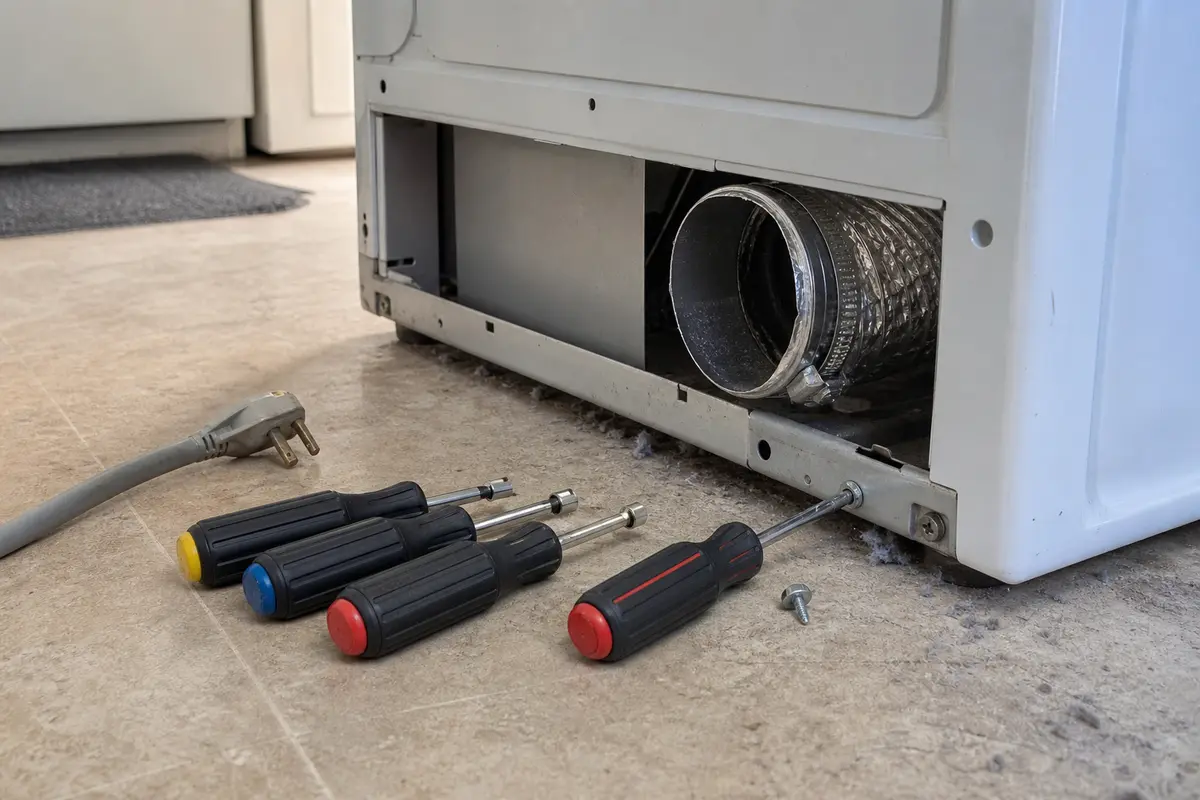
Pull the plug before moving the dryer far, opening panels, reaching into the vent outlet, or testing continuity.
For a gas dryer, shut off the gas at the appliance valve before opening access panels.
Check the lint screen and outside vent hood before touching internal parts.
Reset an electric dryer double breaker one time only. If it trips again, stop.
Do not touch live terminals or run live-voltage tests unless you are trained and equipped.
Do not bypass a thermal cutoff, high-limit thermostat, door switch, flame sensor, or other safety device.
Is the dryer completely cold but tumbling normally?
Check the heated-cycle setting, clean the lint screen, and feel for exhaust at the outside vent hood before you split electric from gas. A gas odor is the stop point: leave it off and call the gas utility or a qualified pro before any dryer testing.
Is it an electric dryer?
Reset the double breaker fully off and back on once. The motor can run on 120 volts while the heater needs the full 240-volt supply.
Does it get a little warm but still leave clothes damp?
Treat airflow as the lead issue. Clean the lint screen, inspect the hose for crushing, and check the outside hood before testing parts.
Does heat start and then quit?
Look for restricted airflow and an overheated safety circuit. A thermal cutoff or high-limit thermostat may have opened after the vent problem.
Does a gas dryer click or glow but never light after you have checked airflow and confirmed there is no gas smell?
Stop guessing at electric heating elements. Note the burner sequence, then move to gas-side diagnosis or service if the pattern is unclear.
Do you see scorched wiring, melted plastic, gas odor, or repeat breaker trips? Stop and leave it off.
Leave the dryer off and call a qualified appliance tech, licensed electrician, or gas pro as appropriate.
Start where the heat failure usually starts
A cold Amana dryer is not automatically a bad heating element. Use the visible clues first: airflow at the vent, full electric supply on electric models, and burner behavior on gas models. Treat any gas smell as the stop point.
Weak airflow or a crushed hose can make a good dryer act like it has no heat, and it can also open a heat-safety part.Heat parts belong in the diagnosis after airflow and power checks. Test with the dryer unplugged, then match parts by full model number.
Before you buy anything
Write down the exact Amana model number and make the failure repeat. Thermal cutoffs, high-limit thermostats, heating elements, igniters, and gas parts are model-specific. A clogged vent can make several good parts look guilty. A gas odor ends the test; this is no longer a parts-shopping problem.
When the drum turns but the load stays cold, start outside the cabinet. The first useful clues are the lint screen, the outside hood, the breaker, and the burner sound.
Start outside the cabinet. A lint-packed or crushed exhaust path can cause poor heat and repeat heat-safety failures.
If the outside hood barely opens, the vent path is still a suspect even when the dryer sounds normal.
A crushed transition hose or lint-packed hood can make the cabinet run hot, then leave the drum cold after a safety device opens.
On an electric Amana dryer, the motor can run on one side of the supply while the heating element gets no 240-volt power.
On a gas model, the burner sequence matters, but safety comes first. Any gas odor means leaving the dryer off and calling the gas utility or a qualified pro. With no gas smell, note whether you get no glow, glow with no flame, or flame once with no relight before choosing the next check.
The heating element, igniter, cutoff, and thermostat move up the list only after airflow and supply clues stop pointing elsewhere.
What not to do first
Skip the expensive guesses until the dryer gives you a better clue. The cheap checks are not busywork; they protect the next part from failing again.
A running-but-cold dryer is not enough evidence for a control board.
A heating element order is premature until the vent is clear, the outside hood has strong airflow, full electric supply is present, and the element is visibly broken or tests open.
One click or one glow does not name a gas valve part. A gas odor means leaving the dryer off and calling the gas utility or a qualified pro. Only when there is no gas smell should you write down the burner sequence.
A breaker that trips again is no longer a reset task; it needs electrical diagnosis.
A disconnected vent is for a brief attended test only, not for drying full loads.
A thermal cutoff, high-limit thermostat, flame sensor, or door switch is a safety device. Never bypass it.
A scorched connector can ruin a new thermostat, cutoff, element, or igniter.
Airflow and power split
This is the fork that saves the most time. Airflow trouble and lost heater supply can look the same from the laundry basket, but the checks are different.
Set the dryer to a heated timed cycle, not air fluff, wrinkle-prevent, or a no-heat option.
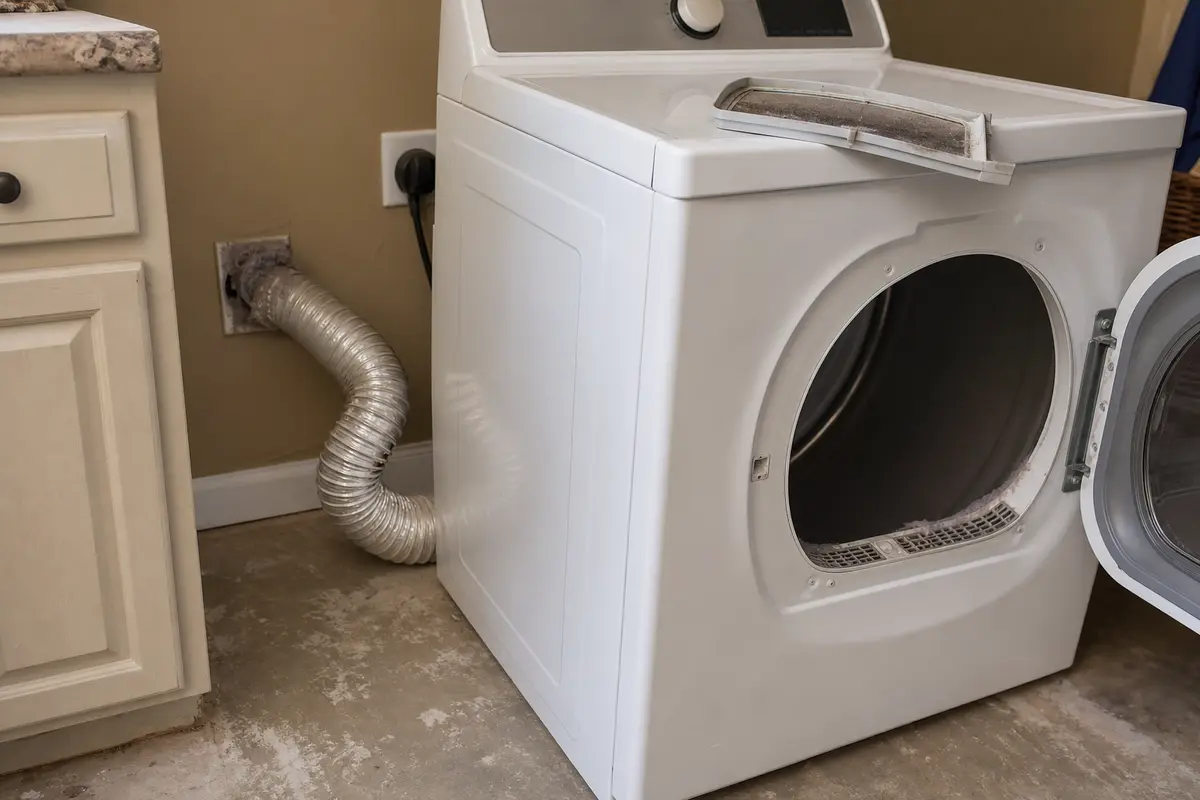
Clean the lint screen and wash it with mild soap and warm water if dryer-sheet film blocks water from passing through the mesh.
Go outside while the dryer runs and feel for steady exhaust. Weak, fluttering, or no airflow keeps the vent path at the top of the list.
Look behind the dryer for a crushed foil or flexible hose, a kink at the wall, or lint packed around the outlet collar.
On an electric model, reset the paired dryer breaker fully off and back on once. Stop if it trips again.
On a gas model, stop immediately for gas odor. If safe to observe, listen for the click and whoosh pattern during the first few minutes.
What you find
What it usually means
Next move
Outside hood airflow is weak
The vent hose, wall duct, or outside hood is restricting exhaust
Clean or correct the vent path before buying heat parts
Electric dryer tumbles after breaker reset but still has no heat
The heater supply or heat circuit still needs diagnosis
Check safely visible cord/outlet damage, then move to unplugged heat-circuit tests or service
Gas dryer glows but no flame appears and there is no gas smell
The burner sequence is not completing
Stop guessing and diagnose the gas ignition circuit
Heat returns with the vent briefly disconnected
The house vent path is likely the restriction
Reconnect before normal drying and fix the full vent route
When heat-safety parts move up the list
Heat-safety parts move up the list when the dryer had weak airflow, a hot cabinet, or long dry times before it went cold. Handle the vent cause before you trust a new cutoff or thermostat.
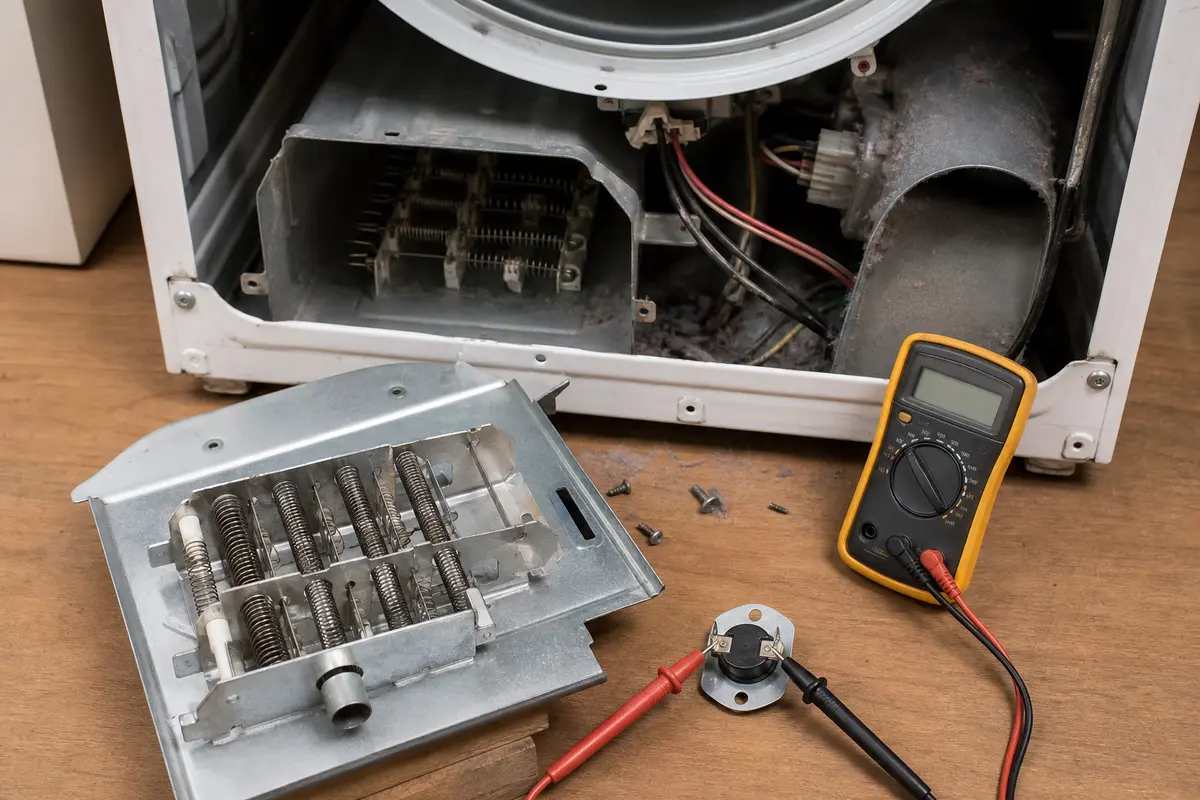
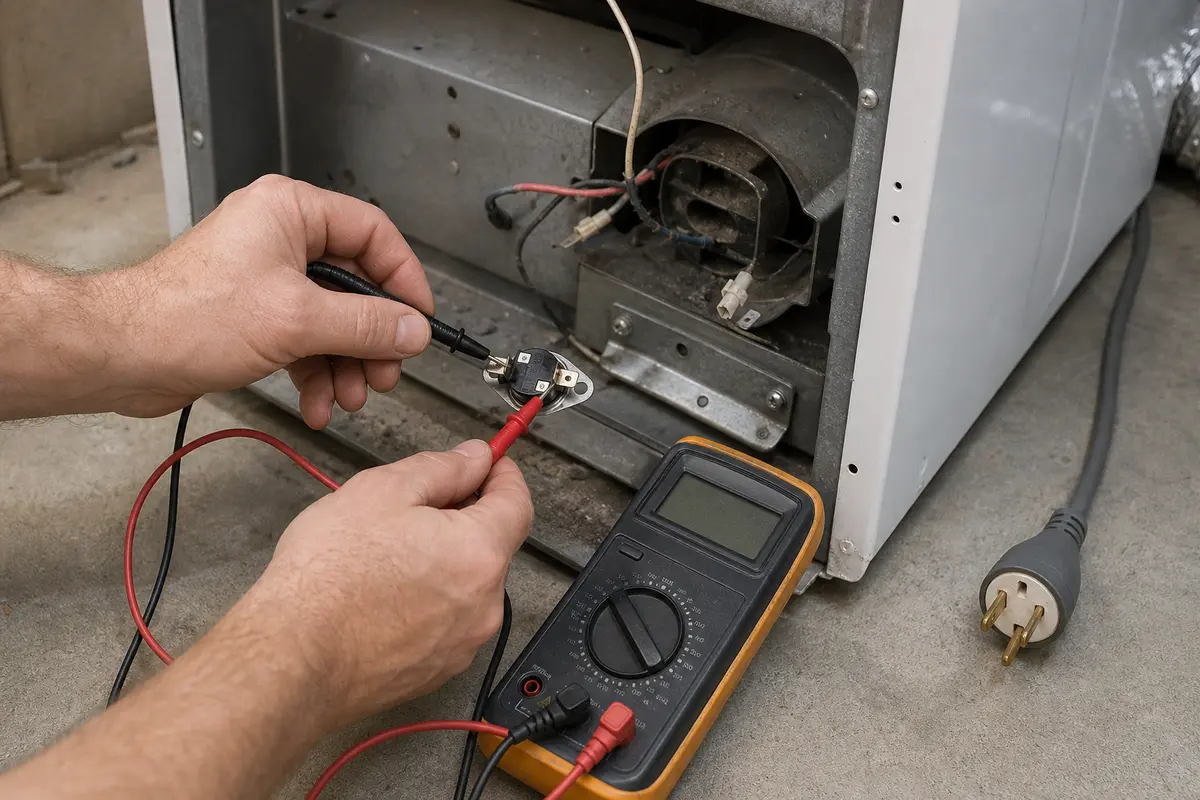
Continuity checks come after power is disconnected and the airflow cause has been handled.
Pull the plug before accessing any thermostat, cutoff, fuse, or heating element.
Use the wiring diagram tucked inside the dryer if it is available, and move one wire at a time so terminals do not get mixed up.
Check continuity only with power disconnected. A meter test is safer and more useful than a guessed parts order.
If a cutoff tests open, correct the vent restriction before running the dryer again.
Darkened, loose, or melted terminals are a stop point before any new part goes in.
Replace the part that actually tests failed. Similar names on a parts diagram are not proof that the whole group is bad.
Electric element or igniter
Amana electric and gas dryers can leave the same cold load in the basket. Gas odor is a hard stop; otherwise, split the diagnosis between the electric heater path and the gas burner sequence.
Electric dryers use a heating element, thermostats, cutoff devices, wiring, and full 240-volt supply.
Gas dryers use an igniter, flame sensor, gas valve operation, and safety devices to light and cycle the burner. Any gas odor means leaving it off and calling the gas utility or a qualified pro.
A visibly broken electric element, or one that tests open, is a supported replacement path after supply and airflow checks.
A gas igniter that never glows and tests failed is a supported replacement path after airflow checks. Shut off the gas before access.
A glowing igniter with no flame does not automatically mean the igniter is bad. If there is no gas smell, that pattern needs gas-side diagnosis.
If the burner lights once and will not relight, note that pattern before buying several parts. Leave it off for erratic ignition or any gas odor.
Tools You May Need
Use tools to prove the next clue, not to open deeper areas than you can safely put back together.
Paid links. As an Amazon Associate I earn from qualifying purchases. Repair Riot may earn a commission at no extra cost to you.
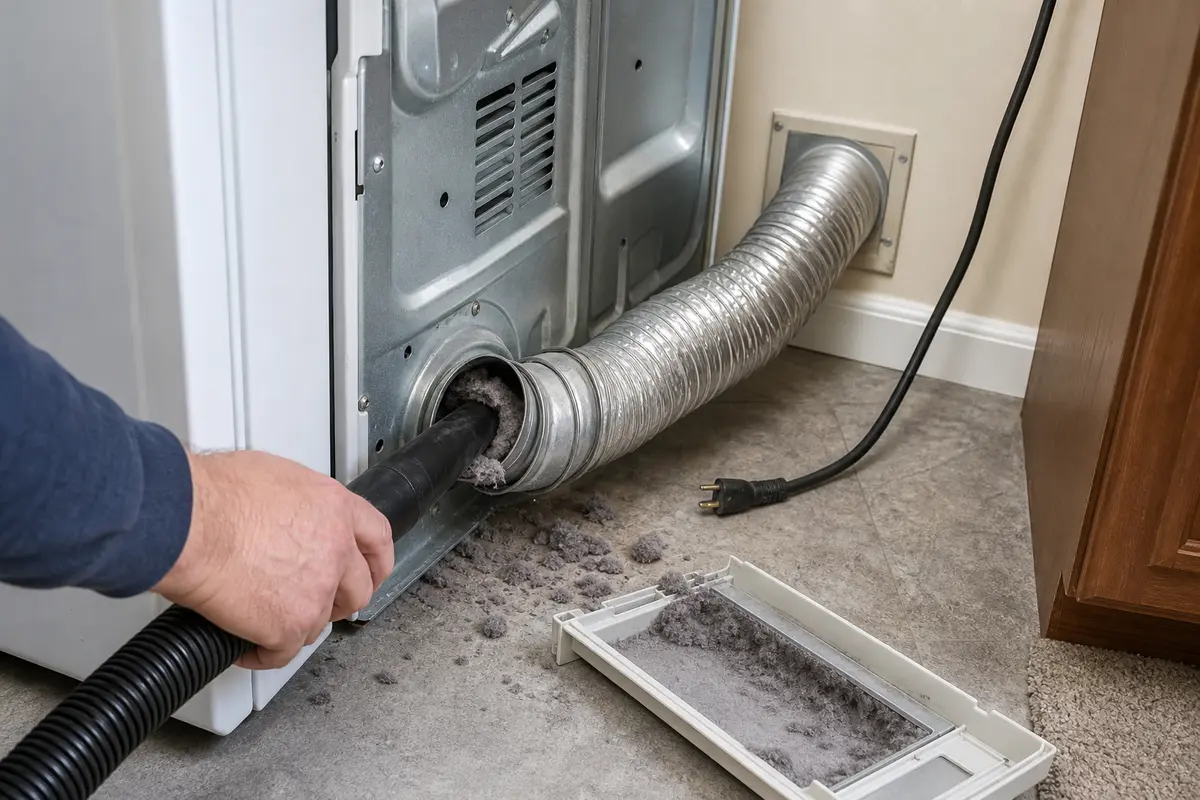
Vacuum with hose attachment
Helps when: Clears loose lint from the dryer outlet, first section of hose, lint screen housing, and cabinet base after power is disconnected.
Skip it when: The lint is deep in a long wall duct, near gas components, or where you cannot reach without damaging parts. Gas odor is a hard stop.
Helps when: Checks continuity on an unplugged thermal cutoff, high-limit thermostat, heating element, or igniter once airflow and supply clues support testing.
Skip it when: You are not comfortable identifying terminals, removing wires, or reading continuity safely.
Start with the lint screen, outside hood airflow, and dryer breaker. A dryer can tumble normally while a restricted vent, lost electric heater supply, or failed heat-circuit part keeps heat off.
Can a dryer vent problem cause no heat?
Yes. A blocked vent can make the dryer overheat, cycle heat poorly, or open a thermal cutoff. If airflow is weak at the outside hood, fix that before blaming the heating element or igniter.
Can an electric dryer still run if it loses half its power?
Yes. The drum motor can run on 120 volts while the heater needs full 240 volts. That is a classic reason an electric dryer tumbles normally but never heats.
Should I replace the dryer thermal cutoff and high-limit thermostat together?
Not automatically. Replace the part that actually tests failed. If the paired thermostat also tests bad or shows heat damage, replace it too. More important, fix the airflow problem that likely caused the failure.
My gas dryer igniter glows, there is no gas smell, and there is still no heat. Is the igniter bad?
Not automatically. A glowing igniter proves part of the ignition circuit is working. If it glows and no flame appears, the gas-side diagnosis needs the burner sequence, flame sensor, coils, supply, and safety circuit checked instead of one guessed part. Any gas odor means stop and leave it off.
If my dryer gets warm but clothes still stay damp, is this the right page?
Maybe not. If the drum warms but clothes stay damp, check the vent path first. Weak outside hood airflow points to the hose, wall duct, or hood before the heater.
Should I run the dryer with the vent disconnected?
Only as a brief attended diagnostic check, and only when you can do it without spilling lint near heat or straining the cord or gas connector. Reconnect the vent before normal drying.
What part should I buy first for an Amana dryer with no heat?
None yet. Find the model number, clean and check airflow, reset the double breaker once on electric models, and test parts with power disconnected. Buy the thermal cutoff, thermostat, element, or igniter only when the symptom and test point to it.
When should I stop and call a pro?
Leave the dryer off for any gas odor, scorched wiring, a melted cord or outlet, repeat breaker trips, or a diagnosis that requires live electrical or gas work.
How this guide was built
Repair Riot built this page around lint screen checks, outside hood airflow, dryer breaker resets, gas ignition behavior with a stop point for gas smell, unplugged continuity testing, and model-specific parts matching. The public references below back up the vent, model lookup, and dryer-fire context used here.