Was chemical cleaner already poured in?
Do not plunge, snake, open the trap, or add anything else. Follow the product label and use professional help if safe handling is unclear.
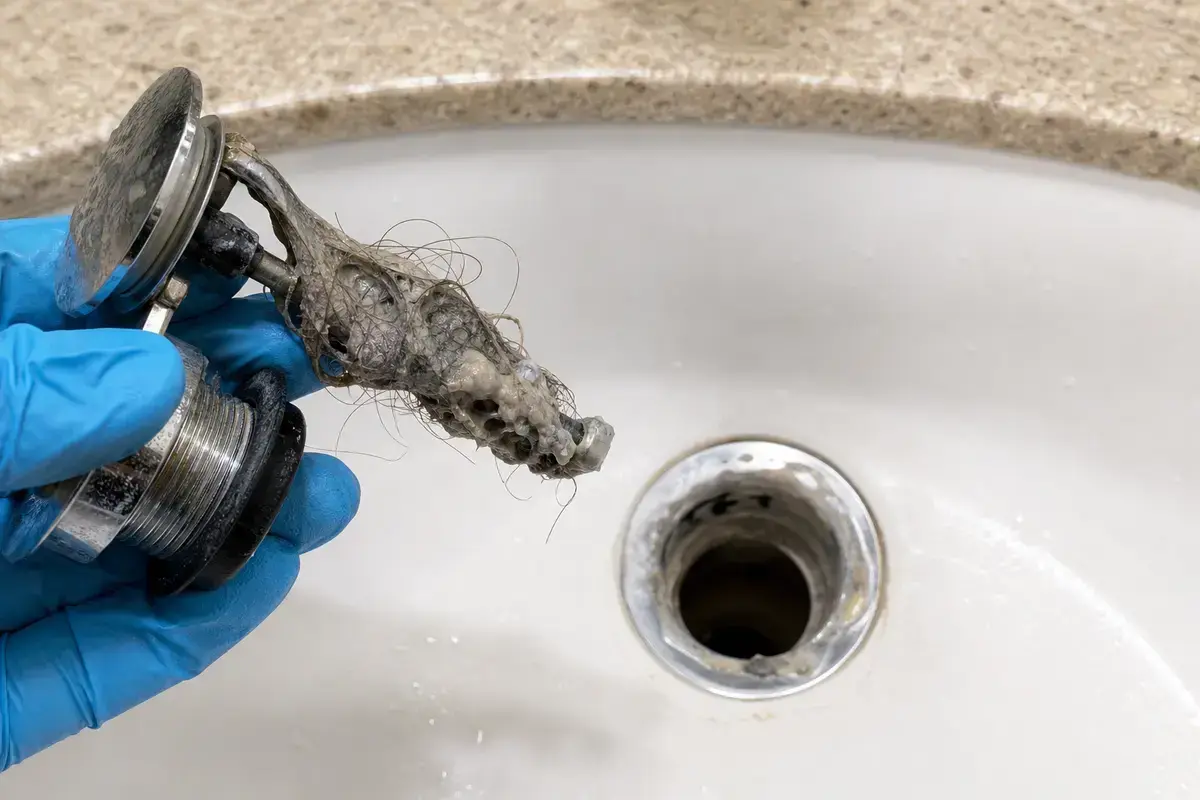
Remove the stopper as its design allows and run water for 10 seconds. If the sink drains faster, pull the hair and sticky product buildup from the stopper and drain opening.
Gray, tan, or black sludge on the stopper usually means the clog is close to the top. If flow stays slow with the stopper out, check the P-trap next.
Check a nearby tub or shower. If it is slow or gurgling too, the blockage is farther down the plumbing.
Don’t start with: Do not add drain cleaner. If cleaner is already in the pipe, do not plunge or open the drain.
Do not plunge, snake, open the trap, or add anything else. Follow the product label and use professional help if safe handling is unclear.
The clog is probably farther down the plumbing. Cleaning the stopper or replacing the trap will not fix it.
Identify the stopper type, remove it only as designed, and pull out the visible hair-product sludge.
Clear the reachable drain throat. Open the P-trap only if no chemical was used and the trap is sound, accessible, and supported.
Use the stopper clue first. Move below the sink only when the drain is chemical-free and the upper drain is clear.
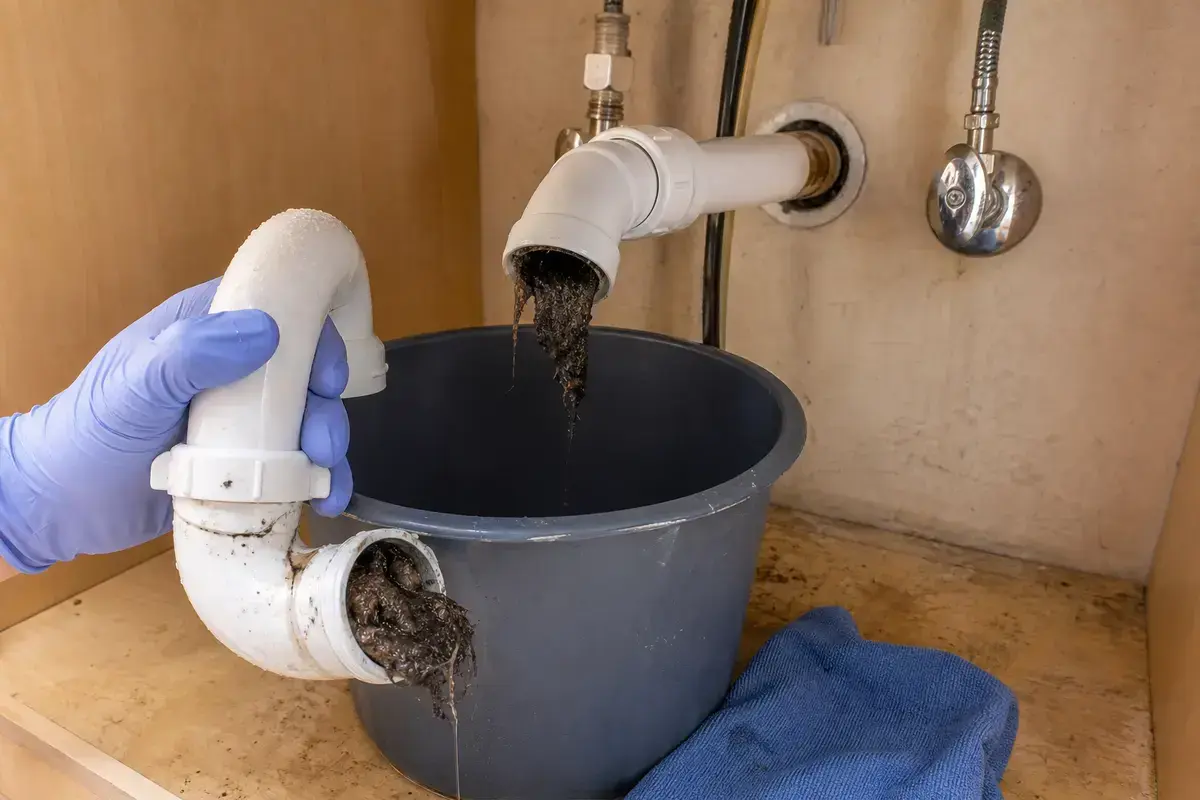
Record which fixtures are affected, whether chemicals were used, stopper type, exact wet point, trap material and connection style, and what you found at each check. Cleaning is the repair unless a washer, trap, stopper, or drain body is visibly damaged or will not reseal.
If drain cleaner is already sitting in the pipe, stop. Opening or plunging the drain could splash it onto you.
One slow sink is often a small, local clog. Several slow fixtures point to a blockage farther down the drain line.
Hair and thick products often form a sticky clump around the stopper where you can reach it.
Even if the stopper looks clean, buildup may be stuck to the drain just below it.
Only do this if no drain cleaner was used and the curved pipe under the sink is easy to reach and in good condition.
Buy only the item that failed inspection; a clog by itself does not require new plumbing.
Paid links. As an Amazon Associate I earn from qualifying purchases. Repair Riot may earn a commission at no extra cost to you.
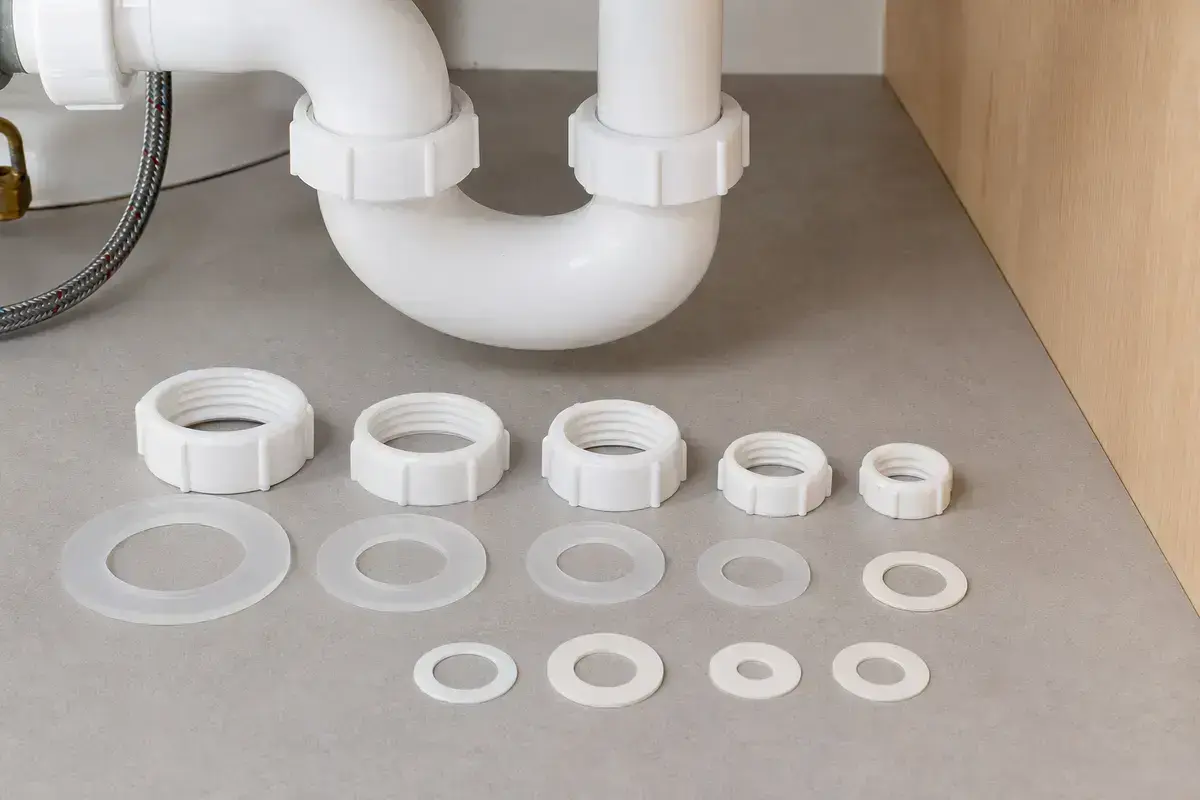
Helps when: A removed trap drips and its matching washer is split, flattened, or hardened.
Skip it when: Skip when the washer is sound or the leak starts at another joint.
Find matching slip-joint washers on Amazon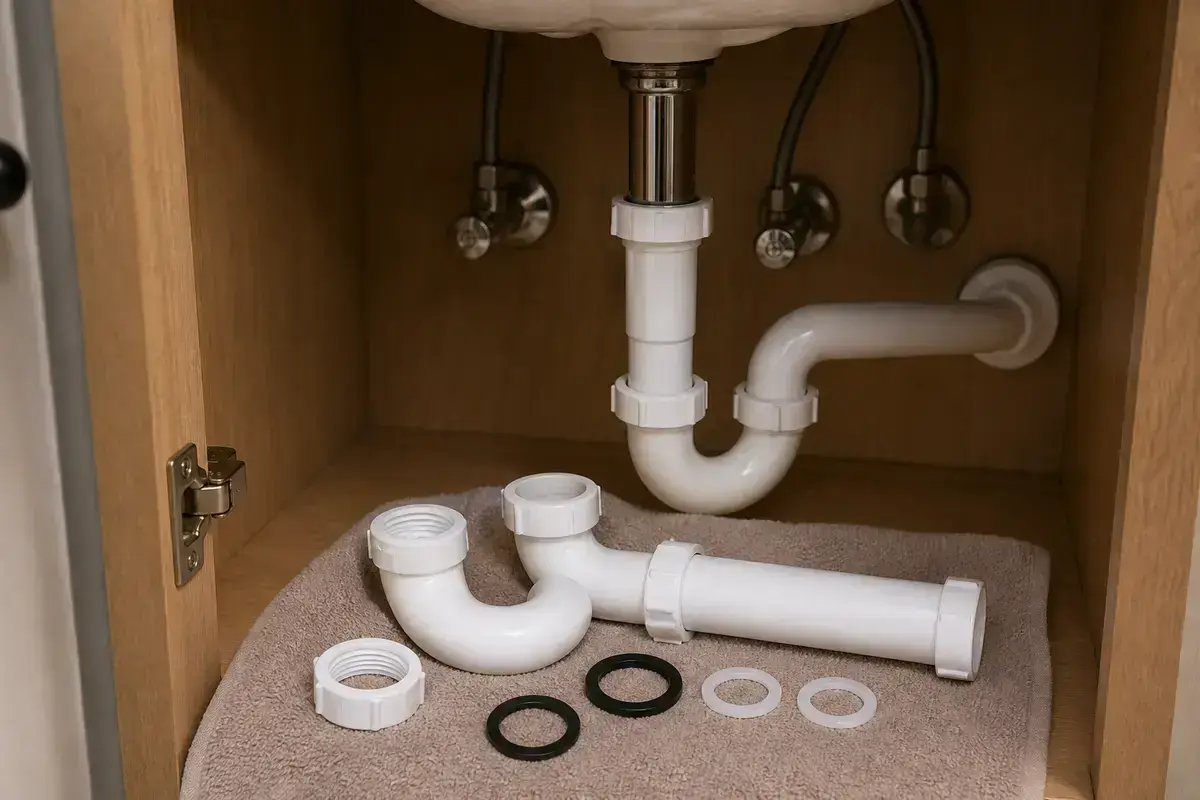
Helps when: The existing trap is cracked, deeply corroded, or cannot reseal with correct washers.
Skip it when: Skip for a sound trap that only contained sludge or for a blockage inside the wall.
Find a matching bathroom sink P-trap on AmazonBecause many hair products leave a sticky film that grabs loose hair and soap scum. In a bathroom sink, that buildup usually starts on the pop-up stopper and then thickens in the drain throat or P-trap.
Do not use that mixture as a drain-clearing step. It does not physically remove the hair-and-product mat, and adding anything is unsafe when another cleaner may already be present. Use mechanical removal only when the drain is chemical-free.
Not as a first move. Chemical cleaners often do little against waxy hair-product sludge, and they can make trap work messier and risk damage to finishes or older drain parts.
The clog is often just below the visible opening or inside the bathroom sink P-trap. A clean-looking stopper does not rule out a thick ring of buildup lower in the drain body.
The clog is probably inside the wall when the stopper and P-trap are clean but the sink is still slow, or when nearby fixtures are slow too. Replacing more parts under the sink will not help.
Do not plunge, snake, remove the stopper, or open the trap. Avoid splashes, keep others away, ventilate as the label directs, and follow the product label or call a plumber. Never add another cleaner.
No. Boiling water can damage some plastic parts, seals, finishes, and sink materials. Hot tap water is enough for rinsing removable residue after the solid hair-and-product mat is physically removed.
Only if it is cracked, badly corroded, deformed, or cannot reseal with the correct matching washers. A sound trap that contained sludge can be cleaned and reinstalled.
The stopper design controls removal. Chemical exposure changes the safe workflow, and household hazardous products should be handled by their label and local disposal rules.