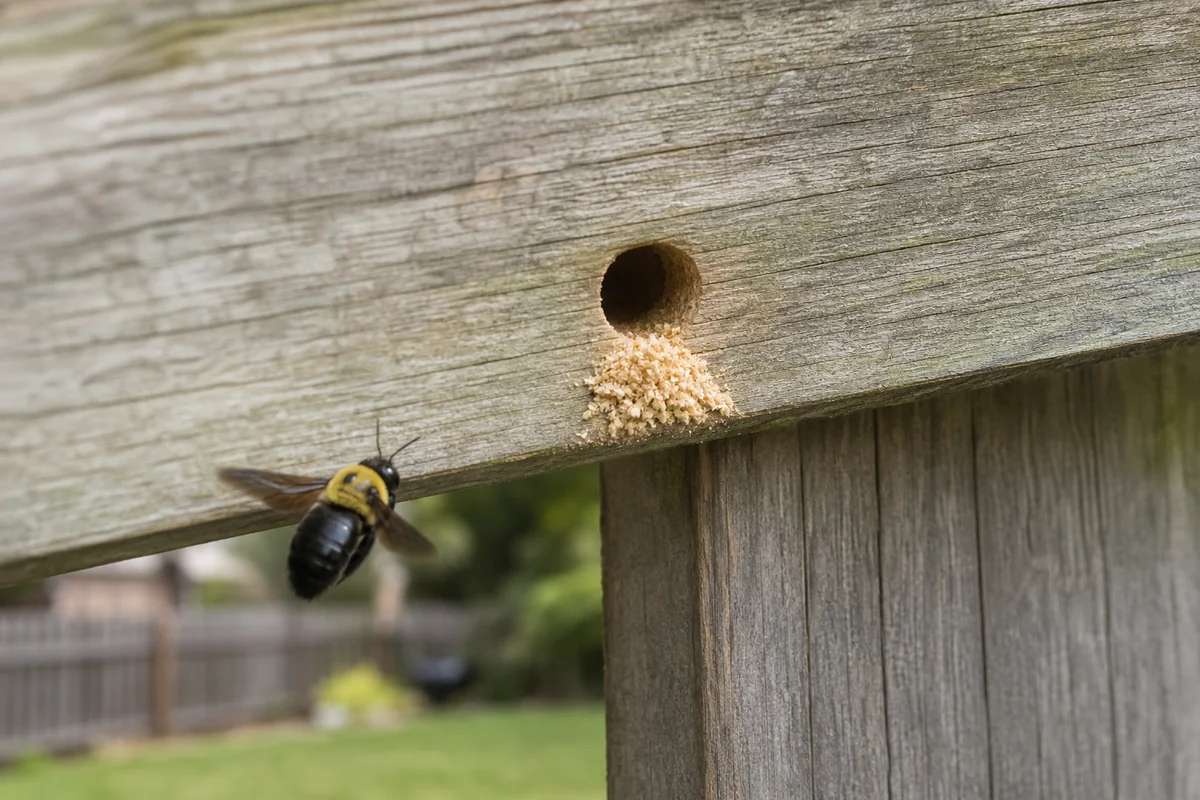
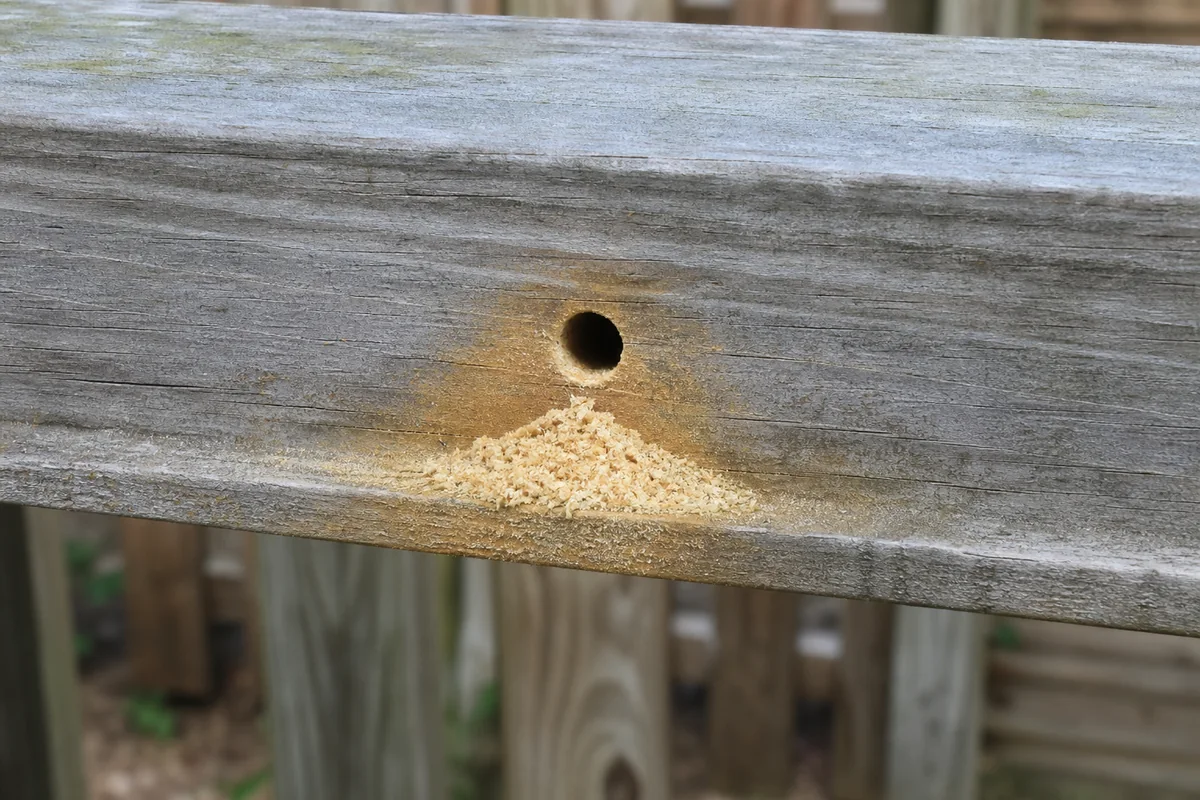
Is the opening nearly round and about half an inch wide?
That shape fits carpenter bee boring. Tiny pinholes, triangular marks, ragged cavities, or crumbling wood need a different diagnosis.
Look for a clean round hole about half an inch wide and fresh sawdust below it. Watch from a safe distance: a bee returning to that spot is a good clue the tunnel is active. Then check the rail for softness or sagging before patching.
One or two holes in a firm rail are usually localized damage. Reused tunnels, long splits, softness, or sagging move the job toward rail replacement.
Read the hole first. Its shape, dust, staining, and the wood around it tell you what to do next.
Don’t start with: Do not seal a hole while bees are still using it, and do not trust filler to restore a rail that has lost strength.
That shape fits carpenter bee boring. Tiny pinholes, triangular marks, ragged cavities, or crumbling wood need a different diagnosis.
Treat the tunnel as active. Do not plug it yet; use labeled control or call a pest professional first.
Move to the rail check. An inactive hole in firm wood may be patched after you are confident the tunnel is empty.
Filler will not restore lost strength. Plan on a matching rail and inspect both post connections.
A localized exterior wood repair is reasonable, followed by paint or another protective finish.
Carpenter bee damage has a recognizable pattern. A nearly round opening, coarse fresh shavings, and yellow-brown staining are stronger clues than a rough crack or tiny irregular hole.
Do not buy filler, a replacement rail, screws, or brackets until you know whether the tunnel is active and whether the old rail is still sound. Match the exact replacement rail by its measured profile, dimensions, material, and connection style; a nominal size or similar-looking fence panel is not enough.
Carpenter bees chew a clean entrance across the grain, then turn and tunnel along the grain. The outside opening can look minor even when an old gallery extends farther inside the rail.
Watch the opening from a few feet away on a warm day. Fresh dust or a bee using the same hole matters more than whether the outside edge looks new.
| What you see | What it points to | What to do next |
|---|---|---|
| Round hole, fresh coarse shavings, bee returning | Active carpenter bee tunnel | Control activity before closing the entrance |
| Round weathered hole, no fresh dust or traffic | Older or inactive tunnel | Check rail strength before a localized repair |
| Tiny holes with fine flour-like powder | A different wood-boring insect may be involved | Do not label it carpenter bee damage without identification |
| Ragged cavity with damp, soft, crumbly fibers | Rot or other wood damage | Find the moisture source and judge structural loss |
A patch only makes sense when the rail can still carry its job. Compare it with the next undamaged rail instead of judging it by appearance alone.
Two choices cause most of the trouble here: sealing a gallery that is still active and treating a weakened rail like a cosmetic patch.
Once activity has stopped, let the wood condition make the repair decision. One or two old holes in a firm rail are a different job from repeated galleries in split wood.
These tools are for looking and comparing, not opening a live tunnel. Keep the first pass simple.
Paid links. As an Amazon Associate I earn from qualifying purchases. Repair Riot may earn a commission at no extra cost to you.
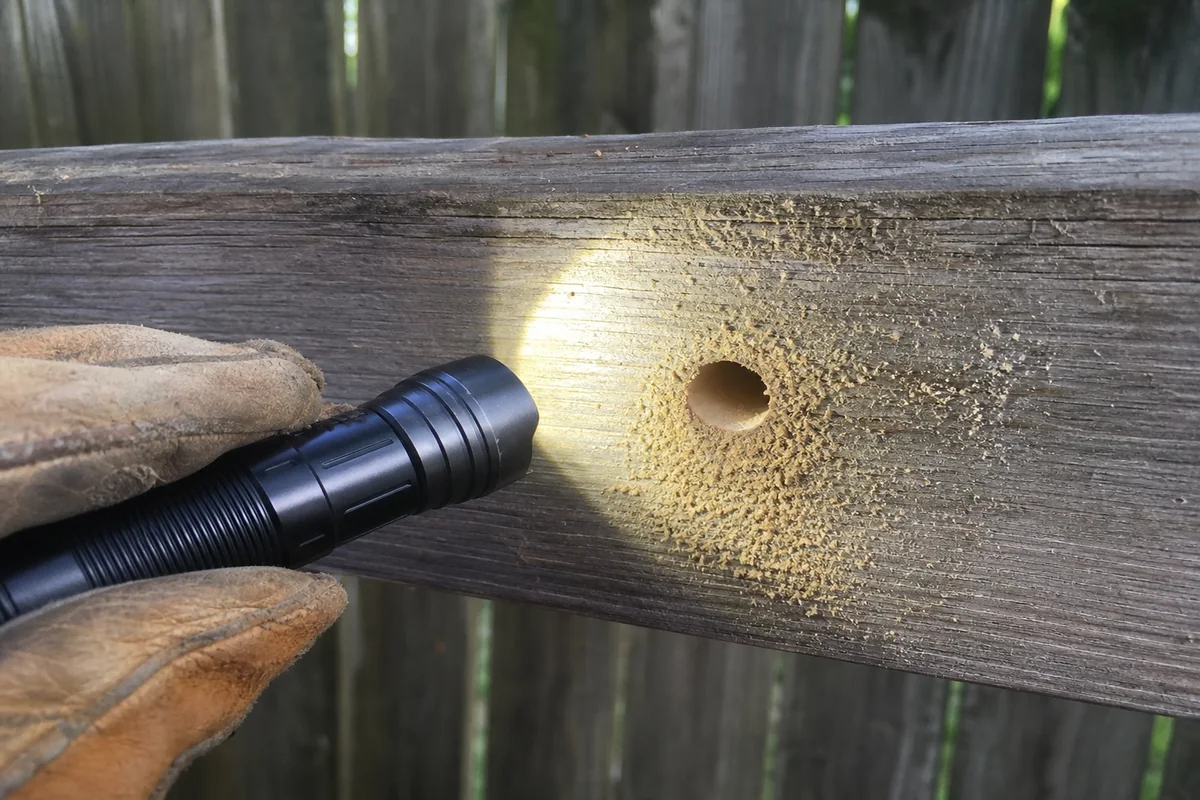
Helps when: You need to see the hole edge, fresh shavings, staining, and the underside of the rail without putting your face near it.
Skip it when: You would have to climb unsafely or work among active bees.
Compare inspection flashlights on Amazon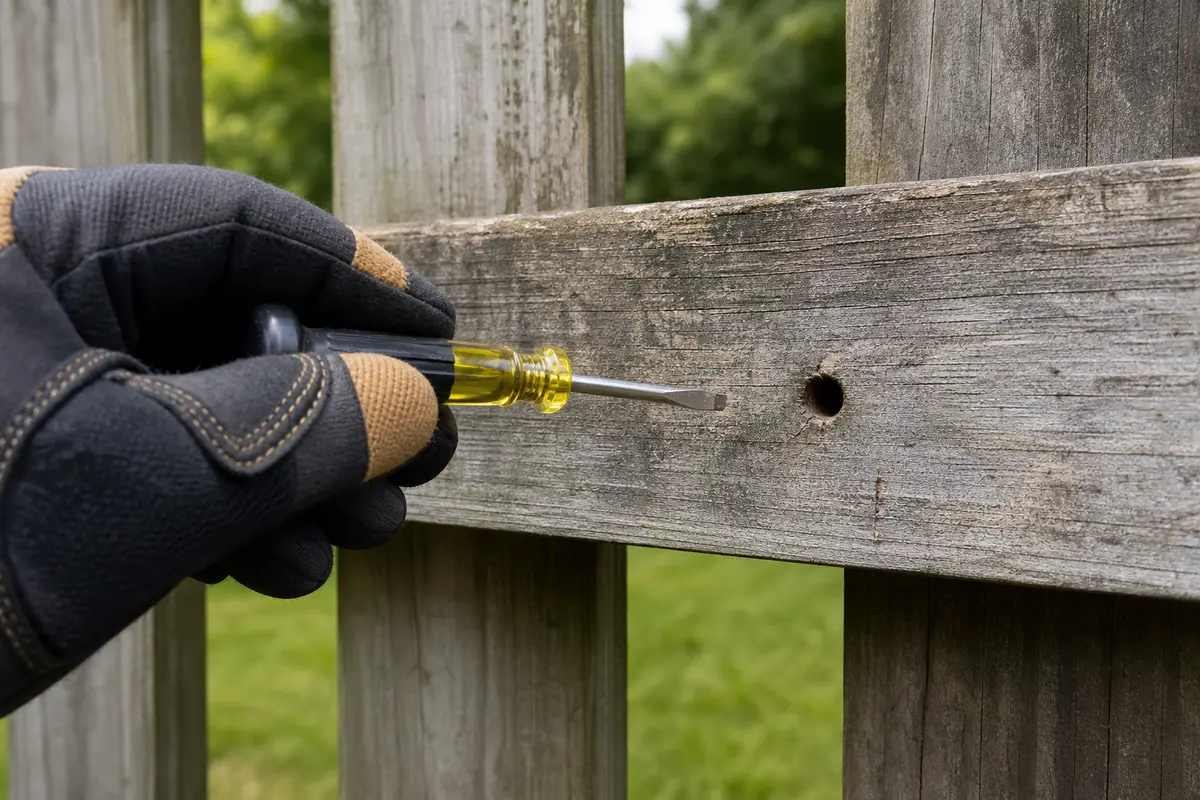
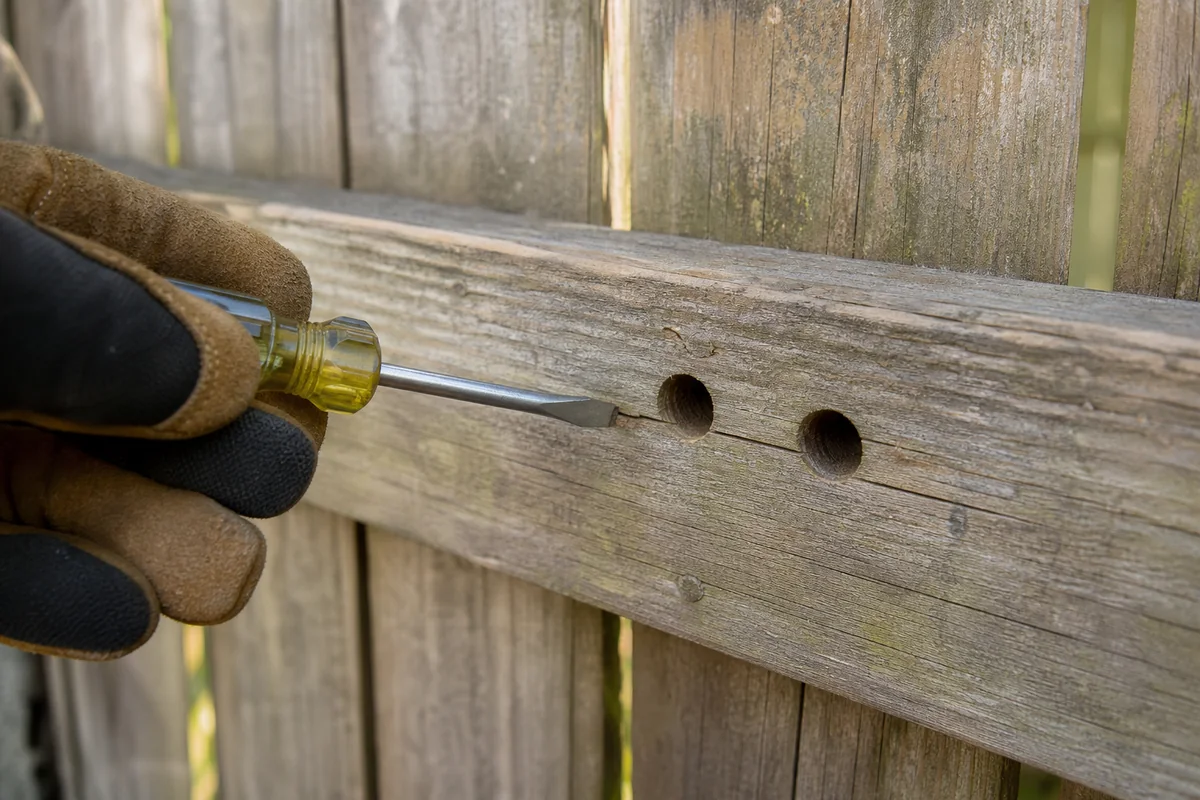
Helps when: A handle gives you a light tapping tool, and the tip can compare firm surface wood beside an inactive hole.
Skip it when: You are tempted to dig into the gallery or the wood is already breaking apart.
Compare small screwdrivers on AmazonBuy only for the repair the rail actually needs. Filler belongs on firm inactive damage; a new rail belongs where the old wood has lost strength.
Paid links. As an Amazon Associate I earn from qualifying purchases. Repair Riot may earn a commission at no extra cost to you.
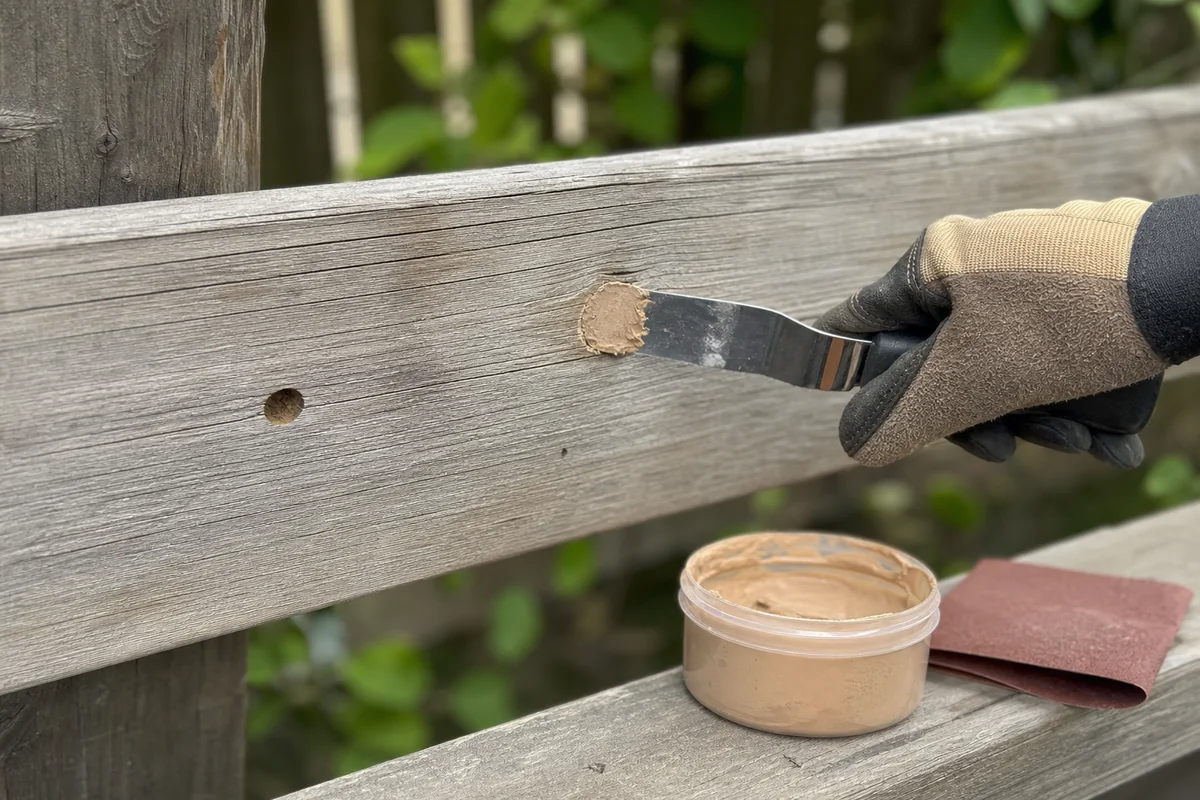
Helps when: One or two old holes are inactive and the surrounding rail is dry, firm, and not split.
Skip it when: The rail flexes, sags, sounds hollow over a long stretch, or bees are still using the tunnel.
Compare exterior wood fillers on Amazon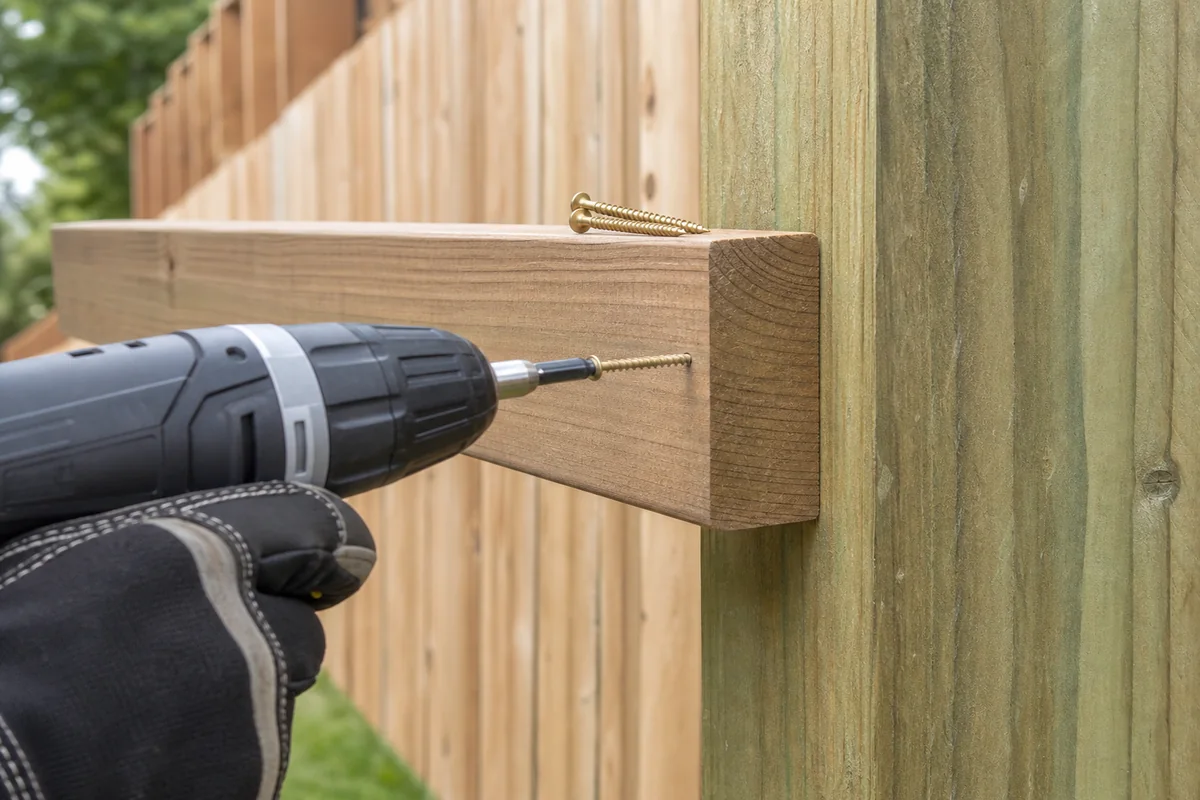
Helps when: The old fasteners are rusted, stripped, too short, or not suitable for exterior wood.
Skip it when: The existing exterior fasteners are sound and can be reused without damaging the connection.
Compare exterior fence screws on Amazon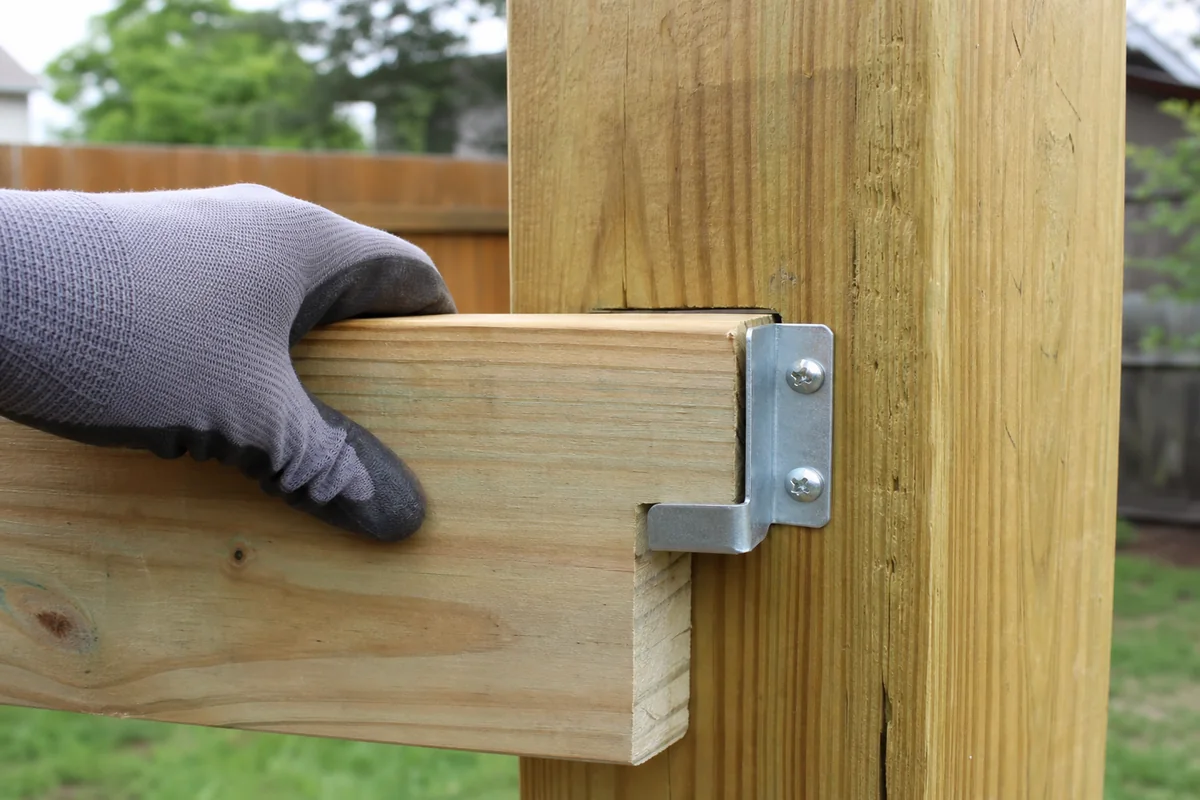
Helps when: The fence design uses a bracket and the existing bracket is bent, loose, corroded, or missing.
Skip it when: Your rail attaches directly to the post or the post wood is too damaged to hold new hardware.
Compare fence rail brackets on AmazonCarpenter bees favor exposed, weathered wood and often reuse old galleries. A finished repair is more useful than a plug left in bare wood.
Usually no. One or two isolated holes in an otherwise solid fence rail are often a localized repair. A hollow, split, sagging rail or one that no longer holds fasteners well should be replaced.
Active holes usually have fresh light sawdust, cleaner edges, and sometimes yellowish staining below the opening. Old holes look weathered, darker inside, and often collect dirt or webs.
Only after you are confident the holes are no longer active. Filling an active tunnel often leads to more boring nearby and does not solve the underlying problem.
They are often on the underside or side of a horizontal rail where the wood stays fairly dry and sheltered. That hidden placement is why the damage can be missed until the rail starts to weaken.
Then do not assume carpenter bees. Ragged openings, damp wood, crumbly fibers, or ant debris point more toward carpenter ants or rot than a clean bored bee hole.
Yes, it often helps. Carpenter bees are more attracted to bare, weathered wood than to well-protected surfaces, so sealing repaired and exposed rails is a smart follow-up step.
Not usually. Carpenter bees make a nearly round entrance around half an inch wide. Tiny triangular marks, pinholes, or ragged openings need a closer look before you treat or patch the wood as carpenter bee damage.
There is no useful hole-count rule. Plan on replacement when the rail sags, flexes more than nearby rails, has long splits, feels soft, sounds hollow over a long stretch, or no longer holds its fasteners.
Repair Riot separates insect identification from the wood decision: first confirm the round opening and activity clues, then judge whether the rail is still sound. The sources below support carpenter bee identification, gallery behavior, repair timing, and pesticide-label cautions.