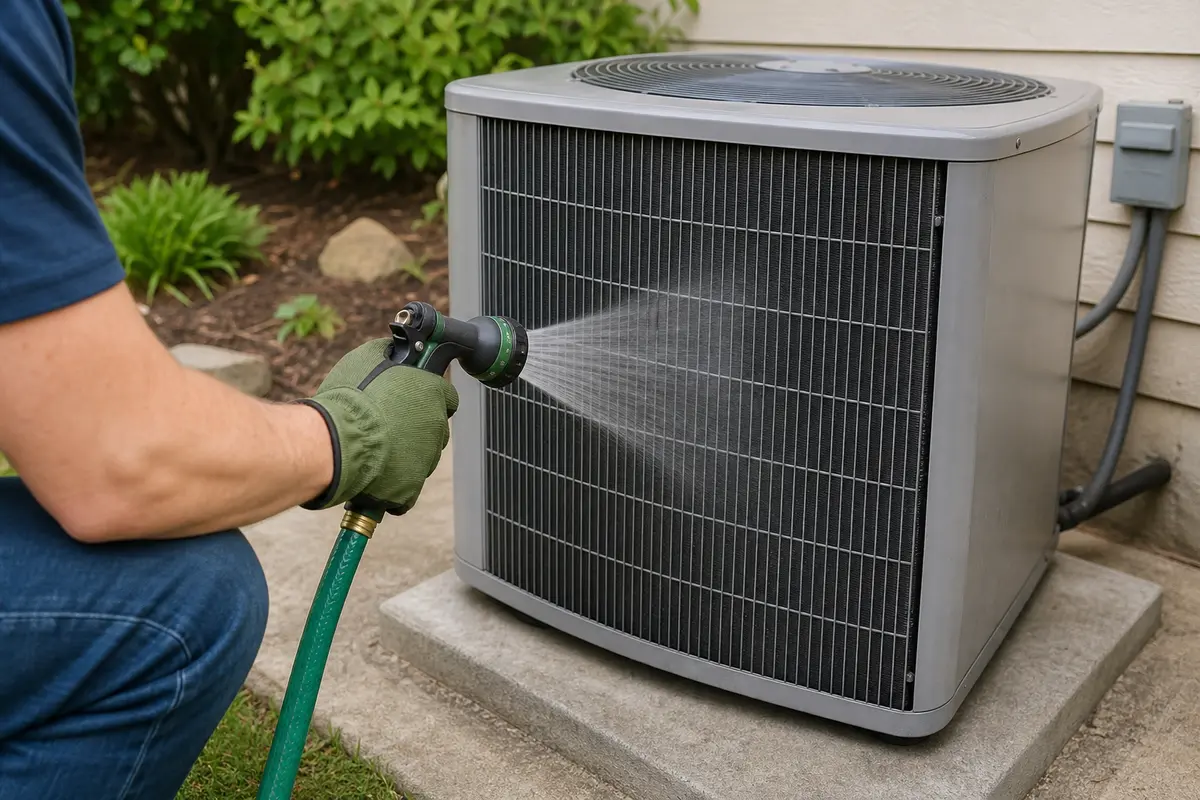
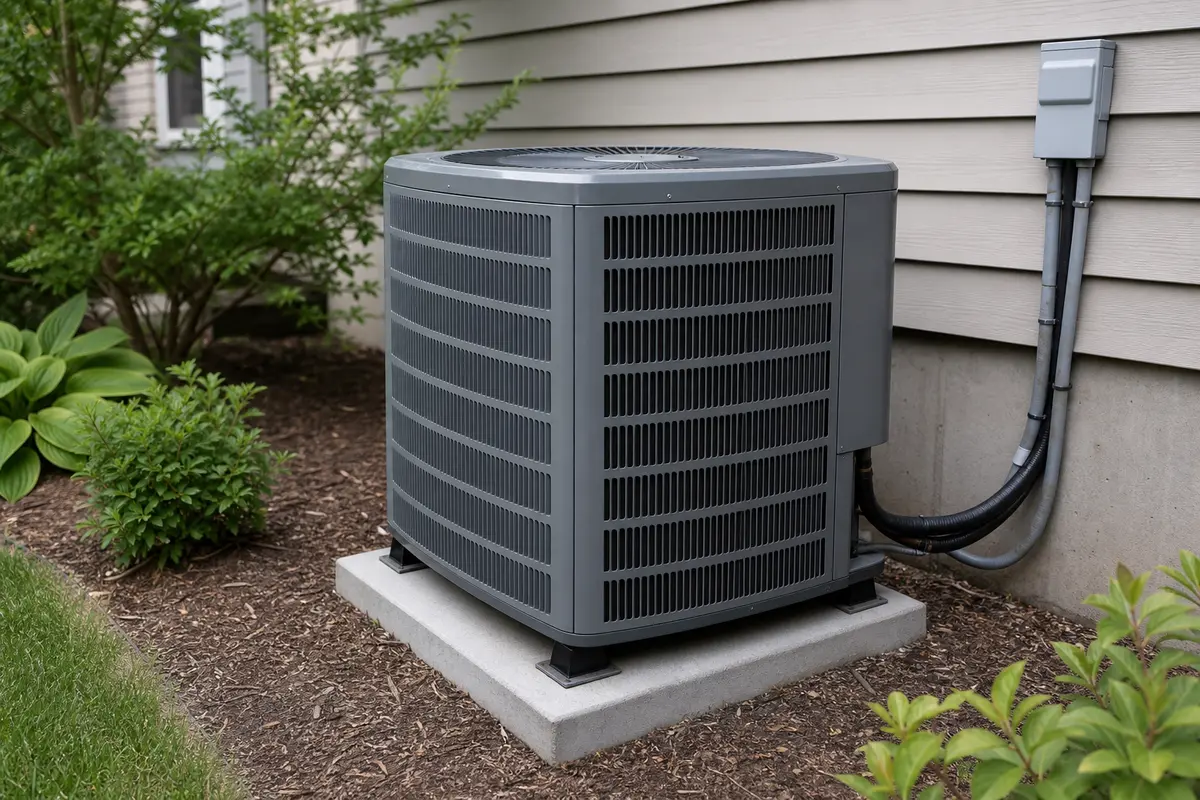
Turn the thermostat off, then shut off power at the outdoor disconnect or breaker. Pull leaves and grass from the coil face and base, then rinse the exterior with a gentle garden-hose spray. Keep water away from electrical areas, and do not use a pressure washer.
The goal is an open coil face, not a shiny cabinet. Keep every panel closed, work from the outside, and stop if you find damaged wiring, crushed coil sections, oil residue, or heavy ice.
Before you start: Turn the thermostat off and shut power off at the outdoor disconnect before cleaning. Stop if you see damaged wiring, a loose disconnect, oil residue, heavy ice, crushed coil sections, or breaker trips.
Exterior cleaning helps when airflow is blocked from the outside. It will not fix ice, refrigerant trouble, damaged wiring, a failing fan motor, or a crushed coil.
This page fits
Look for: Leaves, cottonwood, grass clippings, lint, mud, or dirt are visible on the outside coil face or packed around the base.
Next step: Clean from the outside only after the thermostat and outdoor disconnect are off.
Use gentle tools
Look for: A garden hose, soft brush, gloves, and eye protection are enough for normal exterior debris.
Next step: Skip pressure washers, stiff brushes, harsh coil chemicals, and any tool path that opens electrical covers.
Stop for damage or ice
Look for: The cabinet is intact, the disconnect is sound, refrigerant lines look undamaged, and the coil is not iced over.
Next step: Stop and call an HVAC tech if you find burned wiring, oil residue, heavy ice, crushed coil sections, or breaker trips.
Clean the outdoor coil without damaging fins
Start with visible debris and clearance. The outdoor unit needs gentle rinsing and open airflow, not pressure washing or cabinet disassembly.
Use a soft fan spray on the coil face with every electrical cover closed. A pressure washer can flatten the fins.Finish with closed panels, a clear fan grille, and the model-required breathing room around every coil face.
Safety first
Shut the system off before rinsing the outdoor unit.
Use only a gentle hose spray, not a pressure washer.
Keep water away from exposed electrical parts and damaged panels.
Wear gloves because coil fins and cabinet edges can be sharp.
Tools you may need
Work gloves — Protects your hands from sharp cabinet edges, fins, and debris.
Safety glasses — Keeps dust, grit, and splashback out of your eyes while brushing and rinsing.
Garden hose with spray nozzle — Lets you rinse dirt off gently without damaging the coil fins.
Soft brush or old cleaning brush — Helps loosen leaves, cottonwood, and stuck-on dirt from the cabinet and coil face.
Mild dish soap — Useful for washing grime off the cabinet without harsh chemicals.
Step-by-step fix
Step 1: Look for debris blocking the coil face
Walk around all four sides of the outdoor unit and look for leaves, cottonwood, grass clippings, lint, mud, or dirt packed on the coil face.
Measure the open space around the cabinet and compare it with the clearance in your model's installation manual; move stored items and trim plants that crowd the coil.
Look at the top fan grille and base pan for loose debris you can remove by hand before rinsing.
Stop if the unit is iced over, the cabinet is crushed, refrigerant lines are damaged, or wiring/disconnect parts look burned or loose.
If it works: You can see outside dirt or debris restricting airflow, and there is no obvious electrical, refrigerant, or crushed-coil damage.
If it doesn’t: If the outside is already clean and clear, check the indoor filter, thermostat, and system operation instead of washing a clean coil.
Stop if:
The unit is iced over.
You see damaged wiring, a loose disconnect, or signs of burning.
The cabinet or coil is badly crushed or the refrigerant lines appear damaged.
Step 2: Shut the system off and set up the area
Turn the thermostat to off so the heat pump does not start while you are cleaning.
Shut off power at the outdoor disconnect or breaker if you can do so safely.
Do not rely on the thermostat alone. Make sure the outdoor disconnect or breaker is in its off position before you put water near the cabinet.
Watch for loose conduit, cracked electrical covers, insects, or unstable ground before you set up the hose.
Pick up branches, leaves, and loose debris around the base so you are not washing more dirt back onto the coil.
Put on gloves and eye protection before brushing or rinsing.
If it works: The unit is off, the disconnect area looks sound, and you can work around the cabinet without standing in unsafe footing.
If it doesn’t: If you cannot shut power off or the disconnect area looks damaged, stop and wait for a safe service setup.
Stop if:
Stop if the disconnect is loose, cracked, buzzing, wet inside, or hard to operate.
Stop if unstable ground, insects, or damaged electrical parts make the area unsafe.
Step 3: Clear debris from the outside surfaces
Pull leaves, seed fluff, grass, and twigs away from the coil face and base by hand before using water.
Look for matted debris at the bottom edge where airflow is often most blocked.
Use a soft brush only to lift loose cottonwood or grass from the cabinet guard and coil face. Do not scrub or press the bristles into bare fins.
Compare each side of the cabinet so you do not leave one shaded or shrub-side face packed with dirt.
Trim weeds or plants back so the unit has breathing room on all sides.
Do not use a wire brush, scraper, or anything stiff enough to flatten the fins.
If it works: Loose debris is removed, the coil face is no longer matted, and you can see airflow openings around the cabinet again.
If it doesn’t: If debris stays packed deep in the fins after a gentle outside rinse, stop there and have an HVAC technician clean the coil without opening the cabinet yourself.
Stop if:
Stop if fins crumble, separate, or fold over as you clean.
Stop if you uncover a nest, chewed wiring, oil residue, or damaged refrigerant lines.
Step 4: Wash the cabinet and coil face gently
Mix a little mild dish soap with water if the cabinet is greasy or heavily soiled.
Wipe or brush the cabinet panels first so grime does not run back onto cleaned areas.
Use a garden hose with a soft, steady spray to rinse the outside coil surface. Keep every cabinet panel closed.
Work from top to bottom around the unit until dirt stops washing off.
Avoid spraying directly into the fan motor area, electrical compartment, or disconnect box.
Never use a pressure washer because it can fold the fins over and reduce airflow.
If it works: The outside surfaces are visibly cleaner and water can pass through the coil face without dirt continuing to sheet off.
If it doesn’t: If the coil still looks clogged after a second gentle rinse, do not add pressure or push a brush into the fins; book a professional coil cleaning.
Stop if:
Water is entering an open electrical compartment or damaged panel area.
The fins are bending over from the spray.
Step 5: Inspect the fins and let the unit dry
Inspect the coil face for small patches of bent fins after rinsing, especially where yard tools or branches may have hit it.
Leave bent or crushed fins alone. A mismatched comb or hard pull can tear the thin metal and make airflow worse.
Keep every cabinet panel closed; exterior cleaning does not require access to the fan, capacitor, wiring, or refrigerant circuit.
Let water drain from the cabinet and coil face before restoring power.
Make sure the hose, brush, weeds, and loose debris are clear of the pad and fan grille.
If it works: Air passages on the outside look more open, and the unit is clean, clear, and ready to run.
If it doesn’t: If any area is crushed flat, cleaning alone will not restore normal airflow; have an HVAC technician judge whether the coil can be repaired.
Stop if:
A large section of coil is crushed or damaged.
You find oil residue on the coil or refrigerant lines, which can point to a leak.
Step 6: Restore power and confirm the cleaning helped in real use
Check that the cabinet panels are closed, the hose is put away, and no wire or conduit was disturbed before restoring the outdoor disconnect or breaker.
Set the thermostat to call for heating or cooling, depending on the season.
Once the unit starts, stay clear of the fan grille and watch it through a normal thermostat call.
Confirm the fan moves air freely out the top and the coil face no longer looks matted with dirt.
Listen for rubbing, harsh vibration, breaker trips, or startup noise that was not present before cleaning.
Recheck the coil face after mowing, cottonwood season, or heavy leaf drop if debris returns quickly.
If it works: The unit runs with clear airflow, no obvious blockage, and the cleaned exterior stays clear during normal operation.
If it doesn’t: If performance is still poor after cleaning, check the indoor air filter and thermostat next, or schedule service for a deeper airflow or refrigerant diagnosis.
Stop if:
The breaker trips, the unit will not start, or it makes harsh mechanical noise after power is restored.
The system ices up again or still cannot keep up after the exterior is cleaned.
Verify the repair
The outside coil surface is free of leaves, lint, and packed dirt.
There is open space around the unit and debris is cleared from the base.
The fan runs and moves air normally after power is restored.
The system operates through a normal heating or cooling call without obvious airflow restriction.
FAQ
Can I use a pressure washer on a heat pump outdoor unit?
No. A pressure washer can bend the fins flat and make airflow worse. Use a garden hose with a gentle spray instead.
How often should I clean the outdoor unit exterior?
Check it when mowing, cottonwood, or falling leaves are likely to load the coil face. Clean it when you can see leaves, seed fluff, grass clippings, or dirt building up on the exterior.
Do I need coil cleaner for this job?
Usually not for a basic exterior cleaning. Water, a soft brush, and a little mild soap for the cabinet are enough for normal dirt. If the coil is heavily impacted, a pro cleaning may be the better next step.
Is it normal for some fins to be bent?
A few lightly bent fins do not need to be straightened during exterior cleaning. Leave them alone. If a broad section is crushed or airflow is blocked, have an HVAC technician inspect it.
What if the heat pump still does not heat or cool well after cleaning?
Exterior cleaning helps airflow, but it will not fix every problem. Check the indoor filter and thermostat settings next. If performance is still poor, the system may have an indoor airflow, defrost, electrical, or refrigerant issue.
Sources and how this guide was checked
Repair Riot keeps this job outside the cabinet: shut off power, clear loose debris, rinse gently, and stop at damaged wiring, heavy ice, oil residue, or crushed coils. The sources below support that boundary and the no-pressure-washer warning.