Deck troubleshooting

Deck Bounces When You Walk on It? Check Below First

Start with the movement pattern. If the whole deck springs near the middle, the joists may be flexing between supports. If one spot kicks, drops, or moves sideways, inspect the connection, wood, beam, and post below that spot.

Mark where the movement is strongest, keep other people off the area, and watch the framing from a safe position while one adult walks lightly above. Broad midspan flex and a moving connection are different repair paths.

The useful clue is where the deck moves and whether that movement is vertical, sideways, or concentrated at one support.

Don’t start with: Do not drive more screws through the deck boards or tighten random structural hardware. Surface screws cannot correct an over-span, rot, a loose ledger, or a moving footing.

Whole deck feels springyCheck joist span, beam support, and whether the bounce is strongest mid-span.
One section kicks or dipsCheck for loose deck fasteners, missing approved connector fasteners, rot, split framing, or a shifted post base in that area.

Do this first

  • Keep people, grills, planters, and other loads off the bouncy section until you know what is moving.
  • Stop using the entire deck if it drops suddenly, shifts sideways, cracks loudly, or moves where it meets the house.
  • Inspect from stable ground. Do not crawl beneath a deck while someone is jumping, carrying weight, or testing a badly damaged area above.
  • Do not probe or tighten a connection where the wood is soft, split, crushed, or pulling apart.
  • A cracked beam, leaning post, loose ledger, undermined footing, or widespread rot needs an on-site structural assessment.
Prepared by: Repair Riot Last updated: 2026-07-12 How we build and check guides

Two-minute movement check

Does a broad area flex most halfway between supports?

Joist span or overall framing stiffness moves up the list. Record joist size, spacing, and support locations; do not guess at reinforcement.

Does one spot kick or dip?

Look directly below it for a loose hanger, split joist, crushed bearing point, or localized rot.

Does the deck sway sideways?

Stop treating this as ordinary bounce. Inspect posts, beam connections, bracing, and the house-side connection from the ground.

Does a post, beam, or ledger visibly open and close?

Stop using the deck and arrange an inspection. Visible movement at a primary support is not a surface-board repair.

Is the wood soft, crumbly, deeply split, or wet around hardware?

Do not tighten into damaged wood. Keep weight off the area until the framing and water source are repaired.

Follow the load from the deck boards to the ground

First decide whether the framing flexes across a span or moves at one connection. These views show where to look without prescribing a structural alteration.
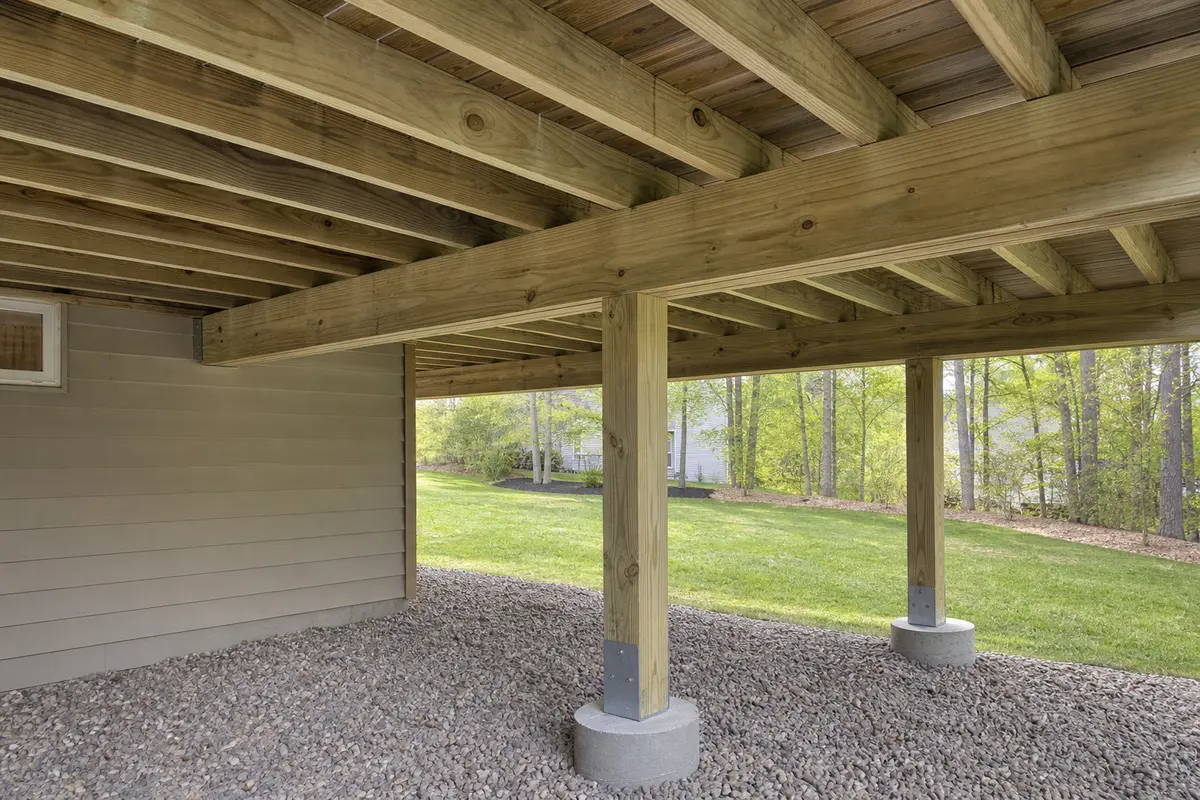
Underside of an attached wood deck showing parallel joists bearing on a continuous beam supported by posts and concrete footings
A wide view helps you follow the real framing from joists to beam, posts, and footings. Use it to locate movement, not as a construction plan.
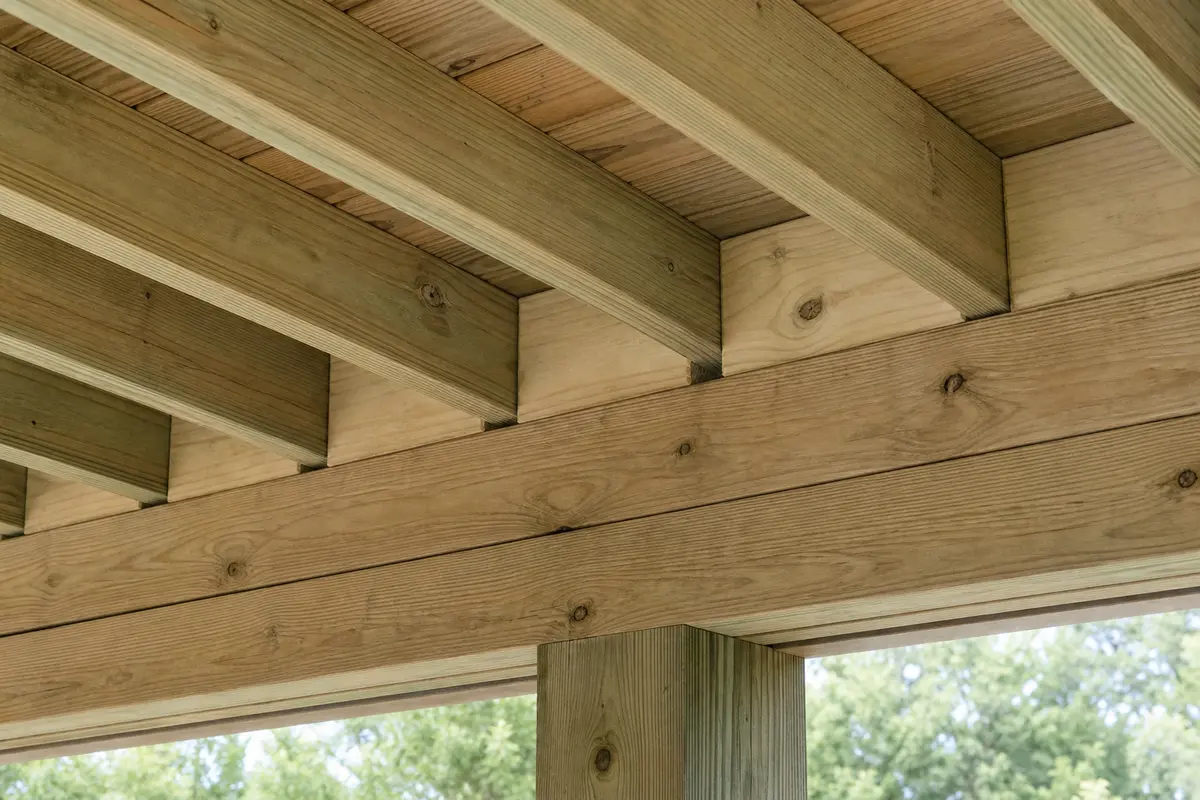
Close underside view of parallel deck joists bearing on a built-up beam with solid blocking fitted between joists
This bearing-and-blocking example shows where gaps and movement can appear. It does not show a joist-hanger installation or prescribe fasteners.

Before you buy anything

Identify the member and connection that actually moves. Photograph the framing, measure joist size and spacing, and note the unsupported span. Do not buy structural hardware from a generic photo: connectors and fasteners must come from a repair plan that matches the lumber, treatment, exposure, and approved installation schedule.

Start with the shape of the movement

Do not use jumping as a test. Walk lightly in a simple grid and mark where ordinary footsteps produce the strongest movement.

Residential deck framing viewed from below with joists, beam, posts, post bases, and concrete footings visible
The part that moves tells you where the load path may be losing stiffness or support. Actual deck designs and connection requirements vary.
  • Broad up-and-down spring near midspan is a good clue that the framing is deflecting between supports.
  • One sharp dip or kick usually points toward a local connection, damaged member, or bearing problem.
  • Side-to-side sway points toward lateral support, post, beam, bracing, or ledger concerns.
  • Movement that worsened after wet weather raises concern for water damage, soil movement, or corrosion.
  • A squeaking board without framing movement is a different, lower-risk surface issue.

Inspect connections from stable ground

Use a flashlight and compare the bouncy area with a firm area. Do not stand beneath a section that visibly drops or separates.

Close view below a deck showing joists bearing on a beam and solid blocking between joists
Use the photo to recognize bearing and blocking, not to select hardware. Hanger and fastener requirements depend on the exact connector and deck design.
  • Check whether joists are fully seated in their hangers and whether the connector is bent, cut, loose, or heavily corroded.
  • Look for empty fastener holes, incorrect-looking fasteners, shiny rub marks, enlarged holes, or wood dust that suggests movement.
  • Watch for a gap that opens and closes at beam-to-post and post-base connections under a light walking load.
  • At the house, inspect only what is visible without removing siding or flashing. Water stains, rot, or separation at the ledger is a stop-use clue.
  • Do not assume every open hanger hole is a defect; use the connector manufacturer's approved fastener schedule.

Check the wood before the hardware

A tight fastener in damaged wood does not restore the connection.

  • Probe suspicious joist ends, beam tops, ledger edges, and post bottoms gently with an awl while the deck is unloaded.
  • Sound wood resists the probe. Soft, crumbly, stringy, or deeply split wood needs repair before hardware decisions.
  • Look for trapped leaves, missing flashing, end grain that stays wet, and corrosion where treated lumber contacts metal.
  • Crushing beneath a washer or connector can show that the joint has moved or been overtightened.
  • Stop if damage continues behind siding, into the house connection, or beyond what you can see.

Measure the framing; do not diagnose span by eye

Joist capacity and stiffness depend on size, species, grade, spacing, span, cantilever, loads, and local code. A long-looking joist is not enough to prescribe a fix.

  • Measure joist depth and width, center-to-center spacing, and the clear distance between supports.
  • Note any cantilever beyond the beam and whether a hot tub, masonry feature, large planter, or other concentrated load is present.
  • Photograph the beam size, post spacing, bearing, hangers, blocking, and house-side connection.
  • Compare the existing design with current local requirements or have a qualified professional check it.
  • Adding blocking may reduce joist twist but does not automatically correct an over-span or inadequate beam.

What not to do

A deck can feel firmer after a cosmetic change while the unsafe connection remains unchanged.

  • Do not add surface screws and call the framing repaired.
  • Do not substitute drywall, decking, or general-purpose screws in structural connectors.
  • Do not tighten fasteners until damaged wood crushes or the connector deforms.
  • Do not jack a beam, move a post, sister joists, or add a support without a load path and footing plan.
  • Do not keep testing a deck that sways, cracks, separates from the house, or has a moving primary support.

Tools You May Need

These tools help document the problem. They do not turn an uncertain structural repair into a safe DIY job.

Paid links. As an Amazon Associate I earn from qualifying purchases. Repair Riot may earn a commission at no extra cost to you.

Inspection flashlight for viewing deck framing connections from stable ground

Inspection flashlight

Helps when: You need to compare hanger holes, joist ends, beam bearing, and damp connections without reaching blindly.

Skip it when: The underside is unsafe to enter or the deck visibly drops above you.

Compare inspection lights on Amazon
Awl for gently checking exposed deck framing for soft or decayed wood

Wood inspection awl

Helps when: You need to test suspicious exposed wood gently for softness after unloading the deck.

Skip it when: The wood is already visibly failed, the area is inaccessible, or probing could disturb concealed flashing.

Compare inspection awls on Amazon
Tape measure for recording deck joist spacing and support span

Tape measure

Helps when: You need joist size, spacing, support span, and cantilever measurements for a useful code or professional review.

Skip it when: Taking the measurement requires climbing, removing guards, or entering an unsafe area.

Compare tape measures on Amazon

What to record before an inspection

Good measurements and photos make the next conversation useful.

  • Where the movement is strongest and whether it is vertical or sideways.
  • Joist size, spacing, span between supports, and any cantilever.
  • Beam size, post spacing, and visible bearing or connection movement.
  • Close photos of hangers, ledger area, beam-to-post connections, post bases, corrosion, and damaged wood.
  • Whether the bounce is new, worsening, weather-related, or associated with an added heavy load.

FAQ

Is a little bounce in a deck normal?

A small amount of flex can be normal on some decks, especially at longer spans. What is not normal is a sharp kick, visible movement at connections, side-to-side sway, or bounce that has clearly gotten worse.

Can loose deck boards make the whole deck feel bouncy?

Loose deck boards can squeak or feel sloppy underfoot, but they usually do not make the whole deck bounce. When the deck feels springy, the framing below is usually where the real movement is.

Should I just add more screws from the top?

Not until you know what is moving. More top screws may quiet a board, but they will not fix a loose joist hanger, a rocking post base, rot, or joists that need more support.

What part of the deck is most likely to rot first when it starts bouncing?

Common trouble spots are joist ends, beam tops, post bottoms, and any connection that stays wet or traps debris. Those areas lose strength long before the whole deck looks obviously bad from above.

When should I call a pro for a bouncy deck?

Call a pro if the deck shifts at the supports, moves at the house side, has cracked beams or posts, shows soft wood in structural members, or still bounces after you correct obvious loose hardware.

Will blocking between joists stop deck bounce?

Blocking can help joists stay upright and share some movement, but it does not automatically correct joists that span too far, an undersized beam, loose ledger, moving posts, or damaged wood. Measure and identify the actual cause before adding framing.

Can I tighten every empty hole in a joist hanger?

No. Use the connector manufacturer's installation schedule and the specified fastener. A random screw can be the wrong size, strength, coating, or location, and tightening into split or soft wood does not restore the connection.

Is a bouncy deck safe for a grill or large planter?

Do not add concentrated weight until the cause of the movement is known. Grills, planters, masonry, and hot tubs can add loads that the original framing may not have been designed to carry.

How this guide was built

Repair Riot built this page around homeowner-visible movement: broad midspan flex, localized connection movement, sideways sway, damaged wood, and primary-support stop points. The references below support joist-span, connection, fastener, support, flashing, and inspection boundaries; the troubleshooting sequence is original guidance.