Dishwasher startup problem

Dishwasher Won't Start With Door Closed? Check Start Timing

First check: with the door open, clear Control Lock and Delay, select a cycle, then follow your model's Start/close timing. If light door pressure changes the result, inspect fit before buying a latch.

Start with control state, rack position, tall items, gasket seating, cabinet contact, and a firm latch click. Those checks explain more no-starts than a guessed control board.

Good clue: dead controls are a power path; responsive controls plus a door warning are a closure path. Keep those diagnoses separate.

Don’t start with: Do not slam the door, defeat the interlock, or order a control board. A powered panel that will not run still needs Start timing, fit, strike, and latch checks.

If it starts only while you hold the door tight,compare the door gap, load clearance, strike, and latch feel before buying a part.
If the controls are dead even with the door open,treat it as a power path and keep the latch diagnosis separate.

Make the first check safely

  • Stop and isolate power for a burning smell, smoke, heat at the plug or console, a repeated breaker trip, damaged wiring, or water near electrical connections.
  • Keep the door open while changing controls. Select the cycle and follow the exact Start-then-close sequence in the model's owner manual.
  • Use only light hand pressure as a brief clue with the door already closed. Do not slam, force, lift, or hold the door through an operating cycle.
  • Switch the breaker off or unplug the dishwasher before cleaning closely around the strike, tightening accessible hardware, or removing any door screw.
  • Never tape, jumper, short, or defeat the door interlock. It prevents operation with an open door.
  • Stop for a bent door, binding hinge, active door leak, wet insulation or flooring, or a repair that needs live testing inside the door or junction box.
Prepared by: Repair Riot Last updated: 2026-07-10 How we build and check guides

60-second no-start sort

Do the controls respond with the door open?

Clear Control Lock and Delay, cancel the old cycle, choose a new cycle, then use the model's exact Start-and-close timing.

Does light pressure on the closed door change the result?

Stop pressing once you have the clue. Check load clearance, door gap, cabinet contact, strike position, and latch feel with power isolated.

Will the door not sit flush or catch evenly?

Empty the front of both racks, reseat any off-track rack, inspect the gasket, and look for countertop or cabinet interference.

Are the controls dead with the door open and closed?

Check the breaker, an accessible plug-in outlet, cord seating, and any under-sink or wall switch. Do not infer a door-latch failure from a dead panel.

Match the clue to controls, obstruction, or alignment

The fastest diagnosis comes from separating what the panel says from how the empty door physically closes.
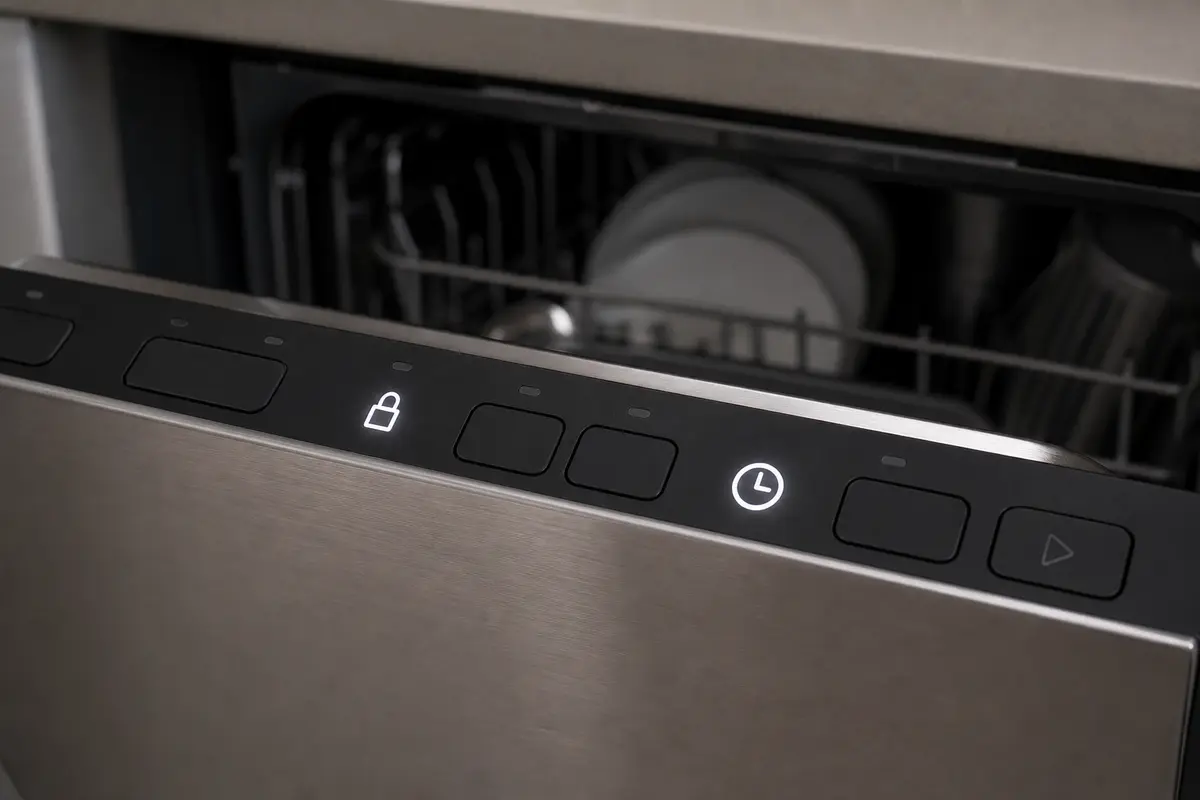
Dishwasher control panel showing illuminated padlock and delay clock icons beside Start button
A responsive panel can still be locked, delayed, or waiting for the model-specific Start-and-close sequence.
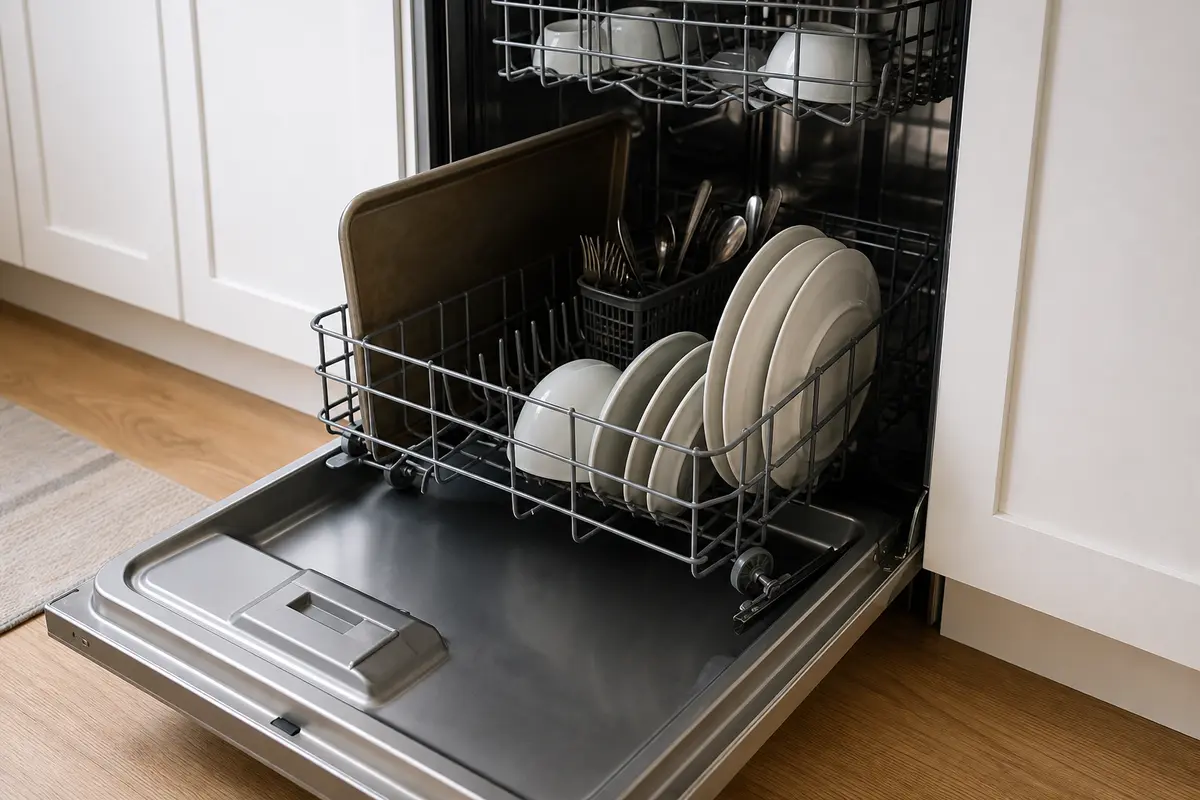
Tall baking sheet and mispositioned dishwasher rack preventing the door from closing fully
Remove tall items and reseat both racks. A door that then closes cleanly did not need an interlock part.
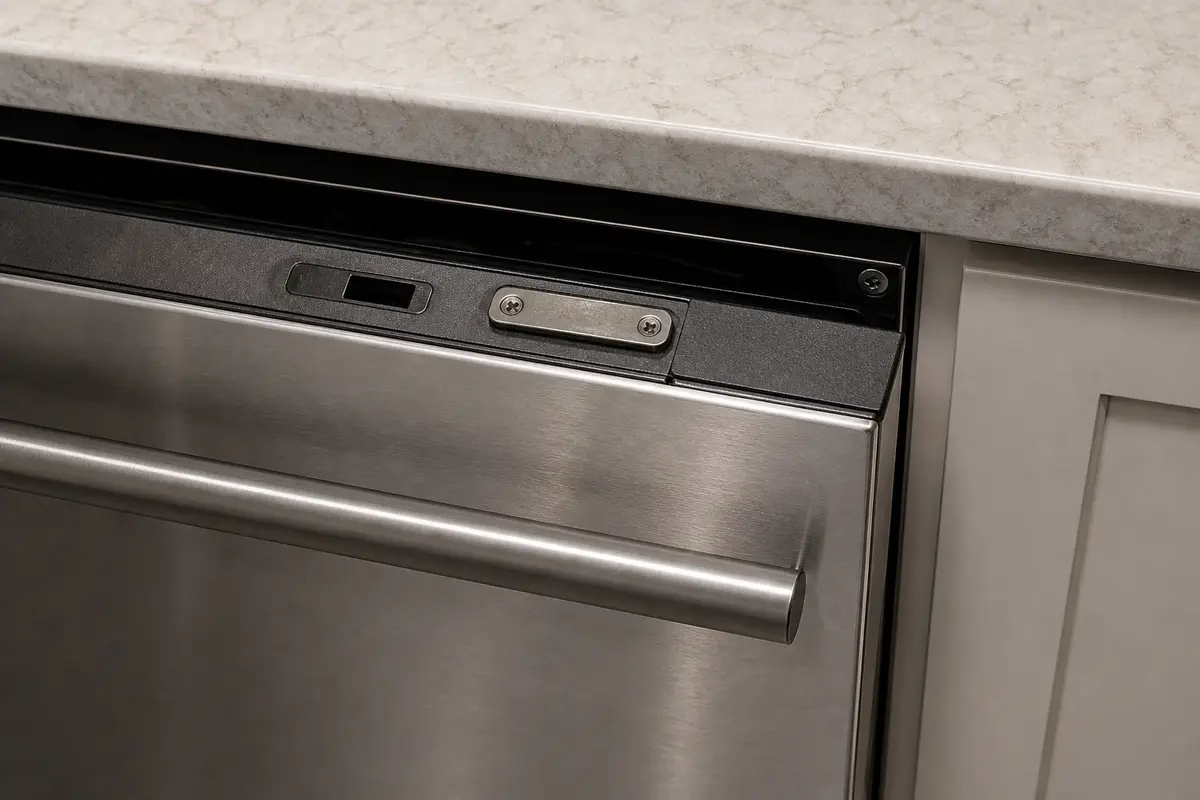
Dishwasher door strike sitting off center from the latch opening with an uneven top gap
Off-center wear and an uneven gap point to fit or strike position. Correct alignment before replacing the latch.

Before you buy anything

Record the full model number, control state, Start sequence, rack position, door gap, latch feel, pressure clue, error code, and accessible power result. Buy only when the physical evidence and exact model agree.

What not to do first

A powered dishwasher that will not begin is not proof of a failed latch or control board. Preserve the clues before changing parts.

  • Do not slam or shoulder the door. That can bend the strike, damage the latch, loosen the inner panel, or turn a fit problem into a leak.
  • Do not defeat the interlock to see whether the dishwasher runs. The machine must not operate with the door open.
  • Do not order a control board from a beep, flashing Start light, or door message. Lock, delay, cycle state, Start timing, and closure still need to be checked.
  • Do not order a latch just because pressing the door changes the symptom. A tall pan, off-track rack, cabinet contact, gasket, hinge, or strike can create the same clue.
  • Do not open the junction box or inner door for powered electrical tests from a generic guide. Use accessible power checks only, with all panel work de-energized.

Clear the control state and use the exact Start sequence

Whirlpool, GE, and Bosch all direct owners to check control lock, delay or cycle state, and full door closure. The order and close-window vary by model, so the owner manual wins.

Dishwasher control panel showing illuminated padlock and delay clock icons beside Start button
Clear lock and delay with the door open, choose a fresh cycle, and use the full model's Start-and-close sequence.
  • Leave the door open and confirm the panel responds. Look for a padlock, Control Lock, Delay, countdown, demo indication, or flashing Start light.
  • Clear Control Lock using the marked button or the exact manual sequence. Then cancel or reset the old cycle and let any drain step finish.
  • Select one ordinary cycle. Press Start, then close and latch the door within the time specified for the full model number; do not reuse a timing rule from another brand or model.
  • If the cycle begins, repeat the sequence once. The dishwasher needed a control-state or timing correction, not a replacement latch.
  • If the panel accepts selections but reports an open door or never begins, continue to the physical fit check. If the panel is completely dead, skip to the accessible power branch.

Remove rack and load interference, then compare the door gap

The door can look closed while a rack, utensil, baking sheet, gasket, countertop edge, or cabinet screw keeps the strike from reaching the latch squarely.

Tall baking sheet and mispositioned dishwasher rack preventing the door from closing fully
Unload the front of both racks and reseat the wheels before blaming the latch. A small obstruction can leave the door short of the interlock.
  • Open the door and remove tall cookware, trays, long utensils, and anything projecting past the front or sides of either rack.
  • Push each rack fully home and check that every wheel is on its track. Inspect the tub rim for a utensil or rack stop caught in the closing path.
  • Close the empty door slowly. Compare the top and side gaps; note bounce-back, rubbing, a high corner, or cabinet and countertop contact.
  • For a new installation, check that the tub sits square and mounting hardware is not pulling one side out of line. Follow the model installation guide for leveling and mounting.
  • With the door fully closed, brief light pressure may be used once as a clue. If it changes the result, stop pressing and inspect fit, strike, and latch with power off.

Inspect the strike, latch, and gasket with power isolated

This is an observation check, not an interlock test. Switch the breaker off or unplug the dishwasher before working close to the latch area.

Dishwasher door strike sitting off center from the latch opening with an uneven top gap
An off-center wear path or uneven gap supports a fit problem. Correct the cause of the misalignment before fitting a new latch.
  • Inspect the metal or plastic strike for looseness, a polished off-center wear mark, a bend, or cabinet movement that puts it beside the latch opening.
  • Use a damp cloth and mild soap to remove detergent film from accessible strike, latch-edge, and gasket surfaces. Do not spray liquid into the latch opening.
  • Check the gasket for a folded corner, displaced section, hardened swelling, cut, or new-gasket stiffness that physically prevents the door from seating.
  • Look for cracked latch plastic, a loose mount, missing hardware, or an inconsistent mechanical click. Never insert a tool to defeat or hold the switch closed.
  • Restore power only after the area is dry and intact. If the unloaded door now starts consistently without pressure, verify several cycles before buying anything.

If the controls are completely dead, follow the power path

A door-latch symptom normally leaves some control response. No lights or sounds with the door open and closed calls for a separate power check.

  • Check the dishwasher breaker and reset it once by moving it fully off, then on. Stop if it trips again.
  • If the dishwasher uses an accessible cord and under-sink outlet, confirm the plug is fully seated and the outlet or its upstream GFCI has power without opening electrical boxes.
  • Check for an under-sink or wall switch that controls the dishwasher circuit. Make sure it was not turned off during cleaning or other work.
  • Do not remove a hardwired junction-box cover or probe concealed wiring while energized. A loose supply connection, damaged cord, or repeated trip needs qualified electrical diagnosis.
  • Once accessible power is confirmed, use the model's technical path. Do not circle back to a latch purchase unless the controls respond and closure evidence supports it.

Tools You May Need

The useful first-line tools improve visibility and let you secure accessible hardware with the power off. Live-test tools are intentionally excluded.

Paid links. As an Amazon Associate I earn from qualifying purchases. Repair Riot may earn a commission at no extra cost to you.
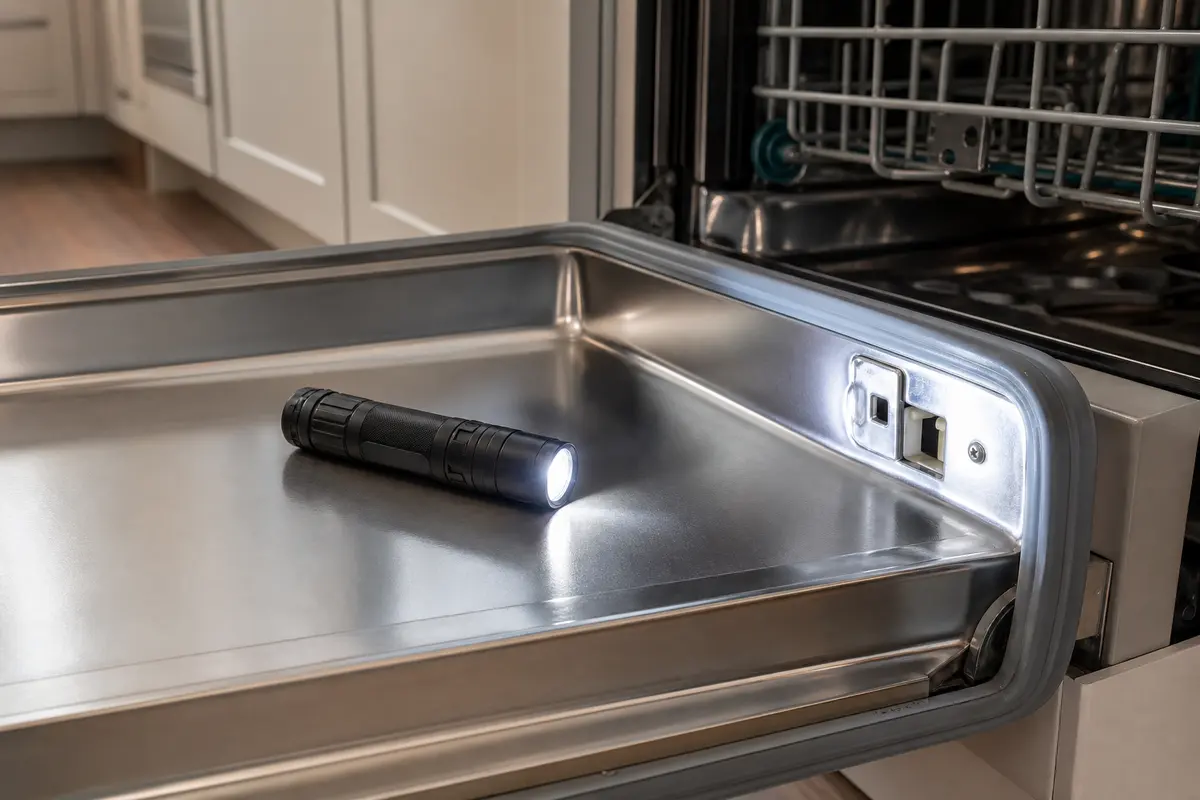
Compact LED inspection flashlight illuminating a dishwasher latch and strike area

Compact inspection flashlight

Helps when: It reveals rack interference, off-center strike wear, cracked latch plastic, gasket folds, and cabinet contact without putting fingers into the opening.

Skip it when: Skip a purchase if you already have a bright compact light that can be held away from wet surfaces.

Shop compact inspection flashlights on Amazon
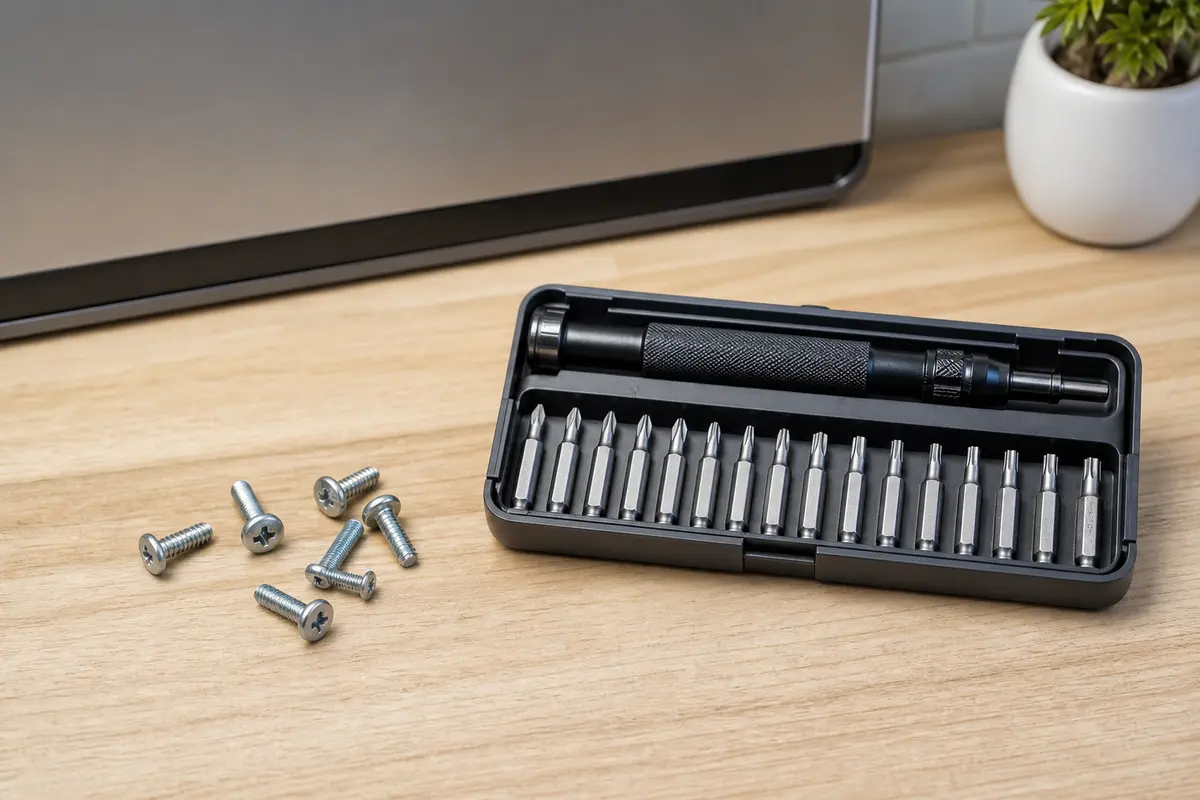
Manual screwdriver set with Phillips and Torx drivers beside dishwasher mounting hardware

Manual screwdriver set

Helps when: Use it only with power isolated to secure accessible strike or mounting screws called out by the exact model's instructions.

Skip it when: Skip it if no hardware is loose or panel removal would go beyond the owner's installation and service guidance.

Shop manual screwdriver sets on Amazon

Replacement Parts

Use the full model number and the physical evidence. These are conditional options, not a diagnosis based on the page title.

Paid links. As an Amazon Associate I earn from qualifying purchases. Repair Riot may earn a commission at no extra cost to you.
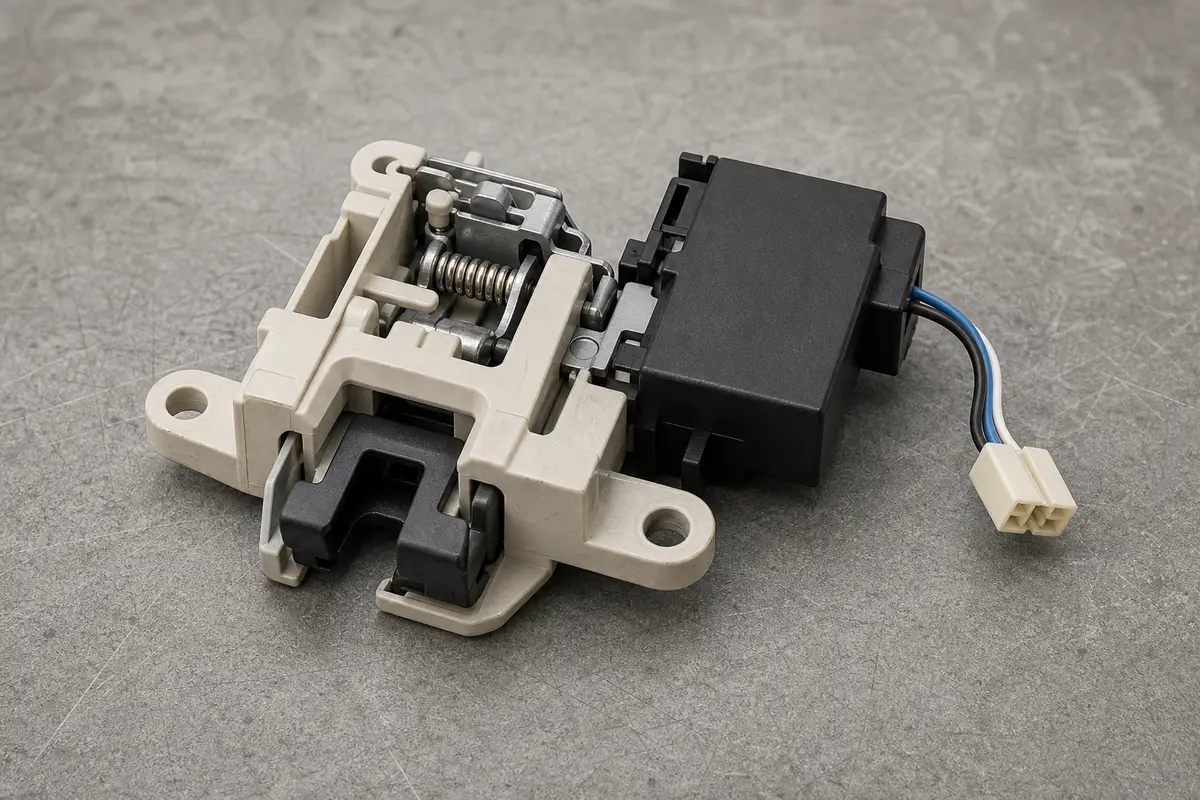
Enclosed dishwasher door latch and interlock assembly with connector housing and mounting points

Model-matched dishwasher door latch assembly

Helps when: The unloaded door and strike align correctly, controls respond, the exact Start sequence is correct, and the latch is cracked, loose, mechanically inconsistent, or fails the model-specific de-energized test.

Skip it when: Skip it when the door rubs, sits unevenly, needs lifting, hits the load or cabinet, or the panel is dead. Correct those branches first.

Find a model-matched dishwasher latch on Amazon
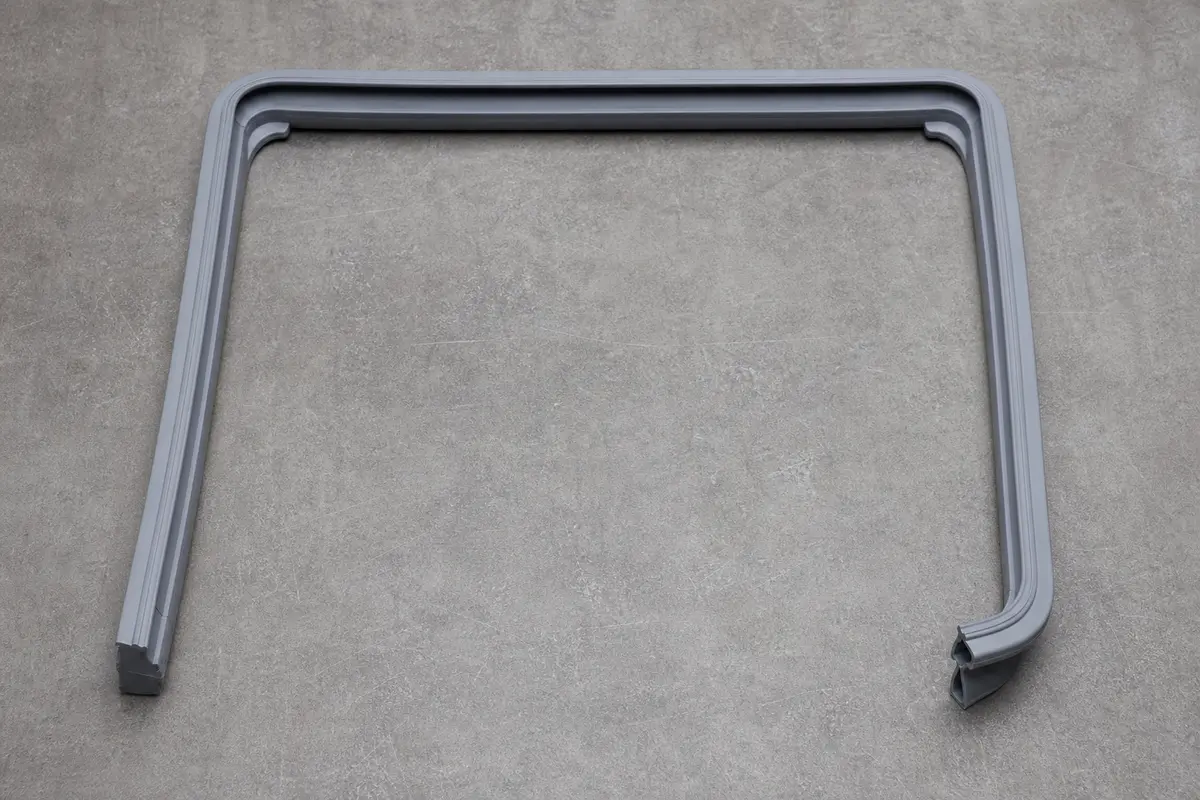
Replacement dishwasher tub door gasket with molded corners and model label tag

Model-matched dishwasher door gasket

Helps when: The gasket is cut, displaced, permanently folded, hardened, or swollen enough to prevent the empty door from sitting flush, and the exact model uses a replaceable seal profile.

Skip it when: Skip it when the gasket is intact and compresses evenly. New gaskets may be stiff, so follow the manufacturer seating guidance before condemning one.

Find a model-matched dishwasher gasket on Amazon

Verify a reliable start and safe closure

A real fix works without special pressure and does not create rubbing or a leak.

  • With normal loading, select a cycle and complete the exact Start-and-close sequence three times. Each start should be recognized without slamming, lifting, or holding the door.
  • Confirm the door gap remains even, both racks travel freely, the strike enters centrally, and the latch has one consistent mechanical catch.
  • Run an attended short cycle. Check the top corners and lower door edge for drips, pause or cancel normally, and confirm the interlock stops operation when the door is opened as designed.
  • Recheck any secured mounting hardware after the tub has filled and drained. Stop for rubbing, a new leak, intermittent control power, heat, odor, or another breaker trip.
  • If the machine still reports the door open after controls, fit, strike, and latch evidence are resolved, stop swapping parts and use exact-model service diagnostics.

FAQ

Why does my dishwasher start only when I push on the door?

That is a closure clue, not proof of a bad latch. Remove load interference and inspect the gap, cabinet contact, strike, gasket, and latch with power off. Never hold or slam the door through a cycle.

Can a bad dishwasher latch keep the whole machine from starting?

Yes. The interlock must recognize a closed door. First rule out Control Lock, Delay, the wrong Start sequence, rack interference, misalignment, and a displaced gasket.

Should I replace the control board first?

No. Separate dead from responsive controls, clear lock and delay, use the model's Start timing, unload the door path, and inspect fit. This symptom alone does not support a board.

Can the door gasket stop a dishwasher from starting?

Yes, if it is folded, displaced, hardened, swollen, or newly stiff enough to keep the empty door from sitting flush. An intact gasket that compresses evenly is not a reason to replace it.

What if my dishwasher has no lights at all?

Treat dead controls as a power path. Check the breaker once, an accessible cord and outlet, upstream GFCI, and any controlling switch. Stop for another trip, heat, odor, or damaged wiring.

Is it okay to keep slamming the door until it starts?

No. Slamming can crack the latch, bend the strike, loosen the panel, or create a leak. Treat a light-pressure change as a clue, then isolate power and find the physical cause.

Why does Start flash or the dishwasher beep after I close the door?

The model may be locked, delayed, waiting for the right sequence, or not recognizing closure. Clear the old cycle, choose one cycle, and follow the exact Start-then-close timing.

Can a rack or tall dish stop a dishwasher from starting?

Yes. An off-track rack, baking sheet, pan handle, or long utensil can leave the door short of the latch. Empty both rack fronts, reseat every wheel, and retry.

Manufacturer troubleshooting references

Repair Riot used official Whirlpool, GE Appliances, and Bosch guidance for controls, Start sequence, closure, installation fit, latch clues, and safe power isolation. The full model's manuals take priority.