Insulation touches the roof deck at the eave?
That bay has a blocked intake path. Pull insulation back only from a safe position, then check whether a baffle is missing, crushed, or too short.
If the eave is packed with insulation, soffit air cannot enter. Start from stable framing and look for insulation touching the roof deck, no chute above it, or a baffle crushed flat.
Usually the issue is loose-fill or batt insulation pushed into the eave. Look for insulation touching the roof deck where a missing, crushed, or too-short attic ventilation baffle should be holding a channel open.
Check the eaves before you blame the ridge vent. Watch for a repeated pattern across several lower roof bays, not one odd stain.
Don’t start with: Don’t start by adding roof vents, cutting new openings, or buying a box of baffles for every rafter bay. First check several eave bays from stable framing: look for insulation against the roof deck, a missing baffle, or a blocked soffit cover before you pick the repair.
That bay has a blocked intake path. Pull insulation back only from a safe position, then check whether a baffle is missing, crushed, or too short.
Treat it as a possible roof leak or flashing issue first. If the wet spot is isolated after rain, inspect the roof, flashing, and nearby vent before moving insulation. Blocked soffit intake usually repeats along several eave bays.
Restricted intake, indoor air leakage, or an exhaust duct leak moves up the list. Check the air path and moisture sources together.
Go outside and inspect the soffit covers for paint, dust, insect nests, crushed metal, or blocked perforations.
Plan on baffles in those affected bays. If insulation slides back after a quick rake-back, the test proved the channel needs something solid to hold it open.
Stop adding parts. Check bath fan routing, air leaks, ridge vent performance, roof leaks, and wet insulation before changing the ventilation layout.
Soffit intake problems have two sides: the attic edge and the exterior cover. In the attic, look for insulation closing the channel or a missing baffle. Outside, inspect the soffit cover for clogged slots.
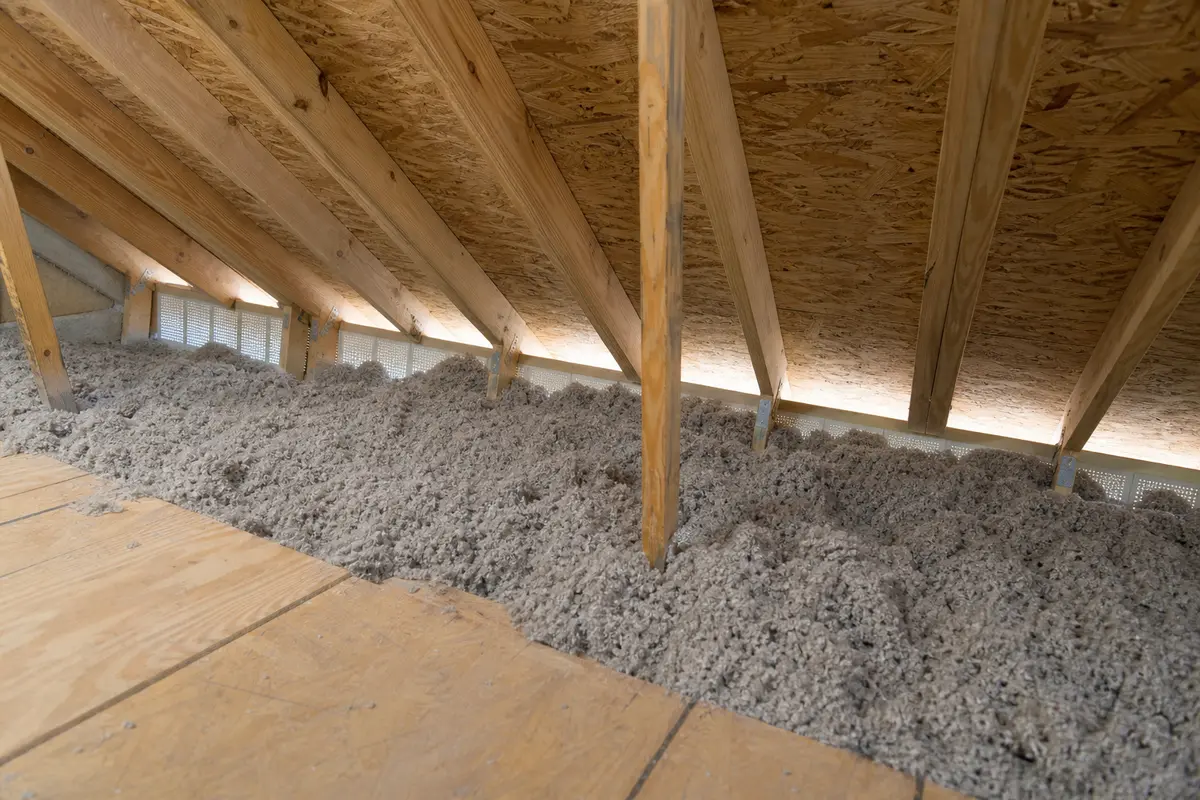
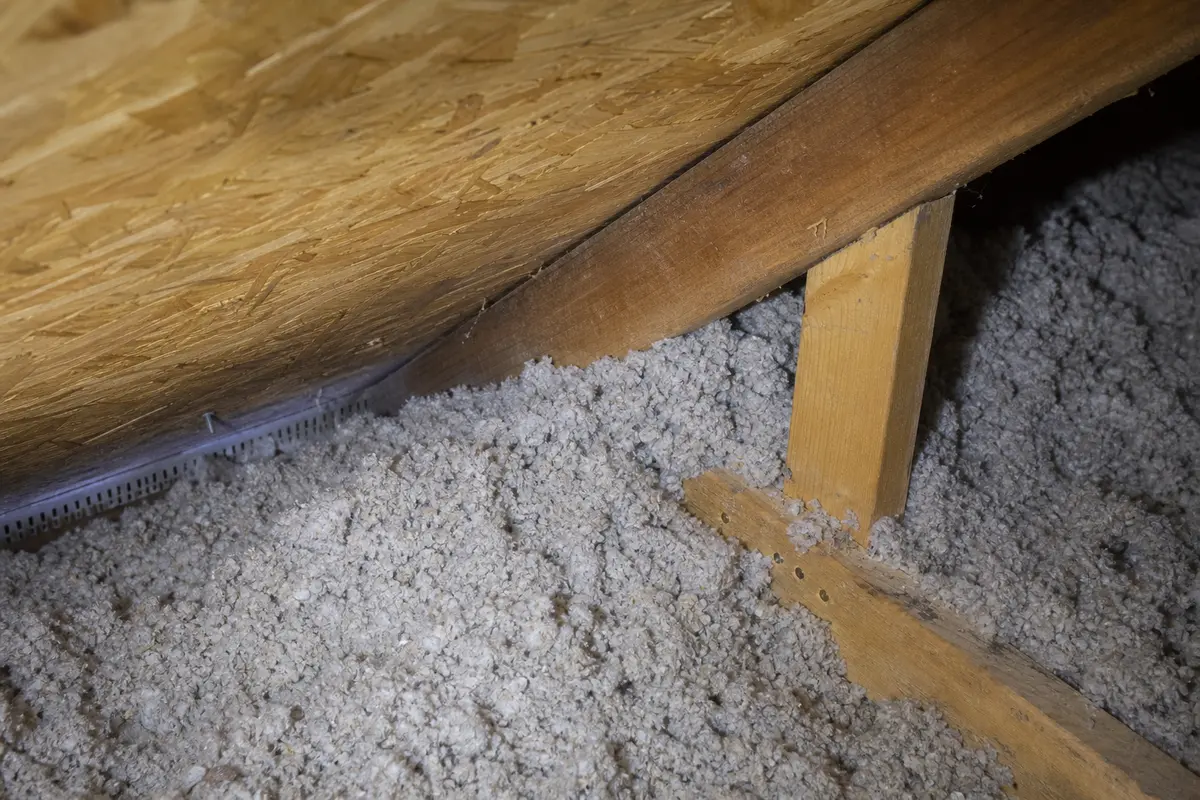
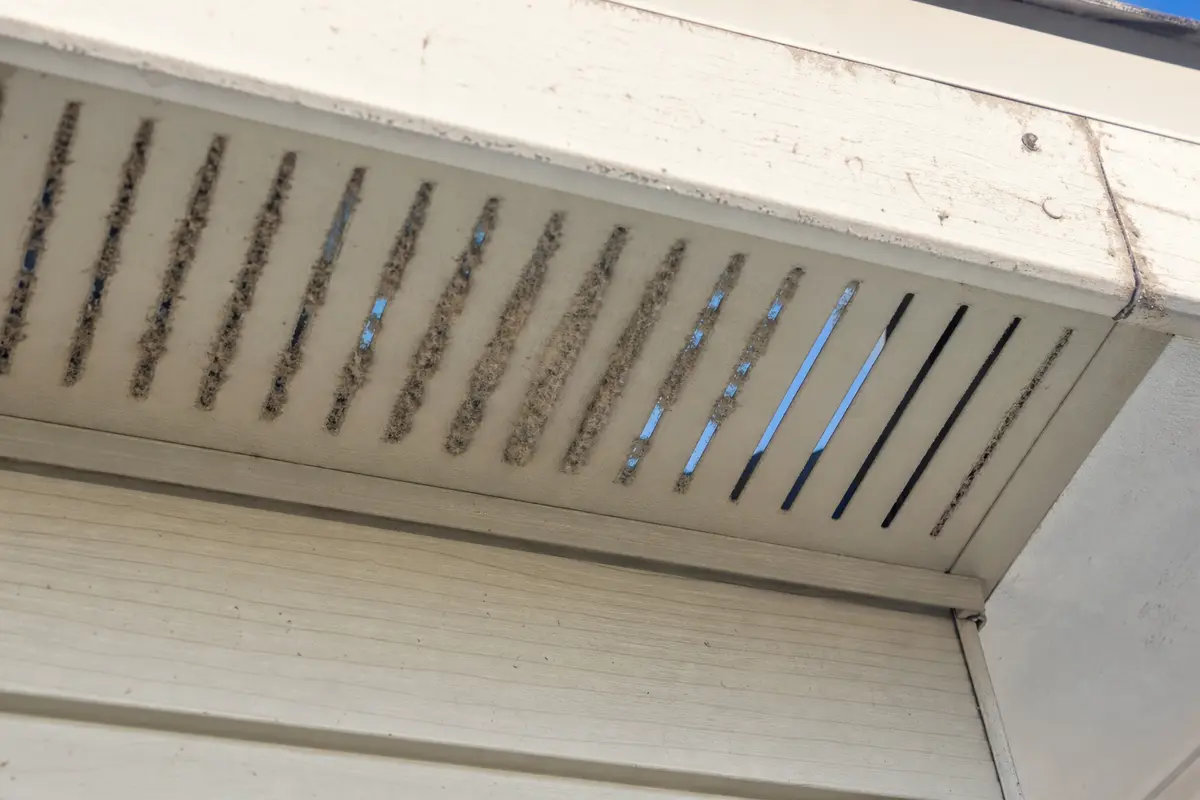
Baffles and soffit covers are cheap enough to buy too early. Match the part to the exact diagnosis: count only the affected bays, confirm the rafter spacing and eave depth, check whether an old baffle failed, and measure any damaged cover before ordering parts. Do not buy roof vents to solve an intake blockage.
Soffit vents are intake. They only help when outside air can enter under the eave and travel above the insulation along the underside of the roof deck.
The repair starts with access, not insulation. If you cannot reach the eave from stable framing, the safest homeowner job is observation and a pro handoff.
A good eave check answers three questions: is the insulation in the intake, is there a baffle, and does the pattern repeat?
| What you find | What it means | Next move |
|---|---|---|
| Insulation is touching the roof deck at the outside wall line | The soffit intake path is blocked in that bay | Pull it back enough to expose the channel, then check whether a baffle is needed |
| No formed chute between the rafters | Insulation can drift back into the opening | Install a baffle in affected bays rather than leaving a loose gap |
| Baffle is folded, crushed, short, or buried | A part is present but not doing the job | Replace or reset the failed baffle and keep insulation out of the side gaps |
| One open bay but neighboring bays are packed | The repair scope is larger than one spot | Check a representative run before buying parts or calling it fixed |
| Attic-side path is open but the exterior cover is dirty or painted | The blockage may be outside | Clean or replace only the covers that are actually restricting intake |
| Wet stain is isolated to one roof area after rain | A leak can mimic a ventilation symptom | Stop the soffit repair path and inspect roof, flashing, and penetrations |
The goal is a clear air path above the insulation, not a bare strip over the ceiling. Keep thermal coverage over the top plate while leaving the soffit intake open.
A clean attic-side channel still needs open intake slots outside. This is the check that prevents buying baffles for a vent-cover problem.
Most bad repairs skip the diagnosis and change the ventilation system before the intake path is actually known.
Use these tools to inspect from stable framing and reposition light insulation. Wear gloves and eye protection. For mold cleanup, roof leakage, tight access, or ventilation redesign, stop and call a pro.
Paid links. As an Amazon Associate I earn from qualifying purchases. Repair Riot may earn a commission at no extra cost to you.
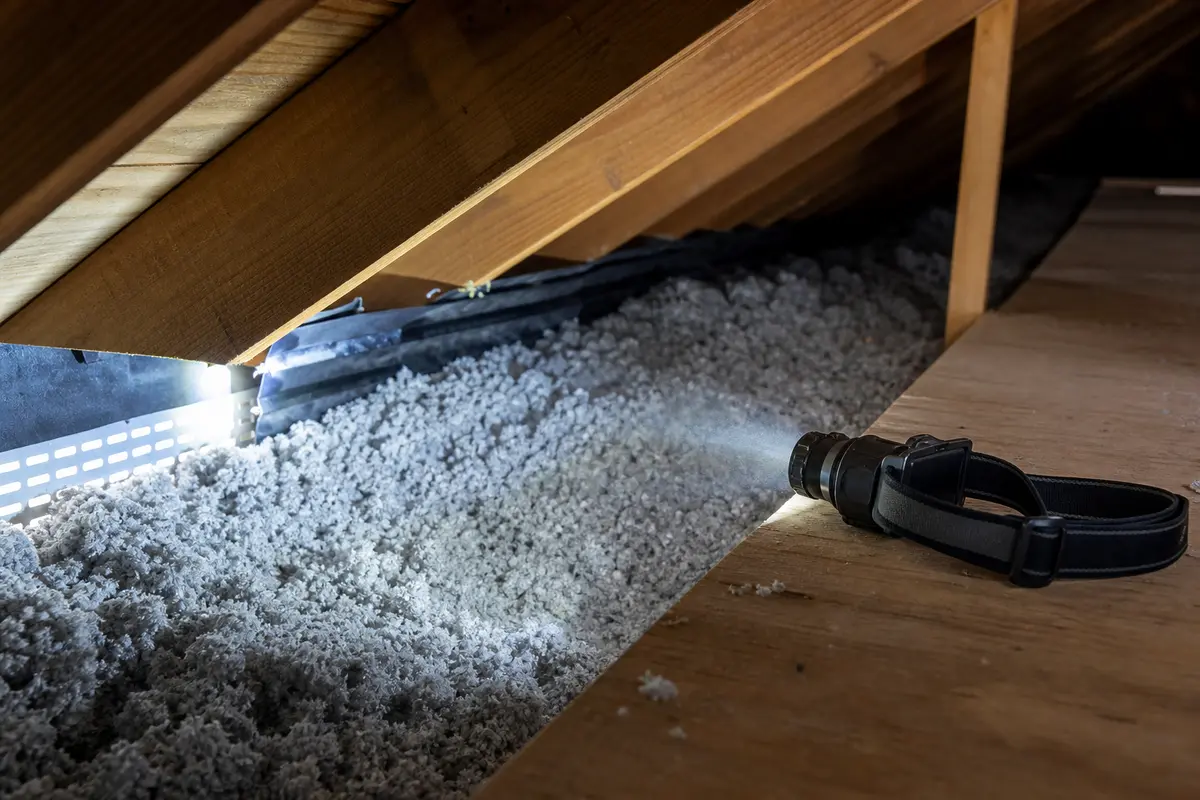
Helps when: You need both hands free and enough light to see the roof edge, baffle shape, and wet or dusty clues.
Skip it when: The attic is too tight or unsafe to access from stable framing.
Compare headlamps on Amazon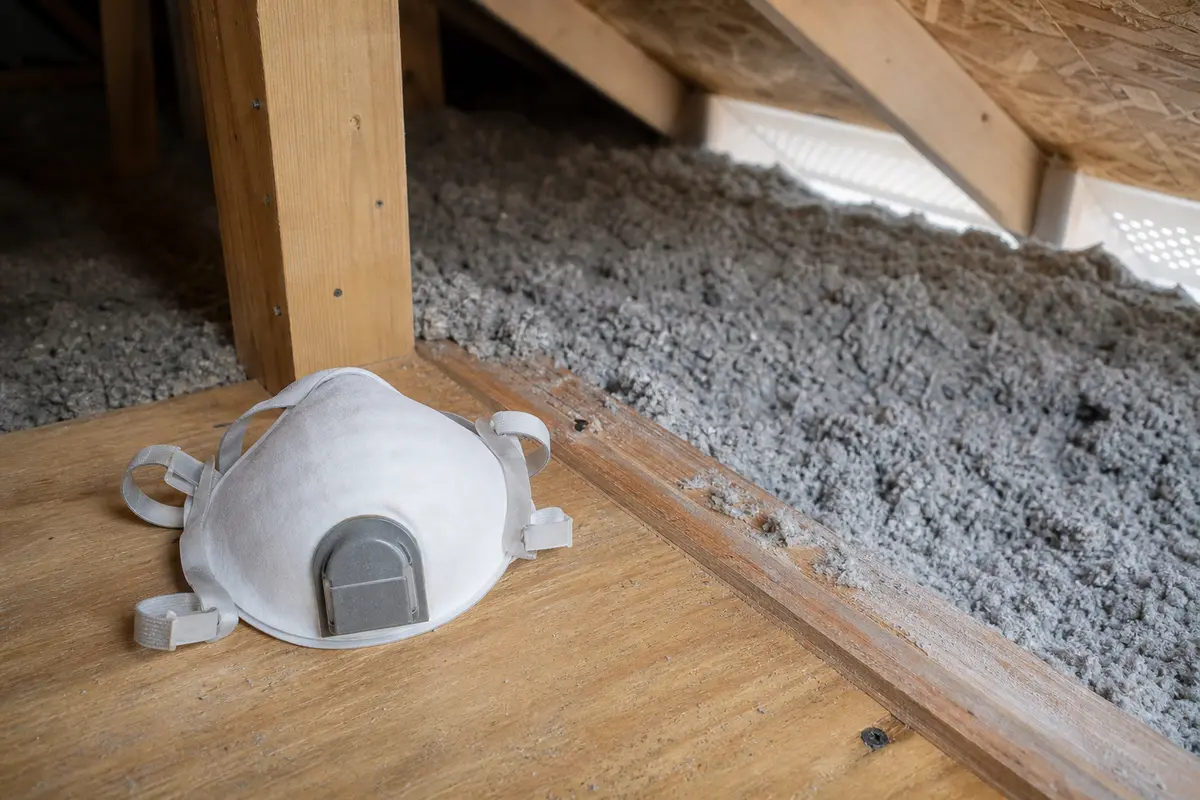
Helps when: Use it before disturbing loose-fill or fiberglass insulation in dusty attic air.
Skip it when: There is widespread mold-like growth, animal contamination, or wet insulation that needs containment; stop and call a pro for that cleanup.
Compare respirators on Amazon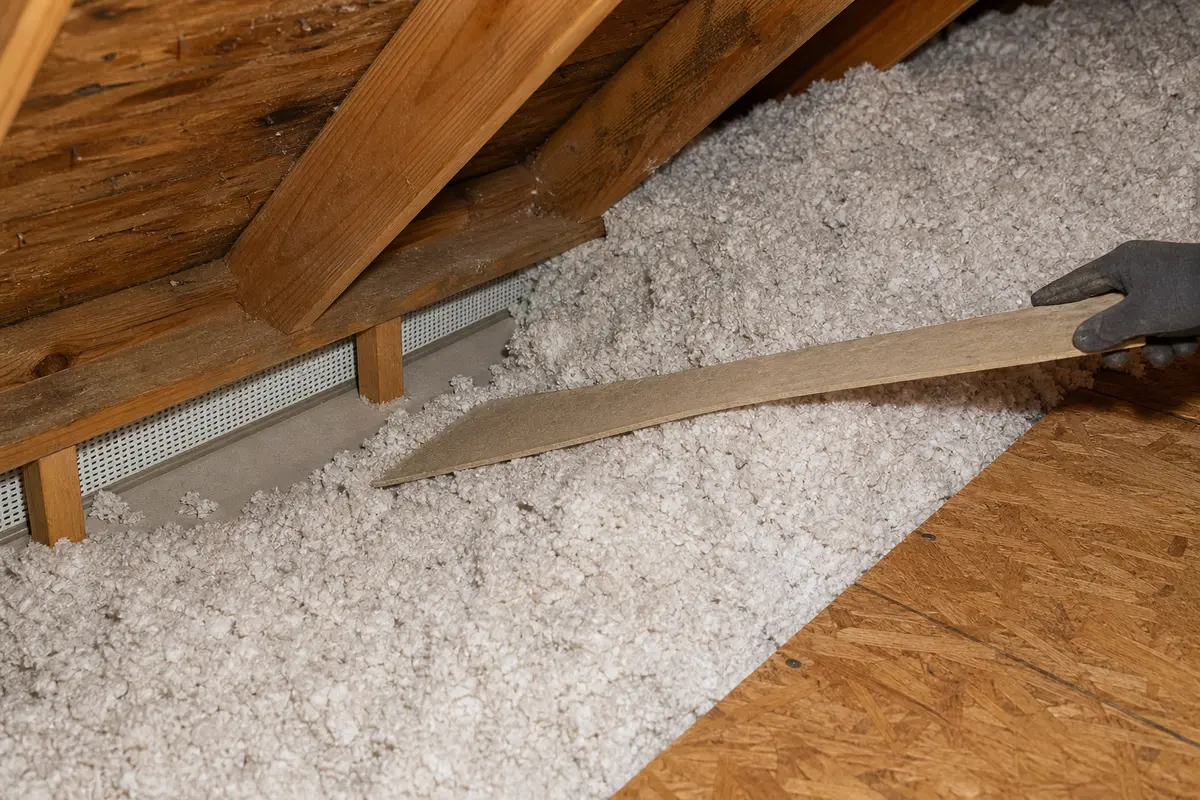
Helps when: Use a light tool to pull insulation back from the eave without digging into the ceiling below.
Skip it when: You cannot see what is under the insulation or the area may contain wiring, pests, or wet material.
Compare insulation rakes on AmazonBuy parts only after the checks point to them. Use baffles when insulation closes the eave bay after you open it. Replace soffit covers when the outside slots are blocked or damaged. Neither part fixes a roof leak, a bath fan dumping into the attic, or a poor exhaust layout by itself.
Paid links. As an Amazon Associate I earn from qualifying purchases. Repair Riot may earn a commission at no extra cost to you.
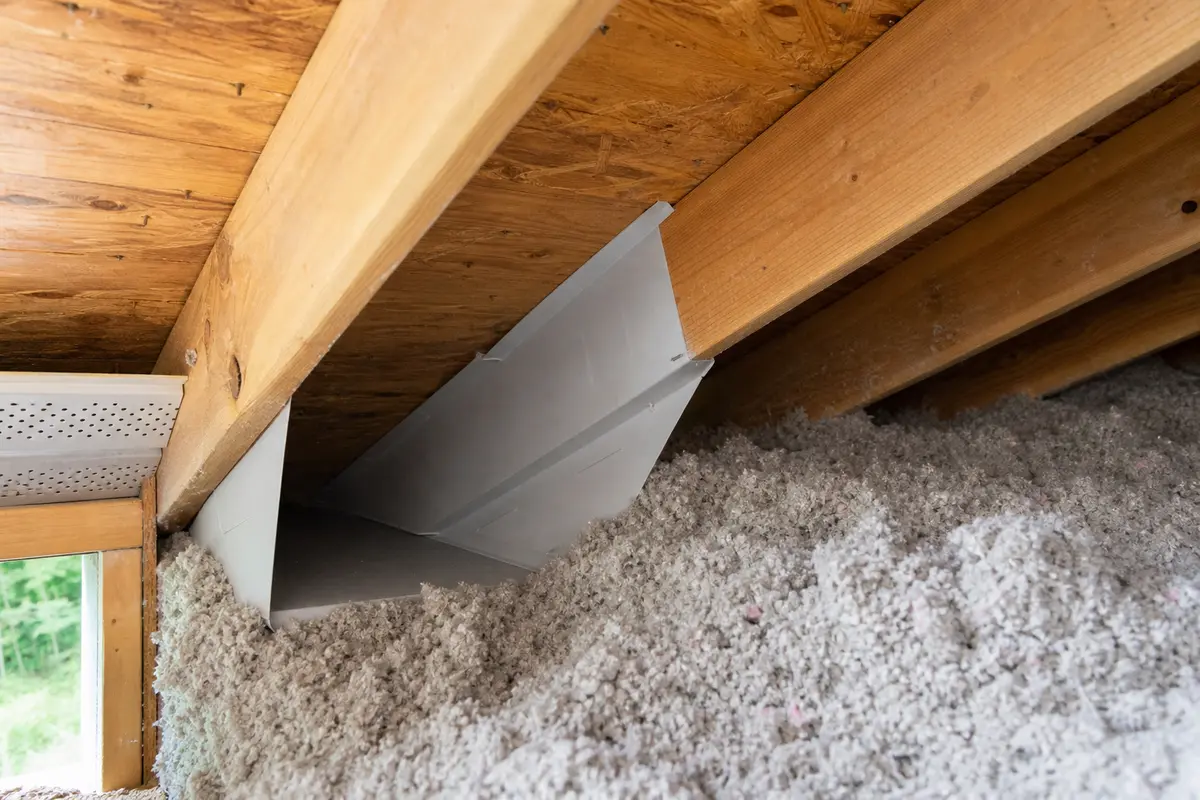
Helps when: Buy baffles when insulation blocks the eave and no intact chute is holding a clear path along the roof deck. Match width, depth, and fastening style to the rafter bay.
Skip it when: The attic-side channel is already open or the real problem is a clogged exterior soffit cover.
Compare attic baffles on Amazon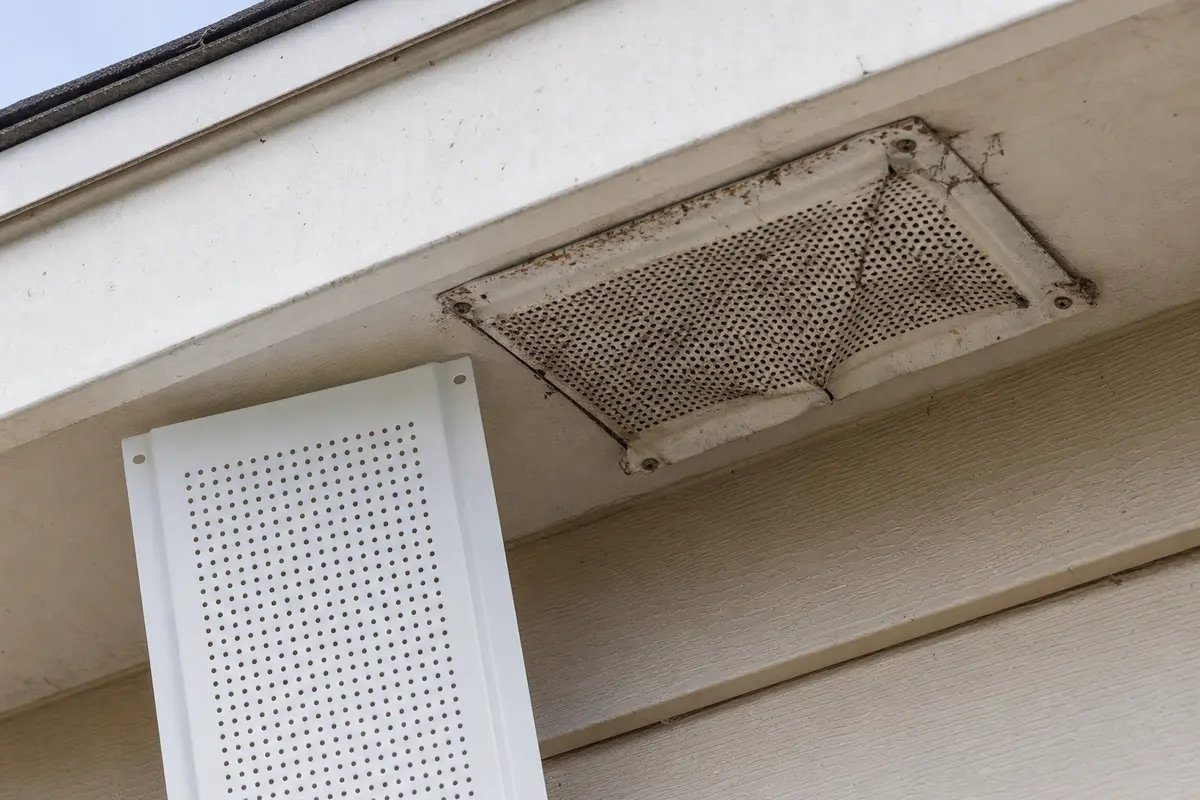
Helps when: Replace the cover when the attic-side path is open but the exterior cover is crushed, broken, painted shut, or too clogged to clean. Match the size, material, and mounting style.
Skip it when: The cover is open and intact; keep diagnosing the attic-side channel or moisture source.
Compare soffit vent covers on AmazonYes. When intake air is choked off at the eaves, the attic can trap warm moist air and the roof deck can collect frost or condensation, especially in cold weather.
Usually no. Fix the intake first. Look for a clear channel above the insulation and open soffit slots outside. Adding more exhaust vents up high does not help much if outside air cannot enter through the soffits.
Only as a short-term check. In most attics the insulation will drift or get pushed back into the eaves unless attic ventilation baffles hold the channel open.
Blocked intake usually shows up in multiple eave bays. A roof leak is more often one wet spot tied to rain, flashing, or a single roof area. Inspect that roof area before moving insulation.
Then check for an interior blockage at the eaves, missing baffles, bath fan exhaust dumping into the attic, or a separate attic ventilation problem higher up near the ridge.
Not automatically. Put baffles where soffit intake exists and insulation can block the channel. Count the affected bays and match the baffle style to the rafter spacing instead of buying by guesswork.
Yes. A bath fan duct that ends in the attic can wet roof sheathing even when the soffit path is open. Fix that exhaust routing before judging the ventilation repair.
Daylight can be a useful clue that the intake opening exists, but it is not the whole test. You still need a clear channel above the insulation and an exterior cover that is not clogged or painted shut.
Call a pro if reaching the eaves requires unsafe attic movement. Also stop if the roof deck is wet or soft. For widespread mold-like growth, pests, or new vent openings, call a pro.
Repair Riot built this page around visible homeowner checks: inspect blocked eave bays, look for missing or failed baffles, check clogged soffit covers, and compare moisture patterns. It also marks the stop points where unsafe attic access, mold-like growth, roof leakage, or exhaust ducts change the job.