Is the smell strongest right at the drain opening?
Clean the basket strainer, underside of the sink flange, and upper drain first. Do not replace the trap unless the cabinet clue points there.
A sewer smell at one kitchen sink usually starts at the drain opening, the P-trap seal, a dirty slow drain, or venting that disturbs the trap. Check where the odor is strongest before running water: drain opening, sink cabinet, or the room around the sink.
Most kitchen sink odor is local: grime at the strainer, a dirty or leaking trap joint, or water sitting in the nearby drain run.
Start cold, before running water or cleaner. Smell at the drain opening, then inside the cabinet near the P-trap. A sharp cabinet odor usually means a joint, washer, or trap seal deserves the first look.
Don’t start with: Do not start with chemical drain cleaner or a parts cart. First place the smell: drain opening, inside the cabinet, or the room around the sink. Buy parts only after that check points to grime, a trap joint, or another visible failure.
Clean the basket strainer, underside of the sink flange, and upper drain first. Do not replace the trap unless the cabinet clue points there.
Put a bucket under the trap, dry every joint, run water, and check slip nuts, washers, the tailpiece, and the wall connection.
Treat it like dirty water sitting in the trap or nearby drain run. Watch for slow flow, gurgling, or backup into the other bowl.
Stop sink-level parts shopping if the gurgle or slow drain repeats. The clue has moved toward a drain or vent problem that may need a plumber.
Look for a slow leak, swollen cabinet floor, or mildew source before calling it sewer gas.
Use the sink and cabinet together. The useful clue is whether the smell is strongest at the strainer, at a trap joint, or only when a big slug of water drains.
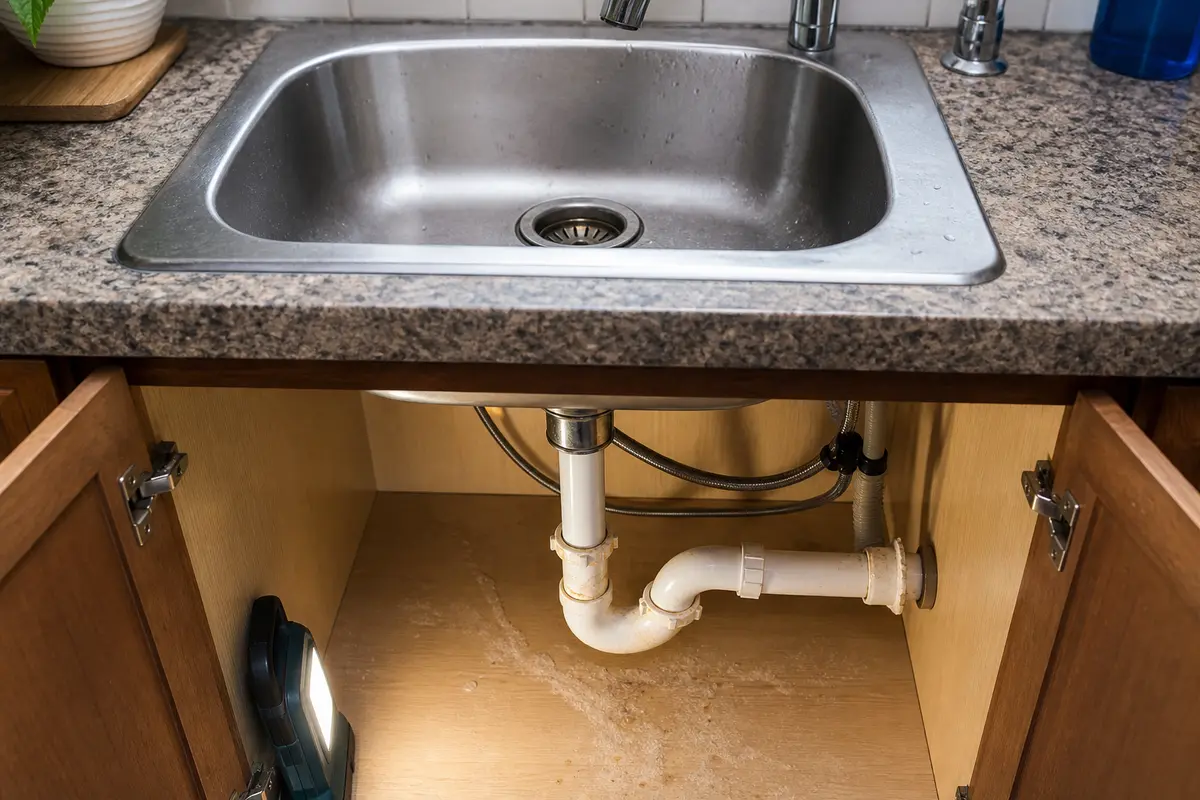
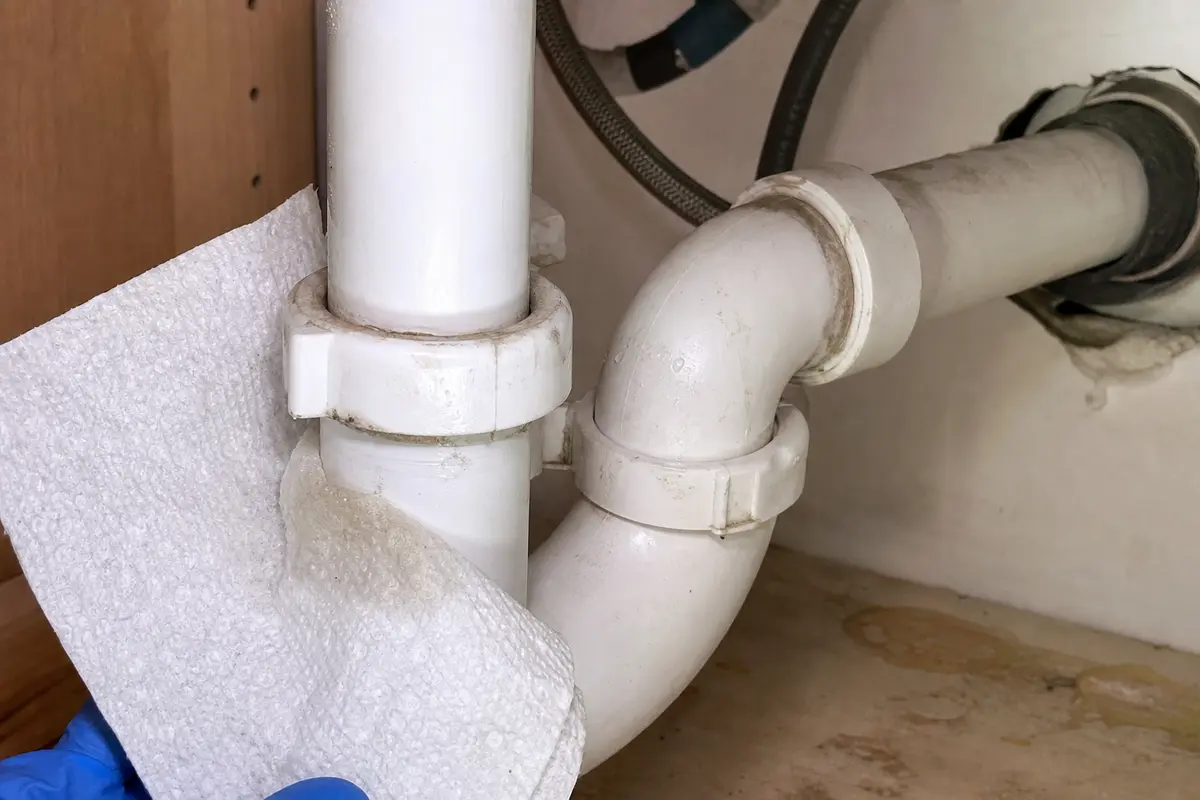
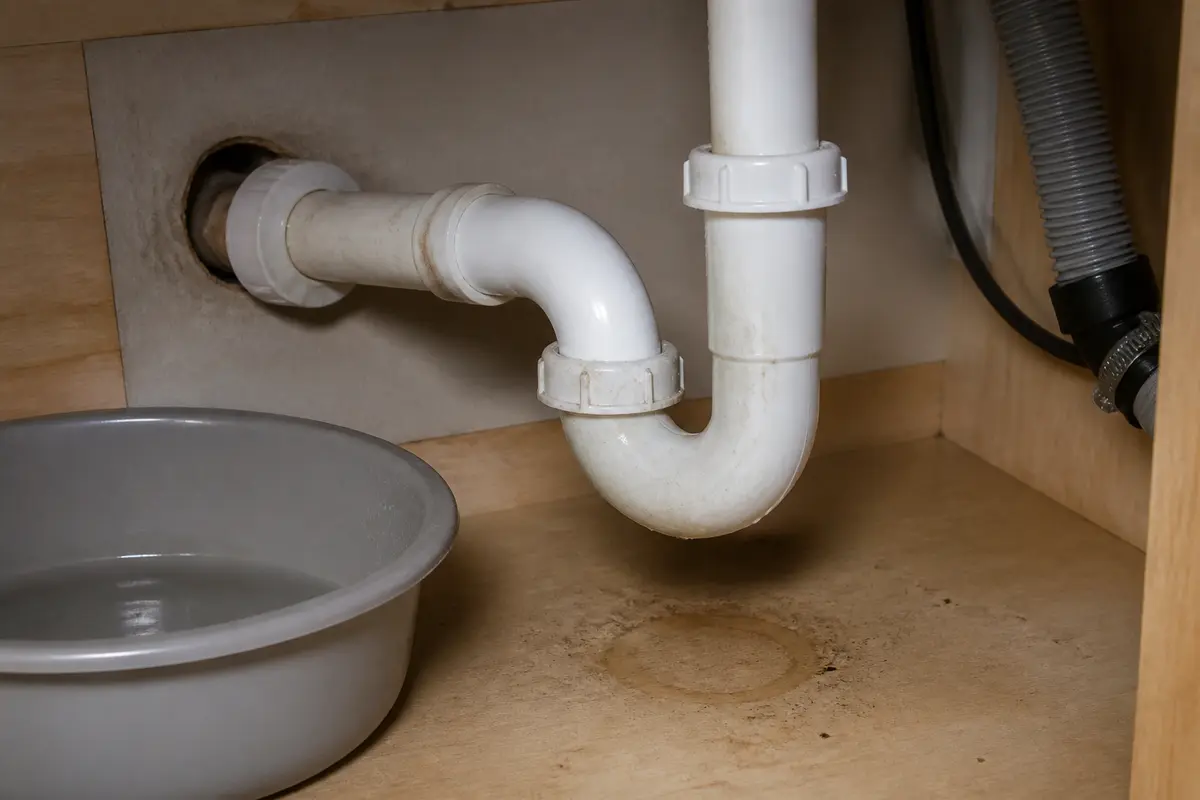
A P-trap kit, tailpiece, basket strainer, or washer pack belongs in the cart only after the smell points to that exact part. Clean the opening first, prove whether the trap leaks air or water, and match replacements to the existing pipe size and slip-joint layout.
A kitchen sink sewer smell is usually an opening problem, a trap-seal problem, or dirty water sitting too close to the sink. Before you run water, check the drain opening, the sink cabinet, and the room so the strongest odor has a location.
Bad shortcuts hide the clue and can make the trap unsafe to open. Keep the first pass clean, visible, and reversible.
Run no water for the first check. Water can rinse the top of the drain, refill a low trap, or temporarily move the odor so the source gets harder to find.
A sink can drain and still be partly clogged. Fill the basin partway with hot tap water, open the cabinet, then release the water and watch the bowl, trap, and other bowl if you have a double sink.
| What you see or smell | What it usually means | Next move |
|---|---|---|
| Fast drain, smell only at the opening | Upper drain grime is still the main suspect. | Keep cleaning the strainer, flange, stopper, or disposal throat. |
| Fresh damp ring at a slip joint | A washer, nut, or misaligned trap may be leaking water and odor. | Reseat the joint gently and replace only damaged pieces. |
| Slow drain or backup into the other bowl | Dirty water may be sitting in the trap or nearby drain run. | Clean the trap if you can do it safely, then retest. |
| Gurgle after the basin empties | The trap seal may be getting disturbed by drainage or venting. | Stop replacing visible sink parts if the clue repeats. |
| Other fixtures gurgle or drain slowly | The problem is bigger than one sink assembly. | Call a licensed plumber for drain or vent diagnosis. |
The trap blocks sewer gas only when it holds water and the joints seal. If the cabinet smells sharp but the floor is dry, wipe each joint with a paper towel after running water. Small air leaks often show up as odor before they show up as a puddle.
A clean strainer and sound trap should give a clear improvement. Drain-system behavior means the cabinet parts are no longer the main target.
Parts are reasonable only when the check points to that part. Match the failed piece after you see the clue: a cracked trap bend, a leaking washer, a split tailpiece, or a loose basket strainer. Similar-looking sink drain pieces can seal poorly if the diameter, washer style, or alignment is wrong.
Paid links. As an Amazon Associate I earn from qualifying purchases. Repair Riot may earn a commission at no extra cost to you.
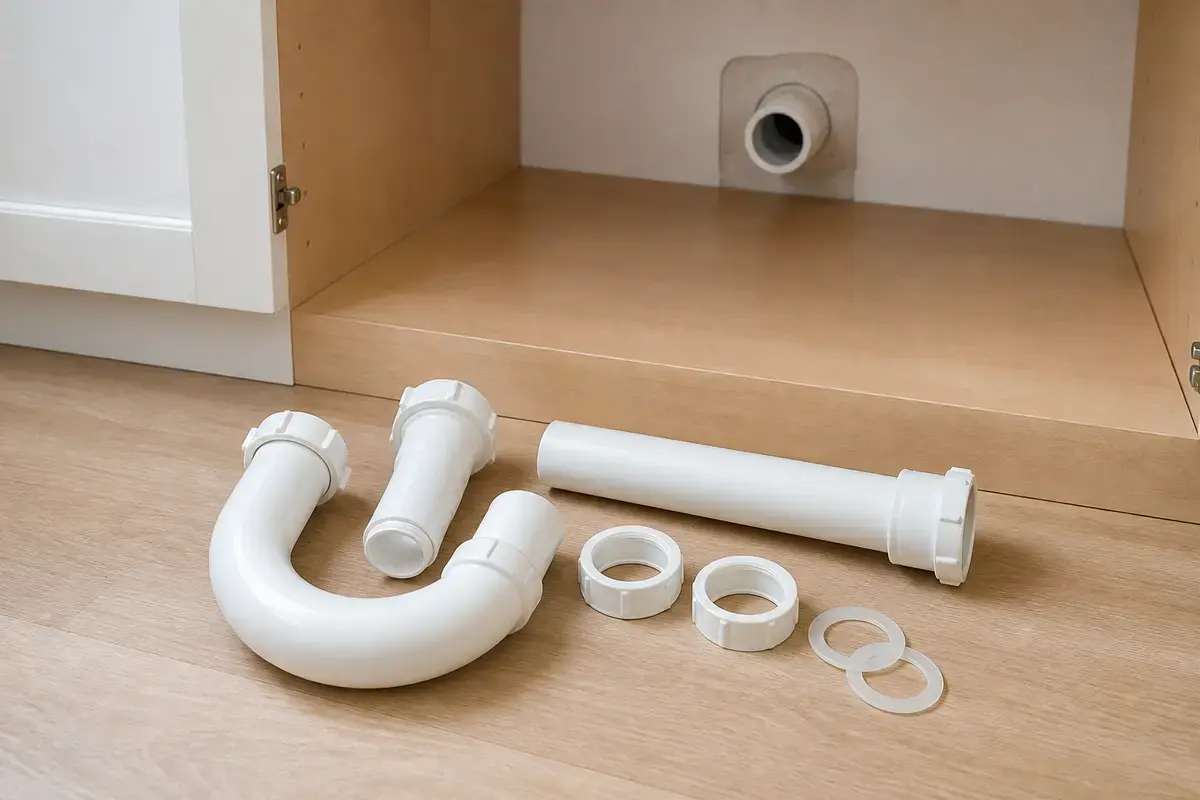
Helps when: Use this only when the trap is cracked, warped, packed beyond cleaning, or still leaks after careful alignment and reassembly.
Skip it when: The smell is strongest at the drain opening, the old trap seals dry, or nearby fixtures are gurgling.
Compare P-trap kits on Amazon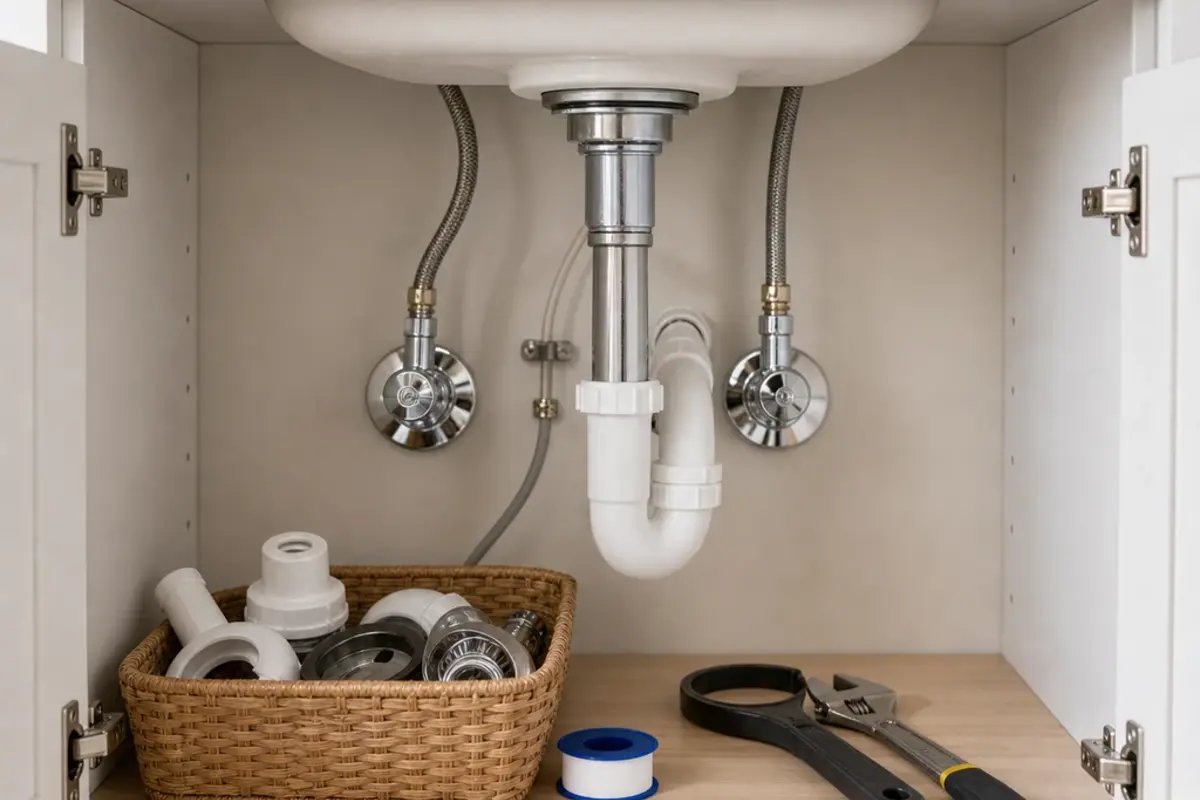
Helps when: Use this when the vertical tube is split, corroded, too short, or damaged where it meets the trap or basket strainer.
Skip it when: The tube is straight, dry, and sealing; odor alone does not make the tailpiece bad.
Compare sink tailpieces on Amazon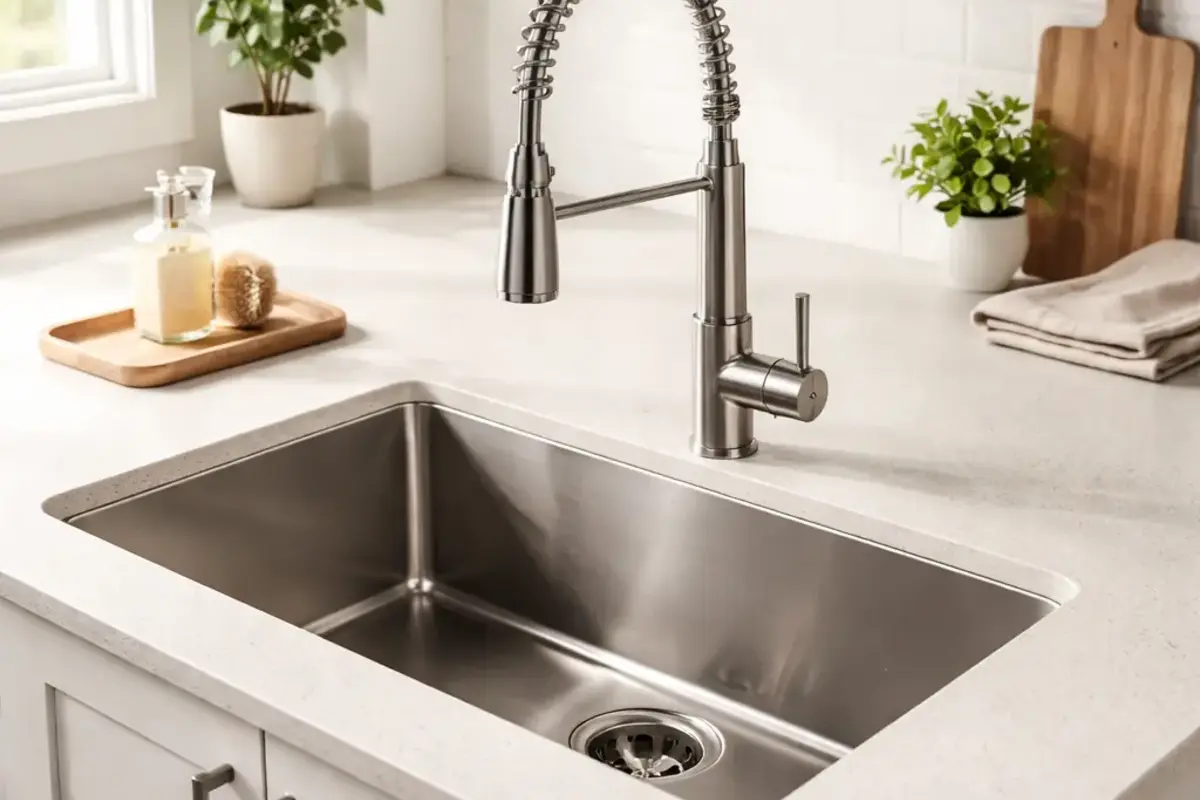
Helps when: Use this when the sink opening hardware is loose, corroded, leaking, or impossible to clean and reseal.
Skip it when: The strainer is only dirty and the cabinet plumbing is dry.
Compare basket strainers on AmazonThat usually points to buildup near the sink opening or a trap joint leaking air, not a full clog. Check the drain, then look inside the cabinet before running water. A sink can drain normally and still smell if slime is rotting near the top of the drain or if the P-trap is not sealing properly.
Yes. The water sitting in the kitchen sink P-trap blocks sewer gas. A trap that dries out, gets siphoned, or leaks has lost that seal, so the smell can come straight into the room or cabinet. Ventilate and stop troubleshooting if the odor is strong, makes anyone feel sick, or could be fuel gas.
That often means dirty water is sitting in the kitchen sink drain branch or trap and gets stirred up by a big discharge. After the dishwasher drains, listen for gurgling and check whether the other bowl backs up. Those clues can also point to venting if the trap seal is being disturbed.
Only as a light follow-up after basic cleaning, and only if the sink is draining normally. It can help with mild organic residue near the top of the drain, but it will not fix a leaking trap, a damaged basket strainer, or a clog farther down the line.
Call when the smell comes with slow drainage, repeated gurgling, multiple affected fixtures, hidden leaks, or a trap and drain setup that is corroded or hard to disassemble safely. If the full-basin test repeats those clues after basic cleaning, the problem is beyond simple sink cleanup.
Yes. A loose slip nut, crooked washer, cracked trap bend, or poor wall connection can let odor out before it leaves an obvious puddle. Dry the joint, run water, and use a paper towel to catch fresh seepage or residue.
Treat it seriously. Ventilate the room, avoid mixing cleaners in the drain, and stop if the odor is strong, anyone feels sick, or you are not sure whether the smell is sewer gas or fuel gas. Check the P-trap area for backup, multiple slow drains, or sewage residue; if you see any of those, leave the sink apart and call a plumber.
A full basin can stir dirty water in the trap or nearby drain run. Gurgling, slow drainage, or backup into the other bowl means clean the trap only when it is safe and stop buying parts until the drain condition is clear.
Repair Riot built this page around visible homeowner clues: odor location, trap seal, slip-joint condition, drain speed, gurgling, backup, and chemical-cleaner safety. The repair sequence is original guidance; the sources below support trap, vent, and drain-care boundaries.