Hot plate, smoke, sparks, crackle, or breaker trip?
Leave the circuit off and stop there. Those clues point toward overheating, arcing, or damaged wiring, not a routine switch swap.
If a light switch smells like burning, stop using it and turn off the breaker you can identify. Compare the wall plate with the fixture or bulb area; warmth or the strongest odor at the plate points to heat in the switch box, not the bulb.
Look for a loose terminal, a worn switch, or a dimmer carrying the wrong lamp load. Those failures can heat the device before the room side looks damaged.
First sort smell location, heat marks, switch type, and fixture load. Burned insulation or uncertain wiring is an electrician handoff.
Don’t start with: Do not flip the switch again to reproduce the smell, and do not loosen the wall plate until power is off and checked.
Leave the circuit off and stop there. Those clues point toward overheating, arcing, or damaged wiring, not a routine switch swap.
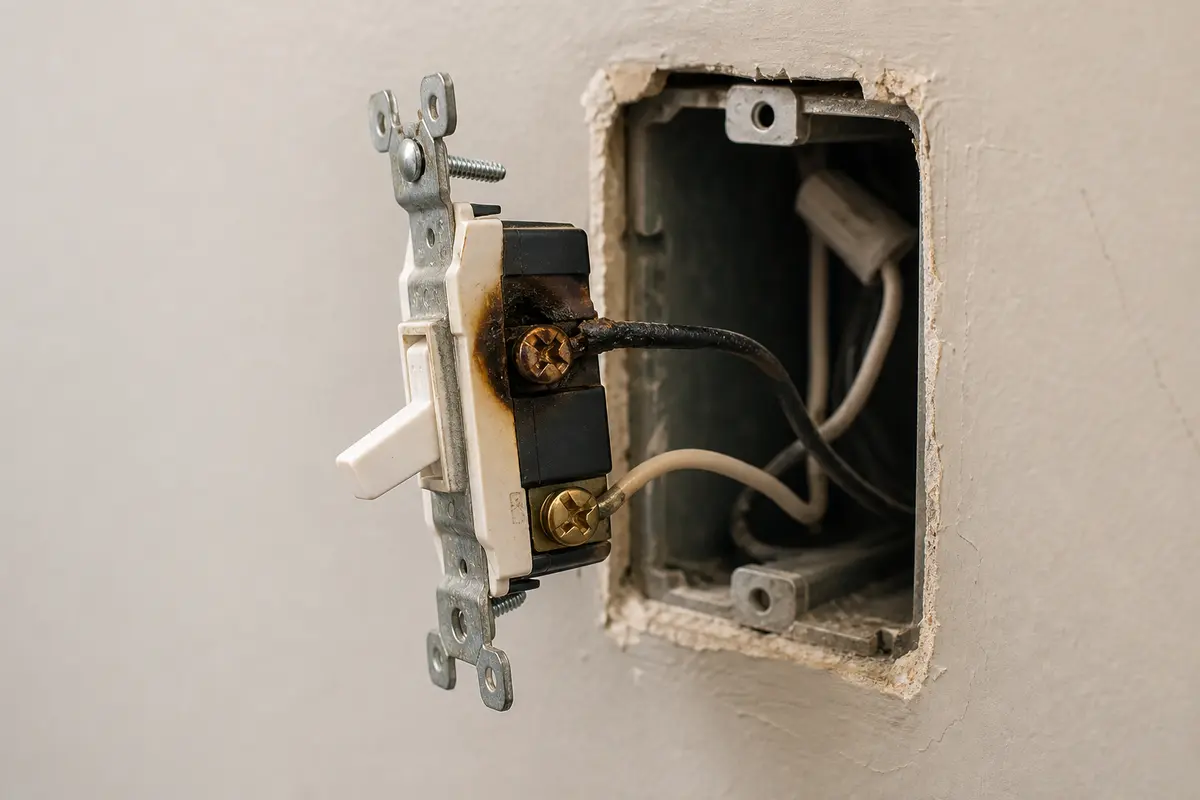
Start with the switch box after power is off. Look for heat marks at the device, terminals, wall plate, and conductors.
Keep the light off and inspect the fixture side first. A wrong bulb, scorched socket, or failing driver can make the switch seem guilty.
Treat load and compatibility as suspects. The dimmer may be overloaded, mismatched to LED bulbs, or failing under normal lighting load.
A like-for-like switch replacement may make sense after power is off, the switch type is clear, and the wiring is sound.
Leave the circuit off. A new like-for-like switch that still smells or warms up points past the switch body, so have a licensed electrician check the load, fixture, wiring, and circuit.
A burning smell at a switch is a shut-it-down problem first. The useful clues are smell location, plate temperature, heat marks, and whether a dimmer or fixture load is involved.
Buy a switch only after the exact smell source, switch type, and damage limit are clear. Match single-pole, 3-way, or dimmer function; match the load rating and bulb compatibility; and skip the cart when insulation, conductors, aluminum wiring, breaker behavior, or source location is uncertain.
A switch that smells hot is usually making heat at a small contact point. The wall may still look normal because the bad spot is behind the plate.
Burning odor is one of the times restraint matters. The goal is to remove power and read the clues, not to make the symptom happen again.
Use room-side clues before anything comes apart. They tell you whether the first stop is the switch box, the fixture, or a licensed electrician.
Each clue points to a different next step. Use the table before disconnecting wires or buying a part.
| What you find | What it usually means | Next step |
|---|---|---|
| Warm or discolored wall plate | Heat is likely at the switch, terminal, splice, or nearby conductor | Leave breaker off and inspect only with power off; call a pro if damage reaches wiring |
| Crackle, buzz, spark, or breaker trip | Possible arcing or loose connection; stop using the circuit | Stop using the circuit and call a licensed electrician |
| Smell appears only on a dimmer | Dimmer overload, bulb mismatch, or failing dimmer is plausible | Match dimmer rating and bulb type before considering replacement |
| Switch area is clean but fixture smells hot | Fixture socket, bulb, driver, or ballast may be overheating | Follow the fixture-side diagnosis instead of buying a switch |
| Plain switch body smells burnt but wiring looks sound | The switch contacts may be worn or heat damaged | Replace like-for-like after power is off and the switch type is clear |
| New matching switch warms up again | The switch was not the whole fault | Leave the circuit off and have the load, fixture, and wiring checked |
Open the box only after the breaker is off and power at the switch has been checked. A short look should decide whether this stays DIY or becomes an electrician job.
Replace the switch only when power is off, the box wiring looks clean, and the damage is limited to the device. Match the old switch function and load, not just the wall opening.
These tools support power-off checks. They do not make damaged wiring, live work, or panel work a homeowner job.
Paid links. As an Amazon Associate I earn from qualifying purchases. Repair Riot may earn a commission at no extra cost to you.
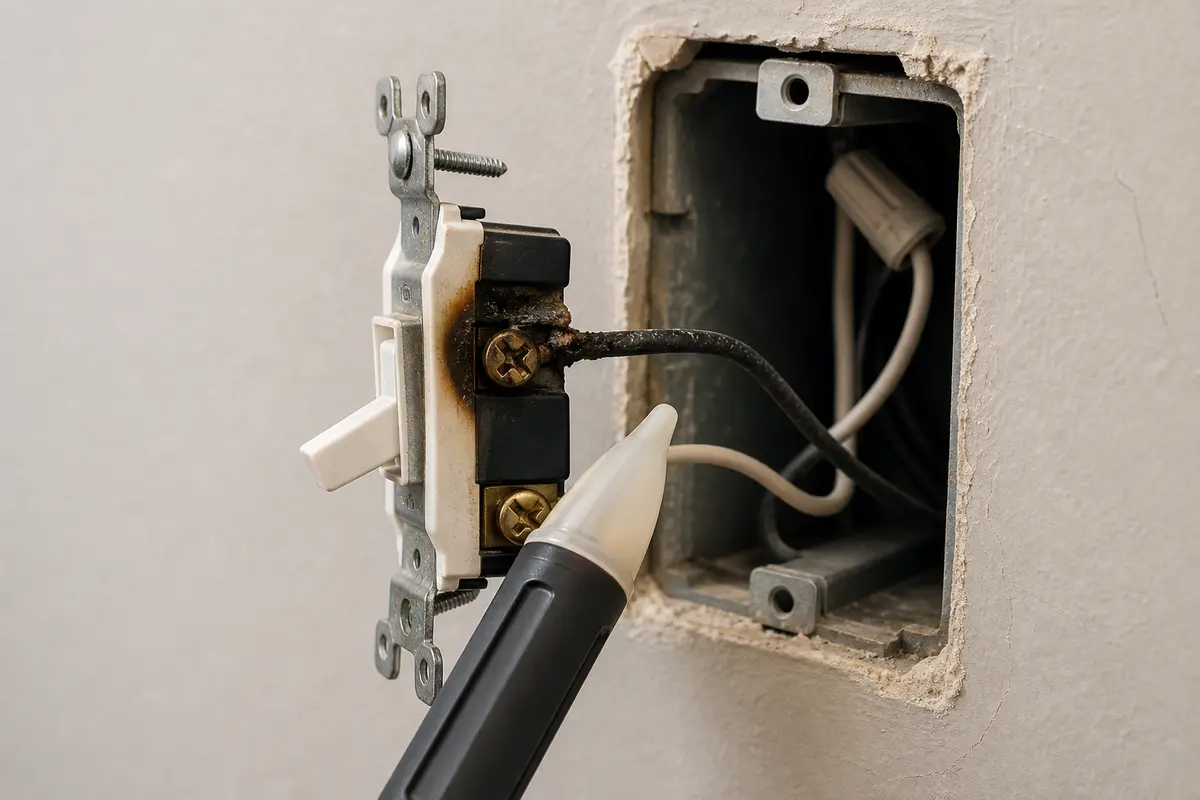
Helps when: Use it as a screening check at the switch box after the breaker is off and before touching the device or terminals.
Skip it when: The plate is hot, the switch sparked, the breaker trips again, or the next step would involve panel diagnosis.
Compare voltage testers on Amazon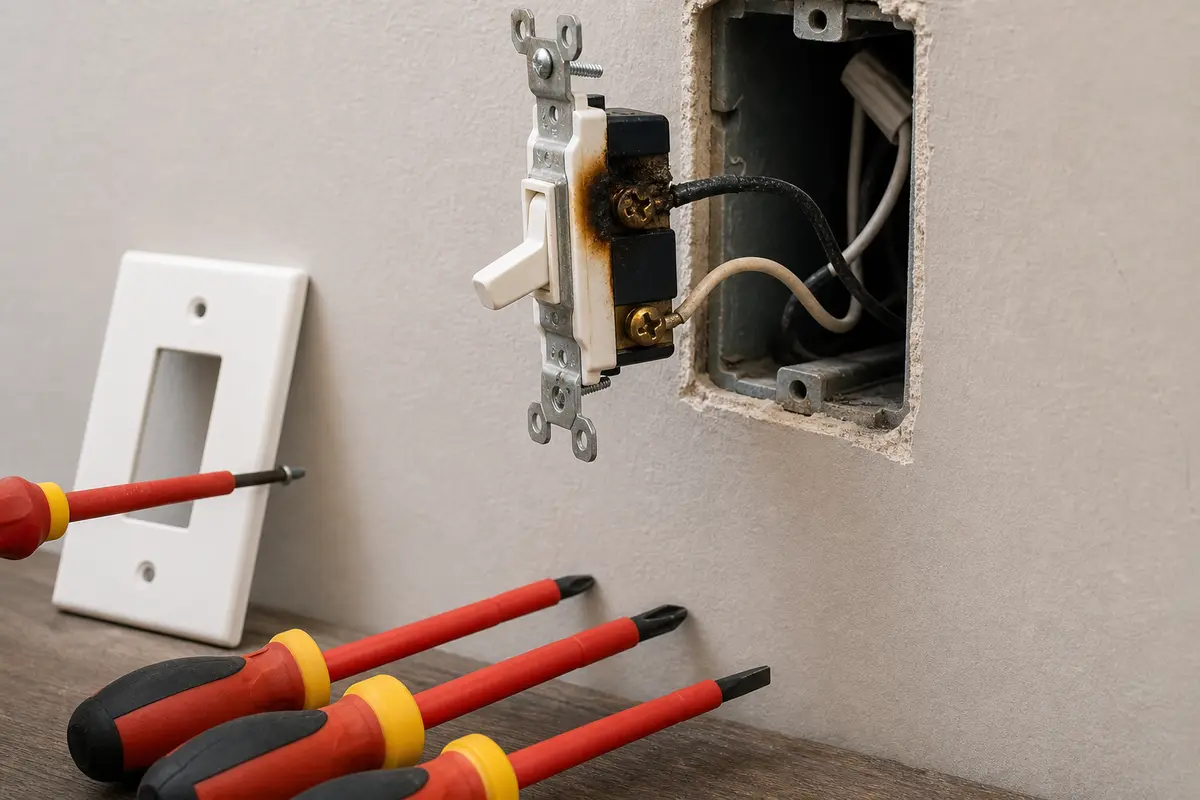
Helps when: Use it to remove the wall plate and switch mounting screws after power is off and the box has been checked.
Skip it when: The switch body, conductor insulation, or box shows scorching, melting, or wiring you cannot identify.
Compare insulated screwdrivers on Amazon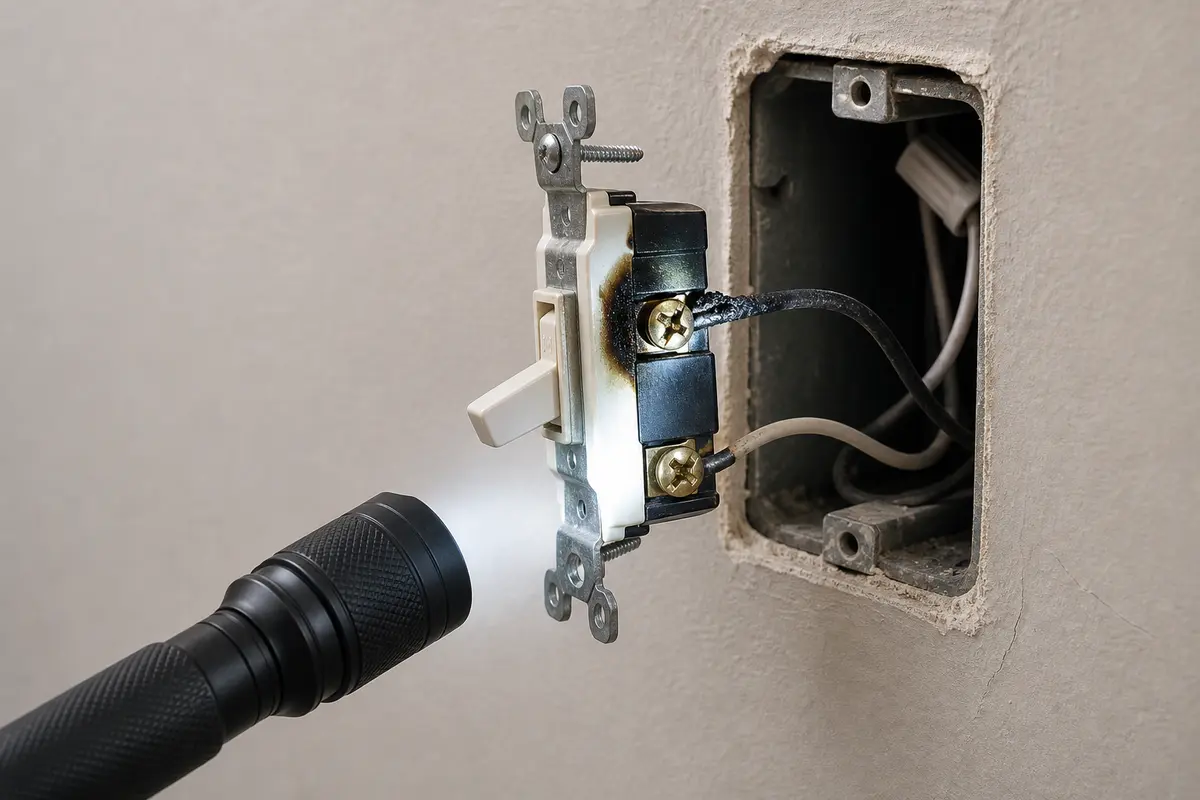
Helps when: Use it to see darkened terminals, brittle insulation, soot, and switch-type markings without moving wires first.
Skip it when: Better lighting still leaves you unsure whether the circuit is off or whether the wiring is safe.
Compare inspection flashlights on AmazonCompare parts only after the exact failure points to a device replacement. Heat-damaged wiring, unclear source location, or a returning smell means no part belongs in the cart yet.
Paid links. As an Amazon Associate I earn from qualifying purchases. Repair Riot may earn a commission at no extra cost to you.
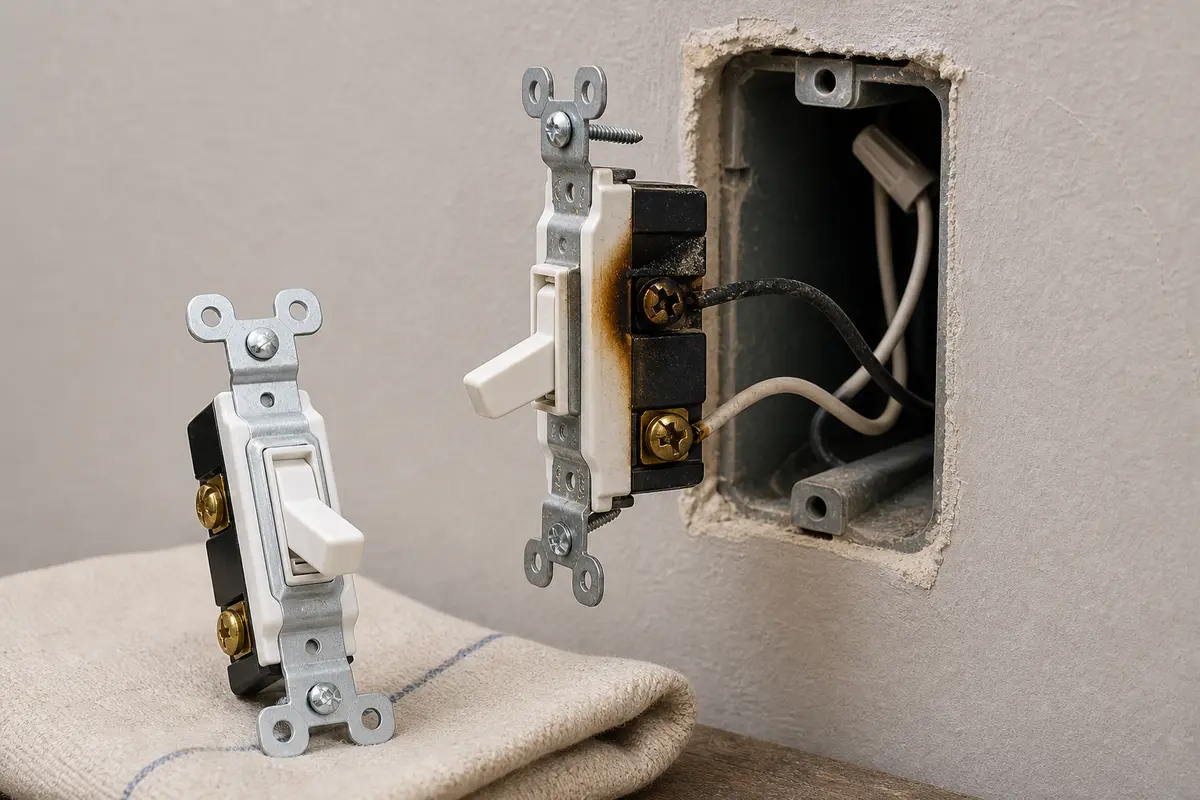
Helps when: One plain switch controls the light, the old switch body smells burnt, and the box wiring looks clean after power is off.
Skip it when: Another switch controls the same light, the device is a dimmer, or any insulation or conductor is heat damaged.
Compare single-pole switches on Amazon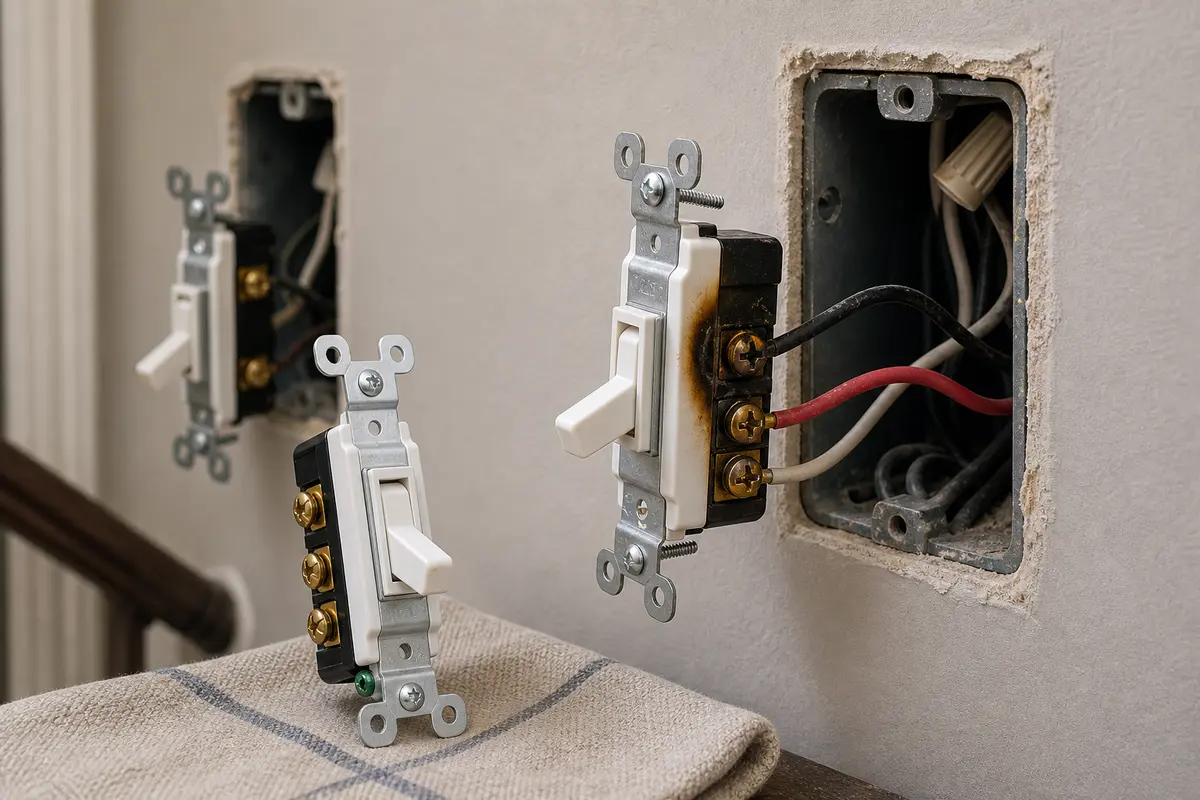
Helps when: The same light is controlled from two wall locations and the burned-smell device is a true 3-way switch.
Skip it when: You cannot identify the common and traveler wires from the old device photo or terminal markings.
Compare 3-way switches on Amazon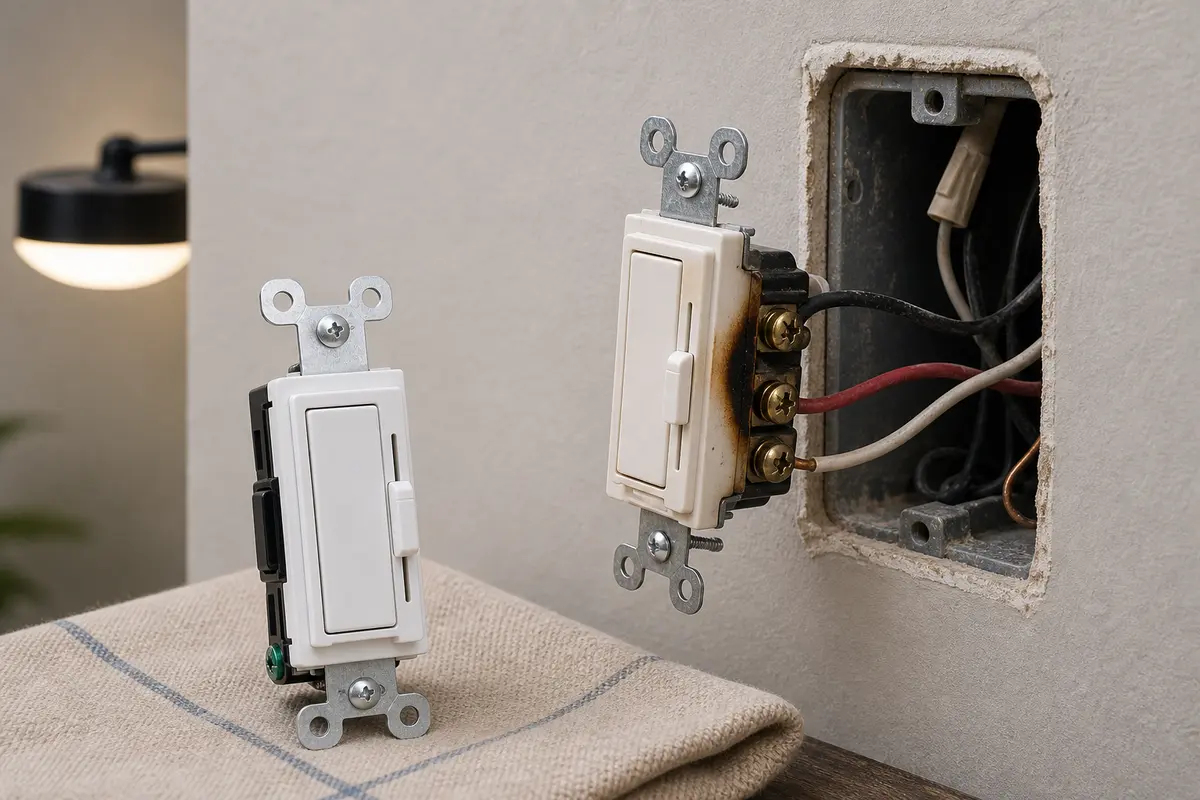
Helps when: The odor is isolated to a dimmer, the lamps and load fit the rating, and no heat damage reaches wiring.
Skip it when: The dimmer smells burnt with visible scorching, unknown wiring, or a fixture load you have not identified.
Compare dimmer switches on Amazon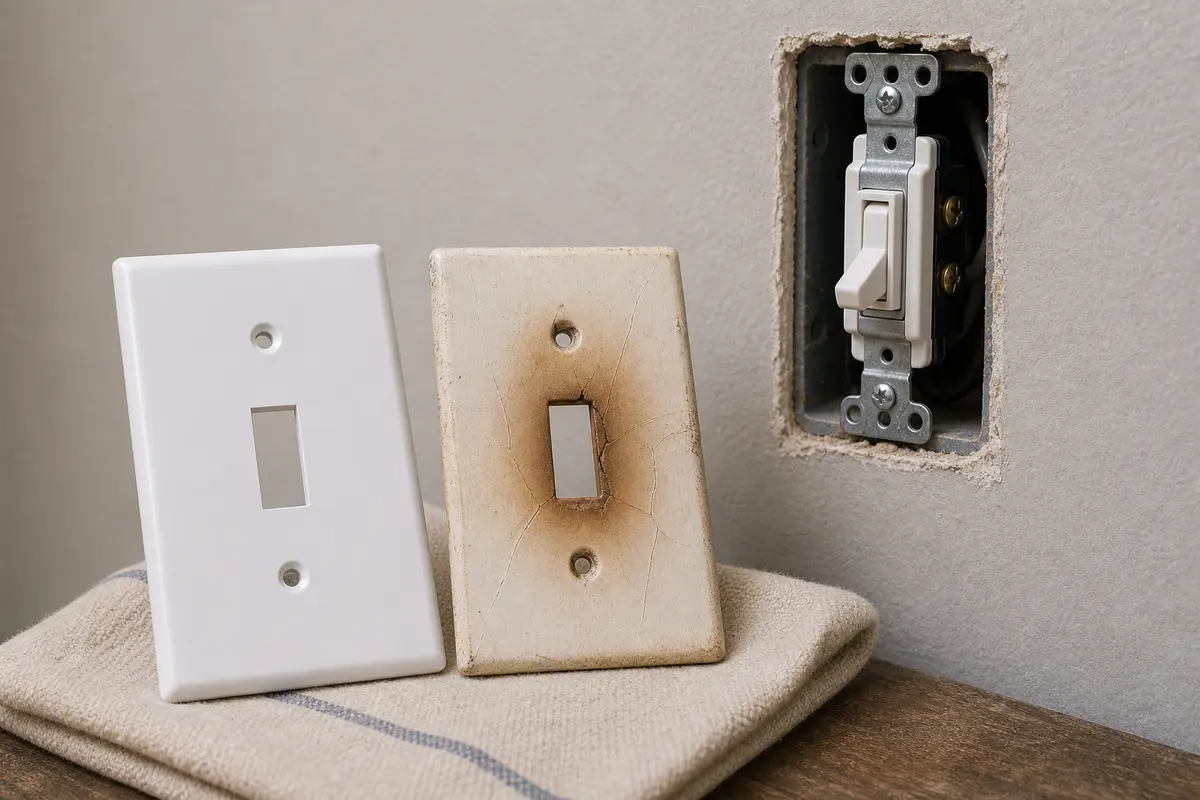
Helps when: The old plate is cracked, warped, or heat-stained after the actual switch or wiring issue has been addressed.
Skip it when: You are using a new plate to cover scorch marks from a switch or conductor that still needs repair.
Compare wall plates on AmazonYes. That is common with loose connections and worn internal contacts. The switch may still turn the light on while overheating behind the plate.
A slight warmth can be normal on some dimmers, but a burning or fishy smell is not. If a dimmer smells hot, treat it as overloaded, incompatible, or failing.
A fishy smell is a heat clue for electrical plastic, including insulation or device material. Stop using the switch, turn the breaker off if you can identify it, and compare the wall plate with the fixture before opening anything.
Not if the smell is strongest at the wall switch. Shut the circuit off and inspect the switch side first. A bad bulb or fixture can cause heat too, but you want to separate those locations before buying anything.
No. A burning smell that fades can still leave heat-damaged plastic, loose terminals, or pitted contacts behind the plate. Leave the circuit off until the switch box or fixture source is checked.
If the switch body smells burnt, looks warped, or has a melted edge, do not reuse it. After power is off, check that the wiring is sound; then use a like-for-like replacement instead of tightening wires on a heat-damaged switch.
Leave the breaker off and call a licensed electrician. If a like-for-like replacement still smells or warms up, the next check is beyond the switch body: load, fixture, wiring, or a connection on the circuit.
Call one if you see scorched wiring, melted insulation, repeated heating after switch replacement, breaker trouble, aluminum wiring, or any setup you cannot identify confidently.
Repair Riot built this page around homeowner-safe clues: smell location, plate warmth, discoloration, breaker behavior, switch type, fixture load, and the point where damaged wiring belongs to a licensed electrician.