Any heat, odor, noise, sparks, discoloration, melting, looseness, or breaker trip?
Leave the breaker off and call an electrician. These signs outweigh the cosmetic appearance.
Turn off the breaker before touching the outlet. If only the thin wall plate is cracked, you may need a matching new plate. If the thicker plastic around the plug slots is cracked, leave the power off and call an electrician.
Look closely at where the crack ends: the removable wall plate is cosmetic, but the outlet body itself is an electrical device.
Heat, a burnt smell, buzzing, sparks, discoloration, a loose outlet, or a tripped breaker are warning signs. If you notice any of them, keep the circuit off.
Don’t start with: Do not plug anything in to test it, press on the crack, or try to patch it with tape or glue.
Leave the breaker off and call an electrician. These signs outweigh the cosmetic appearance.
With the breaker off, inspect from the front. If the receptacle body is intact, solid, and undamaged, a matching faceplate may be the only part needed.
The device body is damaged. Do not use it or install a generic replacement; leave power off for an electrician.
Record the exact configuration and rating. Do not substitute a standard duplex device.
Where the crack ends tells you what is damaged. Keep the breaker off while you compare the wall plate with the outlet body.
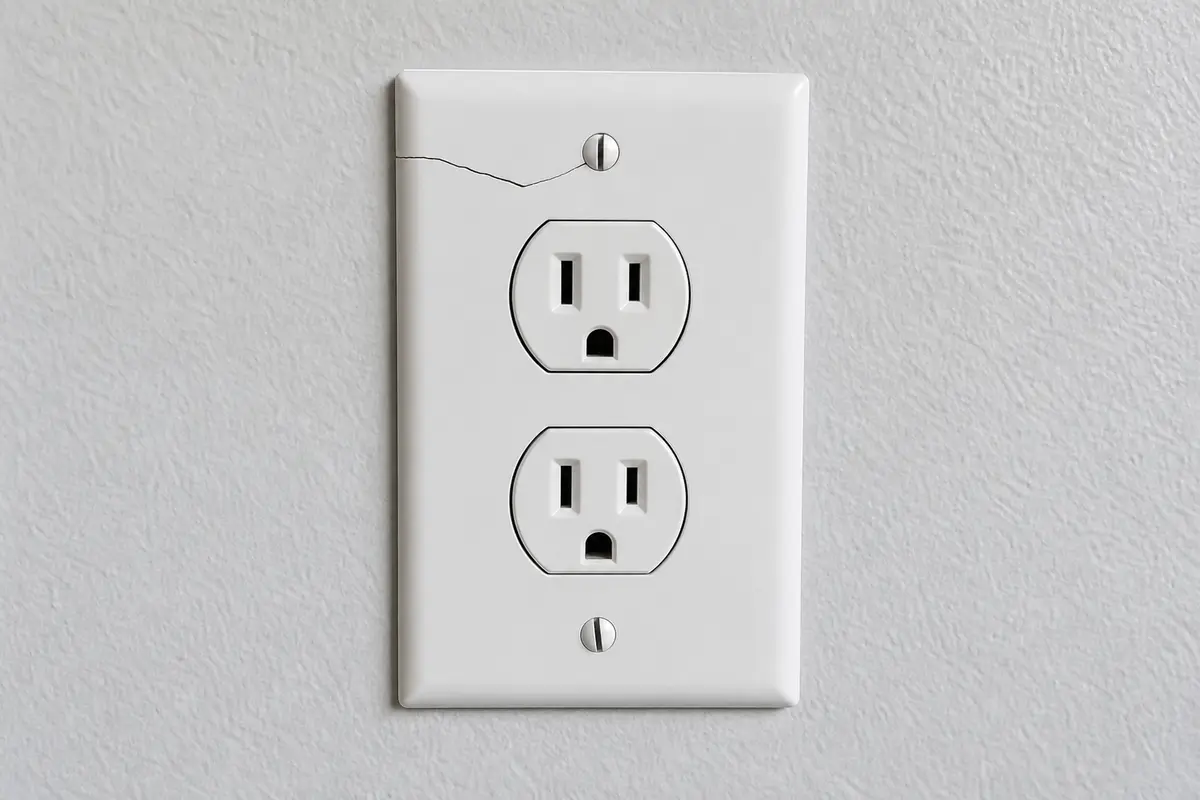
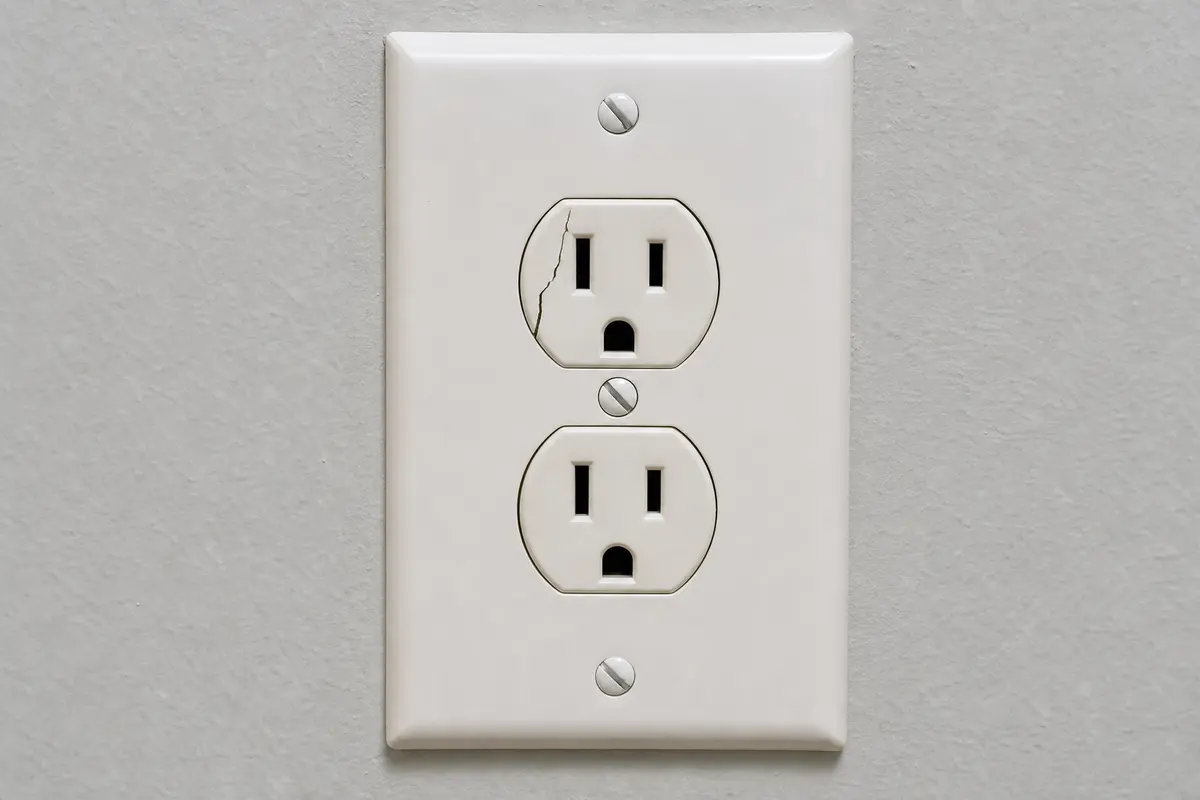
First identify which piece is cracked. For a plate-only repair, match the opening, screw position, and device style exactly. If the outlet body is damaged, do not choose a replacement by appearance; an electrician must match its rating, grounding, GFCI or tamper-resistant features, switched or split setup, and location requirements.
Do not use the outlet to find out how serious the damage is.
Switch off the breaker even if the crack appears to be only in the wall plate.
The wall plate is the thin removable cover. The outlet body is the thicker plastic piece with the plug slots.
This is a plate-only repair only when the crack stops at the edge or screw hole and does not continue into the outlet.
If the thicker plastic around a plug slot or the center of the outlet is cracked, do not patch or keep using it.
You can choose a matching wall plate when only the plate is cracked. Let an electrician choose the outlet itself if the device is damaged.
Paid links. As an Amazon Associate I earn from qualifying purchases. Repair Riot may earn a commission at no extra cost to you.
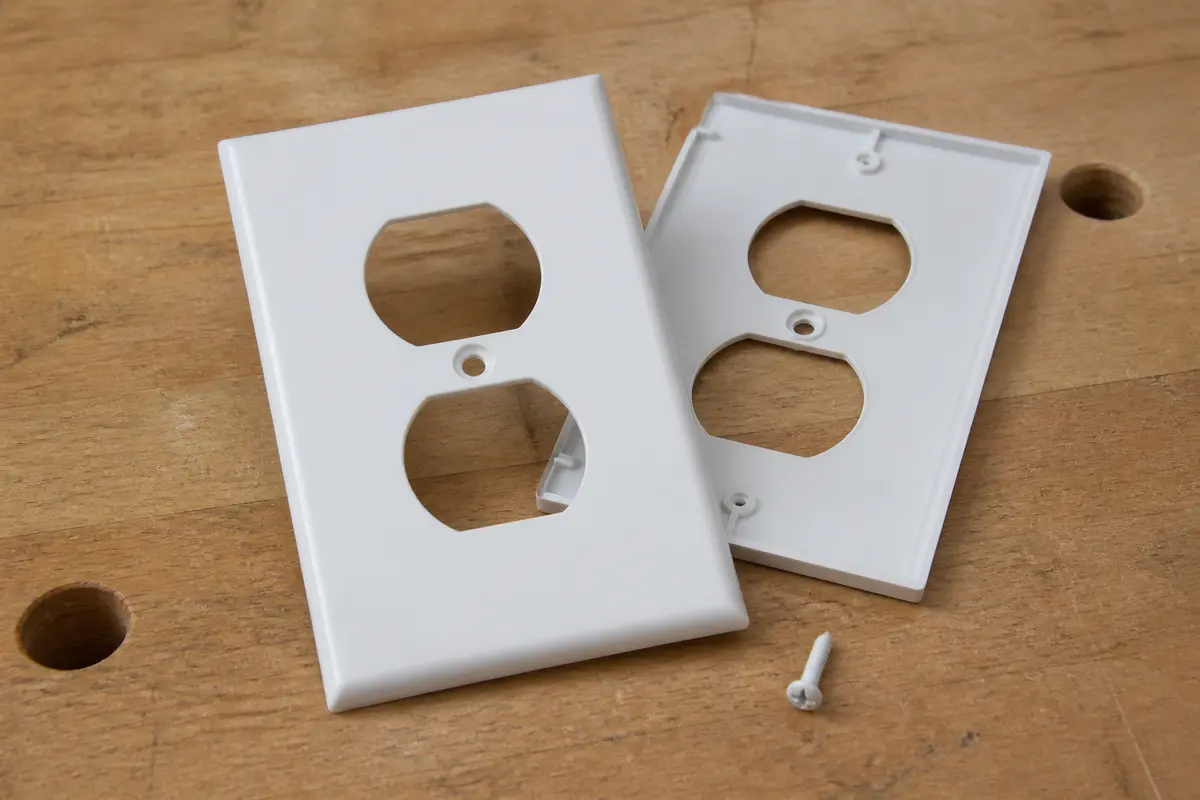
Helps when: Circuit power is off and the crack is confined to the removable plate; the receptacle and box are solid and undamaged.
Skip it when: Skip when the crack reaches the receptacle, the device moves, or any heat, odor, noise, discoloration, or plug-grip problem exists.
Find matching duplex outlet faceplates on Amazon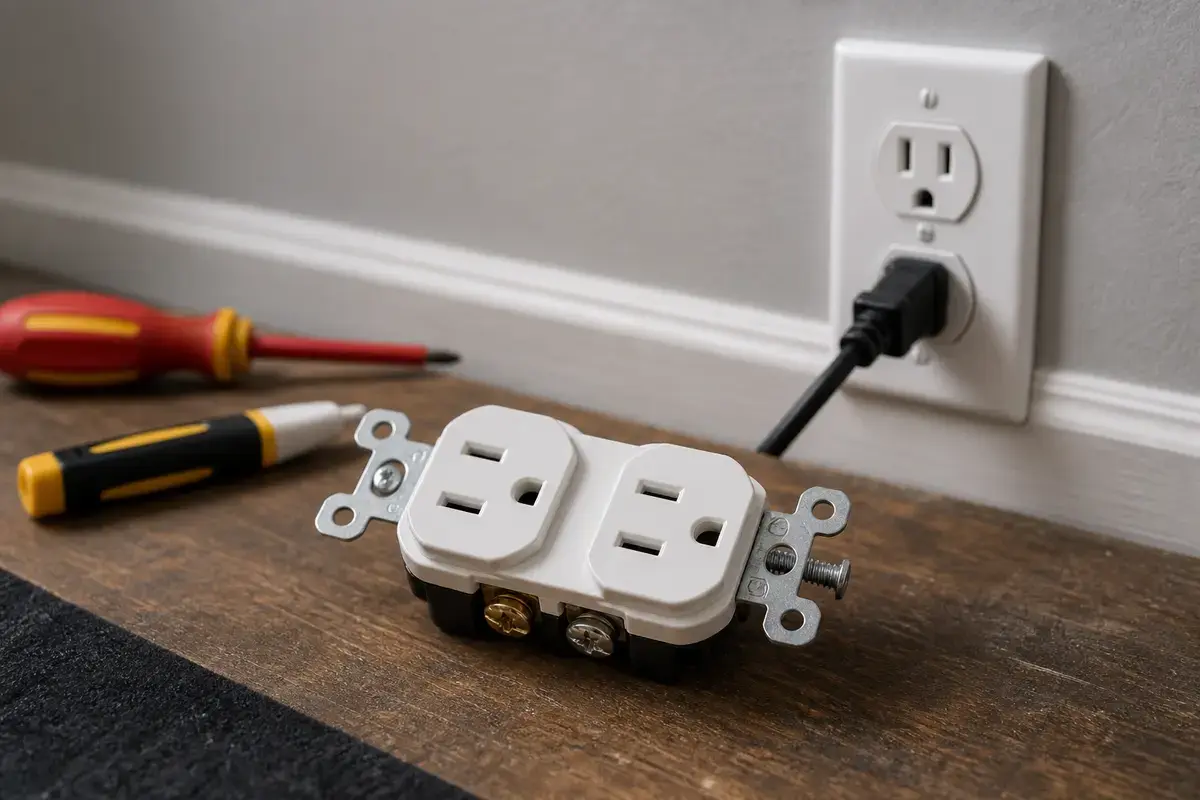
Helps when: An electrician confirms device failure and identifies the exact rating, configuration, features, and location requirements.
Skip it when: Skip generic substitution for switched, split, GFCI, tamper-resistant, USB, specialty, weather-exposed, or heat-damaged installations.
Compare exact-configured receptacles on AmazonA cracked outlet faceplate is usually a minor repair, but a cracked outlet body is a real safety issue. If the crack is in the receptacle itself, or you see heat marks, looseness, or sparking, stop using it and repair it with the breaker off.
Do not use it until the breaker is off and the damage is confirmed as plate-only. A plate-only crack may need a matching faceplate, but any device damage, looseness, heat, odor, noise, or discoloration needs an electrician.
The faceplate is the thin removable cover on top. The outlet body is the thicker plastic around the plug slots behind that cover. If the split is around the slots or center body, the outlet itself is damaged.
Sometimes it did not crack on its own. Old brittle plastic, a plug yanked sideways, furniture impact, a loose outlet rocking in the box, or heat from a poor connection can all crack the plastic over time.
Do not choose by appearance alone. Rating, tamper resistance, GFCI protection, switched or split configuration, USB or specialty functions, location, box, wiring, and circuit requirements all matter. An electrician should identify the exact device.
Do not guess at the wiring. A half-hot outlet is wired differently from a standard always-on outlet. If you are not comfortable identifying that setup, leave the breaker off and have it repaired correctly.
No. Tape, glue, filler, and caulk do not restore the device's insulating structure and can hide heat or movement. Leave the breaker off and replace the confirmed damaged component.
Yes. Turn the correct breaker off before the plate is removed or the assembly is inspected. Stop if circuit identification or de-energization is uncertain.
Device damage, loose plug grip, heat, arcing, odor, and discoloration are replacement or service clues—not reasons to test the outlet under load.