Does the spray-gun trigger feel hard?
Bleed pressure at the gun first. A hard trigger and stiff hose are good clues that the pump is still loaded.
If the pressure washer pull cord is stuck, stop pulling harder. Bleed pump pressure at the gun, then check for hydro-lock before opening the recoil starter.
The first split is simple: a stiff hose points to trapped pressure, while a dead-stop rope after bleeding pressure points to liquid lock, recoil trouble, or engine drag.
Use short pulls only after the hose is unloaded and the spark plug wire is off.
Don’t start with: Do not yank harder, pry the flywheel, or open the recoil spring first. A stuck rope needs unloading and sorting before force.
Bleed pressure at the gun first. A hard trigger and stiff hose are good clues that the pump is still loaded.
The engine and recoil probably were not the problem. Reconnect only after the hose unloads and the rope pulls smoothly.
Pull the plug with the wire disconnected and check for water, fuel, or oil in the cylinder before more pulling.
Treat it as hydro-lock. Correct the oil or fuel issue and do not restart until the engine turns freely by hand.
The recoil starter, pulley, pawls, rope path, or spring is the better suspect than the engine.
Stop DIY diagnosis. Pump drag, internal engine damage, freeze damage, or metal-to-metal binding needs deeper repair.
The rope can feel stuck for three different reasons: pressure trapped in the pump, liquid in the cylinder, or a recoil starter that is actually jammed. The photos follow that order.
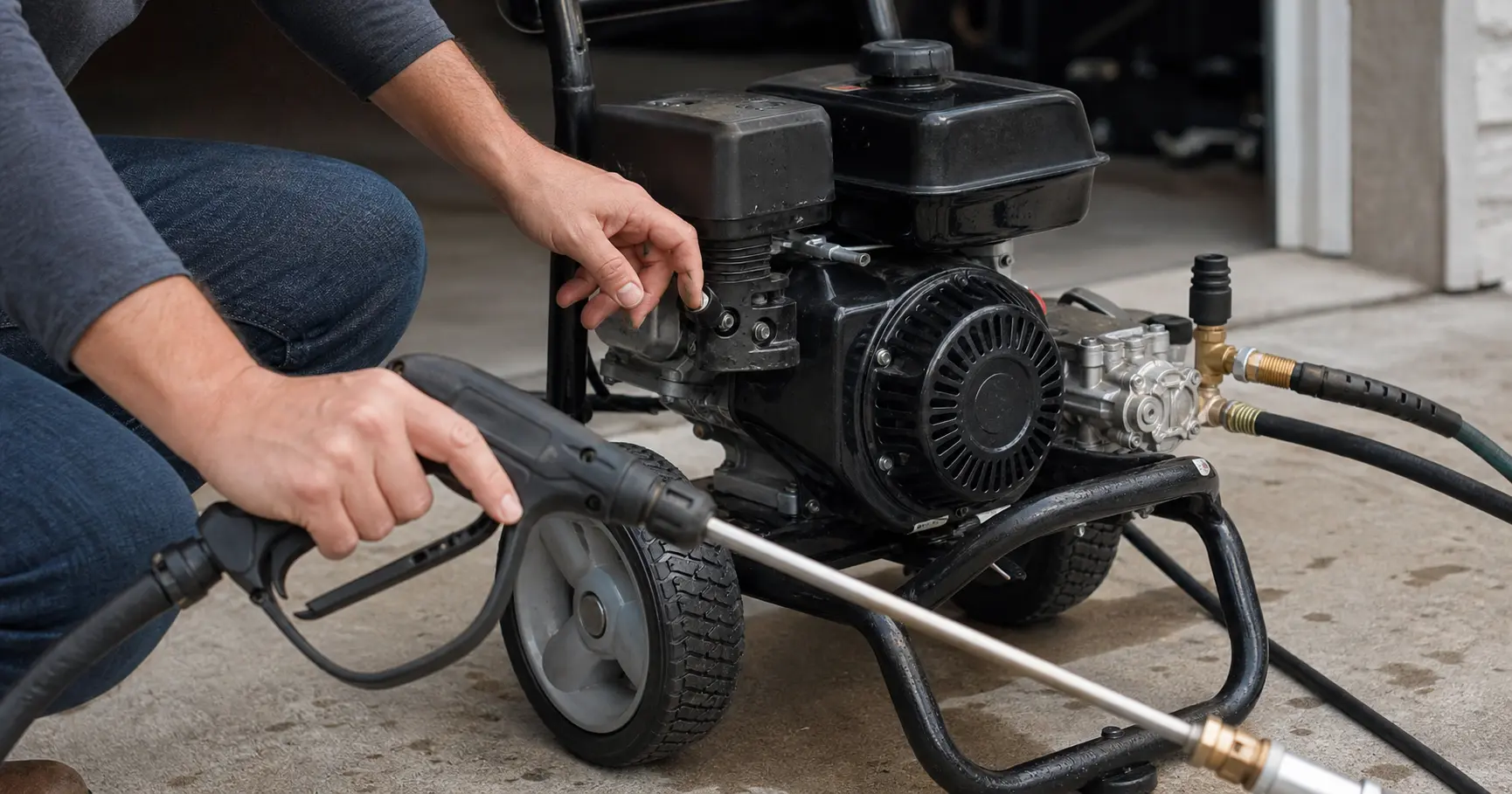
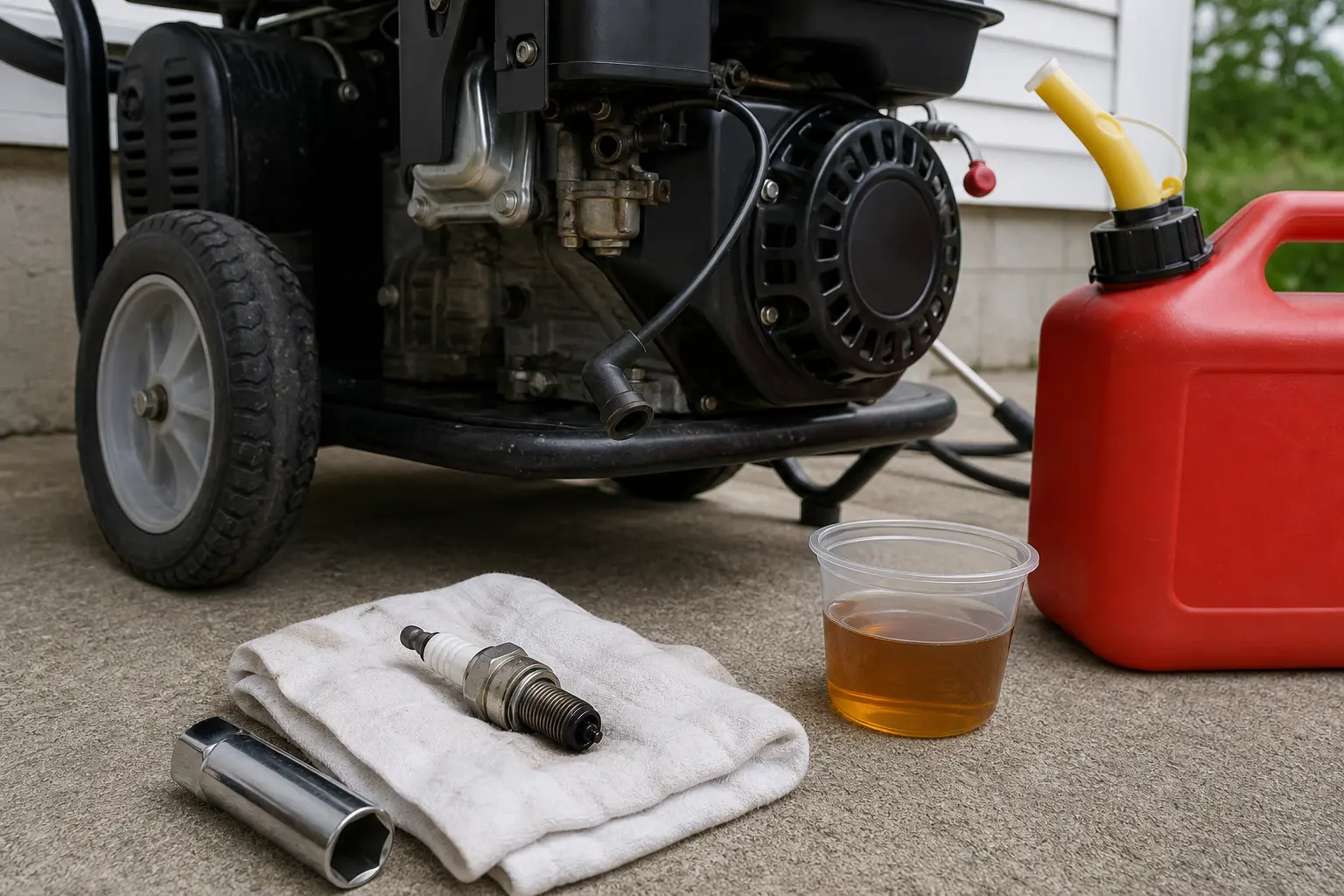
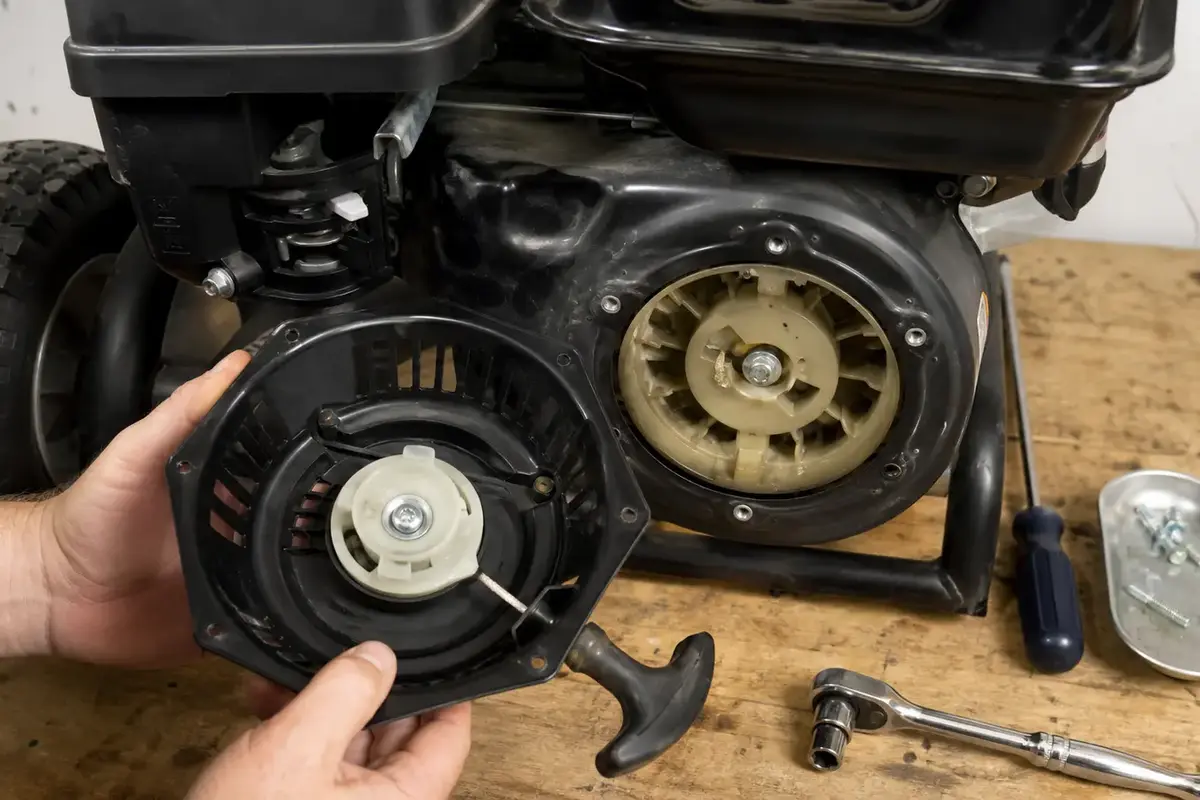
Write down the pressure washer model, engine model, rope behavior, oil level, plug condition, and whether bleeding pressure changed the pull. Recoil starters, rope kits, and spark plugs need exact model and fit checks, not a guess from the symptom alone.
A stuck pull cord is not one failure. The useful clue is what changes after the pump is unloaded and the spark plug is out.
The wrong first move is force. A pressure-bound washer can feel like a seized engine, and a liquid-locked engine can be damaged by repeated hard pulls.
This check costs nothing and usually belongs first. Keep the spark plug wire off so a sudden free pull cannot start the engine while your hands are near the machine.
| What you feel | What it usually means | Next move |
|---|---|---|
| Trigger was hard, hose relaxed, rope now pulls normally. | Trapped pressure was loading the pump. | Reconnect safely, start with water connected, and bleed pressure before future restarts. |
| Pressure is gone but the rope stops hard. | Liquid lock or mechanical binding is still possible. | Remove the spark plug and pull slowly with the plug hole aimed away. |
| Rope moves but grinds or will not rewind. | The recoil rope, pulley, pawls, or spring may be binding. | Inspect the recoil only after the engine turns freely. |
| Rope kicks back violently. | The engine is not giving a normal starter feel. | Stop pulling and check oil, plug condition, and engine rotation before another start. |
Hydro-lock is the check that protects the engine. A cylinder full of liquid can bend internal parts if you keep trying to pull through it.
The recoil starter earns attention only after the engine can rotate. That order keeps a cheap rope part from hiding a locked engine.
A pump or engine that stays tight after the pressure and plug checks is no longer a simple rope problem. Watch for damage you can see or feel.
These are for diagnosis, not for forcing the rope. Skip any tool that would put your hands near hot parts, fuel vapor, or spring tension you cannot control.
Parts come after the result points there. Match the full washer or engine model, mounting pattern, rope diameter, thread reach, and old part markings before ordering.
Usually the pump and hose are still holding pressure. Shut the engine off, pull the spark plug wire, point the gun safely, and squeeze the trigger until the hose relaxes before trying another short pull.
Yes. A loaded pump can add enough resistance that a healthy engine feels seized. A good clue is a stiff high-pressure hose and a spray-gun trigger that will not move easily.
With the plug wire disconnected, remove the spark plug and pull the rope slowly with the plug hole pointed away from you. Liquid blowing out of the hole and a freer rope point to hydro-lock.
That points more toward the recoil starter than trapped pressure. Look for a frayed rope, rope off the pulley, broken pawls, cracked pulley, or a recoil spring that no longer returns smoothly.
No. Hard pulling can snap the rope, damage the recoil, or make a liquid-locked engine worse. Bleed pressure, pull the plug if needed, and stop when the engine feels mechanically tight.
Yes, but it sits lower on the list than trapped pressure. Freeze damage, cracked pump parts, oil seepage, or binding that stays after pressure and spark-plug checks can move the pump side up.
Kickback is a different warning than a stiff hose. Stop pulling, check the oil level, plug condition, and engine rotation, and have the unit looked at if the rope snaps back violently.
Yes. Too much oil or tipping the washer the wrong way can put oil where the piston cannot compress it. Check the oil level and plug hole before trying to run the engine again.
A recoil starter belongs in the cart only after the engine turns by hand but the rope, pulley, pawls, or spring still bind or fail to rewind. Match the engine model and mounting pattern.
Repair Riot built this page around checks a homeowner can safely observe before buying parts: hose pressure, plug-hole liquid, recoil movement, and engine rotation. The links below anchor the model-specific and safety boundaries.