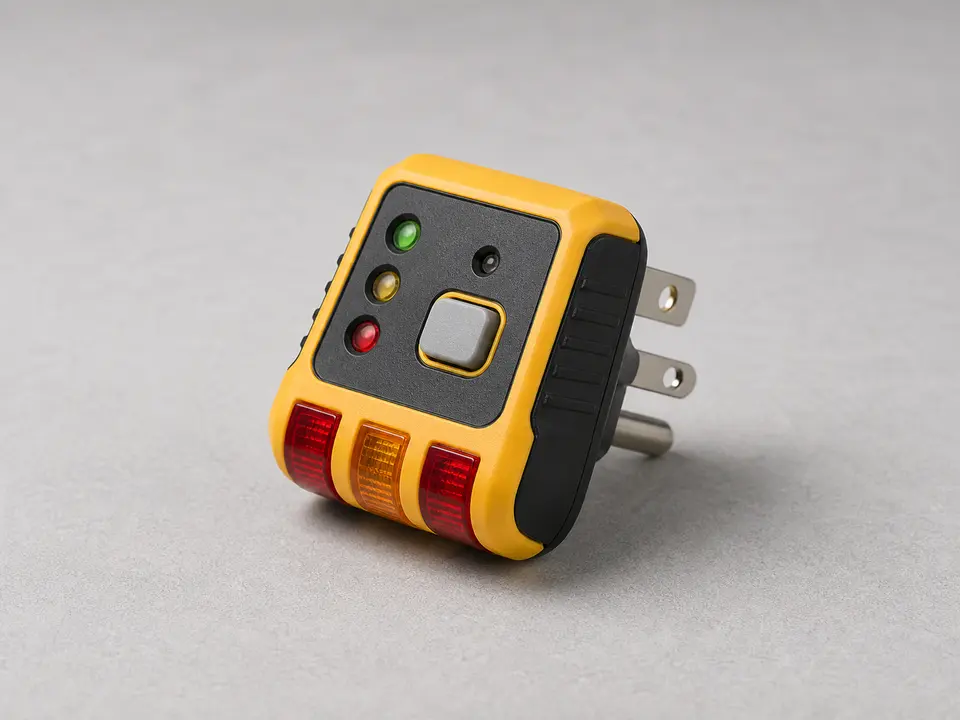
Plug in GFCI outlet tester
Use it for: Shows basic wiring status and lets you trigger a GFCI trip from the tester.
Buy a plug-in GFCI outlet testerTo check a GFCI with a plug-in outlet tester, plug the tester into the outlet, confirm the light pattern shows normal wiring, press the tester's GFCI test button, and make sure the outlet loses power and then resets properly.
This is a quick homeowner check for a GFCI receptacle or a standard outlet protected by a GFCI upstream. The goal is to confirm the device has power, appears wired normally, trips when tested, and comes back on after reset.
Before you start: Choose a standard plug in receptacle tester with a built in GFCI test button that matches the outlet slot style you are checking.
Use it for: Shows basic wiring status and lets you trigger a GFCI trip from the tester.
Buy a plug-in GFCI outlet tester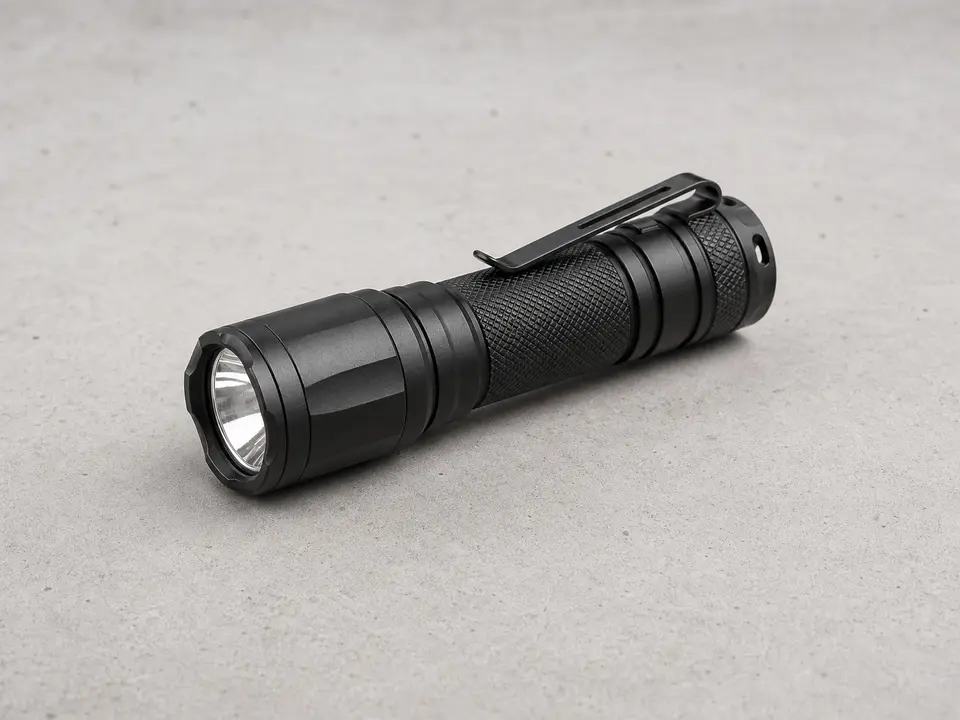
Use it for: Helps you read the tester lights and see the reset button clearly in dim areas.
Get a small flashlight
Use it for: Adds a quick safety check if the outlet, cover, or box seems damaged or suspicious.
Shop non-contact voltage testersAs an Amazon Associate I earn from qualifying purchases. Repair Riot may earn a commission at no extra cost to you.
If it works: You have a suitable outlet to test and it appears safe enough for a basic plug-in check.
If it doesn’t: If the outlet is visibly damaged or wet, skip testing and have the outlet or circuit inspected and repaired first.
If it works: You have a baseline reading showing whether the outlet is powered and appears normally wired according to the tester.
If it doesn’t: If the tester shows no lights, check whether the outlet is already tripped and press RESET on the receptacle or at the upstream GFCI or breaker before continuing.
If it works: The outlet loses power when you press the tester's GFCI test button.
If it doesn’t: If the outlet stays powered, the GFCI protection may not be working, the outlet may not actually be GFCI-protected, or the tester may not be suitable for that wiring setup. Find the protecting GFCI or breaker and test that device directly.
If it works: Power returns and the tester goes back to the normal wiring pattern.
If it doesn’t: If the GFCI will not reset, unplug anything else on the same protected circuit and try once more. If it still will not reset, the device may be failed, there may be a downstream fault, or the circuit may have a wiring problem.
If it works: Both the tester button and the receptacle's own TEST and RESET buttons work as expected.
If it doesn’t: If the tester trips the outlet but the receptacle's own TEST button does not, or vice versa, the device needs closer diagnosis and is a good candidate for replacement by a qualified person.
If it works: The outlet trips, resets, and powers a normal load the way it should.
If it doesn’t: If the outlet fails any part of the test, label it as unreliable and arrange further diagnosis or replacement instead of continuing to use it as if it were protected.
Yes, if that outlet is protected by a GFCI upstream. When you press the tester's button, the protecting GFCI should trip and cut power to that outlet.
Stop there. A wiring fault can make the GFCI test unreliable or point to a bigger problem. The outlet or circuit needs diagnosis before you trust the protection.
A failed GFCI, a downstream fault, moisture, or a connected appliance on the protected circuit can keep it from resetting. Unplug loads on that circuit and try once. If it still will not reset, it needs repair.
No. It is a useful basic check, but it does not catch every wiring issue. It mainly helps confirm power, a basic wiring pattern, and whether the GFCI trips and resets.
If the receptacle has its own TEST and RESET buttons, use both. The tester checks the protection response from the outlet, and the built-in TEST button checks the device's own mechanism.