Does the reading go high in afternoon sun?
Watch the wall for direct sun, reflected glare, nearby lamps, televisions, fireplaces, or a kitchen heat source. Remove that heat first and let the area settle.
If a thermostat reads higher than the room feels, check the air around and behind it first. Sun, a lamp, a supply register, or warm air through the wire opening can fool a good sensor.
Timing is the clue: afternoon spikes or changes during a cycle point to local heat or wall leakage.
Remove nearby heat, shut off power before pulling the face, inspect the wire hole, then compare readings for 20 to 30 minutes.
Don’t start with: Do not replace HVAC parts or use an offset until a separate room thermometer confirms the thermostat is wrong.
Watch the wall for direct sun, reflected glare, nearby lamps, televisions, fireplaces, or a kitchen heat source. Remove that heat first and let the area settle.
Look for a supply register, return path, baseboard heater, or doorway draft aimed at the thermostat. Redirect airflow only if you are not blocking normal room airflow.
With HVAC power off, remove the face only as the model allows and feel at the wire opening. Warm wall air can fool the sensor by several degrees.
Replace batteries if your model uses them, clean dust with a dry soft brush, reseat the face flat, and wait 10 to 15 minutes.
Compare both readings in the same stable air for 20 to 30 minutes. A steady several-degree gap after the location checks makes the thermostat or base the next suspect.
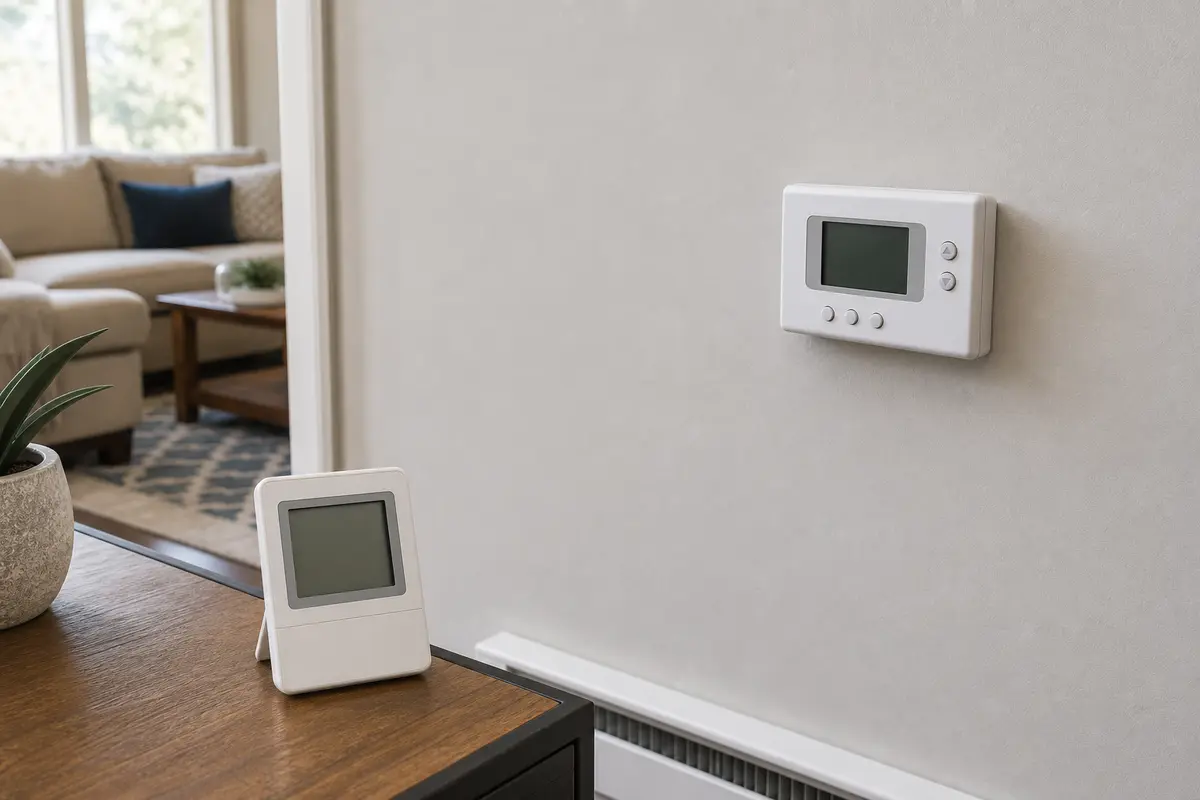
A high reading usually starts at the wall. These photos show the kind of local clue that can make the thermostat report a warmer pocket of air than the room you are standing in.
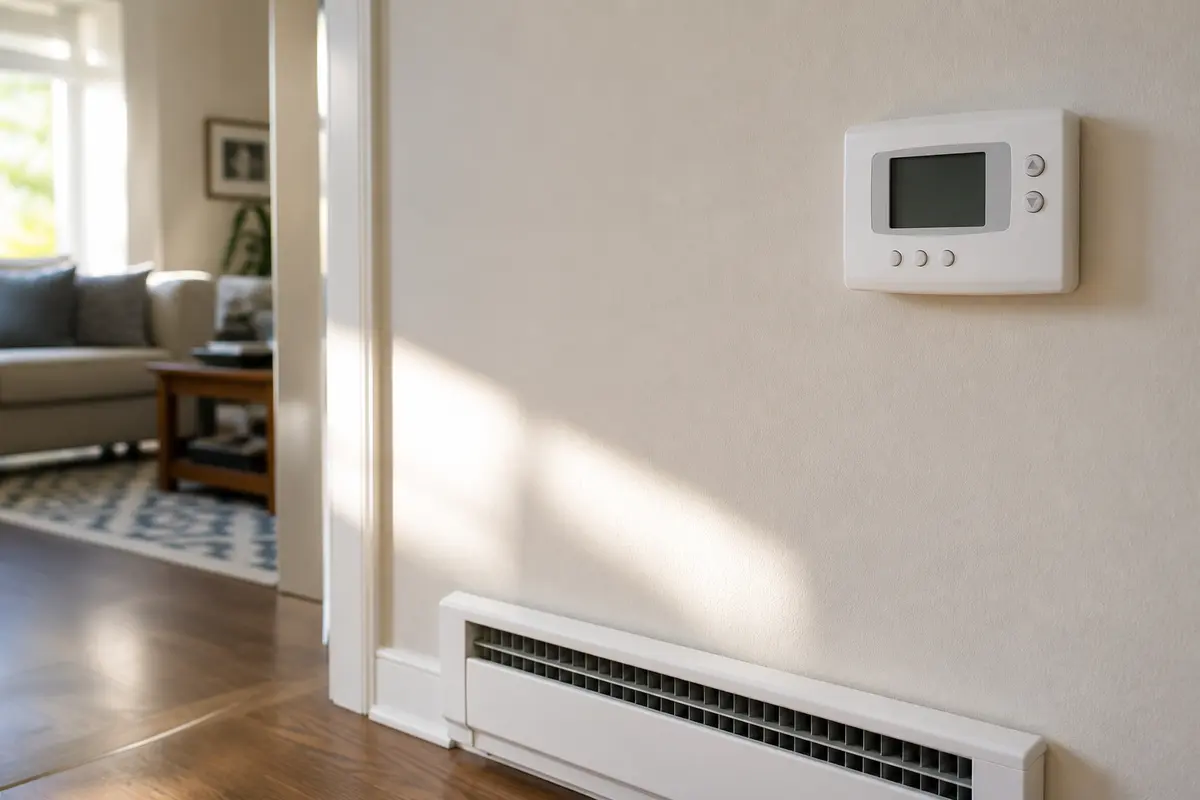
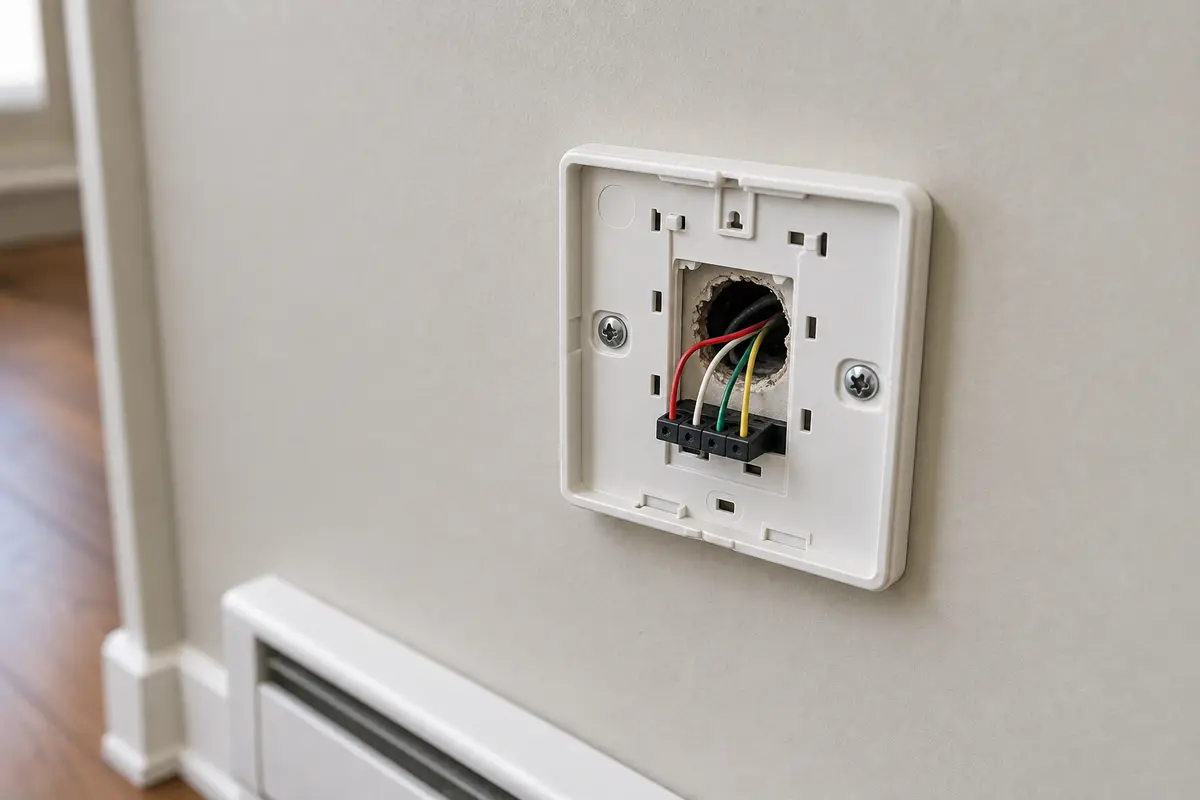
Do not buy a thermostat until the reading is proven wrong in stable air. Copy the exact thermostat model and identify the system type, wiring, and voltage first; standard low-voltage, line-voltage, and communicating controls are not interchangeable.
The thermostat is not reading the whole room. It is reading the small pocket of air around its sensor, and that pocket can be warmer than the chair, bed, or hallway where you are judging comfort.
A high display does not automatically mean the furnace, air conditioner, or control board is bad. Most homeowner wins come from proving where the bad reading starts.
Start without tools. Stand at the thermostat and look for anything that makes that wall warmer than the room. Then remove the clue for a short period and see whether the displayed number settles.
| What you see | What it usually means | Next move |
|---|---|---|
| Reading drops after a lamp, sun, or nearby heat source is removed | The thermostat is reacting to local heat, not a bad sensor. | Keep the heat source away or have the thermostat location reviewed. |
| Reading rises only while airflow is active | Supply air, return air, or wall leakage is reaching the thermostat. | Look at register direction and the wire opening behind the thermostat. |
| Separate thermometer stays steady while the thermostat jumps | Dust, weak batteries, loose seating, or a failing sensor is possible. | Clean gently, replace batteries if used, and reseat the face. |
| Both readings are high in the same area | The room may actually be warm near that wall. | Measure in the occupied area and consider whether the thermostat location represents the room. |
| Wall, cover, or wires look overheated | This is no longer a comfort-calibration issue. | Leave power off and call an HVAC tech or licensed electrician as appropriate. |
Wall air is easy to miss because the thermostat can look perfectly normal from the outside. The clue is air movement or a warm back plate behind the face.
Do these after the placement checks. They are useful, but they should not cover up sun, vent air, or a draft from the wall.
These are for low-risk homeowner checks. They are not permission to open HVAC equipment panels or work on live thermostat wiring.
Paid links. As an Amazon Associate I earn from qualifying purchases. Repair Riot may earn a commission at no extra cost to you.
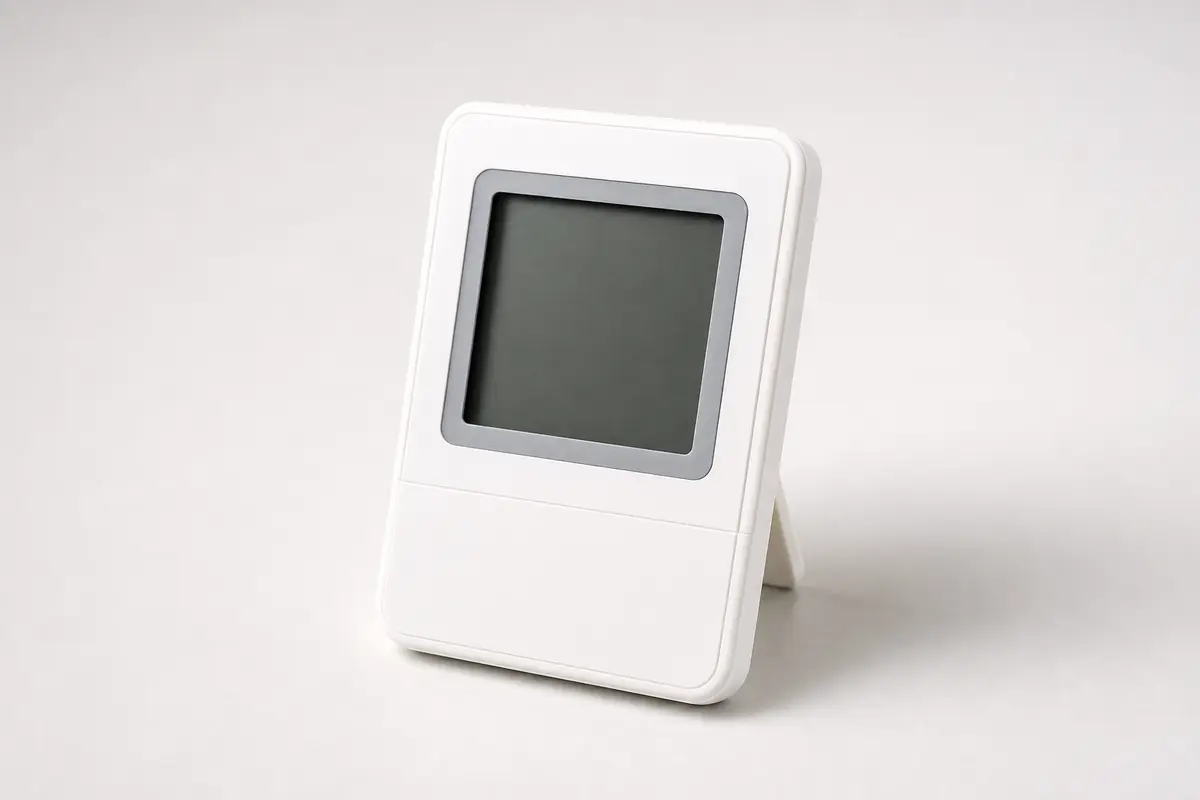
Helps when: You need a separate reading at the same height and in the same stable air before trusting the thermostat display.
Skip it when: You already know the thermostat wall is being heated by sun, lamps, or direct supply air and have not fixed that clue yet.
Compare room thermometers on Amazon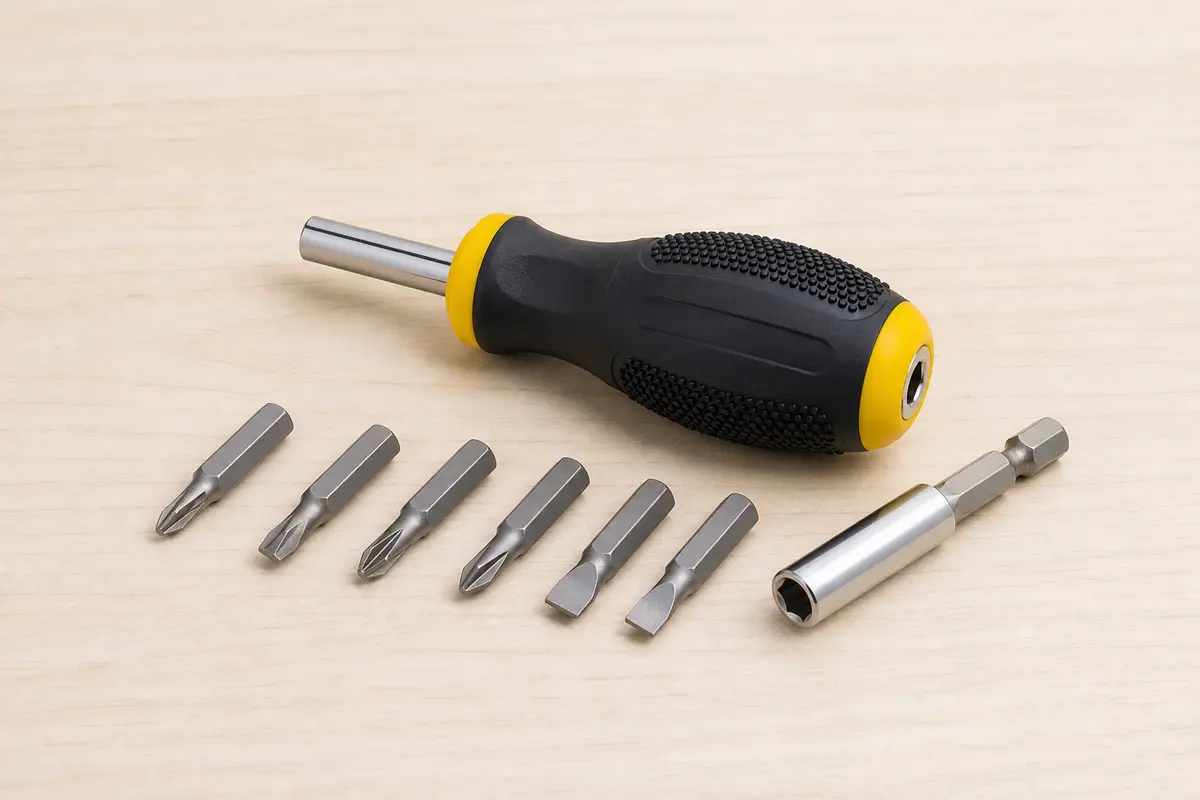
Helps when: Your thermostat model uses screws or a removable wall plate, and power is off before the face or base is handled.
Skip it when: The thermostat is line-voltage, proprietary, brittle, or you are not sure how it releases from the wall.
Compare screwdriver sets on Amazon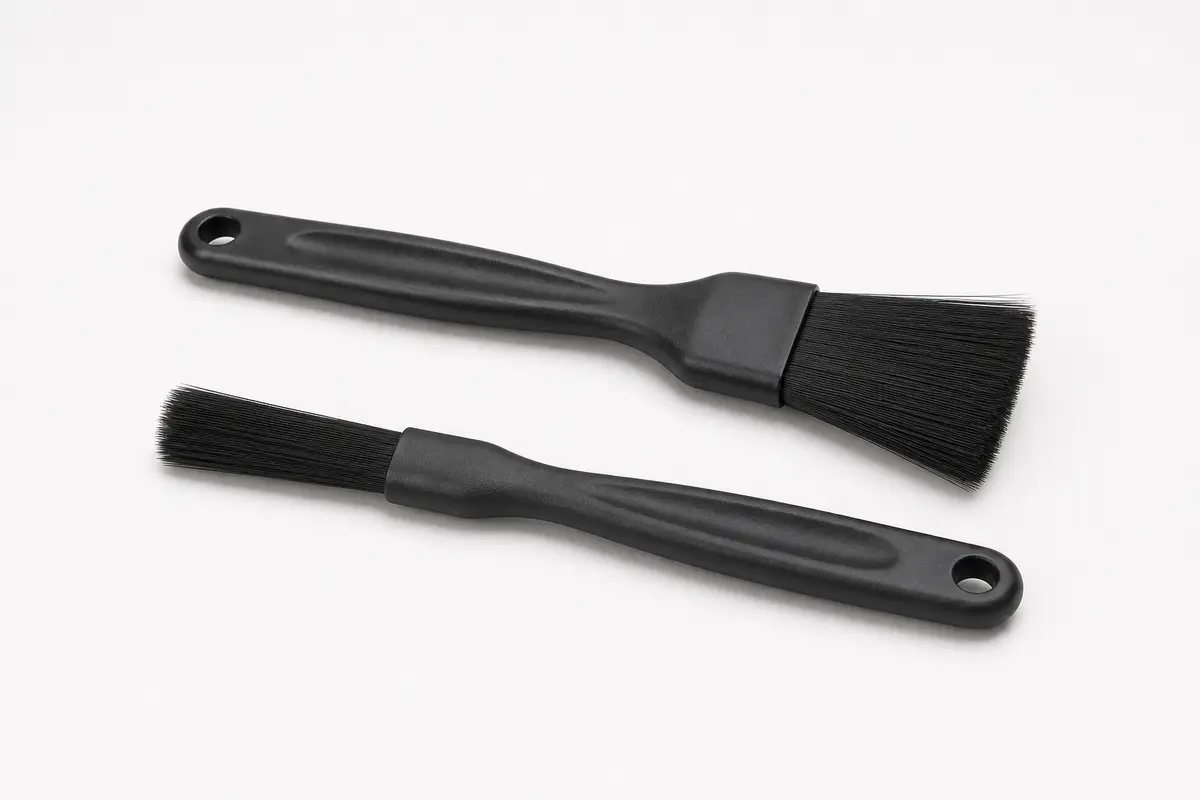
Helps when: Loose dust is visible around the thermostat vents or sensing openings and you can clean it dry without forcing debris inward.
Skip it when: You would need liquid cleaner, spray cleaner, or aggressive compressed air to reach the dust.
Compare soft brushes on Amazon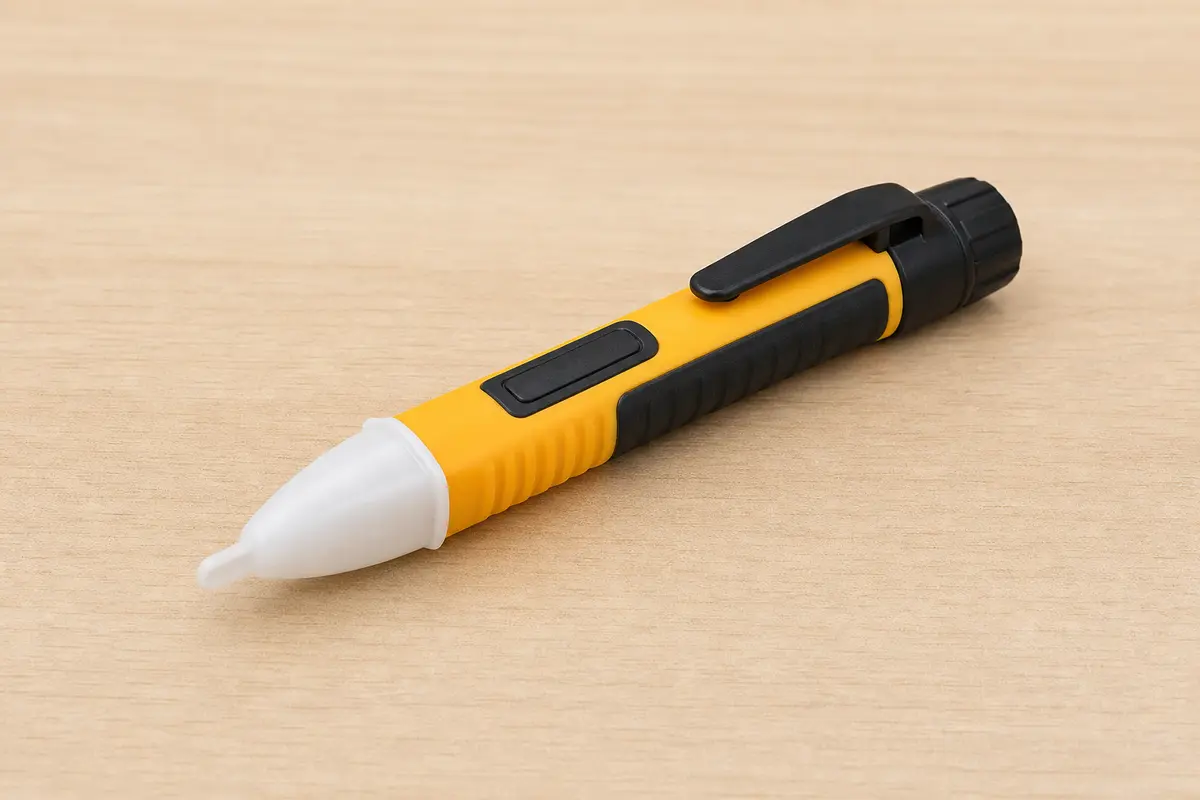
Helps when: You want a basic no-touch safety check around accessible thermostat or service-switch wiring after power is off.
Skip it when: The work requires exposed live wiring, panel access, or any voltage diagnosis you are not trained to do.
Compare voltage testers on AmazonParts come after the reading has been proven wrong. Match the thermostat to the HVAC system type, voltage, wiring terminals, and any required common wire; a lookalike control can still be wrong.
Paid links. As an Amazon Associate I earn from qualifying purchases. Repair Riot may earn a commission at no extra cost to you.
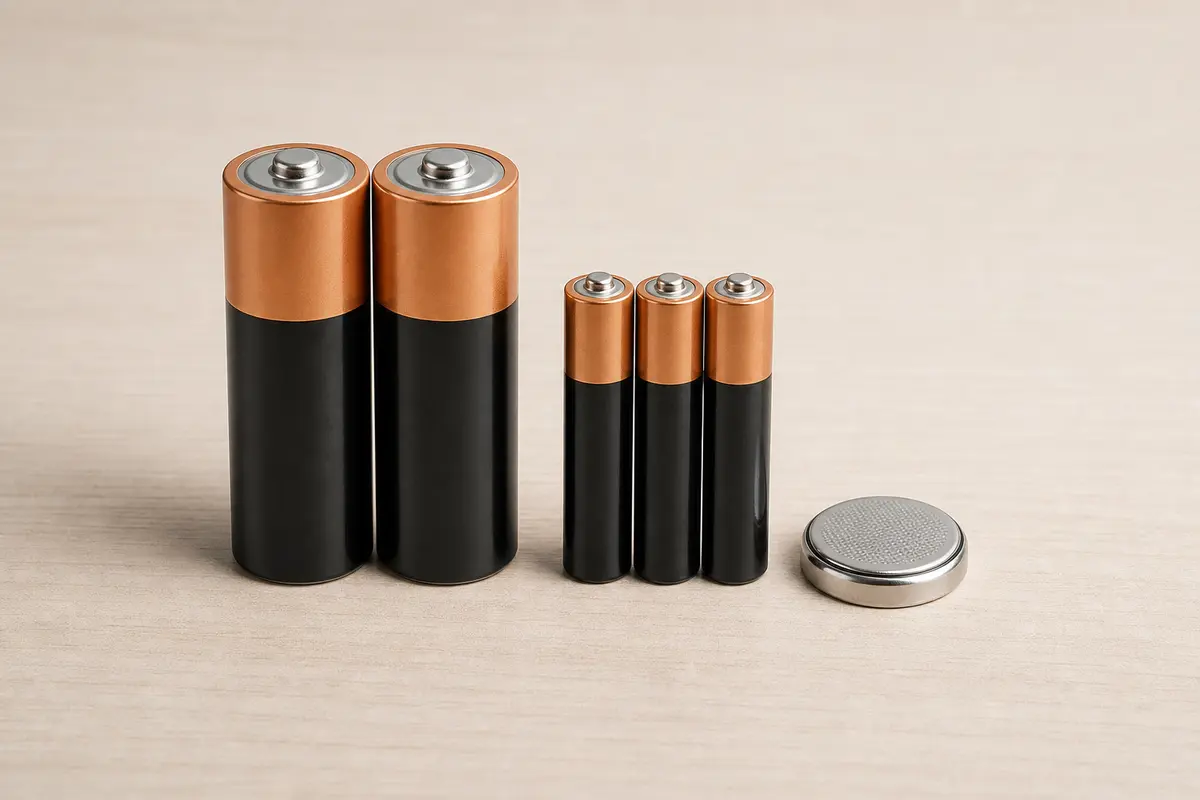
Helps when: Your model uses replaceable batteries and the display is dim, unstable, or slow to settle after the placement checks.
Skip it when: The thermostat is hardwired with no batteries, or the high reading clearly follows sun, airflow, or wall leakage.
Compare thermostat batteries on Amazon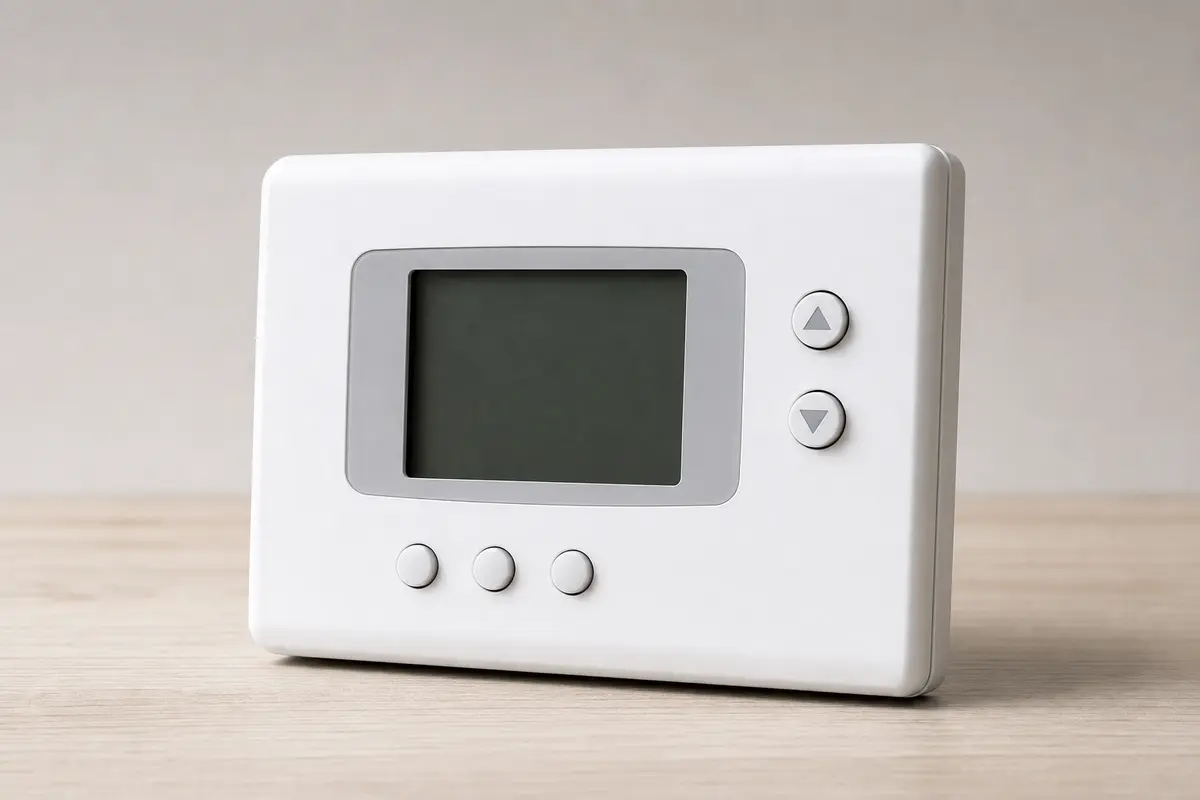
Helps when: A separate thermometer proves a steady several-degree high reading after location, wall-air, battery, and dust checks.
Skip it when: Your system uses line-voltage, communicating, proprietary, or unlabeled wiring, or you have not confirmed compatibility.
Compare low-voltage thermostats on Amazon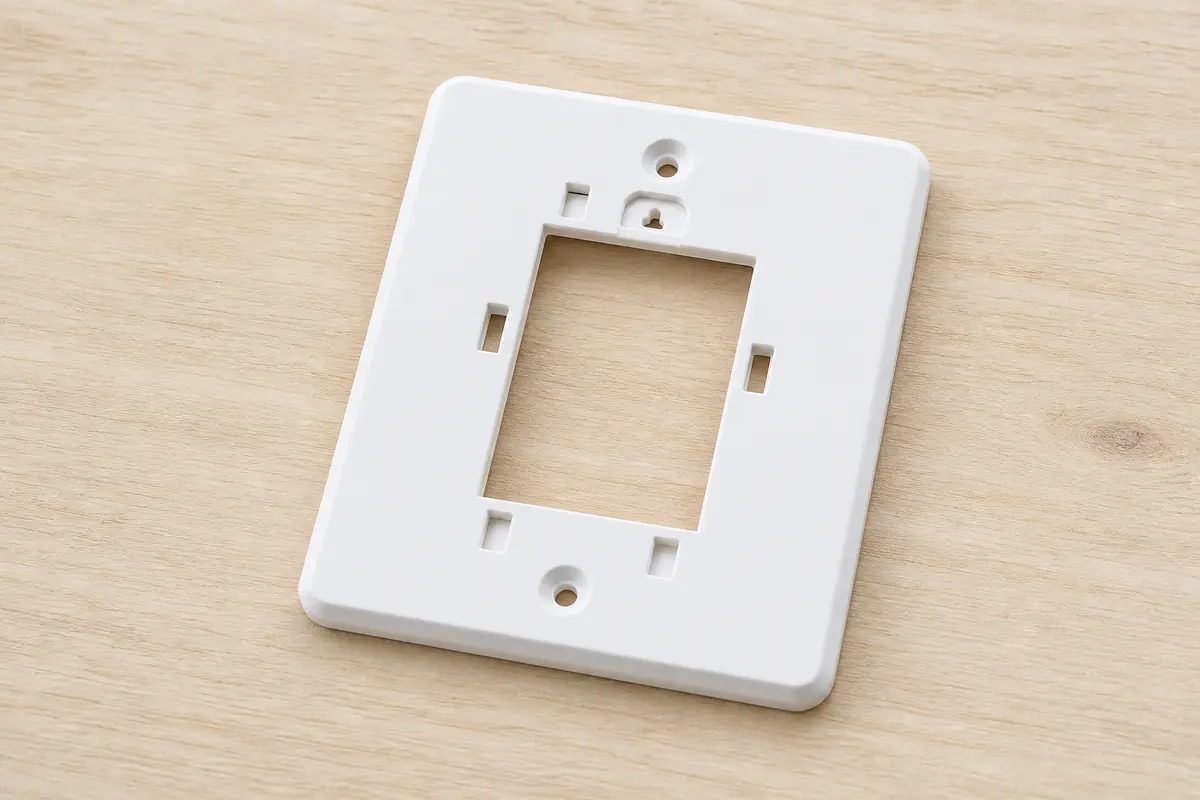
Helps when: The base is cracked, warped, loose, or no longer holds the thermostat body flat against the wall.
Skip it when: The thermostat sits flat and secure, or the reading changes only when sun, airflow, or wall air reaches it.
Compare thermostat wall plates on AmazonThe repair is not finished when the display changes once. Give the thermostat time in stable air and watch whether the HVAC system behaves normally through a few cycles.
Usually the thermostat is sensing a warmer pocket of air than the rest of the room. Sun on the wall, a nearby lamp or TV, a supply vent, baseboard heat, or warm wall-cavity air behind the thermostat can all make the display read high.
Yes. If the wire opening behind the thermostat is large or unsealed, air from a wall cavity, attic chase, basement, or exterior wall can reach the sensor area. Shut off HVAC power before removing the face, then feel around the wire hole for air movement.
Place a separate room thermometer a few feet away at about the same height, away from sun, vents, doors, lamps, and electronics. Let both readings sit for 20 to 30 minutes before comparing.
A small, steady difference can be normal depending on placement and thermostat design. It is worth troubleshooting when the gap is several degrees, changes with airflow or sunlight, or makes the system shut off too soon.
On some battery-powered thermostats, weak batteries can cause unstable displays, slow response, or inaccurate readings. Fresh batteries are a low-risk check after you look for local heat and wall leakage.
Use an offset only for a small, stable difference after the thermostat is in good room air and a separate thermometer confirms the gap. Do not use offset to cover up direct sun, supply air, wall leakage, or a number that drifts.
Replace it only after the location is fair, the wall opening is not leaking air, batteries and dust have been handled, the face sits flat, and a separate thermometer still proves a steady several-degree high reading.
That usually means the location is still the problem. A new thermostat can be fooled by the same warm wall, register airflow, sunlight, or wall-cavity draft. Have an HVAC tech evaluate the mounting location and control wiring.
Stop if you see scorching, melted plastic, damaged wire insulation, line-voltage controls, proprietary communicating controls, sparking, repeated breaker trips, or wiring you cannot identify. Leave the equipment off and call a licensed pro.
Repair Riot treated this as a thermostat sensing problem first: visible heat at the wall, airflow, wall-cavity air, battery behavior, and a separate thermometer comparison before parts. Public HVAC guidance shaped the placement and safety boundaries.