Dusty smell after the fan sat unused?
Clean the blade tops, housing vents, brackets, and light kit exterior with power off. Run one short low-speed test only if the fan starts normally and nothing looks hot or damaged.
Turn the fan off first. If the odor is sharp, plastic-like, smoky, or returns after the fan stops, shut off the breaker and leave the fan off until the hot spot is found.
Dust on the housing or blade tops can smell hot once after long downtime; with power off, look for that dust first. Hum, slow starts, a hot motor, a hot canopy, flicker, or breaker trouble points to electrical heat instead.
Use three clues first: what the smell is like, where it is strongest, and how the fan starts.
Don’t start with: Leave it off. Do not spray cleaner into the motor, run higher speed to burn off the smell, or buy a capacitor or receiver before the source is clear.
Clean the blade tops, housing vents, brackets, and light kit exterior with power off. Run one short low-speed test only if the fan starts normally and nothing looks hot or damaged.
Leave the fan off and turn off the breaker. Those clues point toward electrical heat, not dust burn-off.
Stop using it and leave it off. If startup brought a hum, slow crawl, weak speed, or a blade push, the strain points toward capacitor or motor trouble and can build heat quickly.
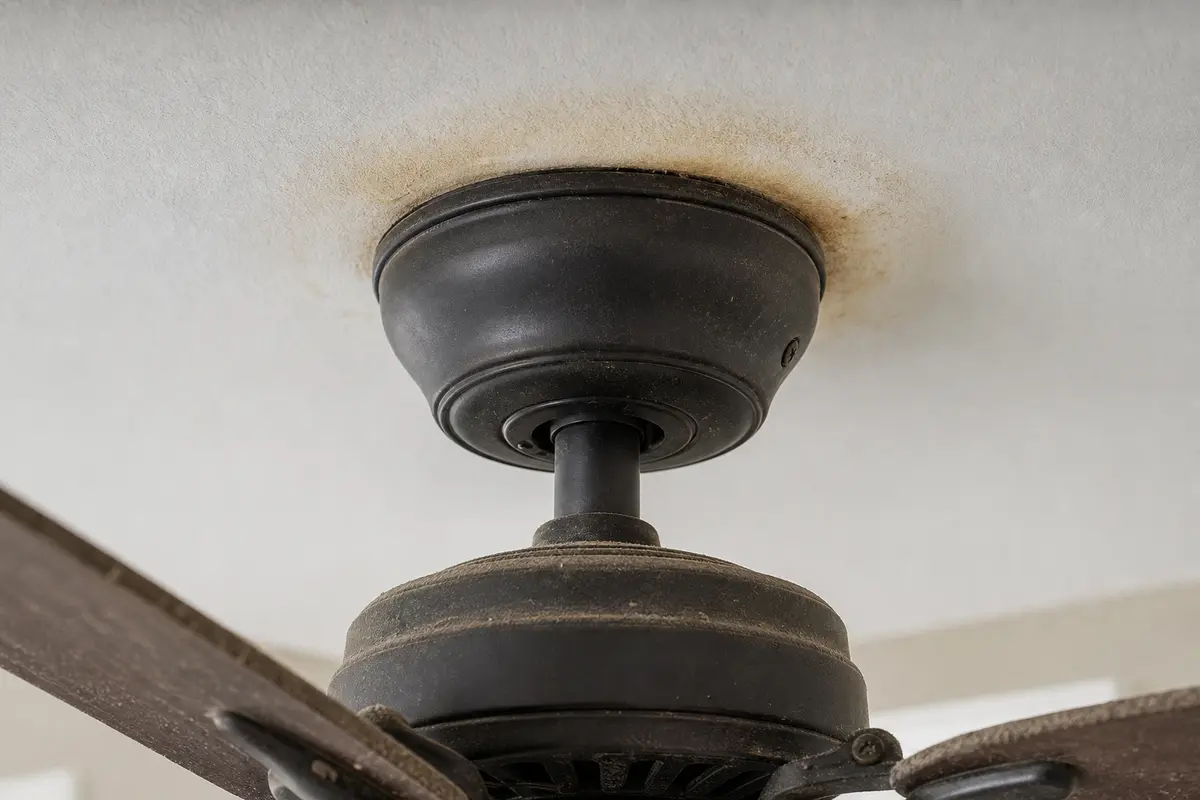
Look at the canopy area before touching anything. Treat the ceiling-box or internal wiring path as suspect, and keep the breaker off if you see heat, discoloration, flicker, or any wiring you cannot identify.
Do not keep testing the fan. The mount, fan-rated box, controls, receiver, wiring, and circuit need a power-off inspection.
Before opening anything, look at the fan with power off. If dust is sitting on blade tops, brackets, or housing vents, clean the exterior and use only one short low-speed test. If the canopy is hot, smells burned, or shows browning or discoloration, leave the breaker off and get service.
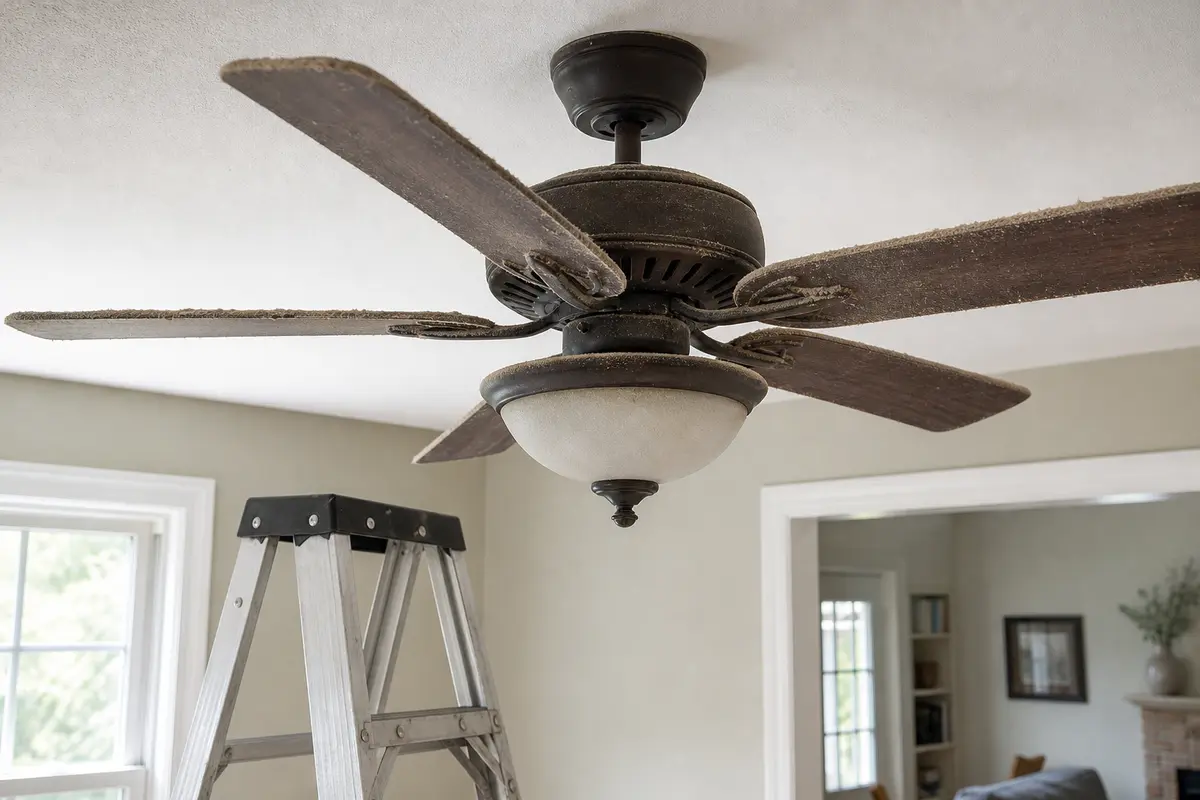
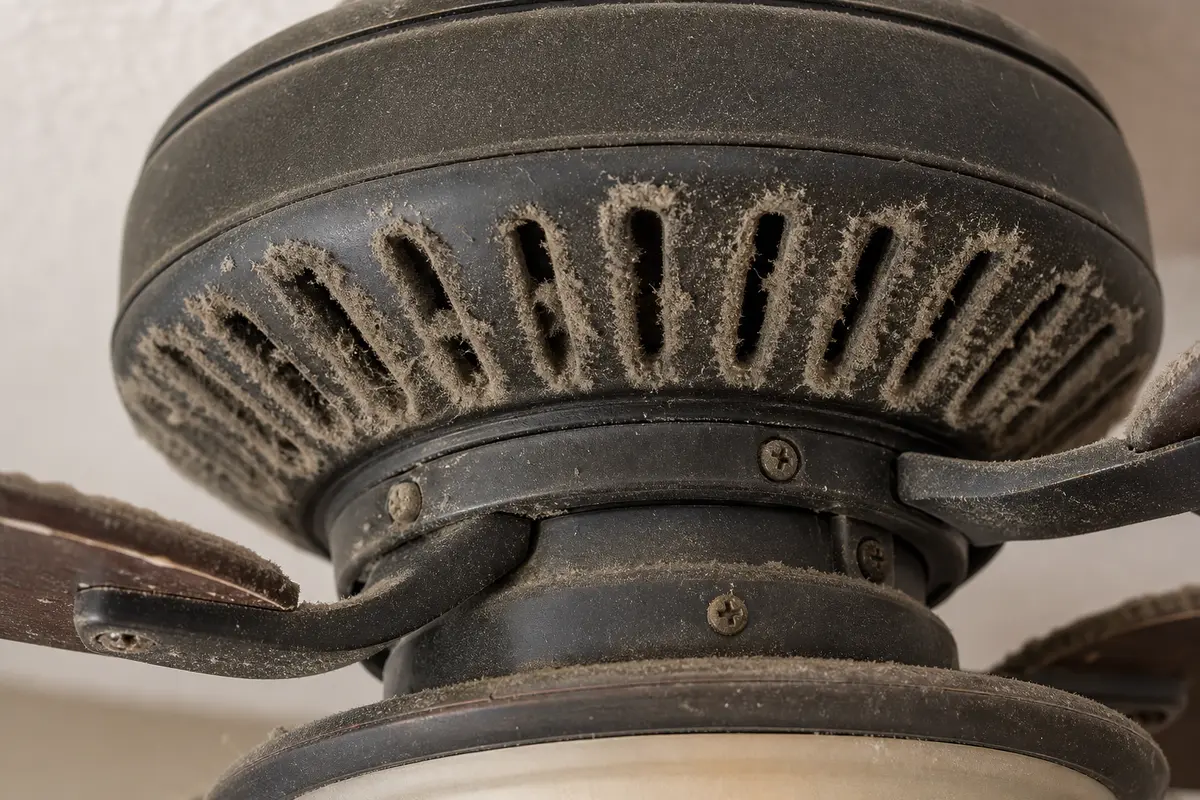
Leave the fan off until the odor has a source. Do not buy a capacitor, receiver, pull-chain switch, or whole fan from the smell alone. When parts make sense, match the fan model, wire positions, capacitor values, voltage rating, wire count, connector shape, receiver space, and control type. Scorched wiring, breaker trips, or a hot canopy come before shopping.
Start by looking at where the odor is strongest and how the fan starts. Dust on exterior surfaces should fade after cleaning; electrical heat comes back, gets sharper, or travels with hum, weak starts, flicker, hot parts, or breaker trouble.
A burning odor is not the place for a longer test run. The fan has already told you something is heating up; stop the heat and keep the clues intact.
Treat the first pass like a sorting job, not a teardown. Smell type, startup behavior, and the warmest area after shutdown tell you whether a brief dust test is reasonable or the breaker stays off.
| What you notice | What it usually means | Next move |
|---|---|---|
| Warm dusty odor after months off; fan starts cleanly. | Dust on blade tops, brackets, housing vents, or the light-kit exterior is warming. | Power off, clean exterior surfaces, let them dry, then try one low-speed run while you stay nearby. |
| Sharp plastic smell, smoky odor, crackle, or odor that lingers after shutdown. | Electrical heat, arcing, or damaged insulation is possible. | Turn off the breaker and leave the fan off; call a licensed electrician for heat marks or wiring concerns. |
| Hum, slow crawl, weak speeds, or blades need a push. | The motor is being loaded or the run capacitor is failing. | Stop testing; do a power-off inspection and match any capacitor only after the symptom points there. |
| Smell strongest at the canopy, wall control, receiver, or pull-chain area. | A splice, control, receiver, switch, or internal lead may be heating. | Keep the breaker off if the canopy is warm, plastic is discolored, or wire positions are uncertain. |
| Breaker trip, flicker, new wobble, or smell after installation. | The issue may be wiring, fan-rated box, control compatibility, or mount movement. | Do not keep cycling it; have the installation and circuit checked before replacing the fan. |
Use this path only when the odor is mild and dusty, the fan starts normally, and there is no smoke, sharp plastic smell, hot canopy, flicker, breaker trip, or new wobble. The test is short because you are trying to prove dust, not run through a fault.
A smell that returns after cleaning is a heat clue, not a housekeeping clue. Watch for where the odor is strongest and how the fan behaves during the first few seconds of startup.
These tools support exterior cleaning and power-off inspection. They do not make live wiring, scorched conductors, or an unstable ladder position a homeowner job.
Paid links. As an Amazon Associate I earn from qualifying purchases. Repair Riot may earn a commission at no extra cost to you.
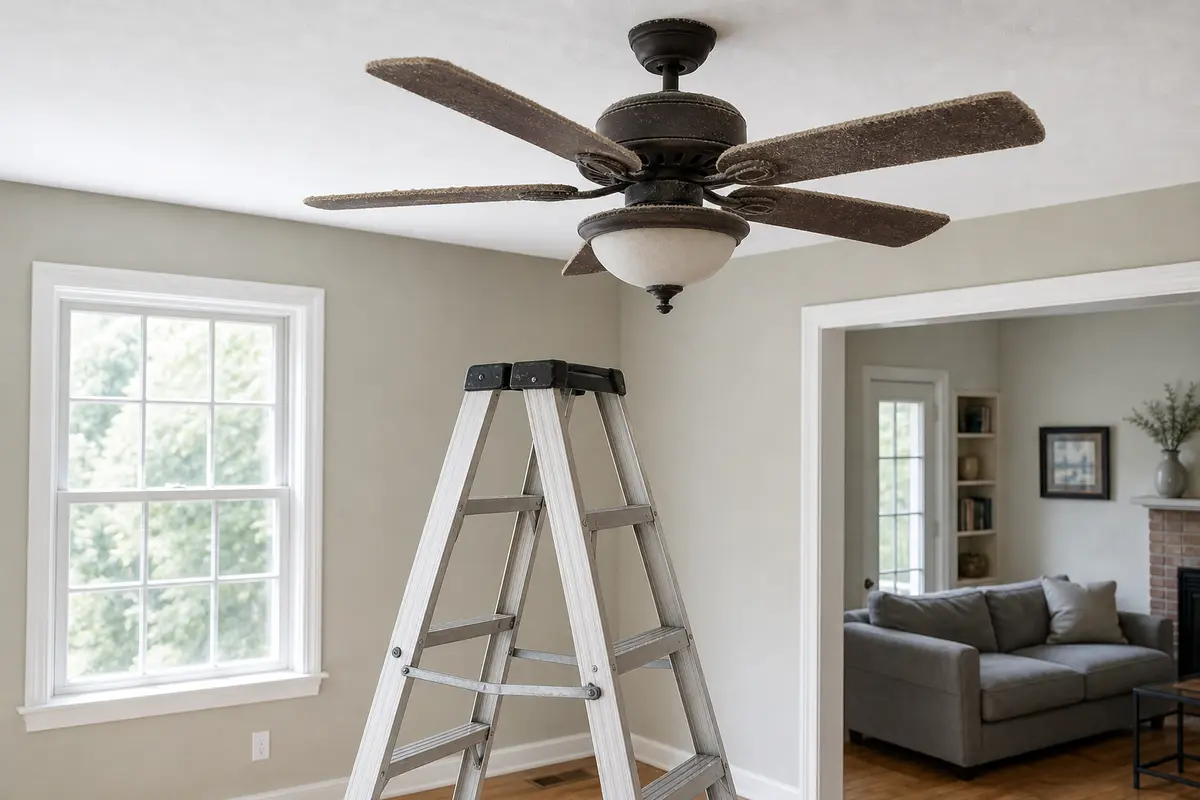
Helps when: Use it when you can reach the fan housing without leaning, standing on the top cap, or working over furniture.
Skip it when: The fan is over stairs, a bed, or anything that keeps both feet from staying planted safely.
Compare step ladders on Amazon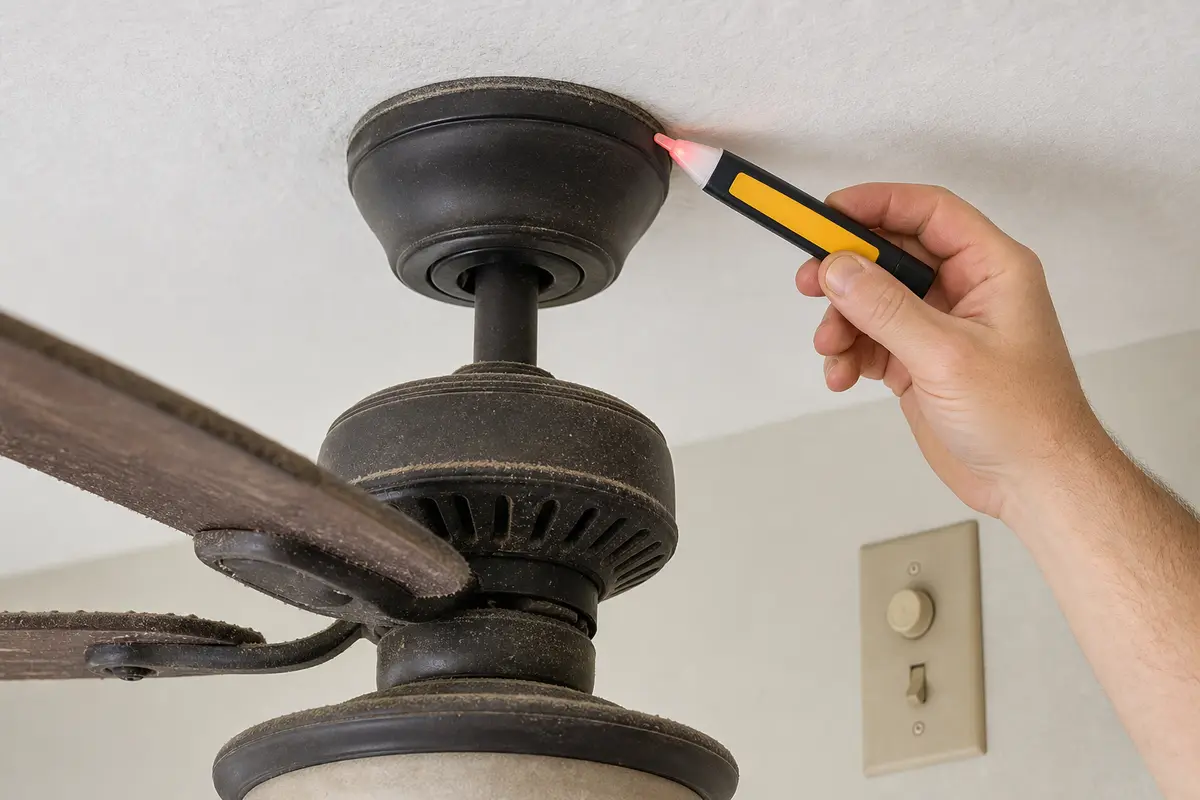
Helps when: Use it as a screening check after the breaker is off and before touching a canopy, switch housing, wall control, or accessible lead.
Skip it when: The circuit still reads live, you cannot identify the breaker, or the next step exposes wiring you do not understand.
Compare voltage testers on Amazon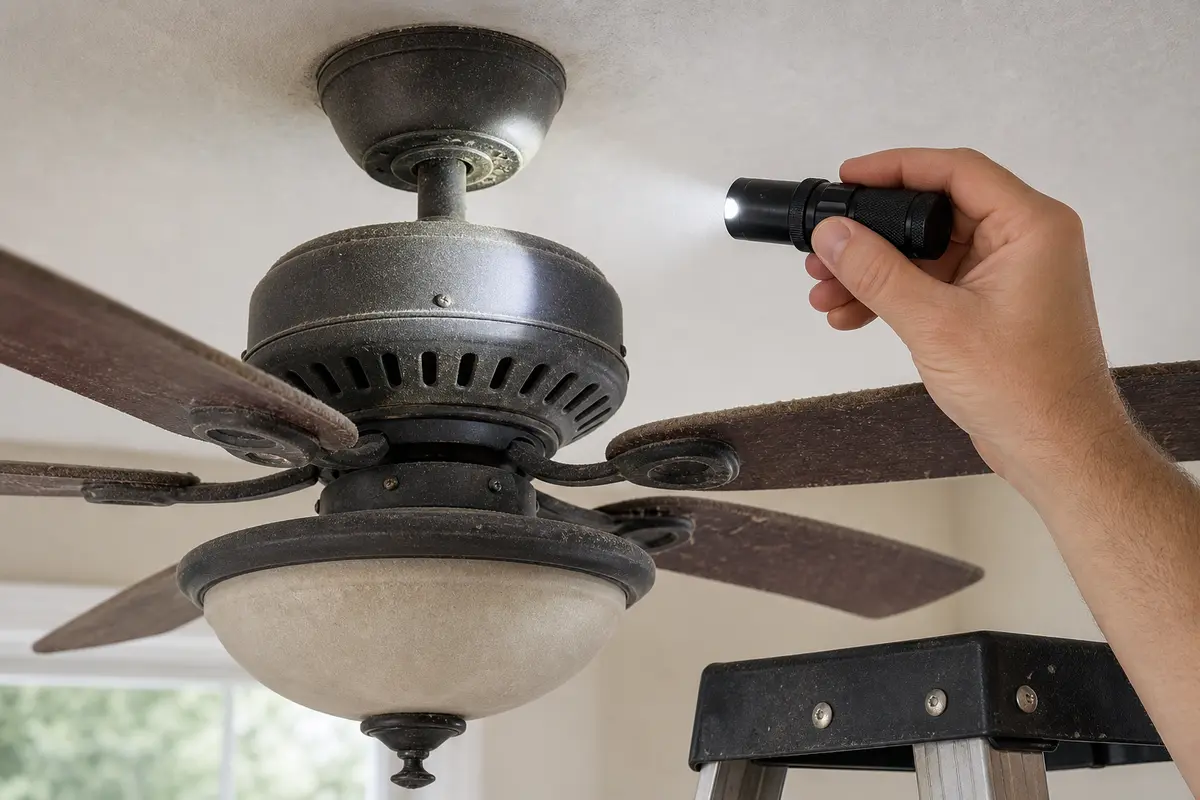
Helps when: Use it to see dust, discoloration, soot, warped plastic, screw heads, and wire positions before anything is moved.
Skip it when: Better light still leaves you unsure whether the circuit is off or whether the wiring is safe.
Compare inspection flashlights on Amazon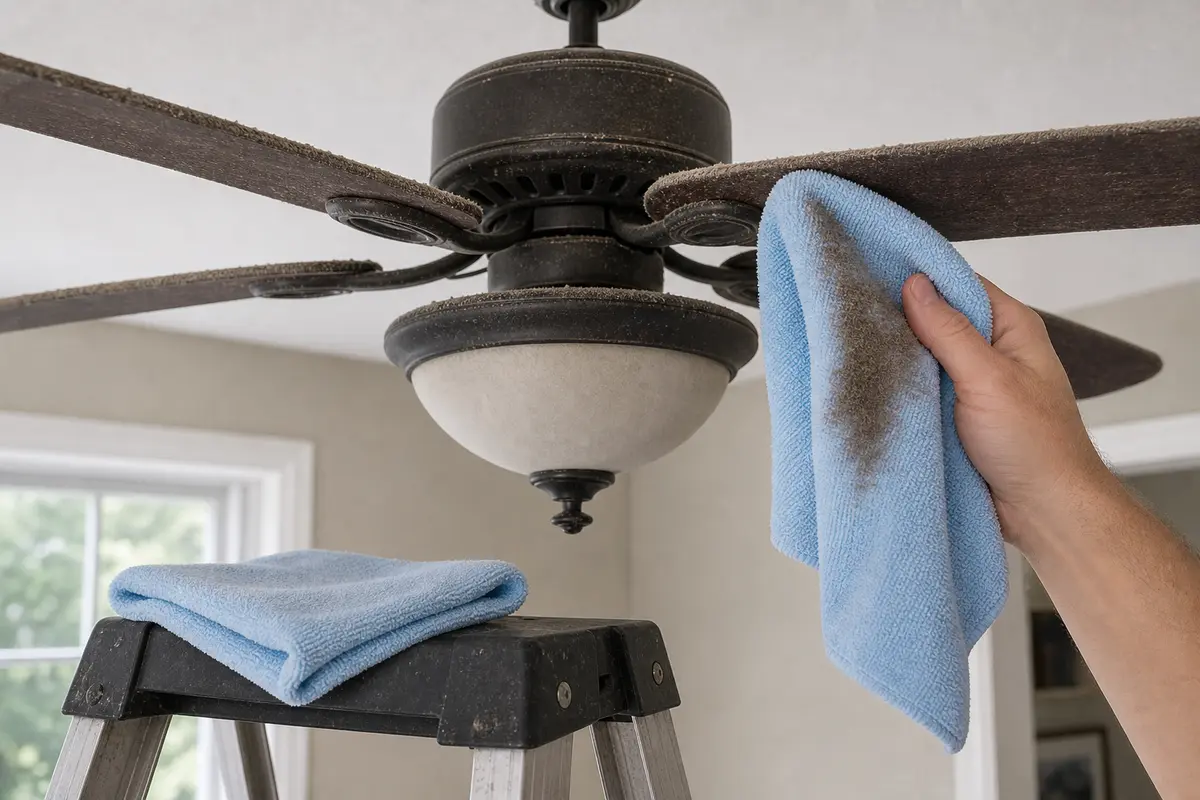
Helps when: Use them for power-off exterior cleaning of blade tops, brackets, motor housing surfaces, and the light kit.
Skip it when: You are tempted to push cloth, liquid, or dust into motor vents, switch openings, or the canopy.
Compare microfiber cloths on AmazonParts come after location and startup clues, not before them. Ceiling fan electrical parts vary by model and control setup. If wiring is scorched, the canopy is hot, or a breaker trips, keep the breaker off and fix that hazard before any part order.
Paid links. As an Amazon Associate I earn from qualifying purchases. Repair Riot may earn a commission at no extra cost to you.
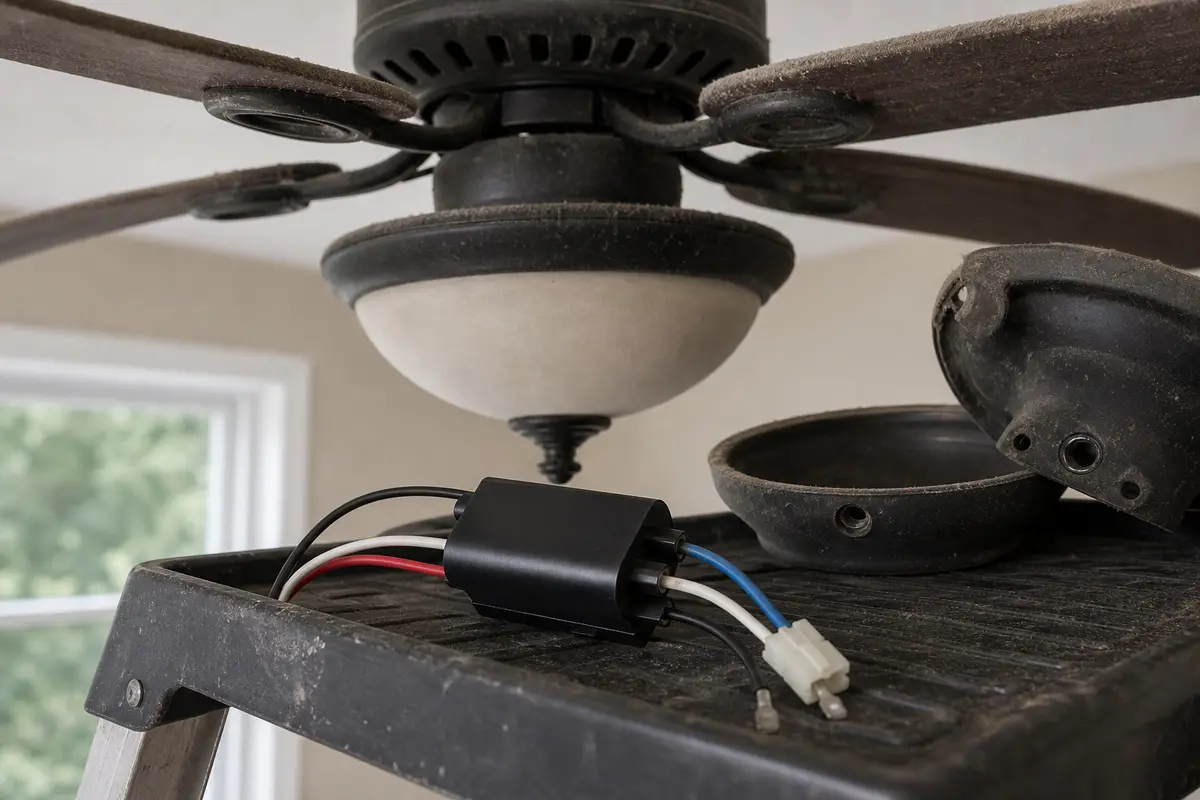
Helps when: Consider it only when the light works but the blades hum, start weakly, stall on lower speeds, or need a push after dust and control clues are ruled out.
Skip it when: You cannot match the microfarad values, voltage rating, wire count, connector shape, and mounting position exactly.
Compare fan capacitors on Amazon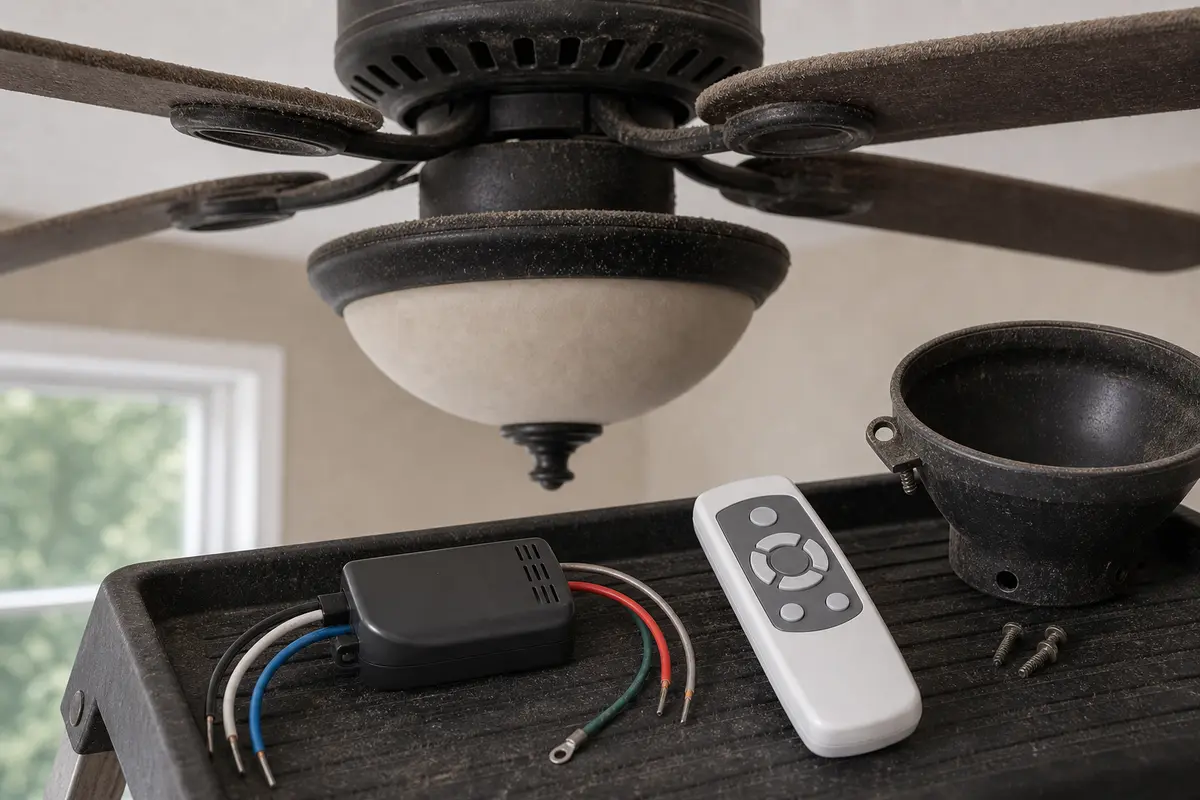
Helps when: Use only after a power-off inspection points to the receiver. The fan motor and house wiring still need to look sound.
Skip it when: The canopy smells hot, wiring is scorched, the breaker trips, the receiver is crowded in the canopy, or control compatibility is unclear.
Compare receiver kits on Amazon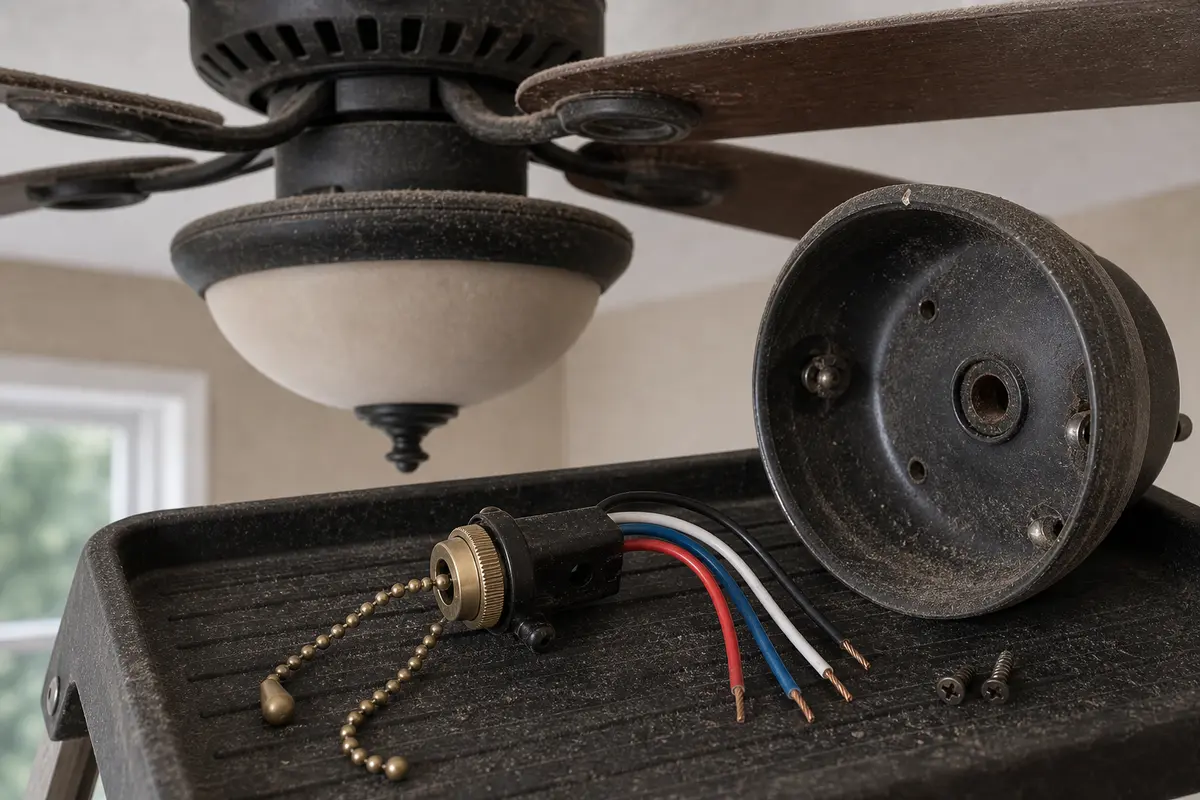
Helps when: Use only when the switch housing is the symptom area. The old speed switch should be clearly failed, with no motor heat, canopy odor, or breaker trouble.
Skip it when: The fan hums, needs a push, smells at the canopy, or you cannot match the wire count and switch sequence.
Compare pull-chain switches on Amazon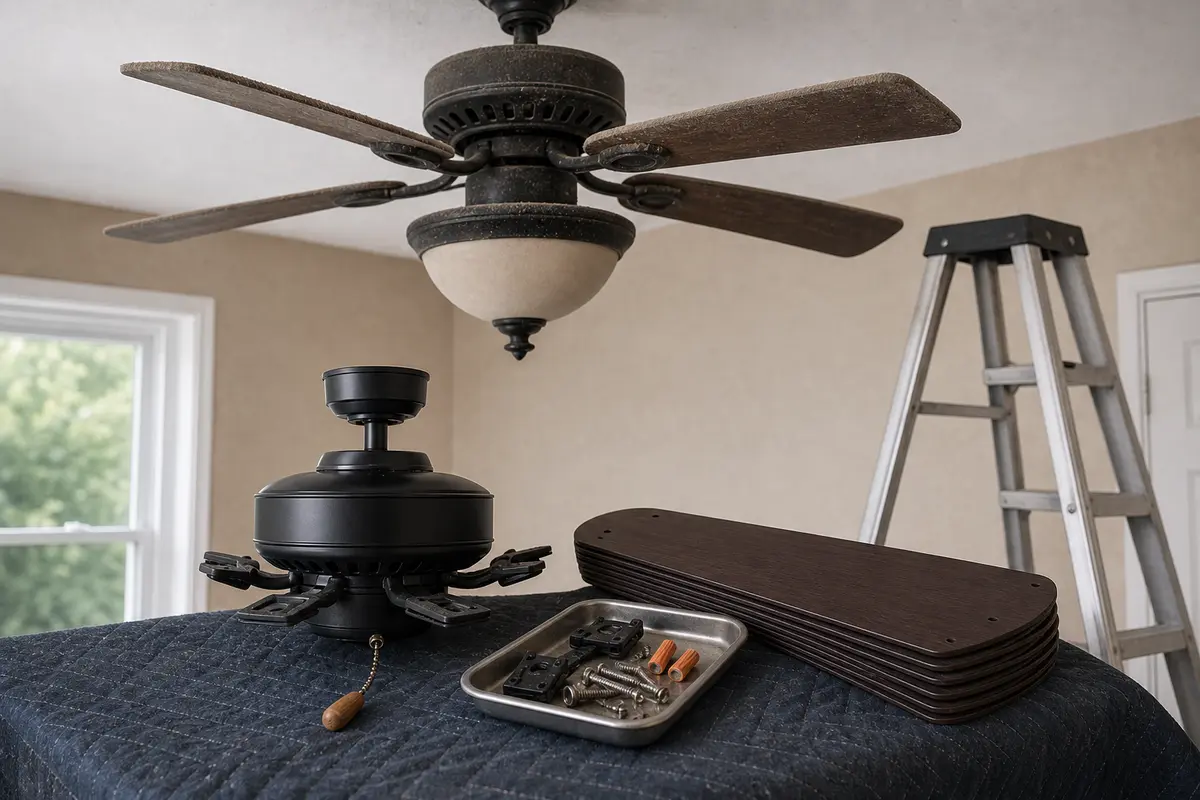
Helps when: Use when an older fan has returning odor with motor heat, hum, weak speeds, wobble, or noisy operation. The ceiling box and wiring still need to check out.
Skip it when: The odor points to house wiring, the ceiling box is questionable, or the breaker trips; solve that before installing a new fan.
Compare ceiling fans on AmazonBefore anyone disconnects wires, write where the smell was strongest, how the fan started, and whether the canopy or wall switch felt hot. After the breaker is off, photograph wire positions and model labels for service or parts matching.
Yes. A fan that has been sitting for weeks or months can give off a brief hot-dust smell when dust on the blade tops, housing vents, or light kit warms up. With power off, clean the blade tops, housing vents, and light kit exterior, then run one short low-speed test. A sharp, plastic-like, smoky, or repeat smell is not the same thing.
No. The only reasonable run is a short low-speed test after the fan is cleaned, dry, and free of warning signs. Stay in the room. Stop immediately if the smell gets sharper, the fan hums, the light flickers, or the motor housing heats up quickly.
Not always. A motor moves up the list when the housing smells hot, the fan runs weakly, hums, starts slowly, or needs a push. Dust and canopy wiring can smell similar at first, so use startup behavior and smell location before blaming the motor.
Yes. A weak capacitor can make the motor hum, start slowly, stall on lower speeds, or need a blade push. That strain can heat the motor, so leave it off until the symptom points there and the microfarad values, voltage rating, wires, and mounting style match exactly.
Leave the fan off and turn off the breaker. Look for odor or heat at the canopy; those clues can mean a loose splice, scorched wire connector, bad receiver, or installation problem near the ceiling box. Do not open the canopy unless power is off and you are comfortable verifying the circuit.
Stop using the fan. A breaker that trips again with burning odor points past dusty fan blades and toward a fault in the fan, control, wiring, or circuit. Leave it off and call a licensed electrician.
New odor after installation deserves caution. A loose connection, crowded canopy, pinched wire, wrong wall control, or mounting issue can create heat or vibration. Keep the breaker off until the wiring, fan-rated box, controls, and receiver layout are checked.
No. Wipe exterior dust with the power off, but do not spray liquid, lubricant, or debris into the motor housing, switch housing, or canopy. Pushing dust or moisture into electrical parts can make a minor odor worse.
A dust-only odor does not call for replacement; clean it and watch one short low-speed run first. An older fan with returning odor, heat, hum, slow starts, wobble, or weak speeds is often a better replacement candidate than a pile of internal parts. Canopy odor or scorched wiring should be handled before any fan or part decision.
Repair Riot built this ceiling-fan page from homeowner-safe clues: smell type, smell location, startup behavior, canopy heat, breaker behavior, and recent installation work. The references below set the electrical stop points and fan-manual context. They are not a substitute for the fan manual, model label, or a power-off inspection.