Does the deck sag, dip, or bounce above the crack?
Unload that section and stop normal use. Movement means the beam or its supports need structural diagnosis before repairs.
A cracked deck beam is not automatically failing, but sagging, soft wood, widening splits, or movement at posts makes it a structural stop point. Unload that area first, then sort checking from split or rot.
Most surface cracks are drying checks in pressure-treated lumber. The serious clues are a crack that opens at a post, bolt, notch, or wet end cut.
Use the first pass to find movement, softness, and crack depth. The beam's load path matters more than the line in the wood.
Don’t start with: Do not add screws, straps, filler, or caulk until the wood is sound and the support layout is clear. Hardware in split or rotten wood can hide the failure.
Unload that section and stop normal use. Movement means the beam or its supports need structural diagnosis before repairs.
Check for hard wood, straight framing, and no movement at posts or fasteners. That pattern usually fits drying checks.
Treat it as a split until proven otherwise, especially near posts, notches, bolts, or beam ends.
Start with rot and water control. Filler, glue, or extra screws will not restore rotten beam strength.
Check bearing, fastener holes, crushed fibers, and gaps between plies before buying connectors.
Stop at visual checks. A pro needs to see the full load path before anyone shores, cuts, or replaces the beam.
A beam crack changes meaning once you see the posts, bearing points, fasteners, and water clues around it. Start wide, then move in close only if the deck is steady.
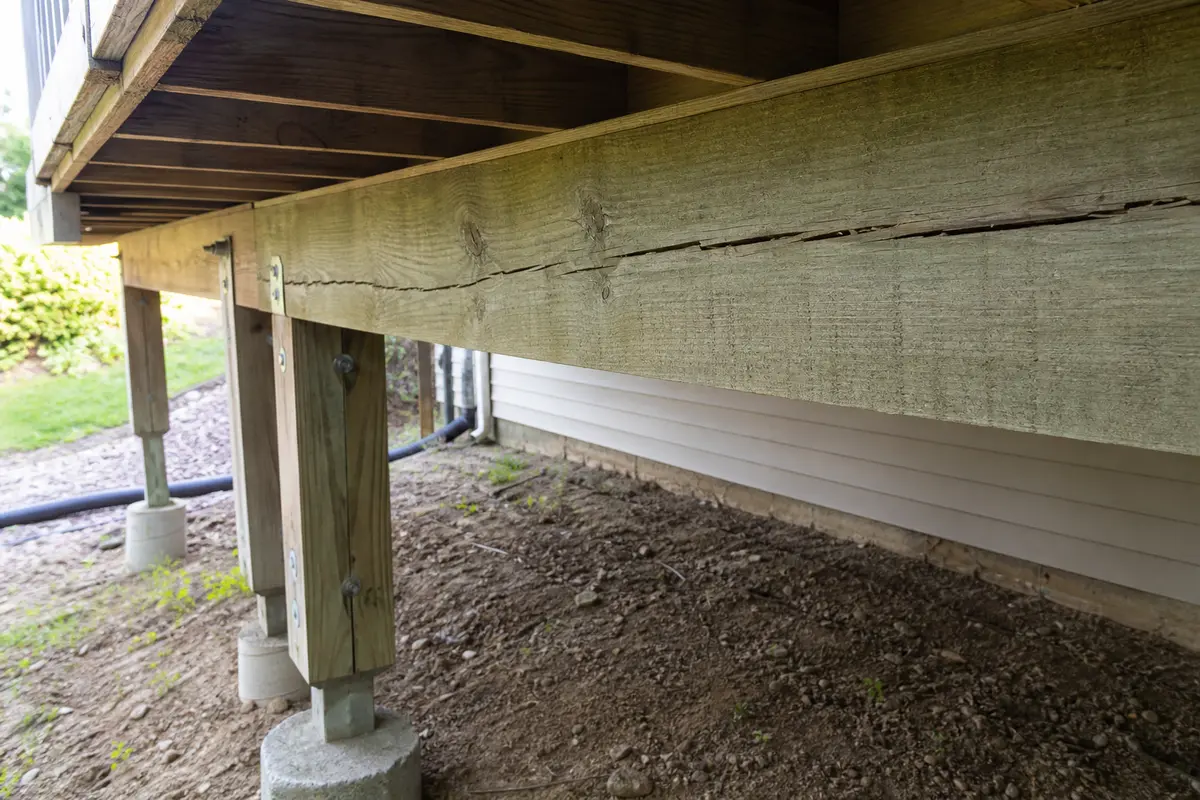
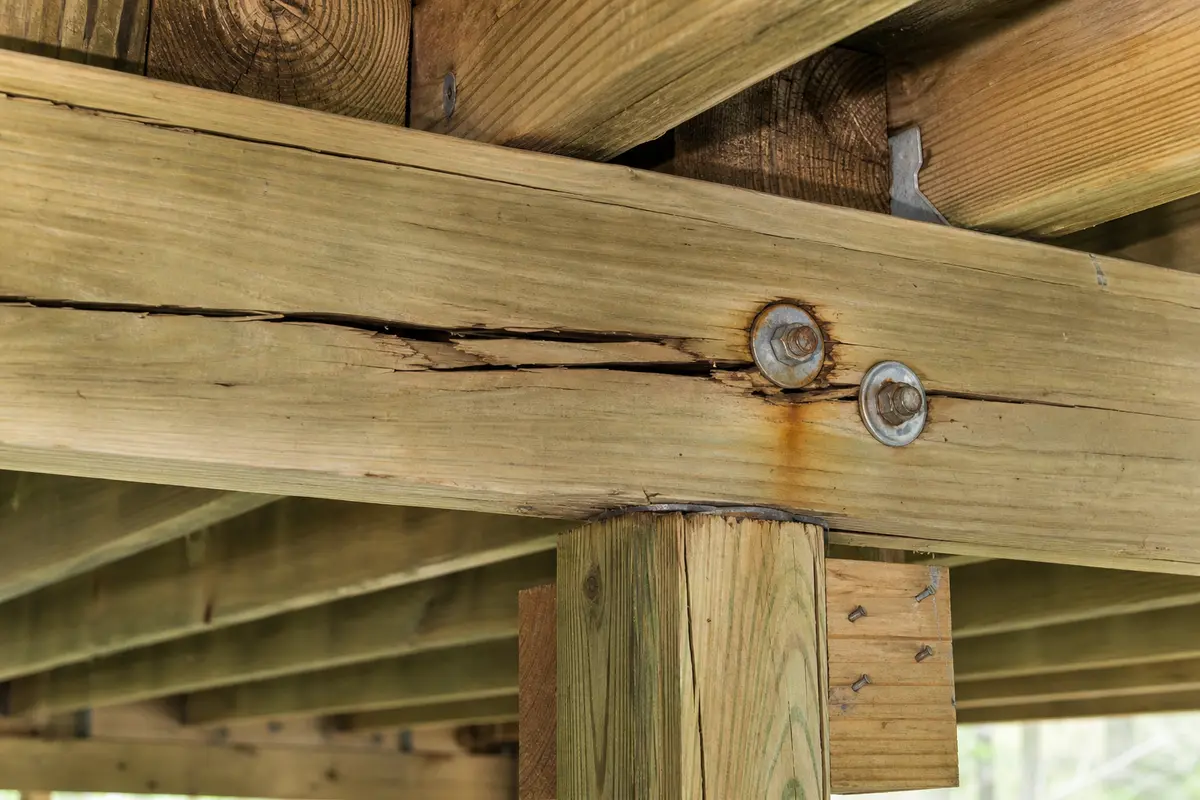
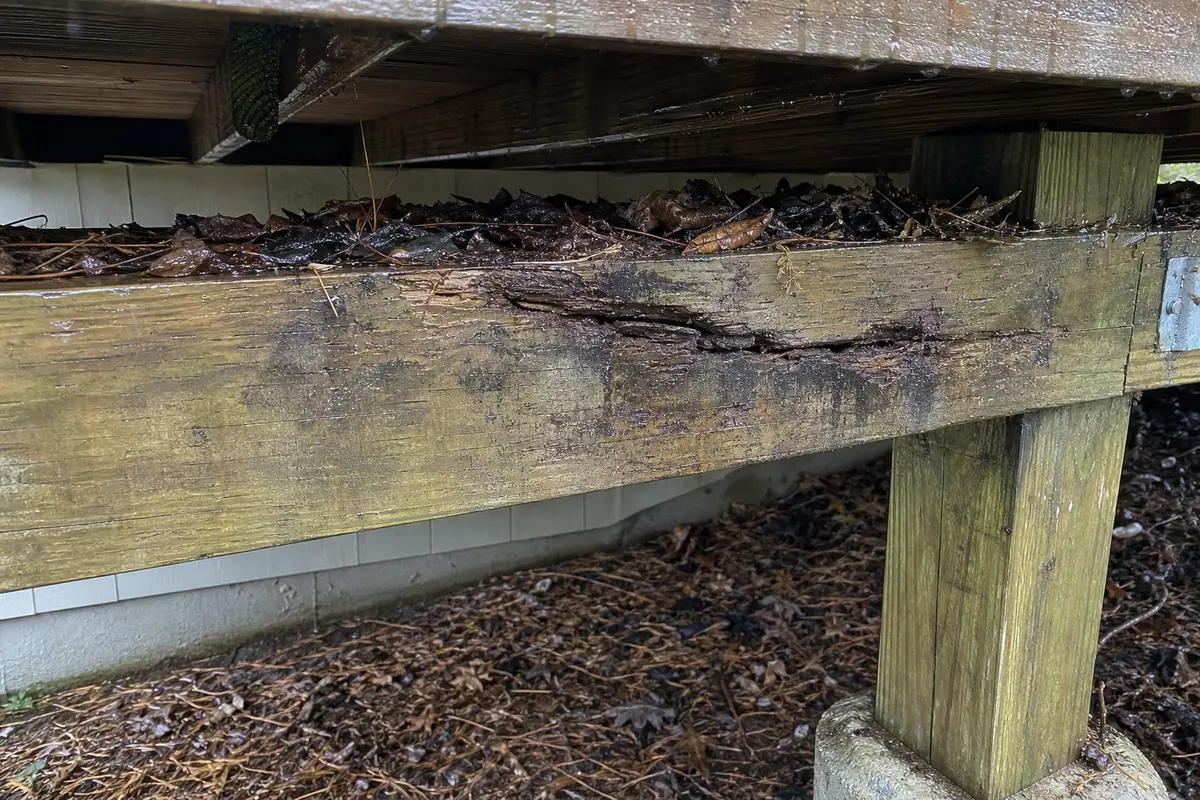
Do not shop from the crack alone. Buy hardware only after the exact diagnosis is clear: the beam is unloaded, the wood is hard, the support point is identified, and the connector style fits the actual framing. Skip parts and get help if the beam is sagging, rotten, split through, or needs shoring.
A cracked beam is a support check before it is a repair project. Reduce the load, stay to the side, and look for movement before you work underneath.
Checking, splitting, and rot can look alike from the yard. The difference is depth, sound wood, movement, and where the crack sits in the load path.
| What you see | Likely meaning | Next move |
|---|---|---|
| Narrow line on one face with hard, straight wood | Typical drying check | Keep water off the beam and recheck after weather changes. |
| Crack wraps a corner or shows on more than one side | Possible structural split | Unload the area and inspect posts, bolts, notches, and bearing. |
| Dark, damp, crumbly, or soft wood near the crack | Rot or moisture damage | Treat the wood as weakened until the damaged section is exposed and repaired. |
| Crack starts at a bolt, notch, hanger, or post | Stress point or connection problem | Check crushed fibers, wallowed holes, and whether the support is still tight. |
| Beam sags, twists, or opens when loaded | Support failure risk | Keep the deck unloaded and bring in a qualified deck pro. |
Beam cracks matter most where loads gather. Spend your careful inspection time at posts, notches, bolts, hangers, beam ends, and wet pockets.
A structural member needs sound wood and a continuous load path. Cosmetic fixes can make the deck look calmer while the support is still weak.
Once the crack is sorted, the repair choice gets narrower. The goal is to restore support, not hide the line in the lumber.
These tools help with inspection and light confirmation. They do not make shoring, jacking, or beam replacement a casual job.
Paid links. As an Amazon Associate I earn from qualifying purchases. Repair Riot may earn a commission at no extra cost to you.
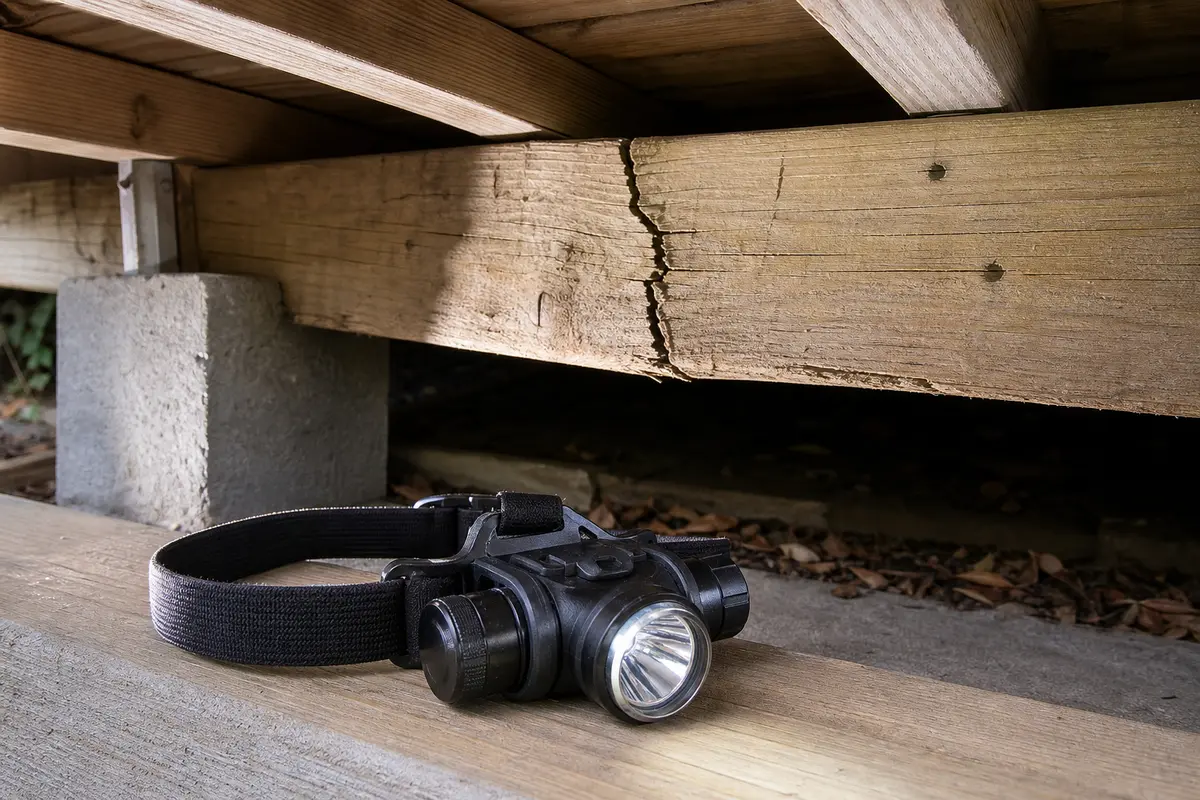
Helps when: Use it to see crack depth, wet staining, pulled fasteners, and gaps under the deck without guessing from shadow.
Skip it when: Skip crawling under the deck if the beam or post moves while loaded.
Compare inspection lights on Amazon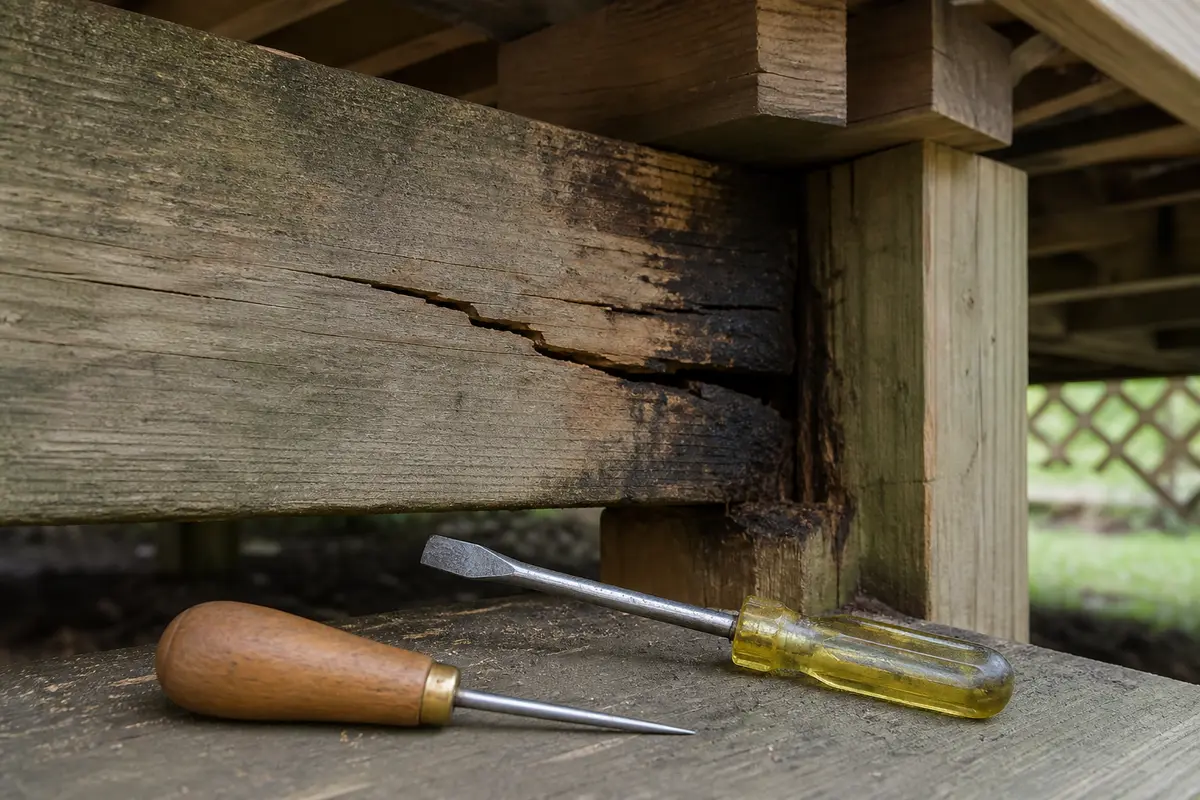
Helps when: Use it to compare hard wood with suspect soft spots around the crack, beam ends, and post bearing points.
Skip it when: Skip treating probe results as a repair plan when the beam is already sagging or split through.
Compare awls and probes on Amazon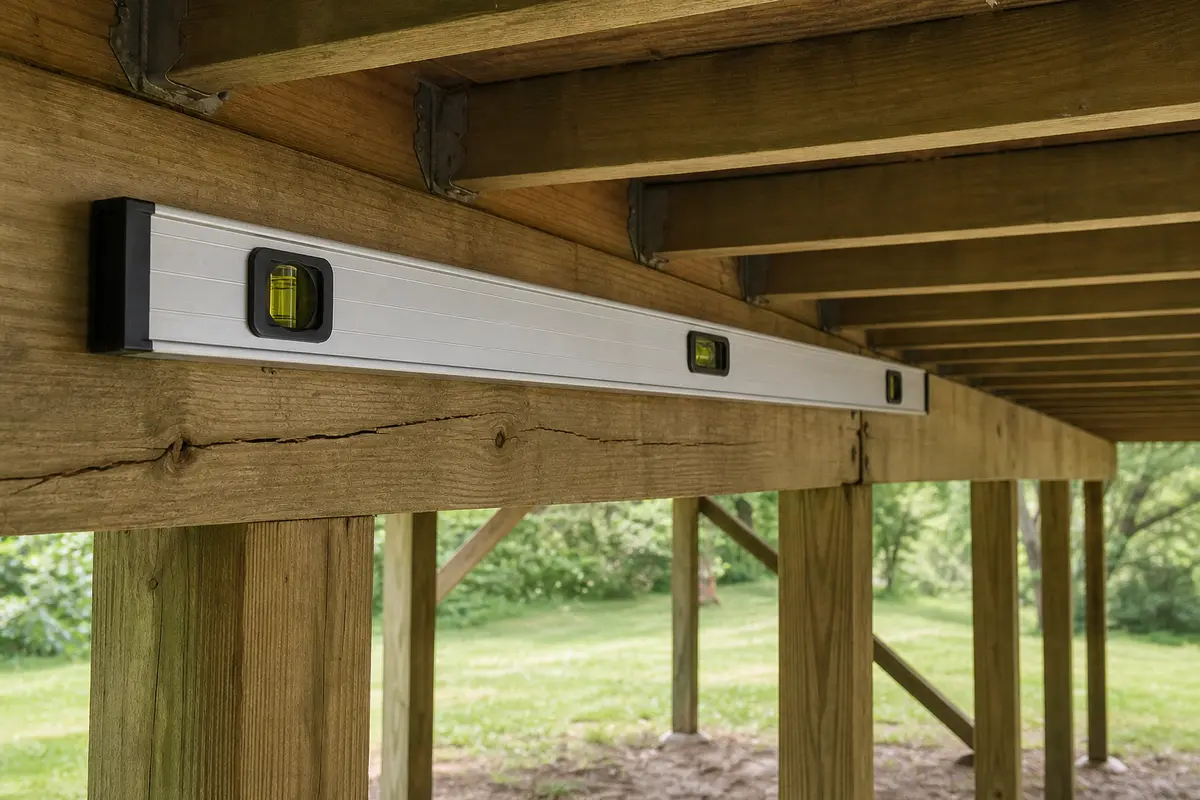
Helps when: Use it to check whether the beam line, post face, or nearby framing has moved out of plane.
Skip it when: Skip assuming a straight line proves safety; sound wood and tight support points still need checking.
Compare levels on Amazon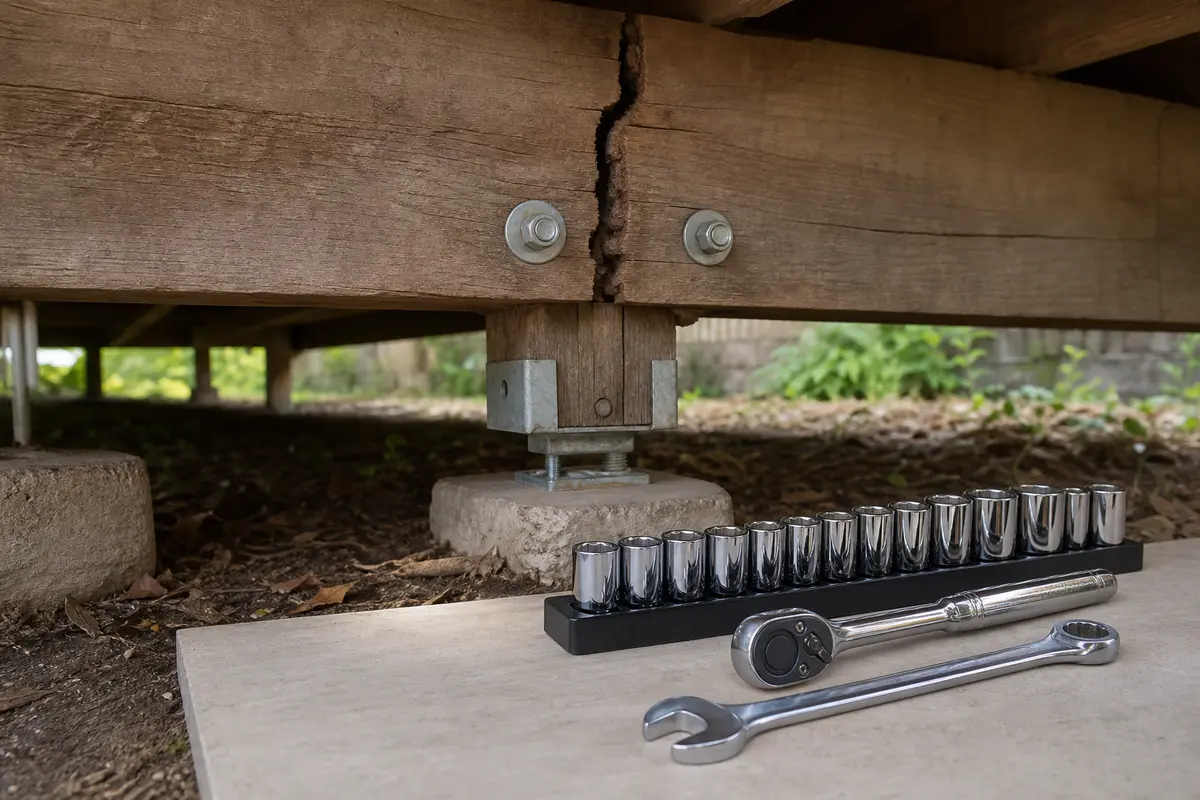
Helps when: Use it only to check obviously loose hardware after the wood condition and support point are understood.
Skip it when: Skip forcing bolts that are crushing wood, spinning, rusted solid, or passing through split fibers.
Compare socket and wrench sets on Amazon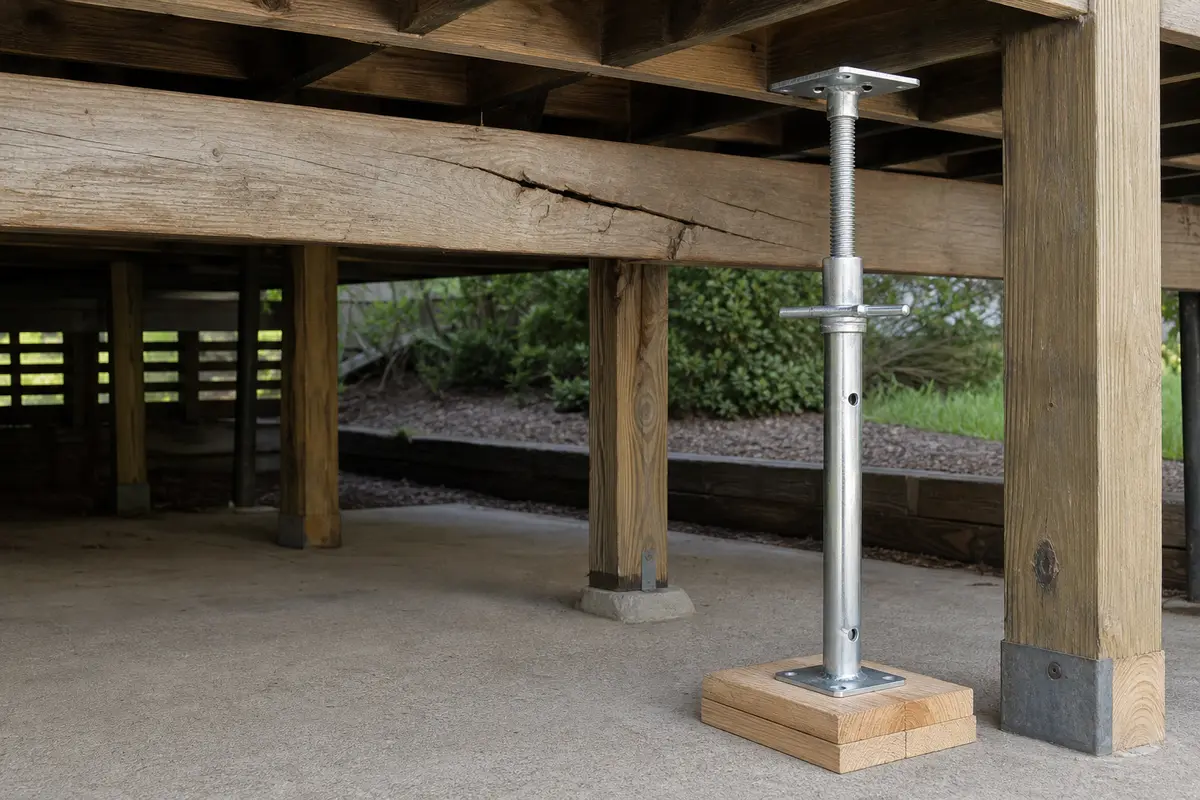
Helps when: Use one only as part of a real shoring plan before beam or connector work on a loaded deck section.
Skip it when: Skip DIY jacking if you are not experienced supporting deck loads safely.
Compare support jacks on AmazonBuy parts after the inspection points to a specific failure. The wrong connector on damaged wood is not an upgrade.
Paid links. As an Amazon Associate I earn from qualifying purchases. Repair Riot may earn a commission at no extra cost to you.
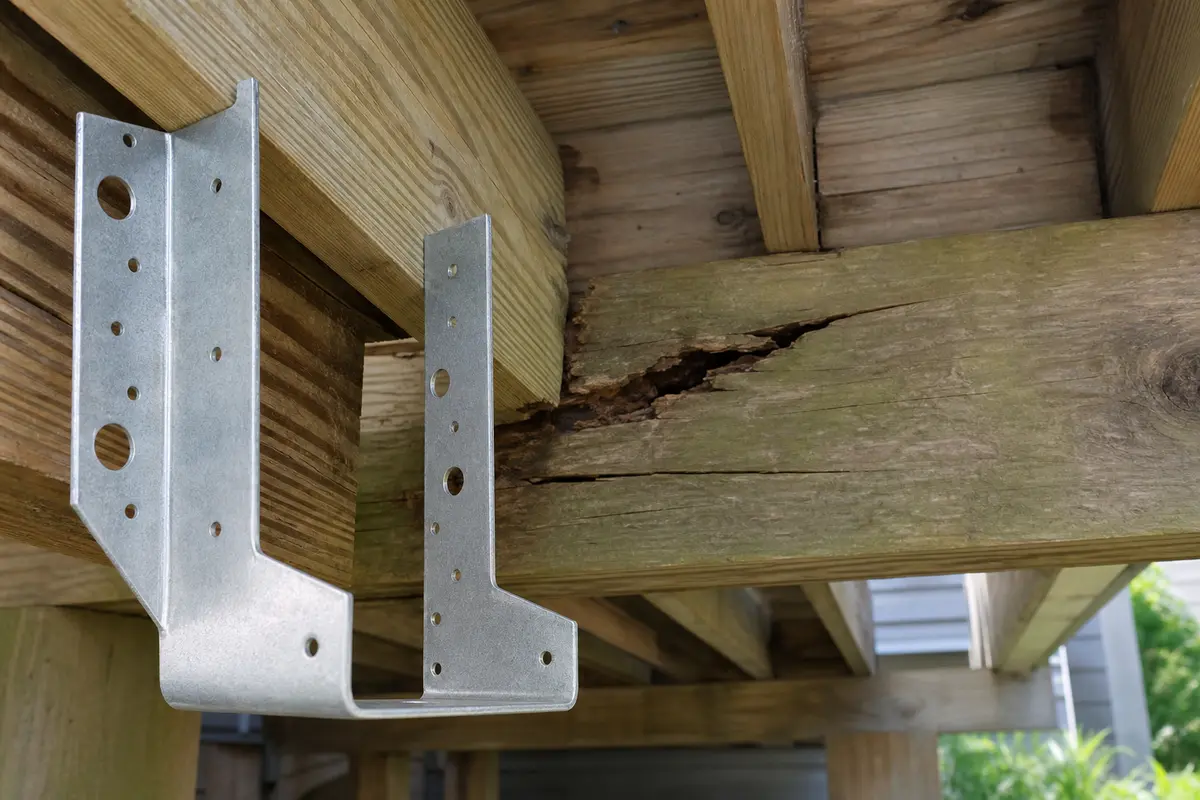
Helps when: Use one when a beam-side hanger is bent, rusted, pulled loose, or wrong for the joist after the wood is confirmed sound.
Skip it when: Skip it when the beam itself is soft, split through, or no longer gives the hanger solid fastening.
Compare joist hangers on Amazon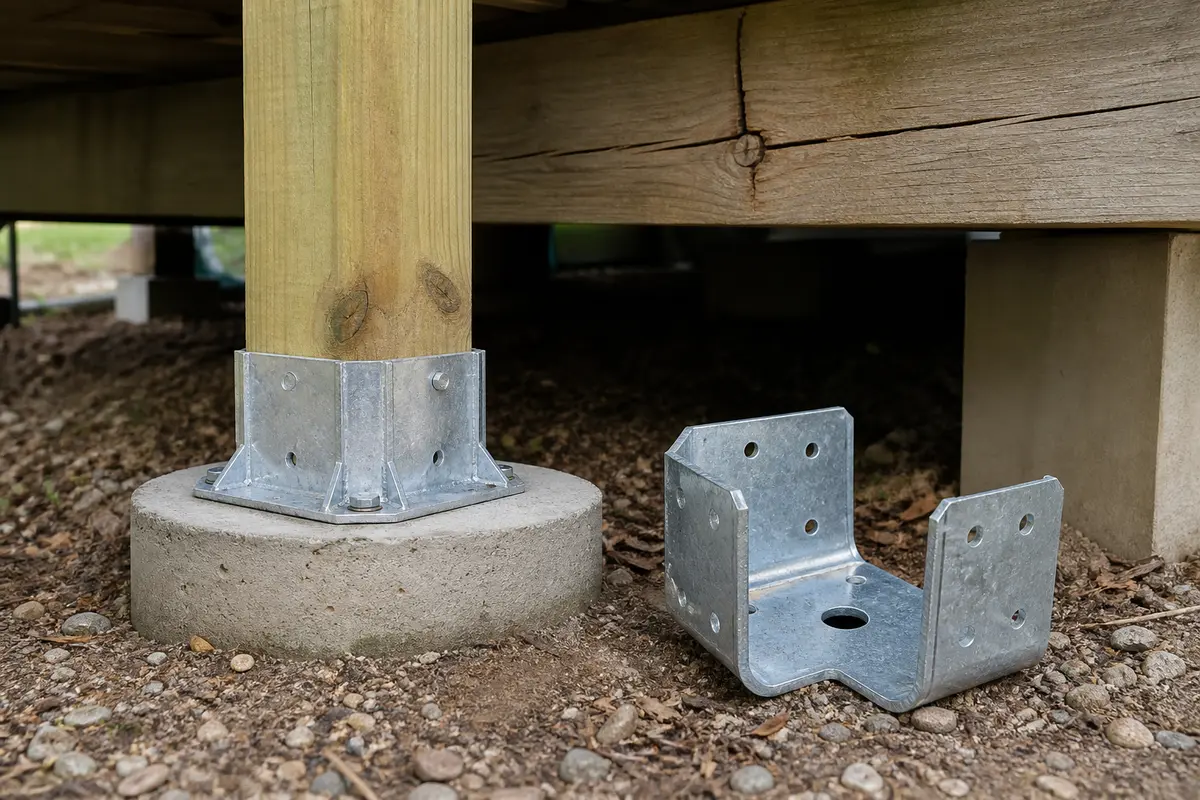
Helps when: Use one when the support-point hardware is damaged and the post, footing, and beam bearing are still sound.
Skip it when: Skip it when the beam crack comes from rot, a sagging beam, or footing movement.
Compare deck post bases on Amazon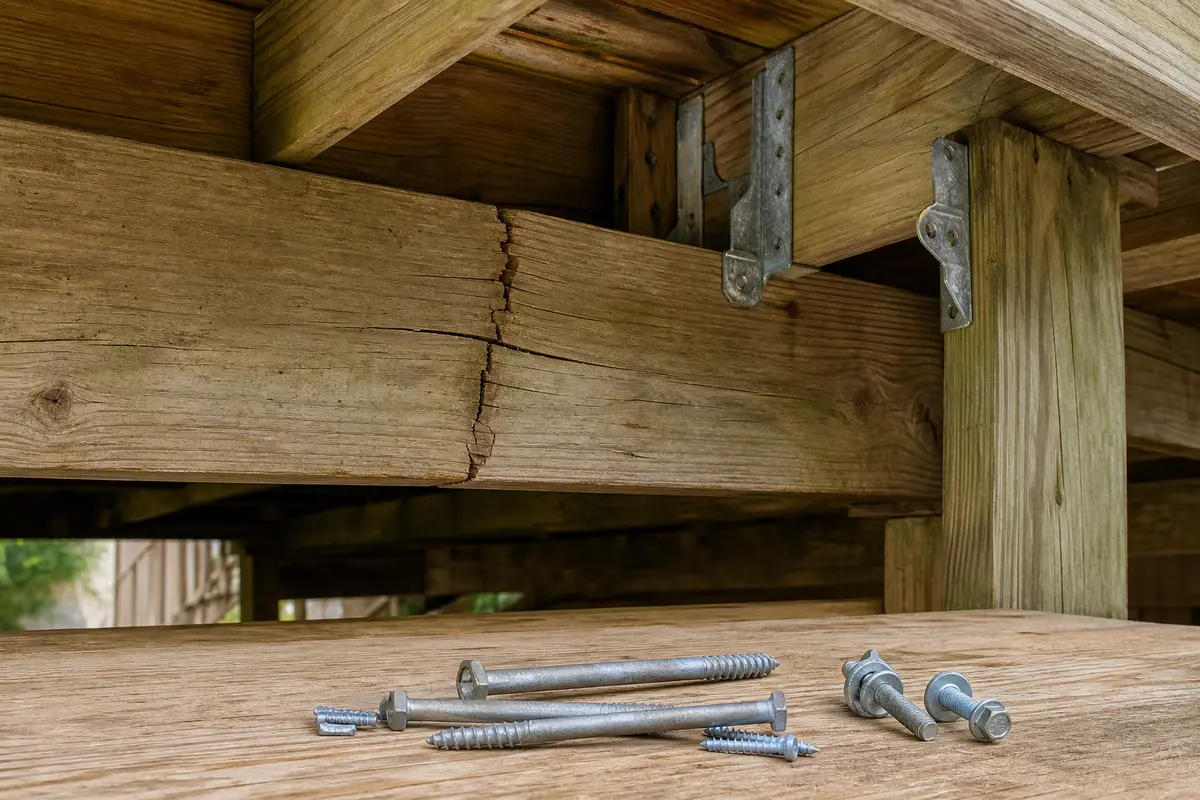
Helps when: Use them when the connector instructions or repair plan calls for exterior-rated structural fastening into sound framing.
Skip it when: Skip generic screws, drywall screws, and any fastener that is not approved for the connector and treated lumber exposure.
Compare structural fasteners on AmazonNo. Many large treated beams develop shallow checking as they dry. The danger clues are sagging, bounce, soft wood, a crack that wraps around the beam, or movement at posts and fasteners.
Do not use filler or caulk as a structural repair. It can hide the crack, trap moisture, and make it harder to see whether the split is changing.
Checking is usually shallow, follows the grain, and stays on one face of hard, straight lumber. A split is deeper, may show on more than one side, and often starts near a post, notch, bolt, or beam end.
Keep normal traffic off that section until you check it. A shallow check in a straight, solid beam is different from a crack with sagging, bounce, or soft wood.
Soft, dark, damp, or crumbly wood points to rot or moisture damage. Treat that as structural damage until the beam is exposed enough to see how far the decay runs.
Not until the wood is sound and the load path is clear. Extra hardware in rotten, crushed, or split wood can make the area worse or cover the failure.
That can be less serious than a split through the full beam, but it still needs a close look. Check whether the plies are separating and whether the split lines up with a post, bolt, hanger, or notch.
Usually not. Many repairs stay near the damaged beam area, support point, or connector. Widespread rot, several loose supports, or hidden framing damage calls for a broader deck evaluation.
Call a deck contractor, structural carpenter, or engineer when the beam sags, the deck moves, the wood is rotten, or the repair would require jacking and temporary support.
Repair Riot built this page around homeowner-visible deck clues: movement, rot, bearing points, connector stress, water exposure, and the stop points that should come before parts shopping.