Hairline crack, firm board?
Clean the crack, probe lightly, and keep debris out of the gap. Most shallow checking can stay in service while you watch it after rain and sun.
Deck board splitting is usually shallow surface checking, a split at a screw, or wet wood losing strength. Clean the crack, probe the depth, then check the starting point: a screw or board end points to fastening stress; dark damp wood at a joist line points to moisture.
A good clue is where the split starts: end grain, an overdriven or crowded screw, or a wet board edge that stays dark after nearby boards dry.
A firm hairline check can stay under watch. A soft, loose, lifted, or shoe-catching board needs repair before normal foot traffic returns.
Don’t start with: Do not fill the crack, drive a larger screw into the same hole, or cover the board before you know whether the wood and joist below are sound.
Clean the crack, probe lightly, and keep debris out of the gap. Most shallow checking can stay in service while you watch it after rain and sun.
Look for a fastener driven too close to the end or edge, a crushed head, rust, or a screw that spins. Refasten only when the board still holds.
Inspect the end grain, nearby screw location, and drainage at the rim. End splits often grow when wet end grain dries fast and a fastener wedges the wood apart.
Treat it as moisture damage until proven otherwise. Probe the board and the joist top below before deciding on any surface repair.
Shift attention below the board. Bounce, sag, lifted fasteners, or moving framing means a board swap alone will not solve the safety issue.
The top face shows where the split starts. The underside shows whether trapped water or weak framing is part of the job.
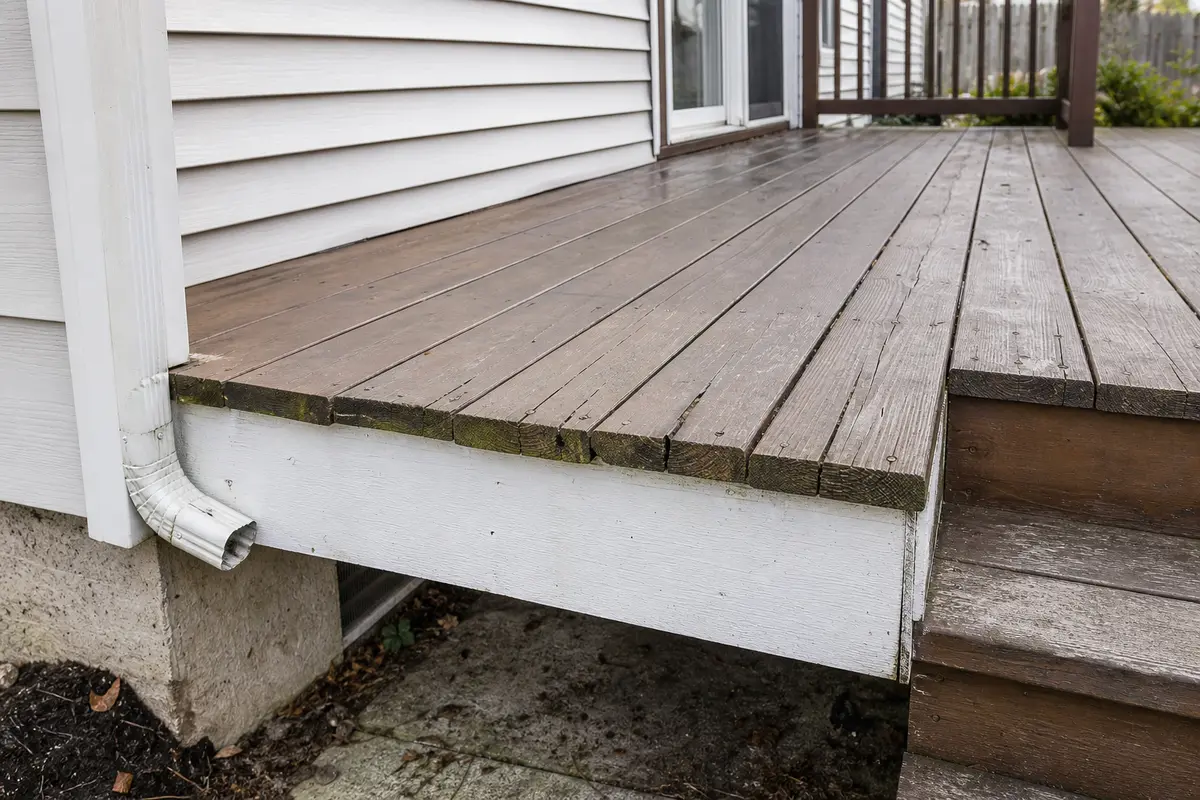
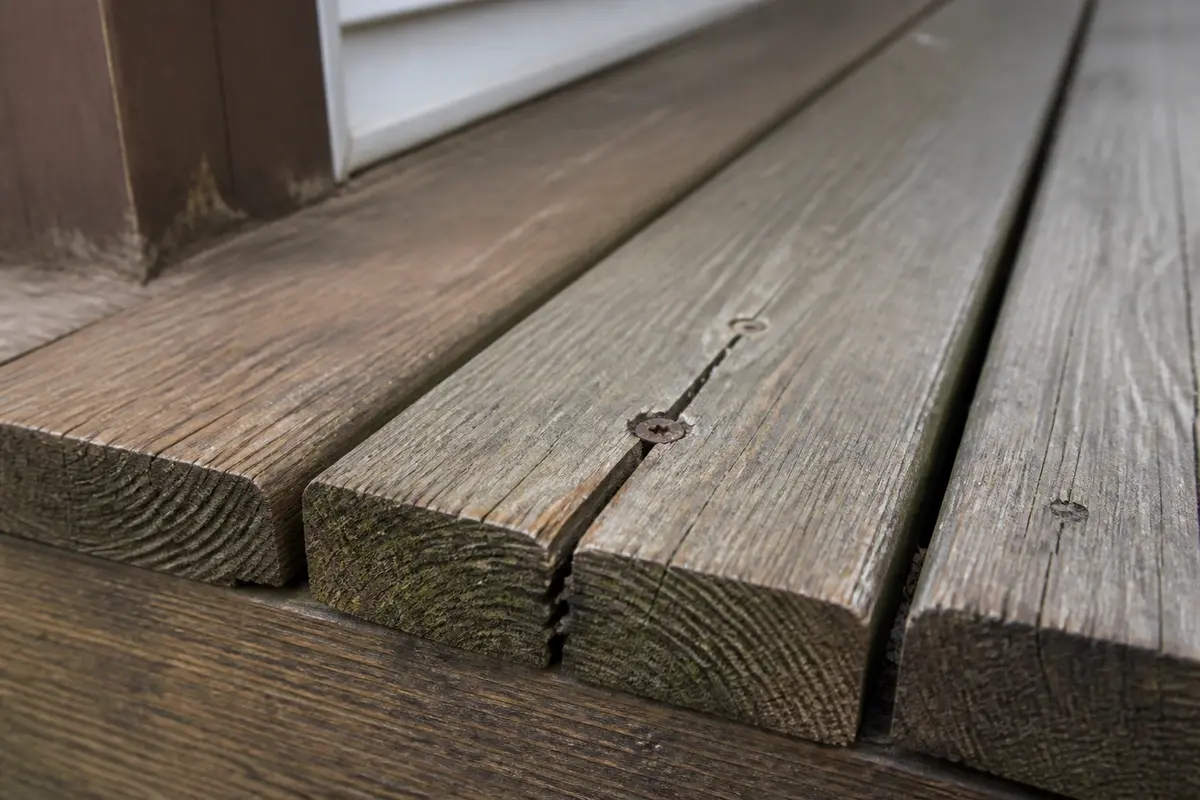
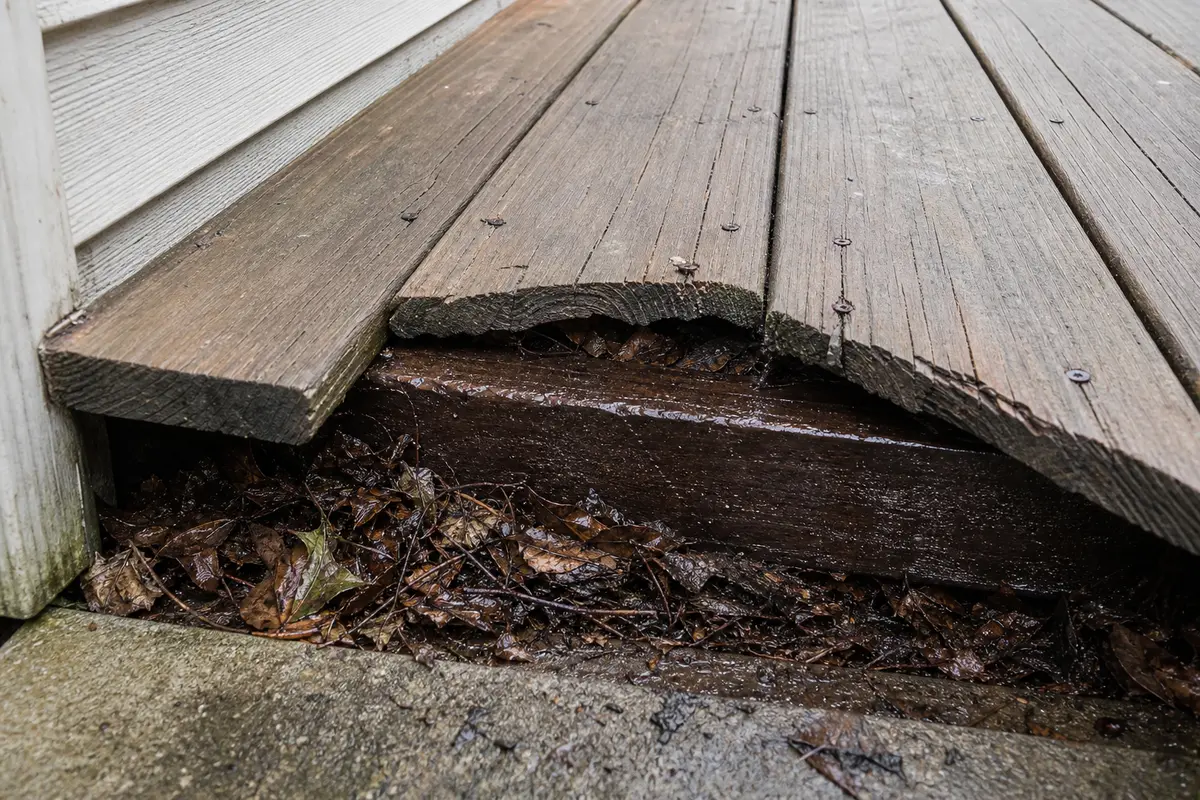
Do not buy screws, filler, a replacement board, or a hanger before the crack points there. Match the part to the exact diagnosis: board thickness for a failed board, screw length and coating for a sound refastening, and connector size only after you confirm the hanger is the problem. Skip filler if the board moves, feels soft, or is split through.
Most deck board splits fall into three buckets: shallow checking, fastener damage, or wet wood losing strength. Check the starting point. Grain-line checking stays on the surface; a crack at a screw points to hardware stress, and dark damp wood near a joist points to moisture.
Slow down before you fill or refasten the split. Clean the crack, check where it starts, and look for a loose screw, soft wood, or a damp joist line. Filler, bigger screws, and overlays hide those clues.
Use one clean inspection pass before touching fasteners. Brush the crack out, press on both sides, probe gently with a screwdriver, and compare the board with the boards beside it. The result tells you whether to watch, refasten, replace the board, or stop for framing work.
| What you see | What it usually means | Next move |
|---|---|---|
| Thin grain-line cracks, firm underfoot | Surface checking from weather and normal wood movement | Clean the gap, keep it dry, and watch after rain and sun. |
| Crack starts at a close screw or nail | Fastener placement or overdriving split the board | Remove or refasten only when the surrounding wood is still solid. |
| End grain is open and wet or dirty | Water and fastener stress are working together | Clear drainage, inspect the rim area, then decide whether the end of the board can stay. |
| Wood flakes, dents easily, or stays dark | Rot or trapped moisture has weakened the board | Replace the board and inspect the joist top during removal. |
| Board rocks, bounces, or lifts at one support | The support below may be moving or failing | Stop surface repairs and inspect the joist, hanger, beam, and nearby railing or stair connections. |
Start with the least destructive step that proves the board is still sound. Clean and probe before you remove fasteners; replace the board when it is split through, soft, or lifting. A good repair leaves firm footing and open drainage, not glue, filler, or crowded screws holding a broken board together.
A split board can be the first visible clue that the support below is wet, loose, or moving. Before new decking goes down, check the joist top and connector at that line. A new board will fail early when soft wood or a moving connection keeps working underneath.
These tools support inspection and a small board replacement. They are not a reason to work on a deck section that is soft, elevated, or moving before you understand the support below.
Paid links. As an Amazon Associate I earn from qualifying purchases. Repair Riot may earn a commission at no extra cost to you.
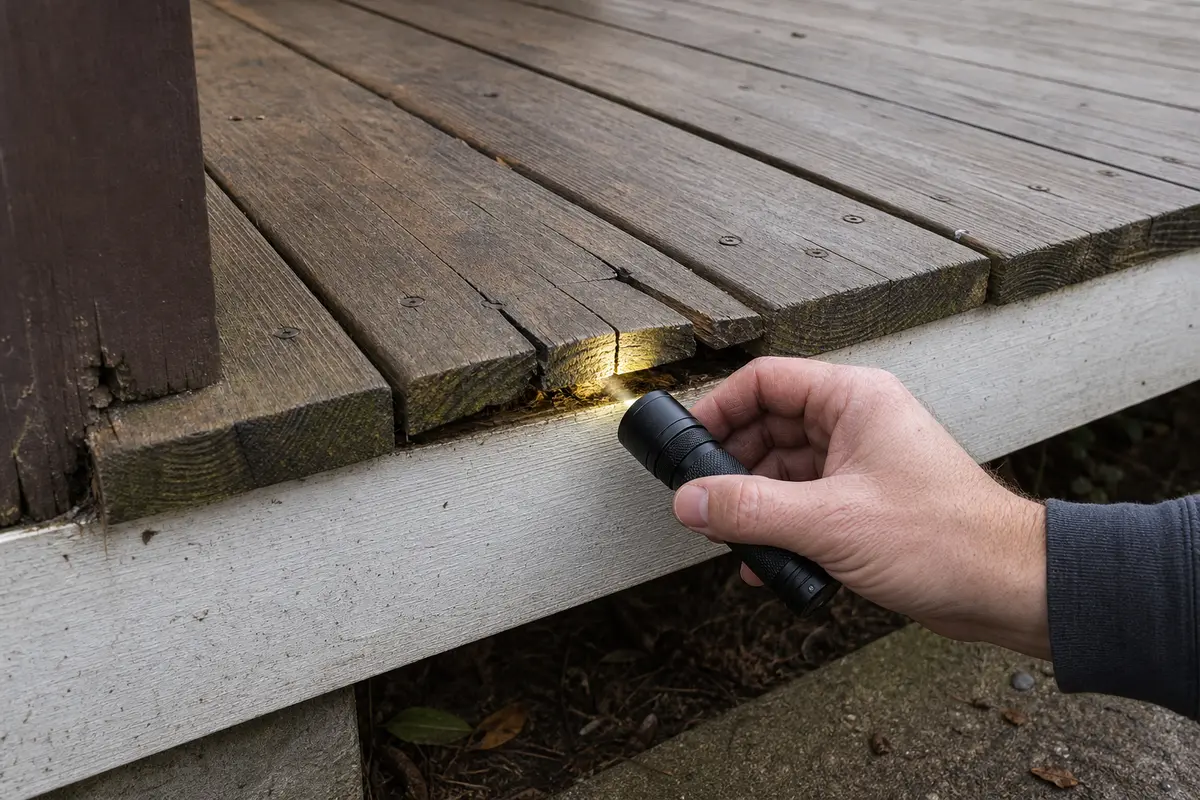
Helps when: You need to see the crack depth, screw condition, board underside, and joist top from a safe position.
Skip it when: Daylight already shows the whole crack and the underside is not safely accessible.
Compare inspection flashlights on Amazon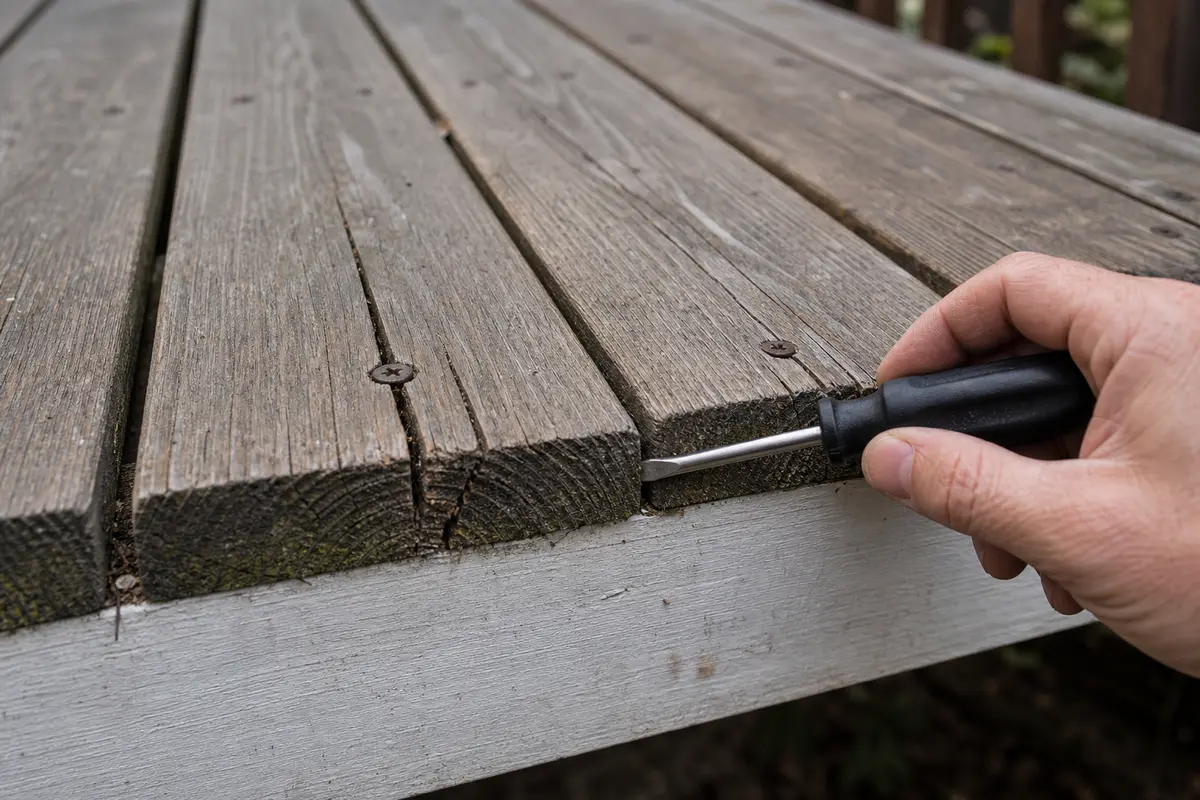
Helps when: You are gently probing for soft wood and clearing a narrow crack without tearing up sound grain.
Skip it when: The board is unsafe to stand near or the tool sinks into structural framing easily.
Compare probes and screwdrivers on Amazon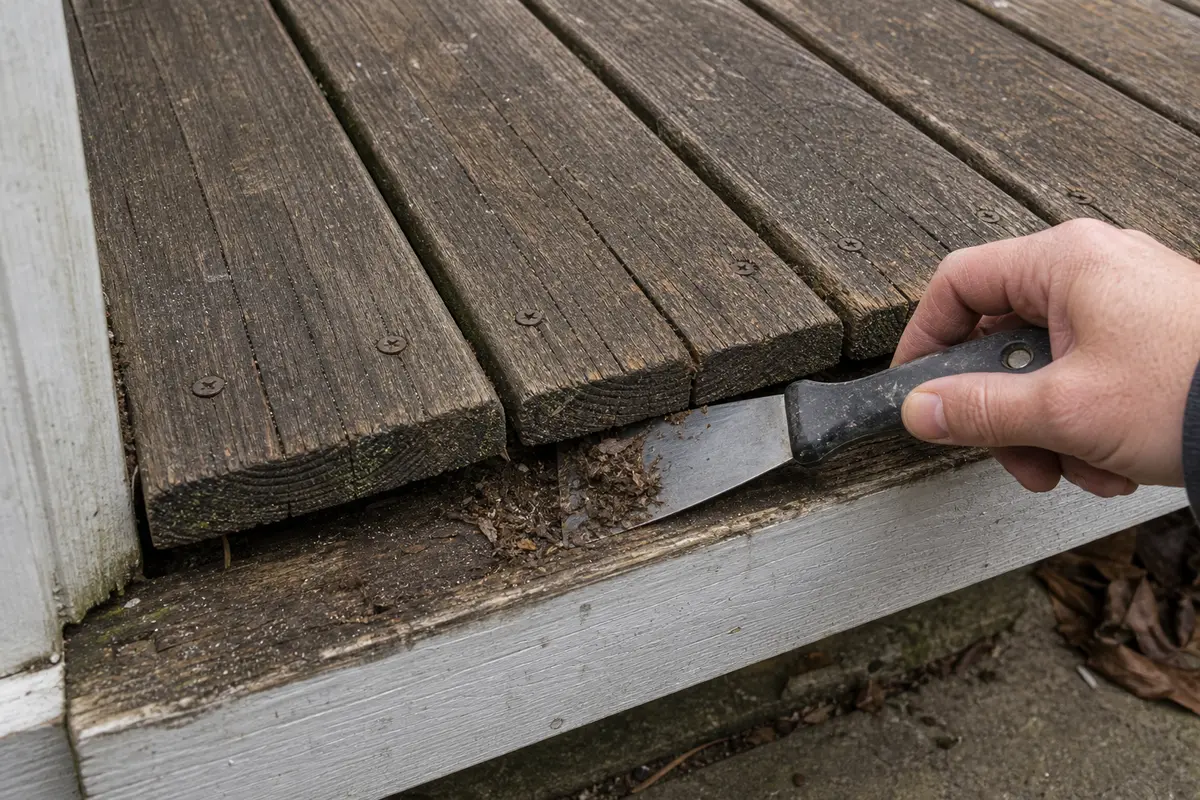
Helps when: Packed dirt in the split or board gap needs to come out before you judge crack depth.
Skip it when: The split is already open through the board or the wood around it is soft.
Compare putty knives on Amazon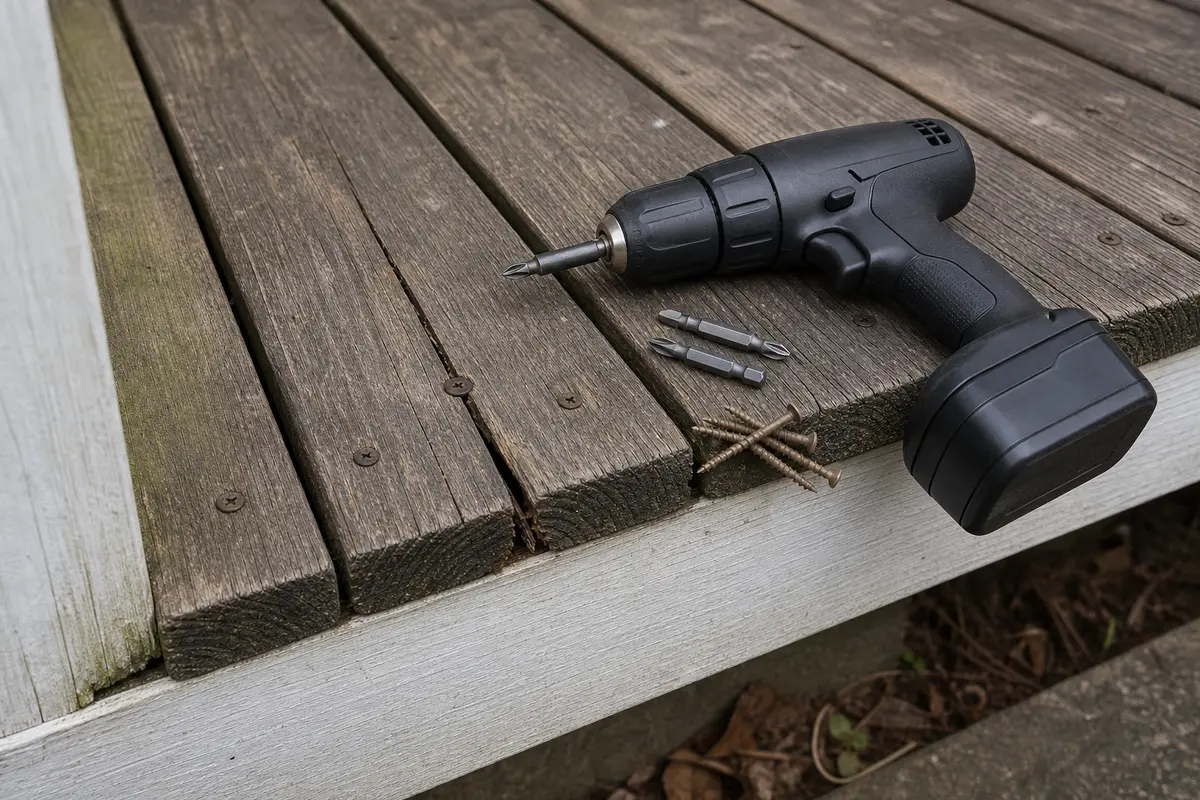
Helps when: A solid board can be refastened or a failed board can be removed after the support below checks out.
Skip it when: Fasteners spin in soft wood, the joist is rotted, or the repair needs structural framing work.
Compare drill drivers on AmazonBuy parts only after the split points to that repair. Look for wet staining, loose fasteners, a repeated split at the same screw line, or a board that feels soft underfoot before shopping. The useful choices are usually a matching deck board, exterior deck screws, or a connector when the framing inspection proves one connector is bad.
Paid links. As an Amazon Associate I earn from qualifying purchases. Repair Riot may earn a commission at no extra cost to you.
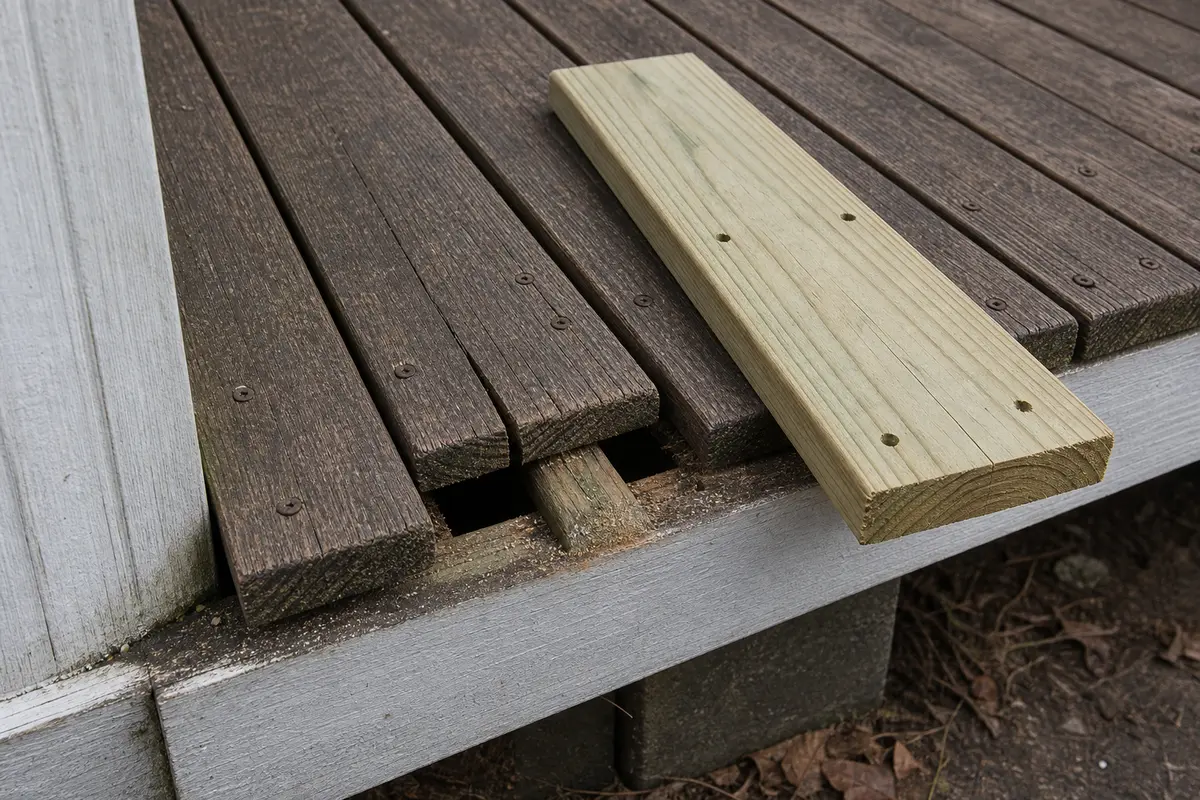
Helps when: The board is split through, soft, lifted, or unsafe, and the joists below are solid enough to hold new fasteners.
Skip it when: Only shallow surface checking is present, or the joist top needs repair before new decking goes down.
Compare deck boards on Amazon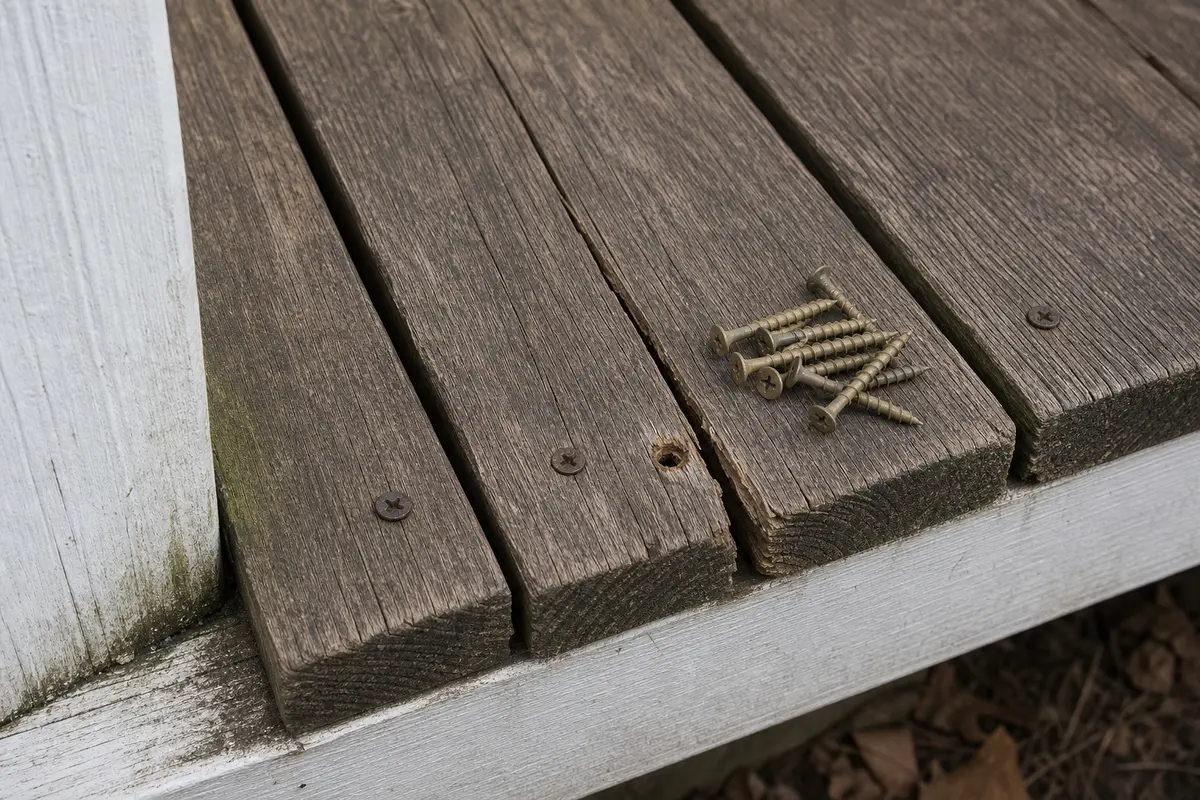
Helps when: The board is still sound and the split came from loose, missing, corroded, or badly placed fasteners.
Skip it when: The board is soft, split through, or the joist will not hold a screw firmly.
Compare exterior deck screws on Amazon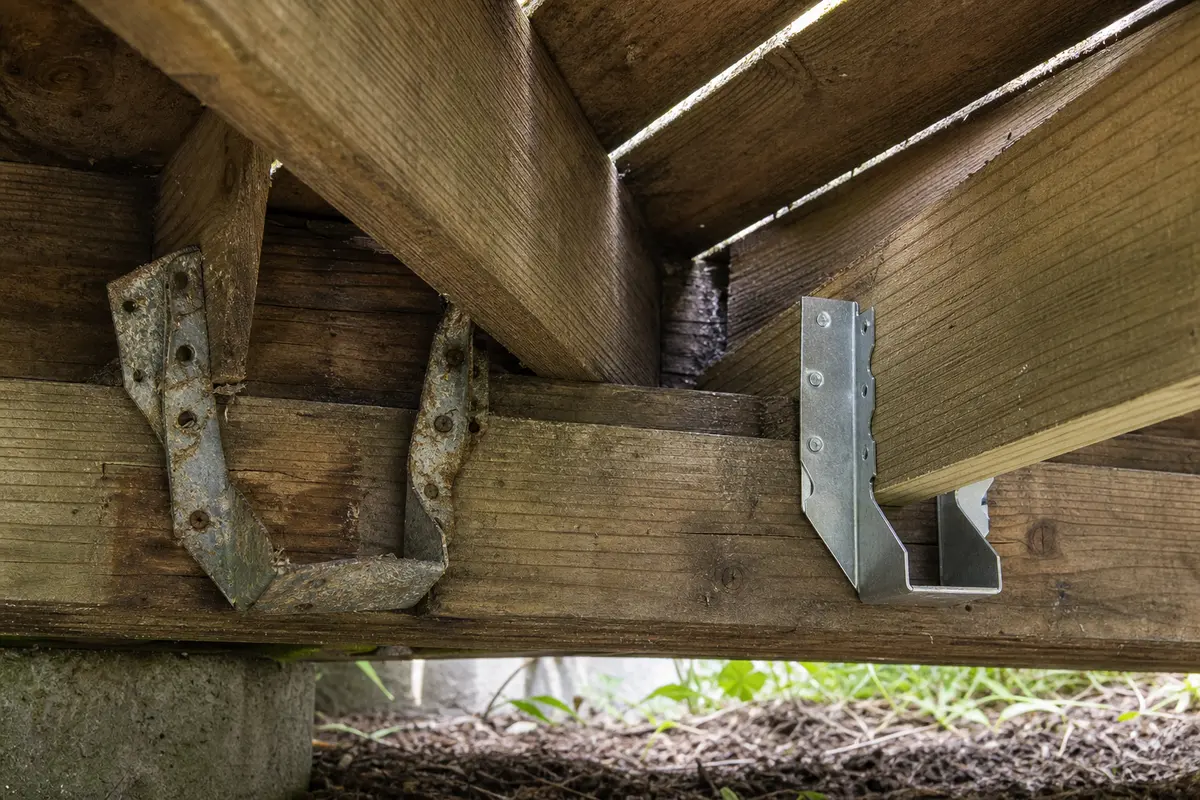
Helps when: The same joist line has a bent, loose, or heavily corroded hanger and the surrounding wood is still sound.
Skip it when: You are guessing from the split alone or the joist, rim, beam, or post needs structural repair first.
Compare joist hangers on AmazonIf the board feels firm and the crack stays on the surface, shallow checking is normal on older wood decking. Repair or replace a board if it is soft, loose, split through at a screw, or opening wide at the end.
Only as a cosmetic move on a shallow, solid surface check. Clean the crack and check the depth first; if the board moves, feels soft, or is split through, filler is hiding a failed board instead of repairing it.
End grain dries fast and takes on water fast, so it moves a lot. Add a fastener too close to the end or repeated freeze-thaw exposure, and the board end can open up.
Usually no. If the board is already splitting, another screw in the same area can wedge the crack wider. Check that the board feels solid, then test whether the joist below will hold a proper refastening pattern.
A split is a safety issue when the two sides flex separately, the wood feels soft, or the crack catches a shoe. Check the screw line too; lifted fasteners on stairs, entry paths, or elevated deck edges mean the area should stay blocked off until footing is firm.
That usually means the problem was underneath all along. Check the joist top, fastener holding power, and nearby framing for rot, twisting, or loose connectors before blaming the new board.
Check both sides of the crack. Surface checking stays shallow, and the board feels firm when you press beside it. If the split opens under foot pressure, reaches through the board, catches a shoe, or sits in soft wood, replace the board.
Usually no. A split or stripped screw hole has already lost holding power. Check for wood that feels solid away from the split, refasten there, and stop if the joist below will not hold the screw.
Replace only what has failed after you inspect the surrounding boards and joists. If several boards split along the same line, check for wet debris, close fasteners, or movement below before more decking goes down.
Repair Riot built this page around what a homeowner can see and feel: crack depth, screw placement, damp wood, and movement at the support line. The references below shaped the safety and wood-movement checks; the repair sequence stays focused on when to inspect, refasten, replace, or stop.