Is the outlet, plug, or cord loose or warm?
Leave the freezer unplugged. A house-side power fault comes before appliance parts.
A repeating click-buzz-click means the compressor is trying to start and dropping out. Check the wall outlet, cord, compressor heat, and rear airflow before you blame the start relay.
Good wall power plus a cooled, clean compressor area moves the model-specific start relay/overload higher on the list.
Listen for one attempt. A steady hum means the compressor started; a short buzz and hard click means it did not.
Don’t start with: Do not keep hot-starting the freezer or order a compressor, control board, or universal relay from sound alone.
Leave the freezer unplugged. A house-side power fault comes before appliance parts.
Keep it upright and follow the settling time in the exact Midea manual before testing again.
Unplug it, let the compressor cool, and clean only accessible airflow surfaces without moving tubing or wiring.
After power, settling time, and airflow check out, inspect the model-specific start relay/overload with the freezer unplugged.
The compressor started. Track cabinet temperature; the complaint may be cooling performance rather than startup.
Stop buying parts. Compressor and sealed-system diagnosis belongs with an appliance technician.
The sound pattern matters, but power, recent movement, heat, and airflow decide whether the relay belongs on the shopping list.
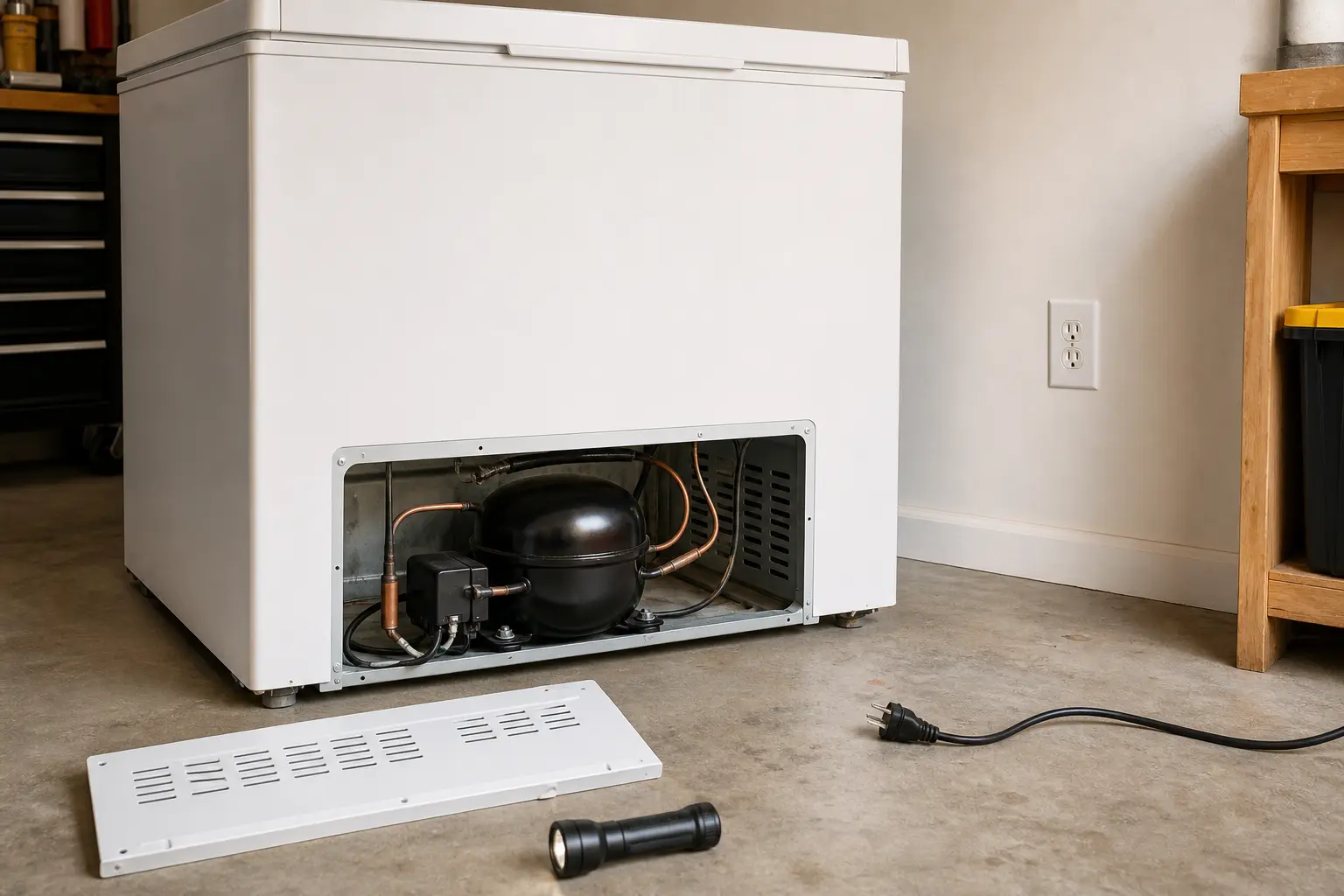
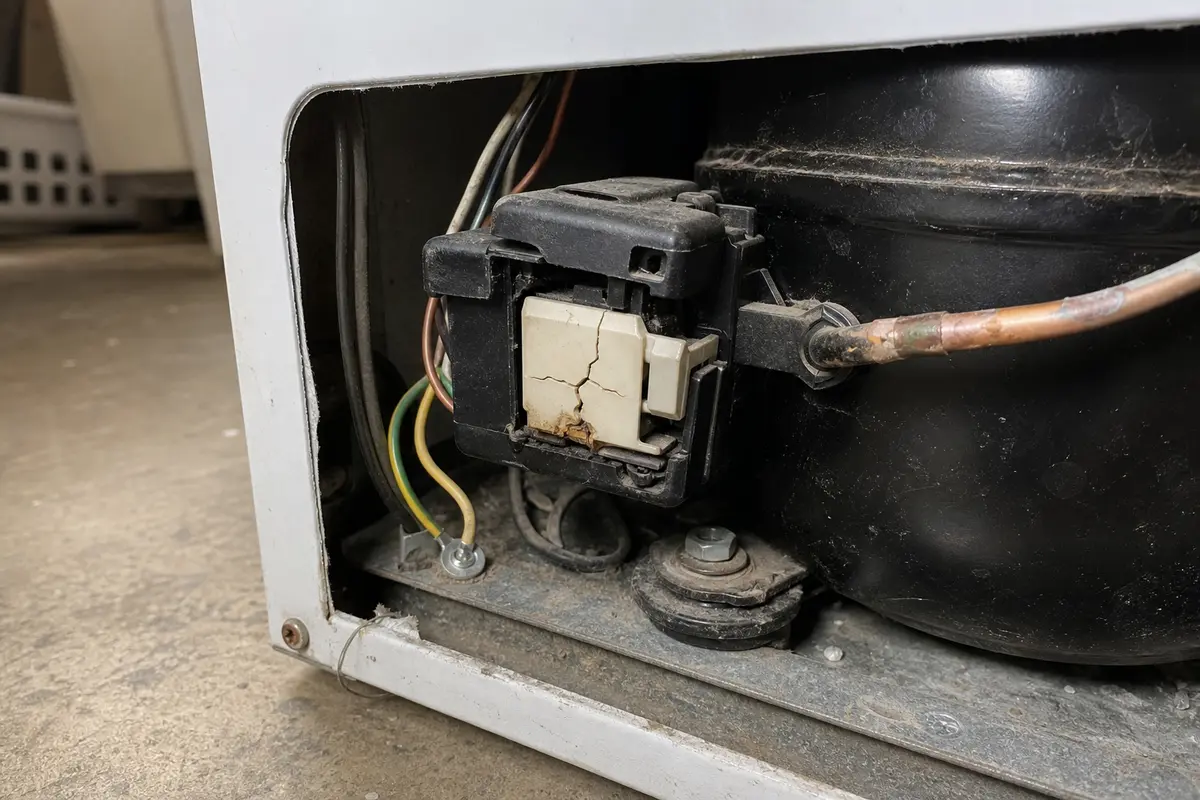
Copy the complete model number and compressor label. Buy only after direct wall power, upright settling time, a cooled compressor, and clear airflow still leave a repeatable click-buzz-click pattern.
A click is an event, not a diagnosis. The useful clue is what happens immediately before and after it.
Do these checks with covers installed. The only powered observation should be listening from a safe position.
A freezer that was pushed tight to the wall, covered in lint, or transported on its side needs a different first move from one that failed in place.
Use the result to choose one next move instead of changing several parts at once.
| What you found | What it points to | Next move |
|---|---|---|
| Loose, hot, scorched, or repeatedly tripping outlet | House-side power fault | Leave the freezer unplugged and have the outlet or circuit corrected. |
| Starts directly at the wall | Extension cord, strip, or weak connection | Keep the freezer on the proper receptacle and monitor temperature. |
| Starts and settles into a steady hum | Compressor completed startup | Track temperature recovery; do not replace the relay from one click. |
| Click-buzz-click after cool-down and clean airflow | Start relay/overload or hard-starting compressor | Inspect the model-specific start device with power unplugged. |
| Start device is cracked, melted, or smells burnt | Start-device failure is supported | Order the exact Midea-listed configuration by model and compressor. |
| Correct replacement makes no difference | Compressor or sealed-system fault | Stop DIY and schedule appliance diagnosis. |
These are for basic power-off inspection and accessible outlet checks, not live appliance diagnosis.
Paid links. As an Amazon Associate I earn from qualifying purchases. Repair Riot may earn a commission at no extra cost to you.
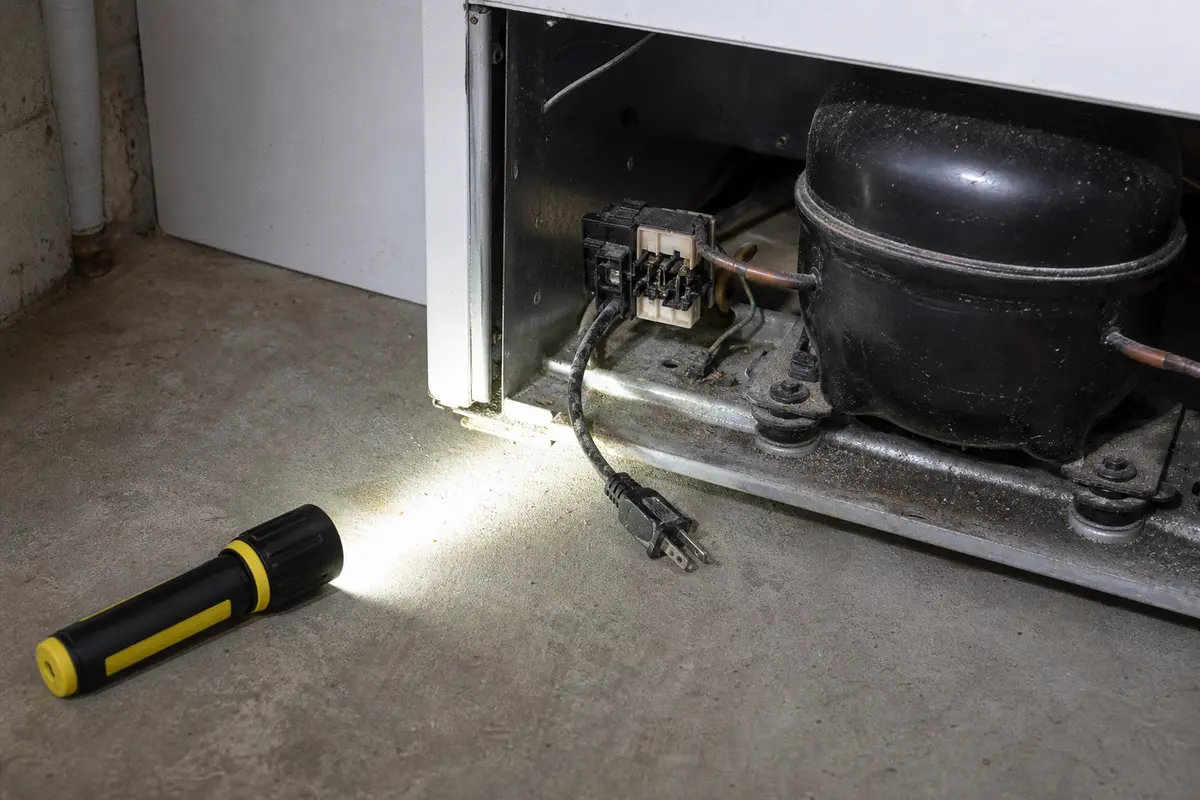
Helps when: You need a clear view of the plug, cord, rating label, ventilation opening, and start-device cover.
Skip it when: Access requires tipping the freezer, pulling on tubing, or reaching near damaged wiring.
Compare inspection flashlights on Amazon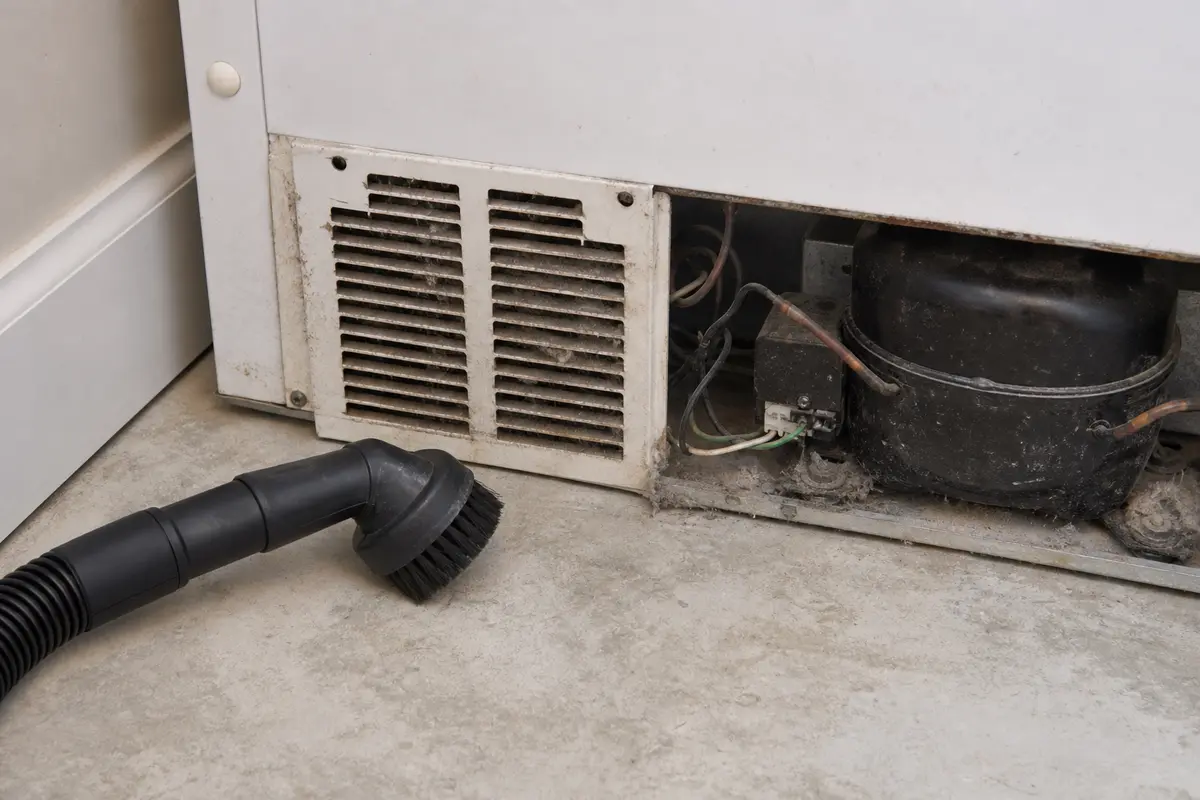
Helps when: Accessible rear ventilation slots and compressor-area surfaces are packed with lint or pet hair.
Skip it when: The nozzle could snag wiring, bend tubing, or push debris into a covered electrical connection.
Compare vacuum brush attachments on Amazon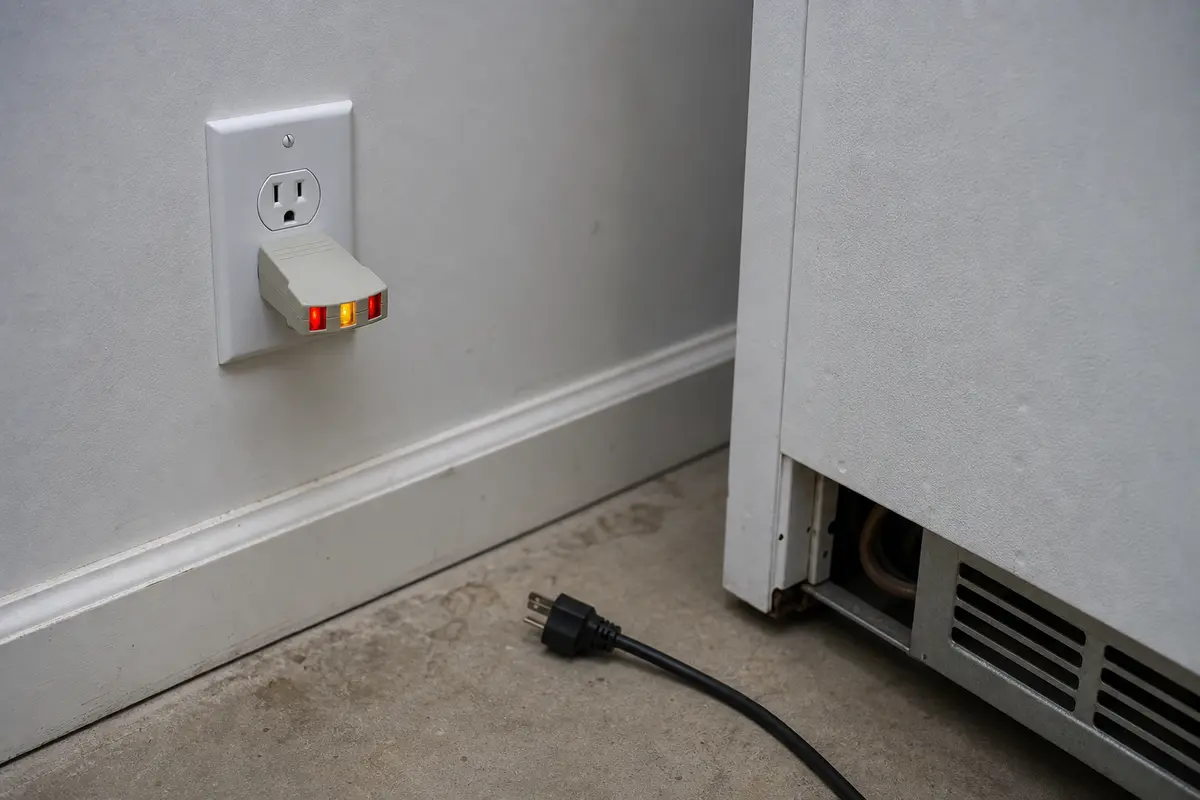
Helps when: The receptacle looks undamaged and you want a basic wiring screen before blaming the freezer.
Skip it when: The outlet is loose, warm, scorched, wet, or trips again; that is an electrician stop point.
Compare outlet testers on AmazonRelay and overload layouts vary by Midea model and compressor. A similar-looking universal kit is not proof of electrical or terminal compatibility.
Paid links. As an Amazon Associate I earn from qualifying purchases. Repair Riot may earn a commission at no extra cost to you.
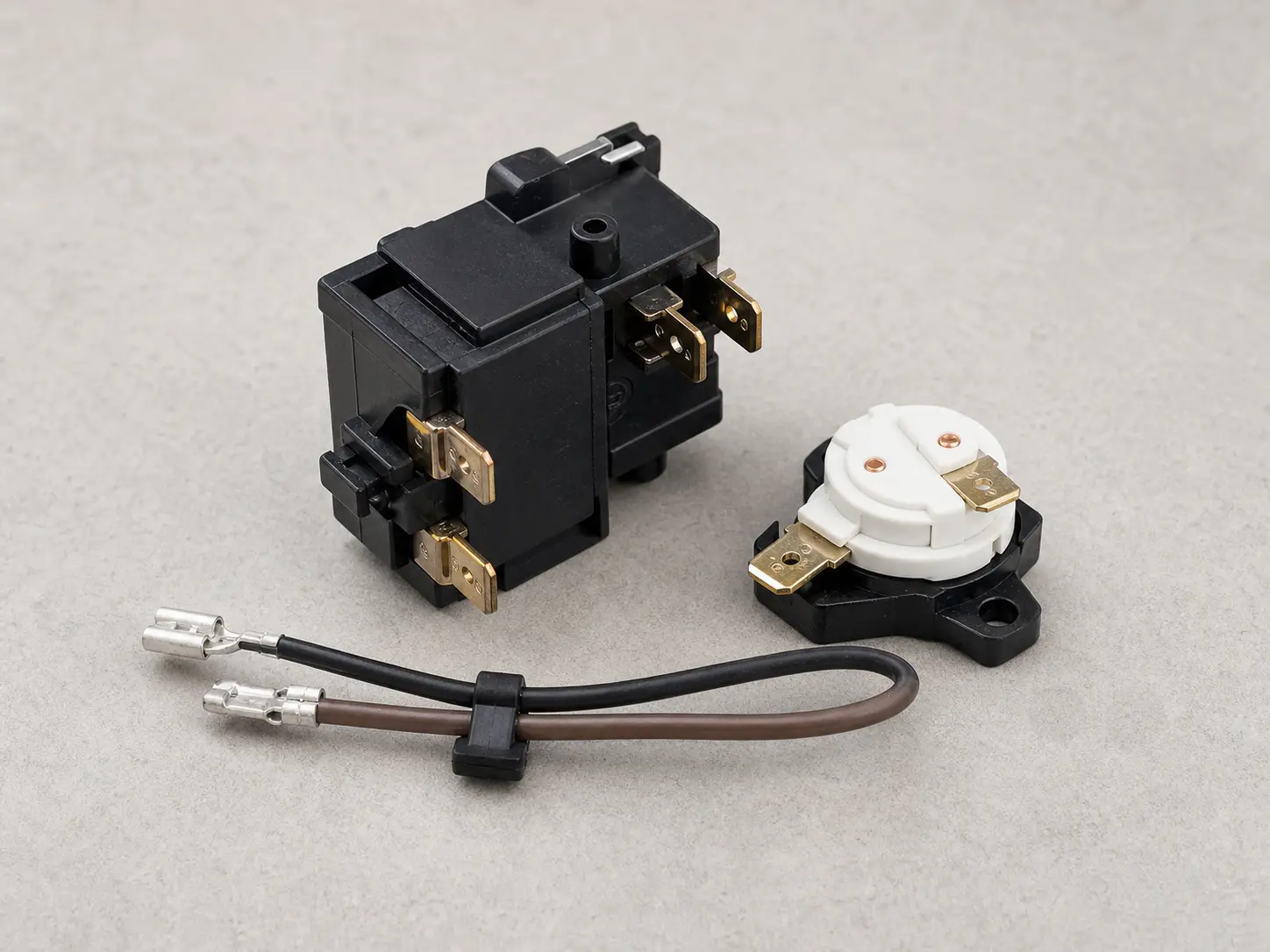
Helps when: Good wall power, proper settling time, a cooled and clean compressor area, and visible start-device damage support replacement.
Skip it when: The model, compressor code, terminal layout, electrical rating, or overload pairing is not confirmed—or the outlet still has a fault.
Compare Midea-compatible start relays on Amazon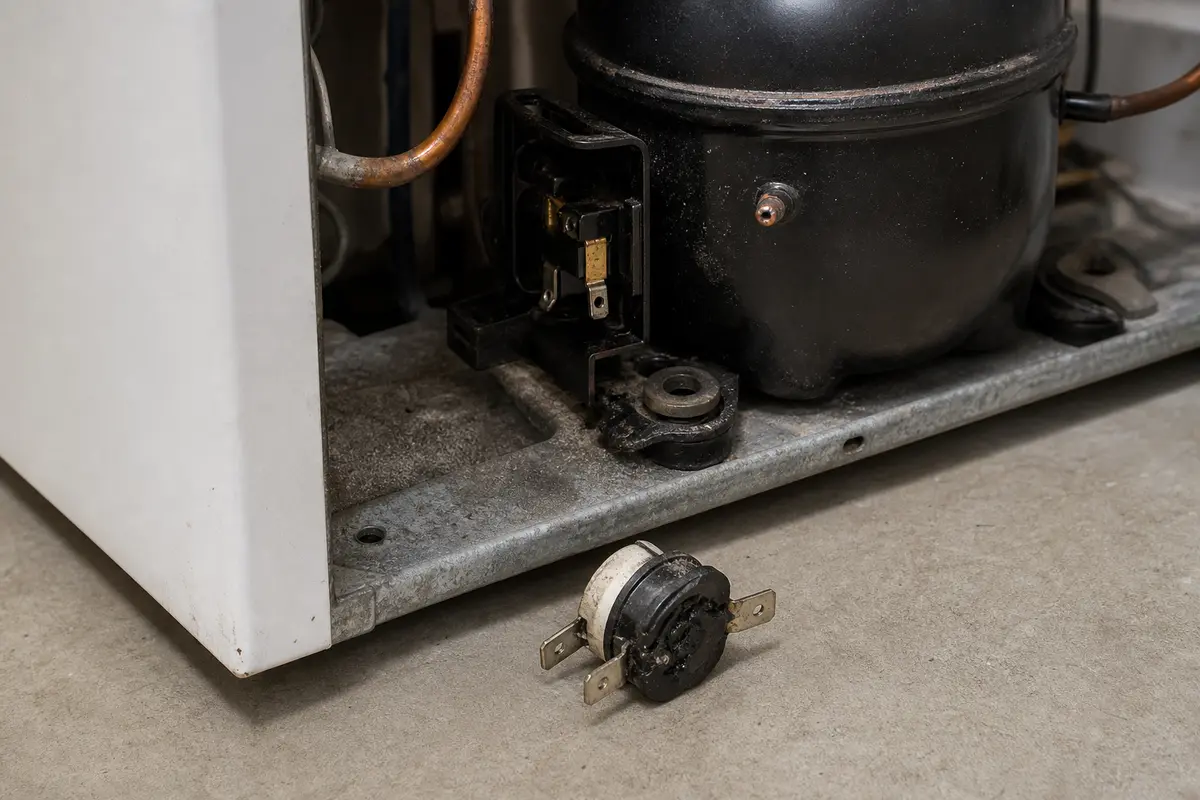
Helps when: The parts diagram lists a separate overload and the original is cracked, heat-damaged, or included with the correct relay kit.
Skip it when: The model uses a combined assembly or the replacement is offered only as a universal hard-start device.
Compare Midea-compatible overload protectors on AmazonThat sound usually comes from the compressor trying to start and then dropping out. The most common reasons are weak power at the outlet, an overheated compressor area, or a failed freezer compressor start relay.
Yes. A loose or weak outlet can let the freezer get enough power to click but not enough to start the compressor properly. That is why a direct test on a known-good wall outlet comes before parts.
A bad relay often smells burnt, shows melted plastic, or rattles when removed because the internal pieces have broken apart. The freezer will usually click every few minutes without settling into a steady hum.
If power is good and a correct new start relay does not change the symptom, the compressor is the likely problem. At that point, further repair usually means a pro diagnosis rather than more guess-and-buy parts.
No. Repeated restart attempts can keep overheating the compressor and overload. Let it cool, do the simple checks once, and then make the next move based on what you found.
Yes. A move can leave the unit needing upright settling time, loosen a weak connection, or finish off an already failing start relay. If it was tipped, let it sit upright for several hours before testing.
No. Controls can click during normal operation, and a compressor may click when starting or stopping. The stronger failure clue is a repeating click-buzz-click paired with no steady compressor run and rising temperature.
Do not treat a universal kit as a default homeowner fix. Use only the start components specified for the exact model and compressor, or have an appliance technician diagnose the startup circuit.
Model instructions control power, transport, clearance, refrigerant, and support decisions. The start-device photos on this page are diagnostic examples, not a universal Midea parts diagram.