Does it surge before you pull the trigger?
Start on the engine side: fuel age, choke position, air filter, carburetor bowl, and governor linkage.
If a pressure washer keeps revving up and down, start with fuel, air, choke position, and water flow before you blame the pump or replace the carburetor.
Old fuel and a partly restricted carburetor are common, especially after storage. A dirty air filter, half-closed choke, clogged inlet screen, weak hose flow, or wrong nozzle can make the same hunting sound.
First note when the engine hunts. Surging with the trigger released usually points to fuel delivery, choke, air intake, or governor movement. Surging only while spraying moves the check toward nozzle size, inlet screen debris, hose kinks, and water supply. If the washer sat all winter with fuel in it, fresh fuel and basic carburetor checks come before pump parts.
Don’t start with: Do not start by turning carburetor screws at random or ordering a pump. Those moves can create a second problem before you have found the first one.
Start on the engine side: fuel age, choke position, air filter, carburetor bowl, and governor linkage.
Check the water side first: nozzle tip, inlet screen, hose kinks, weak supply flow, and pump load.
That is a lean-running clue. Fresh fuel and carburetor cleaning come before adjustment screws or replacement parts.
Drain it safely, refill with fresh fuel, and retest before opening the carburetor.
Shut it down and stop the DIY diagnosis. That is no longer a simple surge check.
A surging pressure washer can be reacting to fuel, air, governor movement, or pump load. Use these checks to separate an engine-side problem from a water-side restriction before buying parts.
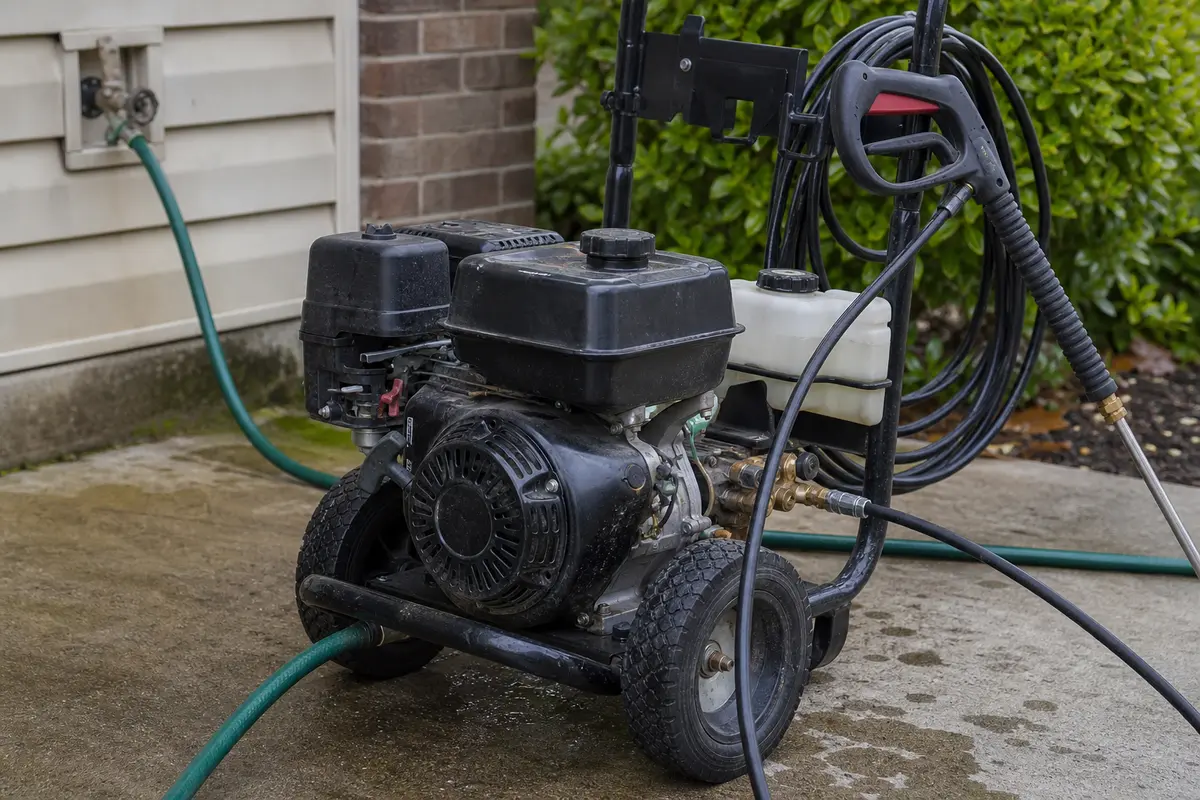
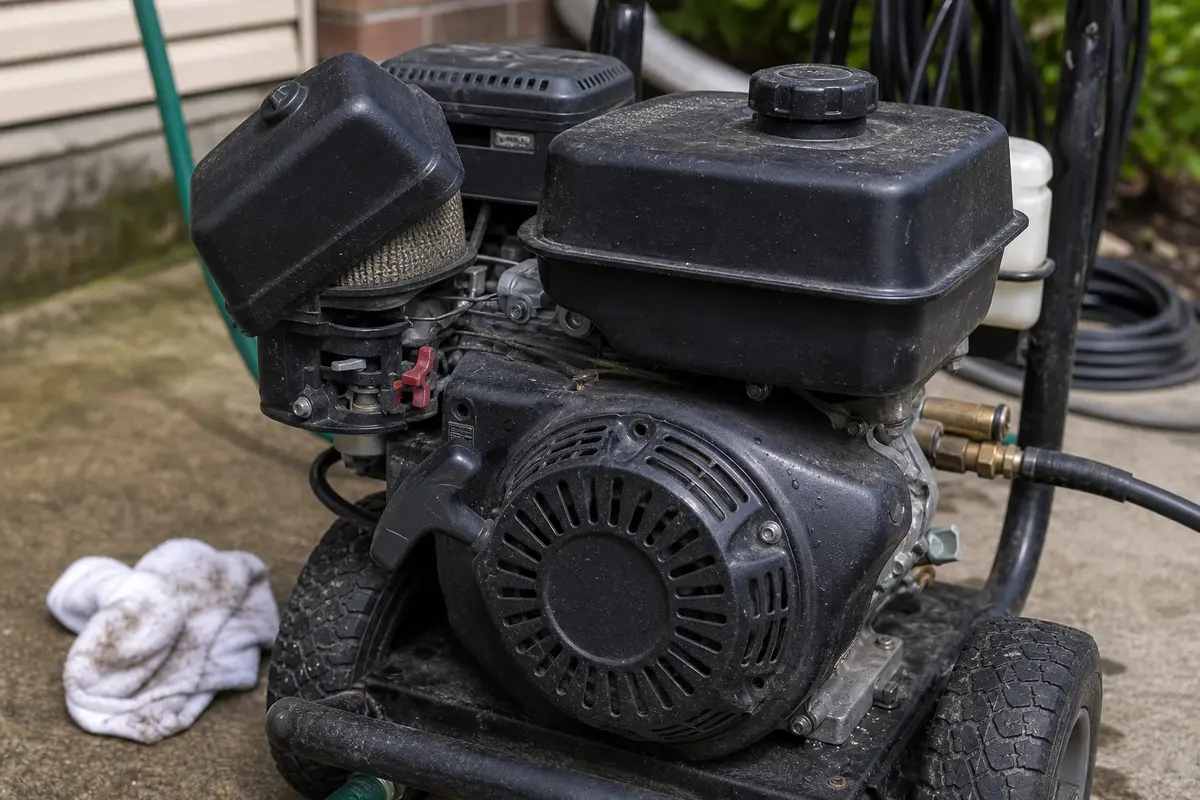
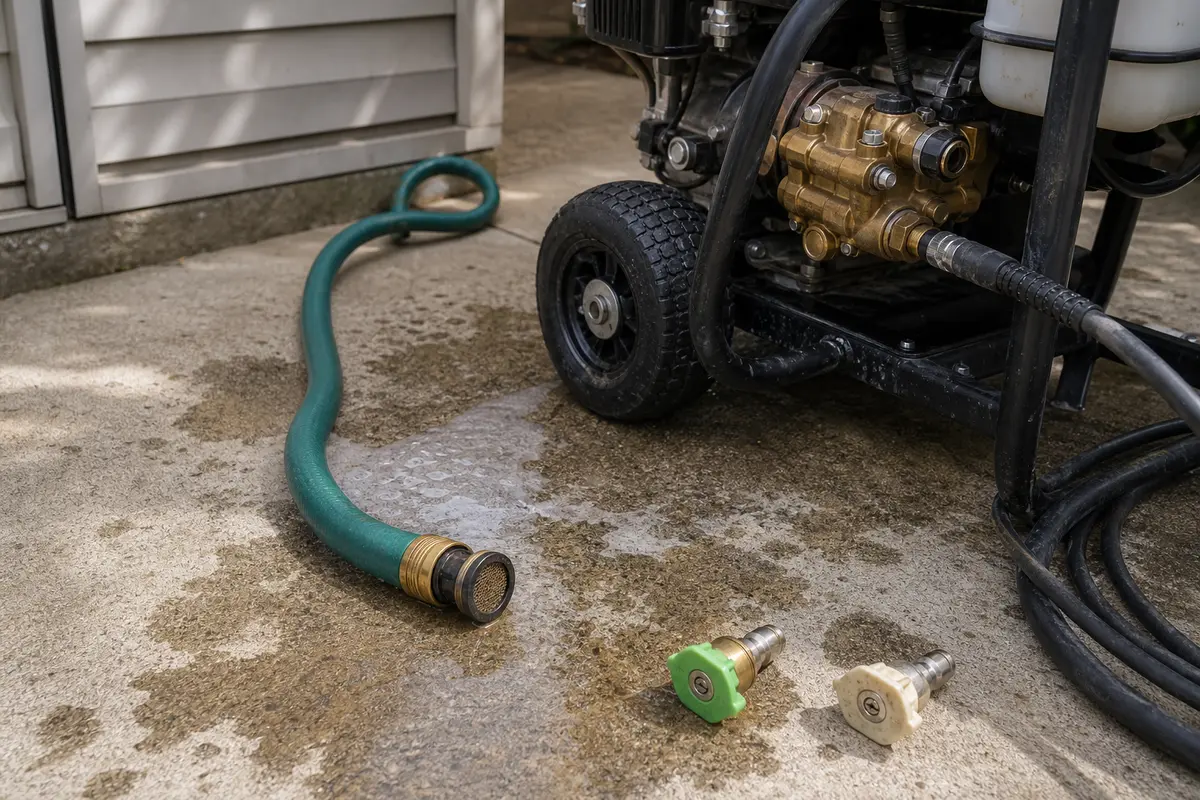
Make the symptom repeat and write down the engine model, pressure washer model, nozzle size, and what changes when you pull the trigger. Carburetors, air filters, nozzles, and pump fittings can look close and still fit wrong.
The timing of the surge matters more than the noise. Watch the engine before and during spray so you know which path to follow.
Small engines hunt when the fuel-air mix swings lean and rich. The safest checks are visible and reversible.
A pressure washer engine can sound like it has a fuel problem when the pump load is changing underneath it. Check the water path before you condemn the carburetor.
Use these only after a symptom points to the part. Note the engine model, linkage layout, gasket shape, filter size, nozzle orifice, and pressure rating before ordering.
Paid links. As an Amazon Associate I earn from qualifying purchases. Repair Riot may earn a commission at no extra cost to you.
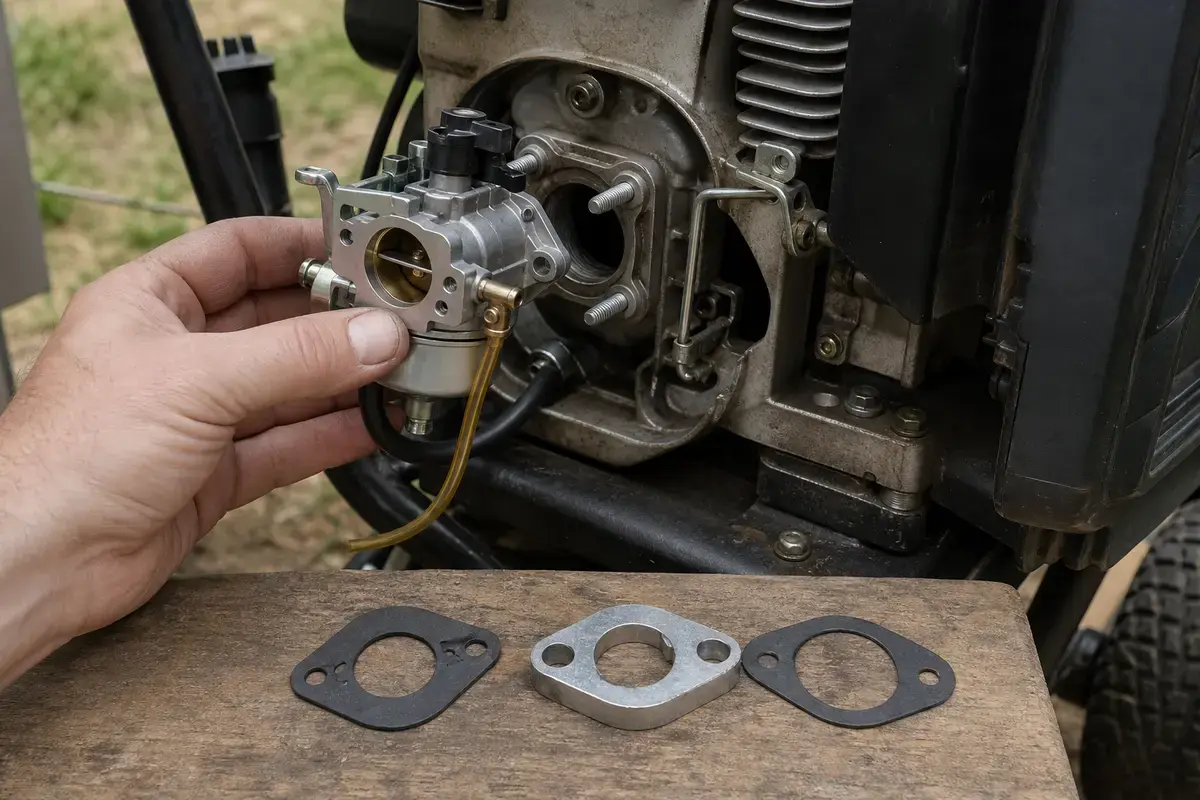
Helps when: Use this when fresh fuel and careful cleaning still leave a lean surge, especially if partial choke smooths the engine out.
Skip it when: Skip it when the surge only appears while spraying and the water side has not been checked yet.
Compare pressure washer carburetors on Amazon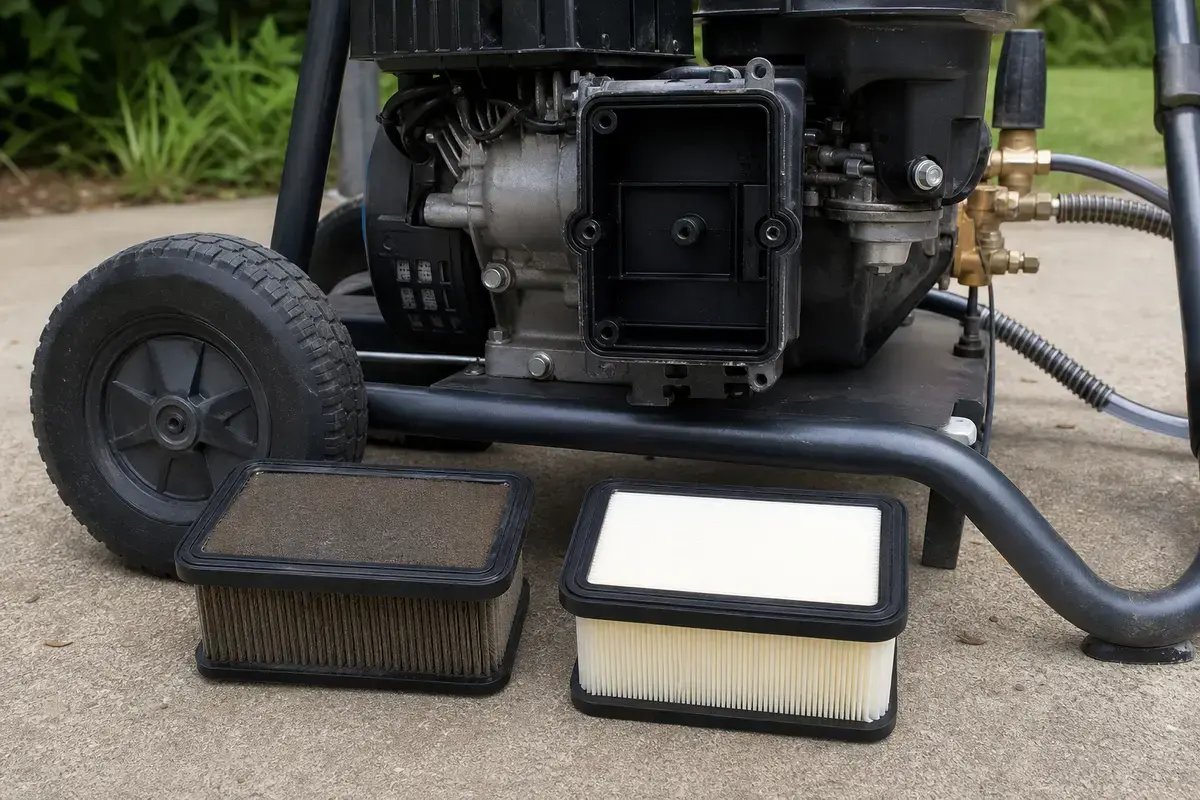
Helps when: Use this when the filter is dirty, oil-soaked, torn, swollen, or collapsing into the intake.
Skip it when: Skip it if the filter is clean and the engine behavior changes only with nozzle or hose flow.
Compare pressure washer air filters on AmazonHelps when: Use these when the old tip is clogged, damaged, missing, or the wrong orifice size for the washer.
Skip it when: Skip them when the engine hunts before you pull the trigger and water flow has no effect on the symptom.
Compare pressure washer nozzle tips on AmazonThe choke test is not a repair by itself. It is a clue about whether the engine is running lean.
A few wrong moves make pressure washer surging harder to diagnose than the original problem.
Most pressure washer surging is basic fuel, air, or water-flow diagnosis. Some symptoms are not worth pushing through in a driveway.
That usually points to a lean fuel condition, often stale fuel or a partly restricted carburetor. If partial choke smooths it out, clean fuel and carburetor checks come before pump parts.
Yes. Small engines are sensitive to stale fuel, water in fuel, and varnish in tiny carburetor passages. If the washer sat through the off-season, fresh fuel is one of the first checks.
Usually no. Many newer small engines have limited homeowner adjustment, and random screw turns can make starting and running worse. Check fuel, choke, air filter, water flow, and carburetor cleanliness first.
Partial choke reduces incoming air, which can temporarily cover up a lean fuel problem. If it smooths the surge, look for stale fuel, a restricted jet, a dirty bowl, or another fuel-delivery issue.
Yes, especially if the engine hunts mainly while you are spraying. A clogged nozzle, wrong nozzle size, dirty inlet screen, kinked hose, or weak spigot flow can change pump load enough to affect engine speed.
Replace it when fresh fuel and a careful cleaning do not stop the lean surge, or when the gasket, float, bowl, jets, or body are damaged. Match the engine model and linkage style before ordering.
It can. Pull the cover with the engine off and look for a dirty, oil-soaked, torn, or collapsed filter. Replace a damaged paper filter instead of trying to wash it back to life.
Short diagnosis runs are one thing, but do not keep running the machine with weak water supply, pump chatter, or hard pressure pulses. A starved pump can be damaged by heat and lack of water flow.
Heavy smoke changes the diagnosis. Check choke position, air filter condition, oil level, and fuel condition before assuming a simple lean surge. Stop if it knocks, backfires hard, or leaks fuel.
Repair Riot built this page around checks that change the repair path: when the surge happens, whether partial choke helps, whether the fuel is fresh, and whether water flow or nozzle load changes the engine sound. The links below support model lookup, small-engine maintenance, safety, and pressure-washer parts matching.