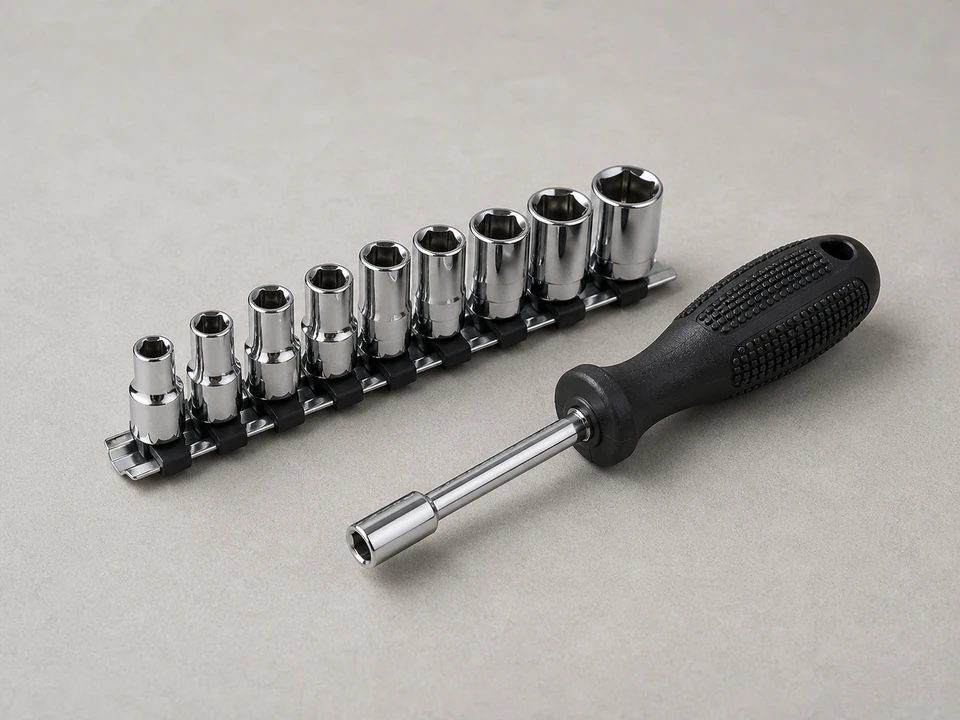
Socket set or nut driver
Use it for: Removes and installs the hinge fasteners on most doors.
Shop socket sets and nut driversTo replace a garage door hinge, disconnect power to the opener, keep the door fully closed, remove tension from the work area as much as possible, swap one hinge at a time with a matching replacement, and test the door slowly by hand before using the opener again.
A bent, cracked, or loose hinge can make a garage door bind, sag, or move unevenly. This job is manageable for many homeowners when the door is fully closed and you only replace the damaged hinge hardware. Stop and call a garage door pro if the hinge is attached to a broken panel, the door is off track, or any cable, roller stem, or spring hardware seems to be under tension.
Before you start: Match the replacement part to your exact garage door before ordering.
Use it for: Removes and installs the hinge fasteners on most doors.
Shop socket sets and nut drivers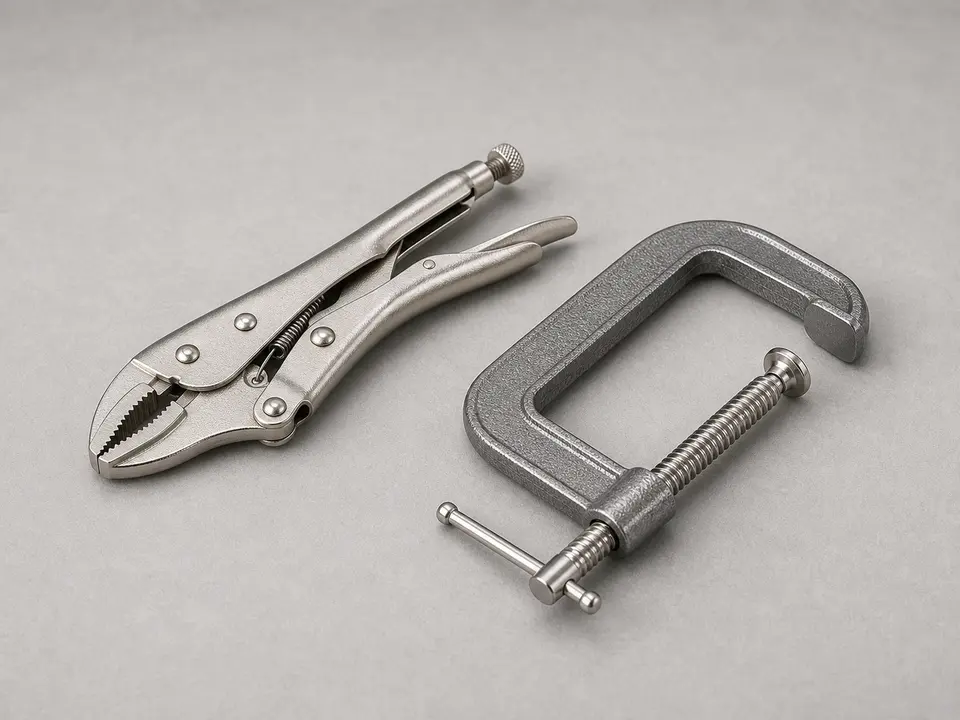
Use it for: Helps keep the door section from shifting while you work.
Find locking pliers or a C-clamp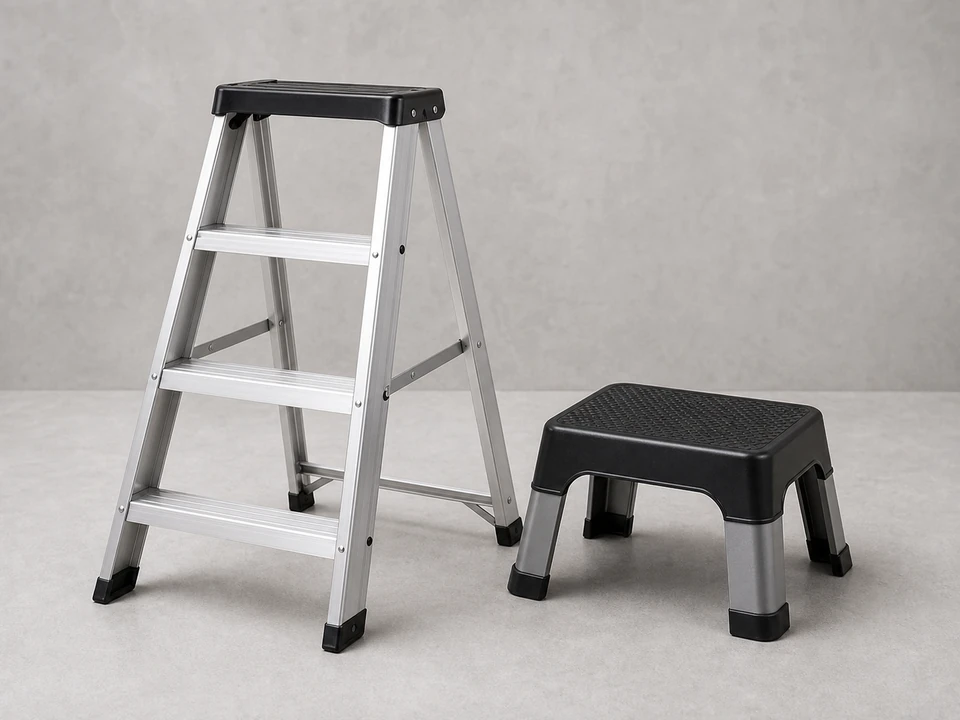
Use it for: Lets you reach the hinge safely on the closed door.
Shop stepladders
Use it for: Protects your hands from sharp metal edges.
Find work gloves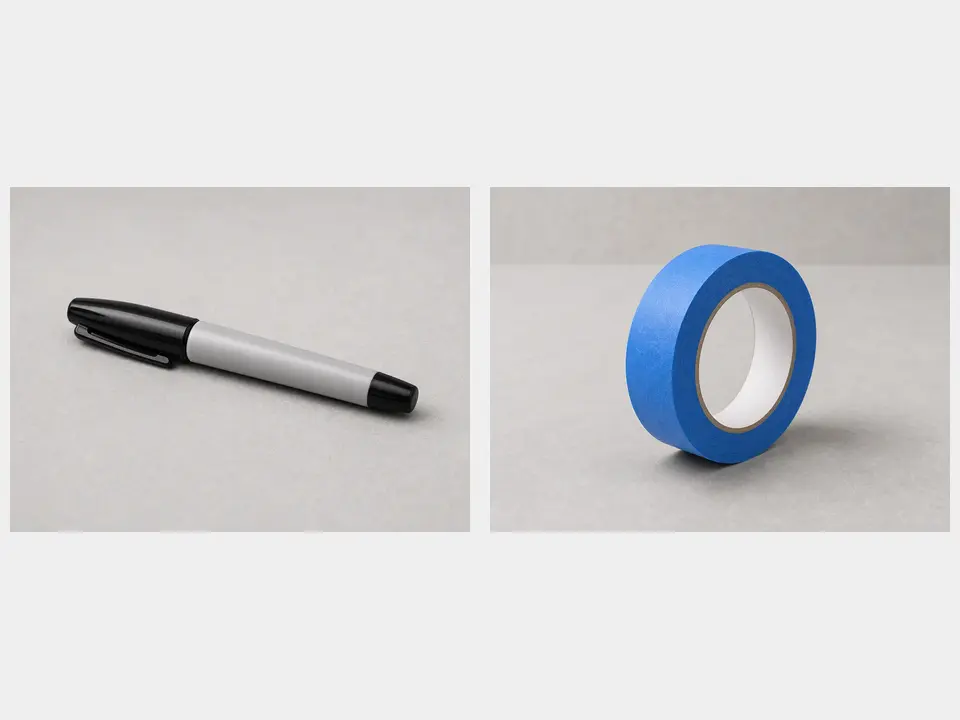
Use it for: Marks the hinge position and panel alignment before removal.
Shop markers and painter's tape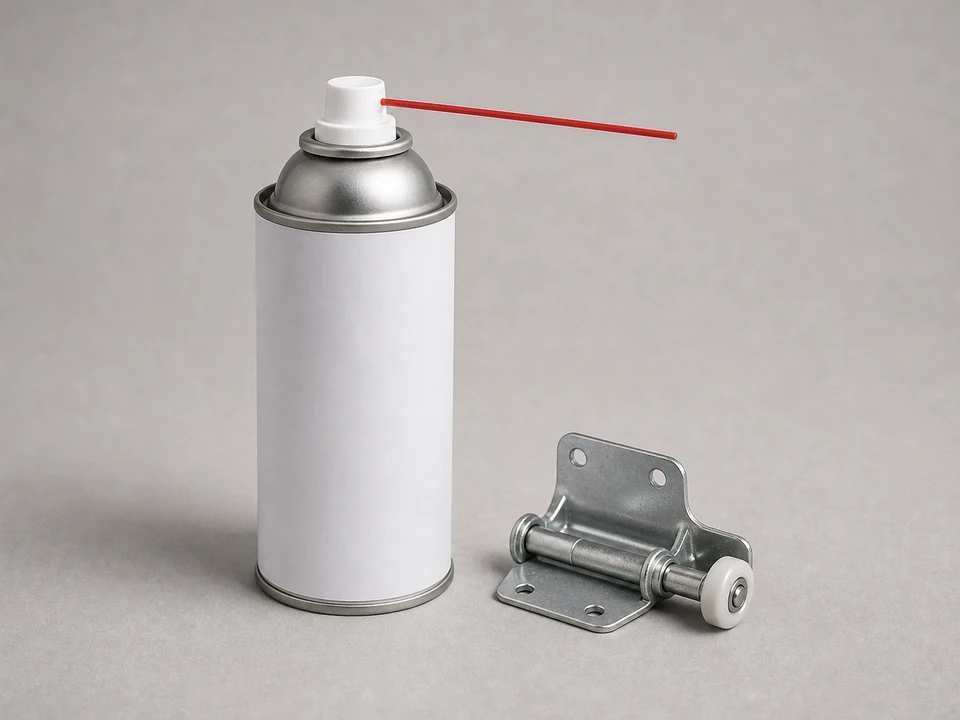
Use it for: Lubricates the hinge pivot and nearby moving points after installation.
Find garage door lubricantAs an Amazon Associate I earn from qualifying purchases. Repair Riot may earn a commission at no extra cost to you.
If it works: The door is fully closed, the opener is disabled, and the work area is stable.
If it doesn’t: If the door will not close fully or the panels are already shifted, do not force the repair. The hinge may not be the only problem.
If it works: You have a matching replacement hinge and understand exactly which hinge is being changed.
If it doesn’t: If the new hinge does not match the old one, pause and get the correct part before removing hardware.
If it works: The hinge location is marked and the door section is supported for a controlled swap.
If it doesn’t: If the panel seems loose or drops when you touch the hinge, stop and secure the section better before continuing.
If it works: The old hinge is off and the mounting area is exposed and ready for the new part.
If it doesn’t: If a fastener spins without backing out or the mounting area is damaged, you may need different hardware or professional repair.
If it works: The new hinge is mounted squarely, the hardware is tight, and the panel edges line up normally.
If it doesn’t: If the hinge will not sit flat or the holes do not line up, remove it and recheck the part match and panel alignment.
If it works: The door moves smoothly, the repaired hinge stays aligned, and normal operation is restored.
If it doesn’t: If the door binds, twists, or becomes noisy at the repaired section, stop using the opener and inspect the hinge position again.
Match the replacement part to your exact garage door before ordering.
As an Amazon Associate I earn from qualifying purchases. Repair Riot may earn a commission at no extra cost to you.
Yes, if only one hinge is damaged and the surrounding panel, roller, and fasteners are in good shape. Replace one hinge at a time so the door stays aligned.
Match the old hinge by shape, hole pattern, offset, and any stamped position number. If the hinge also carries a roller, make sure the roller opening and stem fit are the same.
It can be, if the door is fully closed and the repair does not involve springs, cables, bottom brackets, or a damaged panel. If anything looks under tension or out of alignment, stop and call a professional.
If the mounting holes no longer hold the fasteners securely, the repair may need different hardware or panel repair. Do not rely on a loose hinge, because it can let the door bind or sag.
A small amount of garage door lubricant on the hinge pivot is usually helpful. Avoid heavy grease that collects dirt, and do not spray lubricant onto the door tracks as a general fix.