Are clothes hot but still damp?
Start with airflow, not heat parts. Clean the lint screen and slot, then check the vent hose and outside hood.
The Check Vent light on a Whirlpool dryer usually points to restricted exhaust airflow, not a failed heater. Clean the lint screen and its housing first, then inspect the vent hose and outside hood.
If clothes get hot but stay damp, moisture may be trapped because the exhaust path is restricted.
Work from the lint screen toward the outside hood. A crushed hose or a flap that barely opens keeps the vent path at the top of the list.
Don’t start with: A heater, thermostat, or blower wheel. Consider parts only if airflow stays weak after the screen, housing, hose, and outside hood are clear.
Start with airflow, not heat parts. Clean the lint screen and slot, then check the vent hose and outside hood.
Pull the dryer forward and look for a crushed hose, tight bend, or loose vent connection behind the machine.
Treat the house vent or hood as the likely restriction. Clear lint and debris before opening the dryer.
The dryer is probably moving air. The wall run, exterior hood, or hose route needs cleaning or repair.
Look for lint packed in the lint housing or blower path. The blower wheel comes later, after the vent path is clean.
Leave the dryer off. This is a stop point, not a longer test-load moment.
The check vent light is easier to sort when you move from the lint screen to the hose, then to the outside hood.
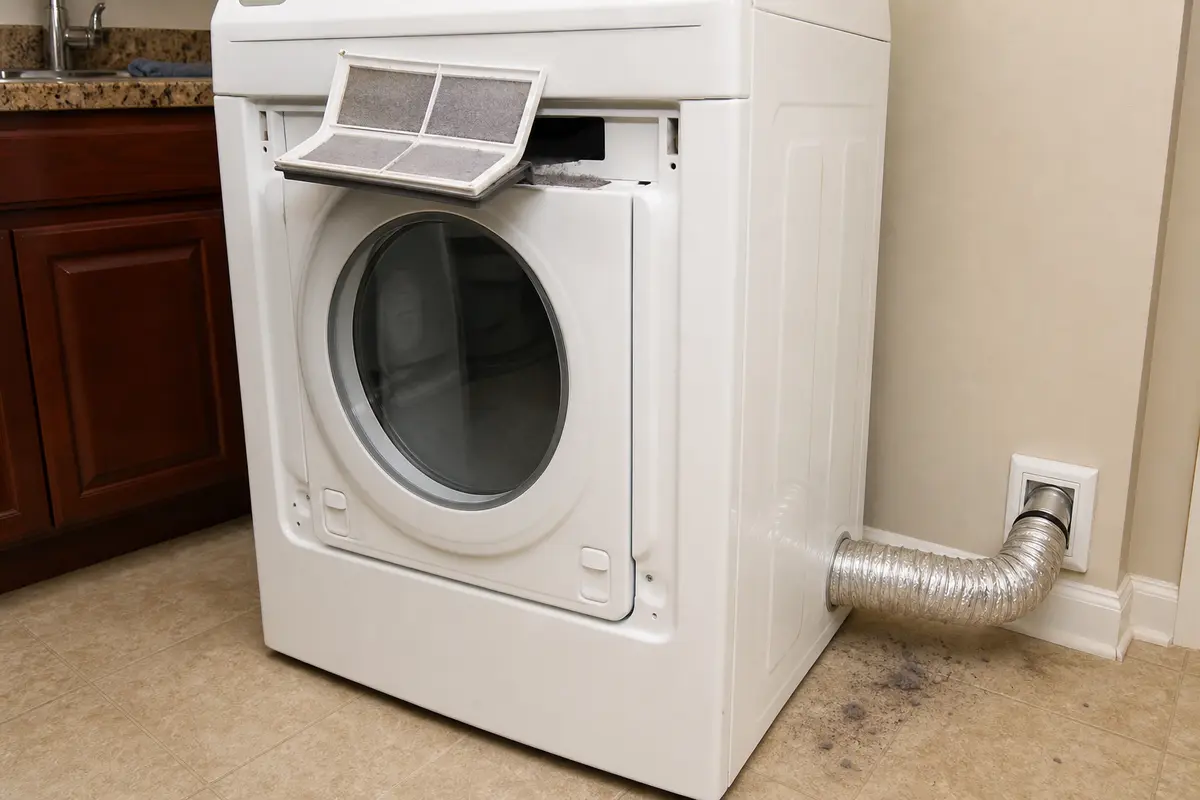
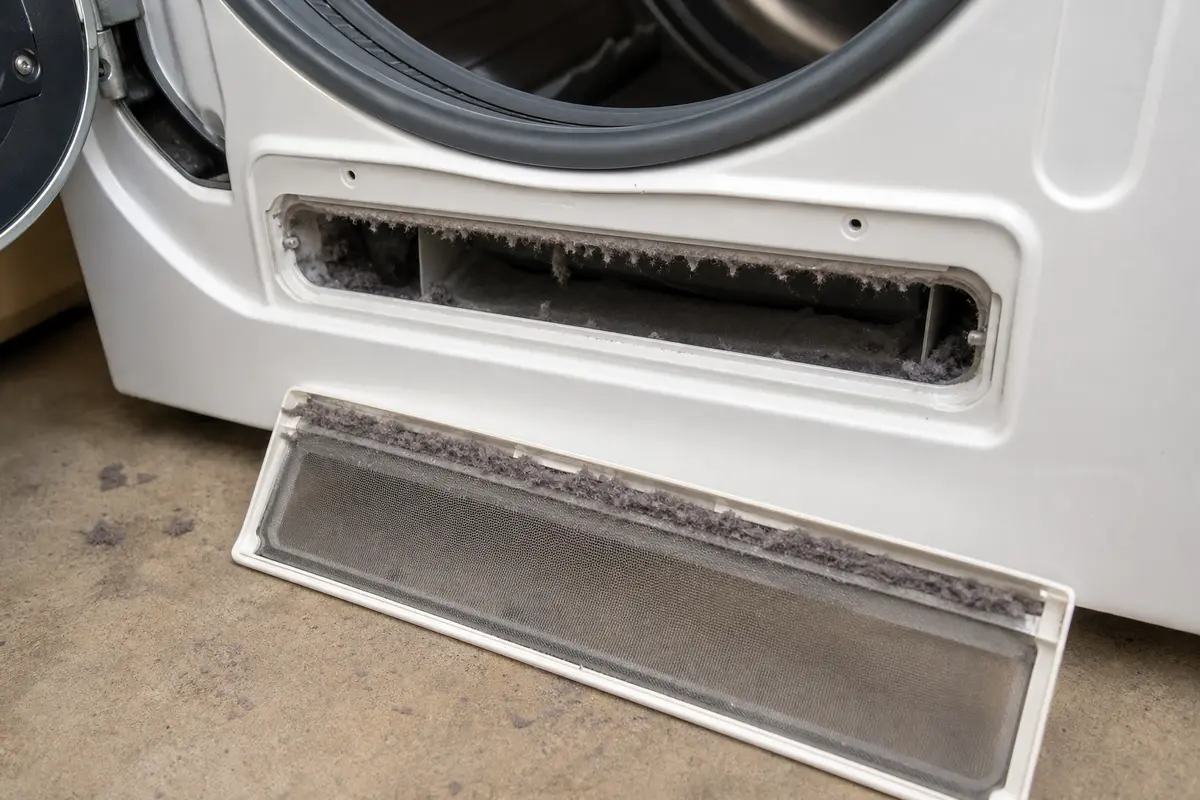
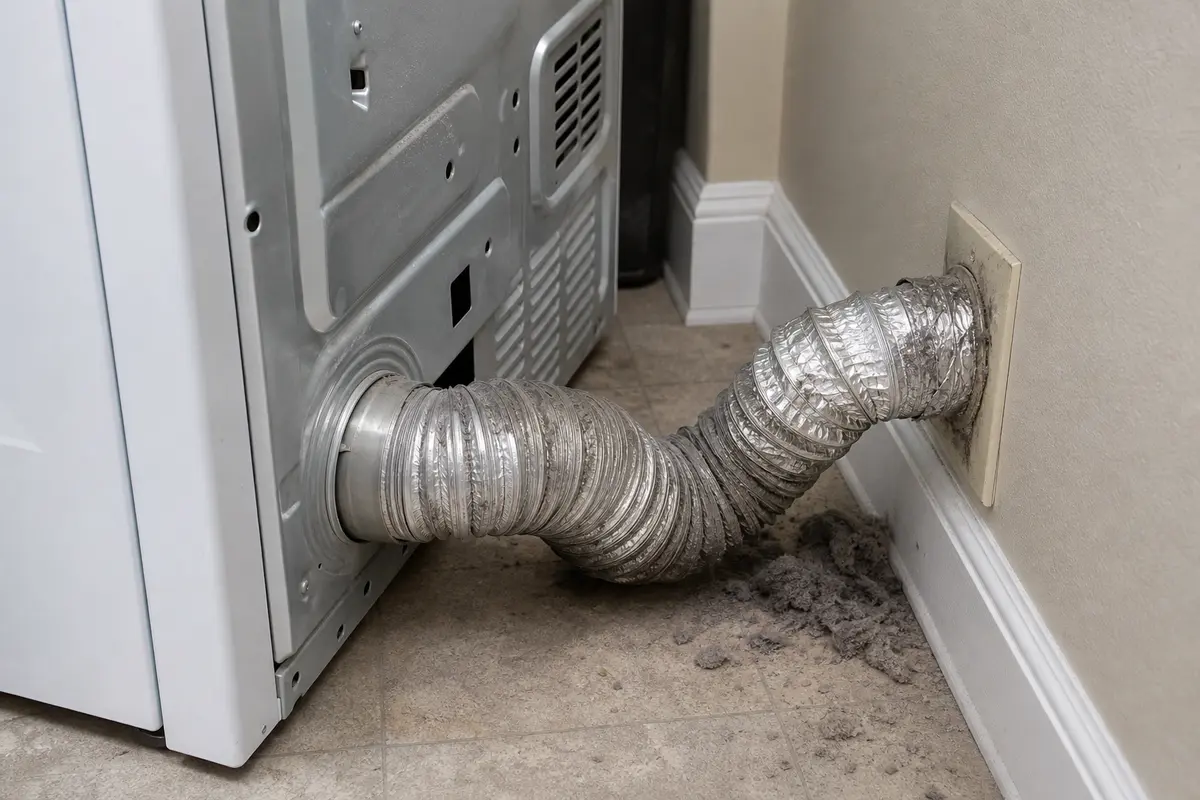
Copy the full Whirlpool model number from the door frame or cabinet tag before ordering anything. Buy a lint screen only if the old screen is torn, warped, or will not seat after cleaning. Consider a blower wheel only after the vent path is clear and the electric-only airflow comparison still shows weak outlet airflow.
The dryer is telling you air is not leaving fast enough. Heat can still be present while moisture stays trapped in the load.
The warning is easy to misread as a broken heat part. Make the dryer prove where airflow is blocked before the cart fills up.
Start where lint collects every load. This is quick, safe with the dryer unplugged, and it can solve the warning without moving into parts.
Most airflow warnings are still outside the dryer cabinet. The rear hose and exterior hood are cheap checks before any disassembly.
A short comparison separates dryer trouble from house-vent trouble. Keep the test brief and only use it where the setup is safe.
| What you see | What it usually means | Next move |
|---|---|---|
| Strong air at dryer outlet, weak air outside | House vent, wall run, hose, or exterior hood is restricted | Clean or repair the vent path before buying dryer parts. |
| Weak air at dryer outlet with hose removed | Lint housing, blower path, or blower wheel may be restricted | Recheck the lint slot and accessible blower path with power unplugged. |
| Warning clears after hose is straightened | The hose route was choking airflow | Leave space behind the dryer and avoid tight bends. |
| Burning smell, scorch marks, or hot cord | Unsafe overheating or electrical damage may be present | Leave it off and call for service. |
A blower wheel is not the first buy. It becomes plausible only after the screen, hose, hood, and wall run stop looking guilty.
Use these to clean and compare airflow. They do not make gas connections, hidden vents, or scorched wiring safe to work on.
Parts come after the airflow path names them. Match the full Whirlpool model number, not just the symptom or a similar-looking part.
The lint screen is only one part of the airflow path. The lint screen housing, rear hose, wall run, outside hood, or blower area can still be restricted enough to trigger the warning.
Yes. That is common. The dryer may still make heat, but if hot moist air cannot leave fast enough, clothes stay damp and the check vent light can come on.
Usually no. A failed heating element points more toward a no-heat complaint. The check vent light is more often tied to poor airflow through the screen, hose, vent run, or hood.
The vent-disconnected comparison is for electric dryers only. Do not run a gas dryer with the vent disconnected. Strong air at the dryer but weak air outside points to the house vent. Weak air at the dryer outlet points back inside the machine.
It is better not to keep using it that way. Restricted airflow makes dry times longer, raises heat inside the machine, and can increase lint and overheating risk.
The vent hose may have been crushed or kinked when the dryer was pushed back. Pull the dryer forward with power off and check the full hose path before opening the dryer.
Replace it only if it is torn, warped, blocked by residue after washing, or will not seat flat. A good screen does not fix a blocked hose or wall vent.
Suspect the blower wheel only after the vent path is clear and airflow is still weak. The electric-only airflow comparison can help isolate that clue, but the test is never for a gas dryer.
Repair Riot built this page around Whirlpool dryer airflow guidance, visible lint and hose checks, exterior hood behavior, model-specific part matching, and clear stop points for heat, gas, and electrical risk.