Does the base plate rock on the concrete?
Start with the anchor nut, washer, bracket foot, and concrete around the anchor. Tighten only enough to see whether slack takes up.
A deck post base wobbles when the anchor, bracket, post bottom, or footing is loose. Start by checking the support from below; look for the first click, gap, shifting washer, soft wood, or concrete crumble.
Good clue: a single loose base often points to anchor hardware or a bent, rusted bracket; rot or footing movement changes the job fast.
Use a flashlight from the side. The first place that clicks, opens a gap, or moves separately sets the repair path.
Don’t start with: Do not shim, caulk, glue, or crank bolts harder until you know whether the hardware, wood, or concrete is the loose point.
Start with the anchor nut, washer, bracket foot, and concrete around the anchor. Tighten only enough to see whether slack takes up.
Stop treating it as a simple tightening job. The connection to the footing is not trustworthy until repaired correctly.
Check missing or loose post-to-base fasteners, split fibers, crushed corners, and rot at the lower few inches of the post.
A replacement post base may be needed, but only after the deck section is supported and the post and footing check out.
That points below the bracket: footing movement, frost heave, settlement, washout, or a cracked pier.
Stop DIY inspection beyond visual checks. Multiple moving supports are a structural problem, not a parts-shopping problem.
The same wobble feels different once you watch the base from below. Use a wide view, a hardware close-up, and a damage view before choosing a repair.
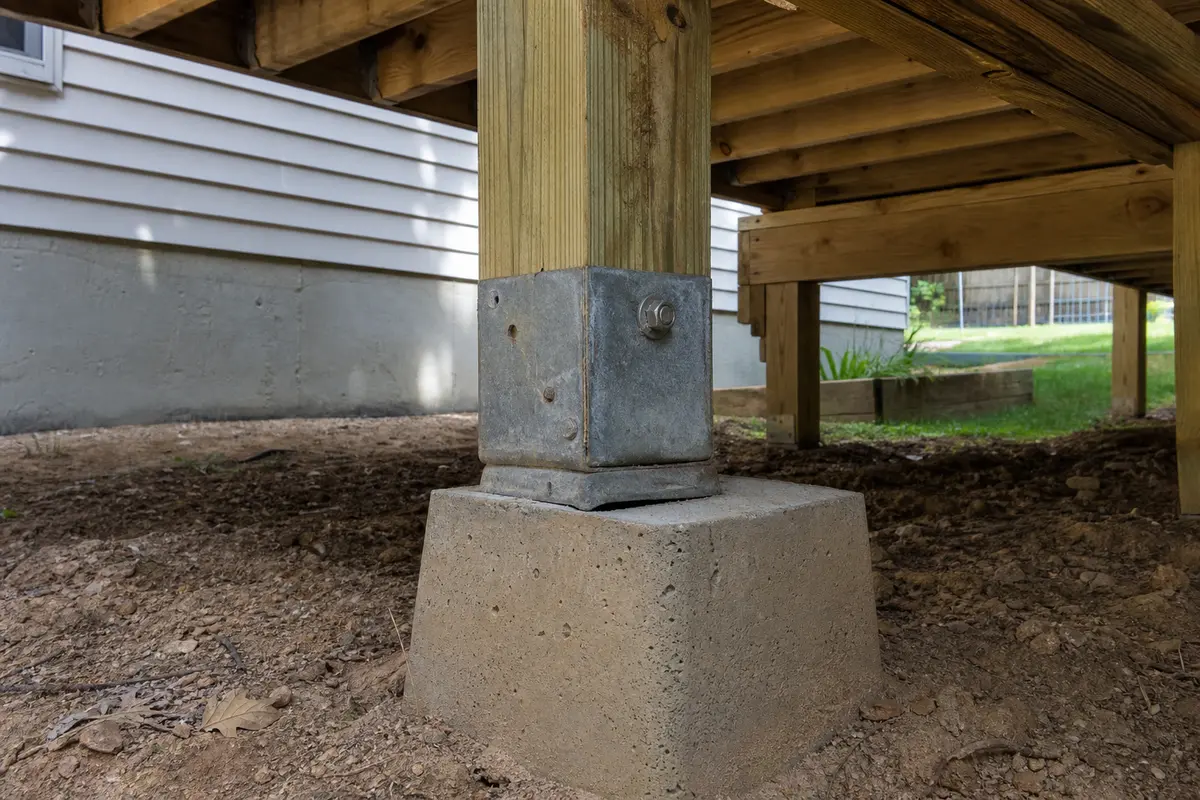
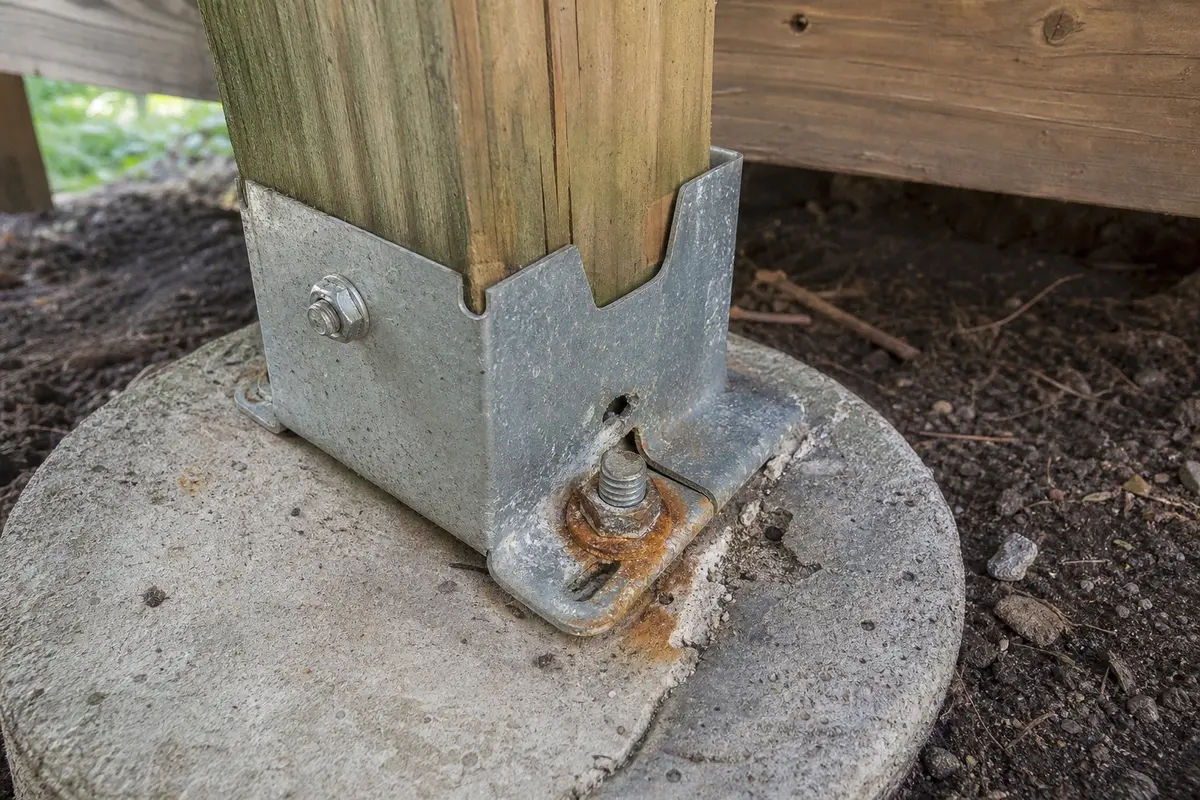
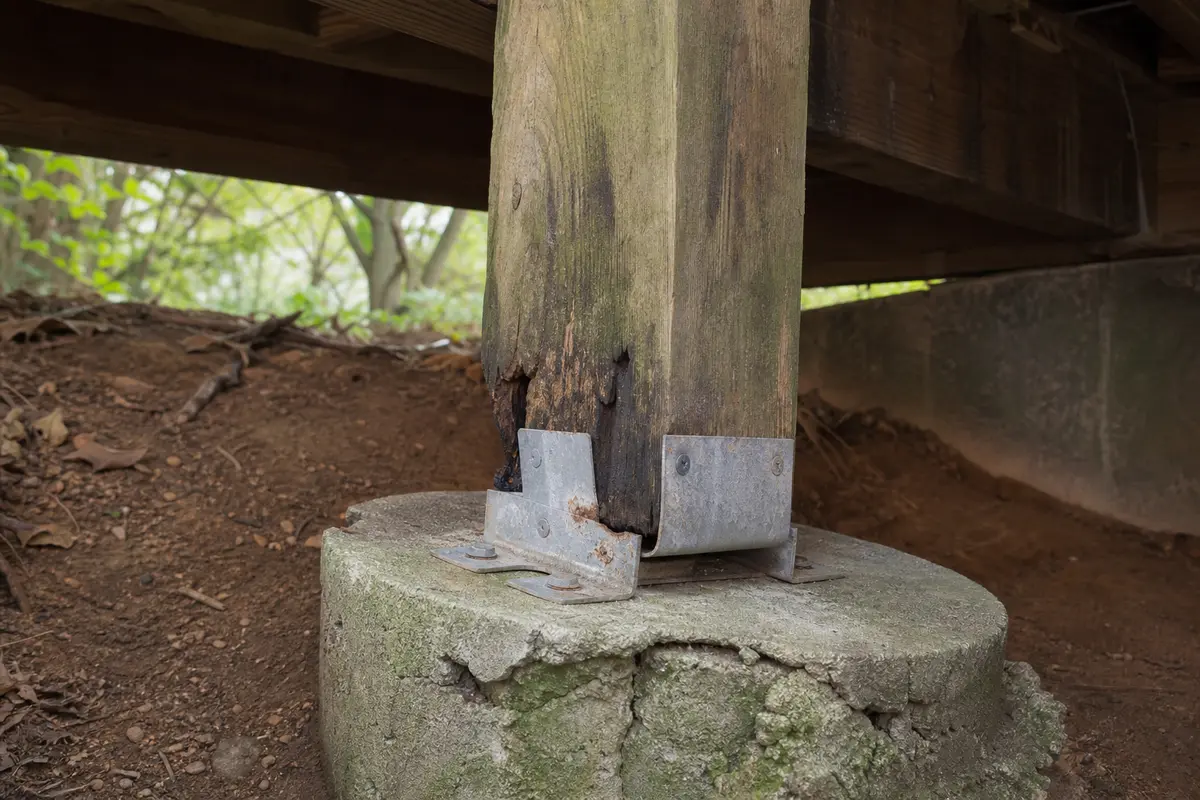
Match the part to the exact diagnosis and confirmed loose point. A new post base helps only when the existing bracket is bent, torn, rusted thin, or has damaged holes while the post and footing are still sound. Anchor hardware helps only when the base is good and the concrete can hold the correct anchor. Structural fasteners help only when the post-to-base fasteners are missing or failed. Skip parts and get help if the post is soft, the footing moves, or the repair needs jacking and shoring.
A wobbly support is structural until proven local. Keep the test light, keep weight off that part of the deck, and watch from the side.
Do not diagnose the wobble from the deck surface alone. The same loose feeling can come from hardware, wood, concrete, or soil.
| What moves first | Likely meaning | Next move |
|---|---|---|
| Base plate rocks while post and footing stay still | Loose anchor, rusted washer, bent base foot, or damaged concrete surface | Check anchor hardware and concrete before touching post fasteners. |
| Wood post wiggles inside the bracket | Loose or missing post-to-base fasteners, split fibers, crushed corners, or rot | Inspect fasteners, probe the lower post, and compare the bracket sides. |
| Metal bracket flexes, twists, or has torn holes | Bent, rust-thinned, or failed deck post base | Plan replacement only after the deck section is safely supported. |
| Post, base, and concrete pier move together | Footing movement, frost heave, settlement, washout, or cracked pier | Stop DIY repair and get the support point evaluated. |
| Several nearby posts move or the beam sags | A wider framing or foundation support issue | Keep the deck unloaded and call a qualified deck pro. |
A wrench is a diagnostic tool here, not a way to overpower a bad connection. Snug lightly and watch what responds.
Once the anchor check is done, move up and down the support. The bracket, wood post, and footing each fail in different ways.
A support post needs a sound load path, not a cosmetic quieting trick. Avoid fixes that hide the clue while the structure stays loose.
These tools help you see the failure point and make light checks. They do not make jacking, shoring, or footing repair a casual DIY job.
Paid links. As an Amazon Associate I earn from qualifying purchases. Repair Riot may earn a commission at no extra cost to you.
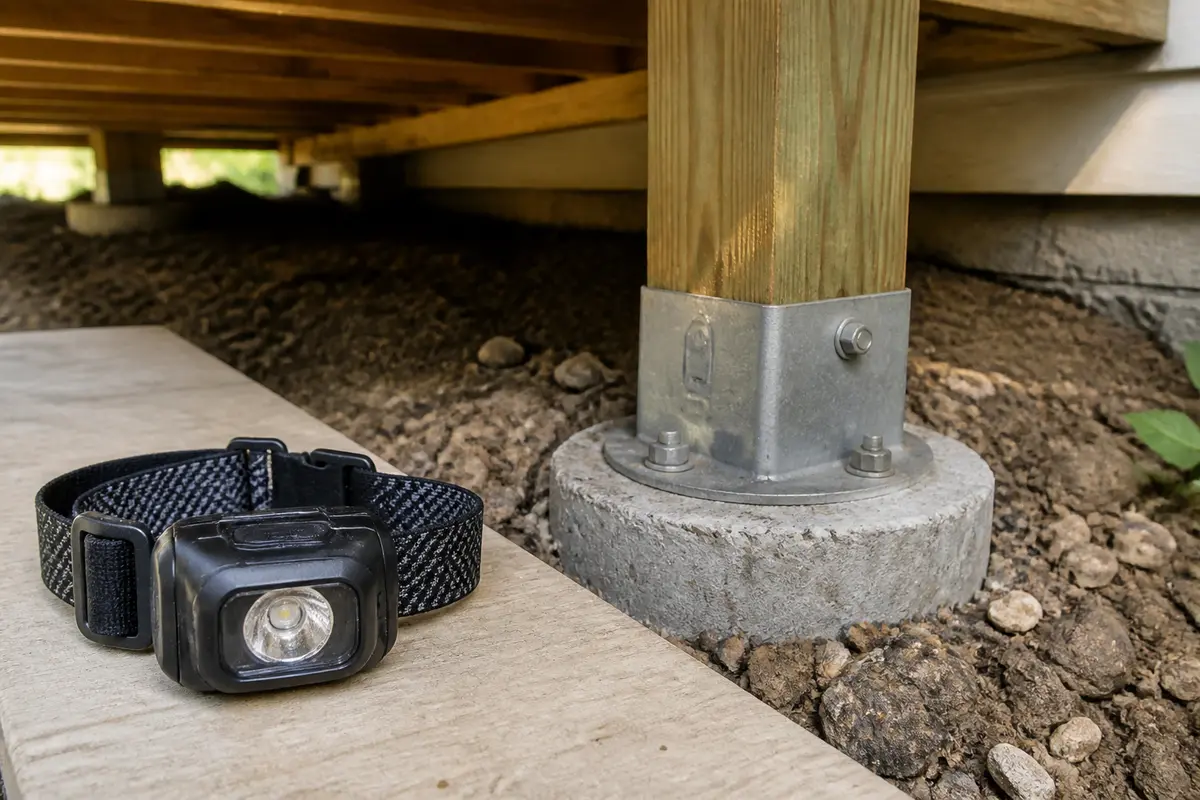
Helps when: Use it to watch the anchor, bracket, post bottom, and concrete while the support is gently loaded.
Skip it when: Skip deeper inspection if the deck shifts, cracks, or feels unsafe to approach from below.
Compare inspection lights on Amazon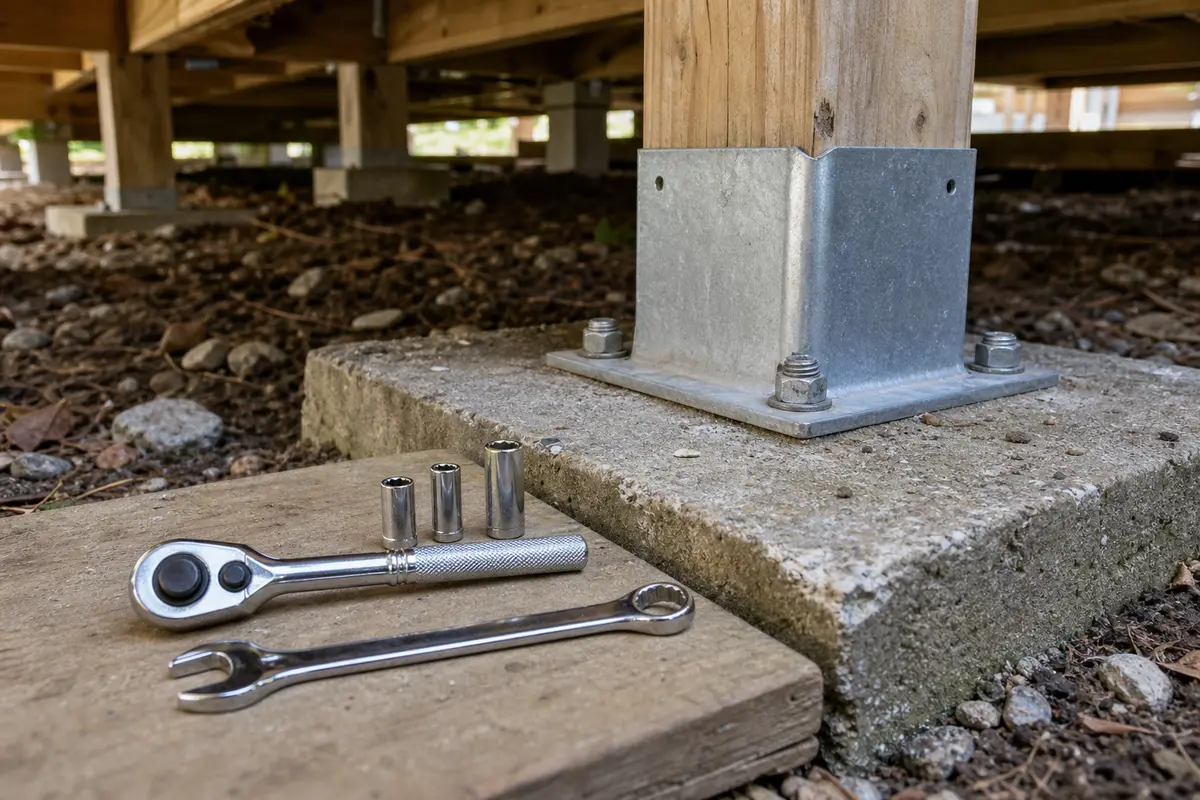
Helps when: Use it to see whether an anchor nut takes up slack or whether the stud spins in the concrete.
Skip it when: Skip forcing hardware that is rusted solid, spinning, pulling out, or deforming the bracket.
Compare socket and wrench sets on Amazon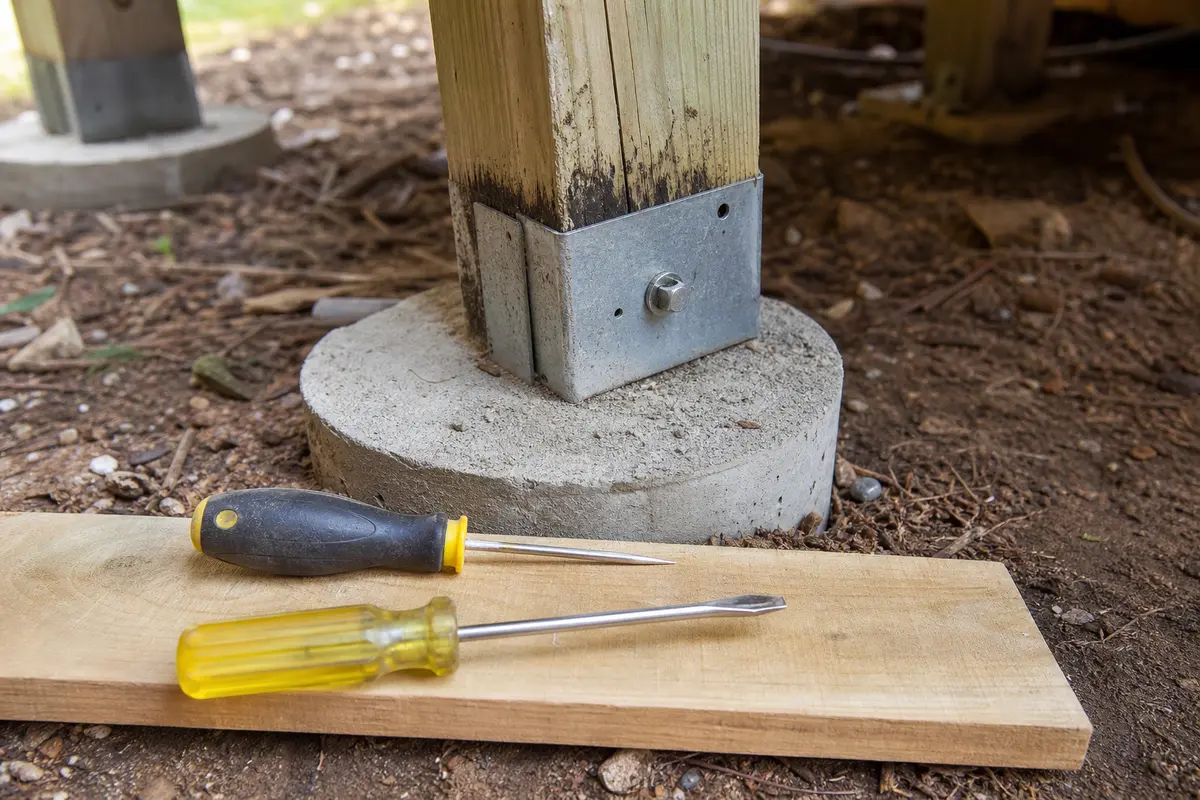
Helps when: Use it to check the lower post for soft fibers, rot pockets, crushed corners, and fastener pull-through.
Skip it when: Skip probing as a repair decision if the post already has deep splits or obvious structural damage.
Compare awls and probes on Amazon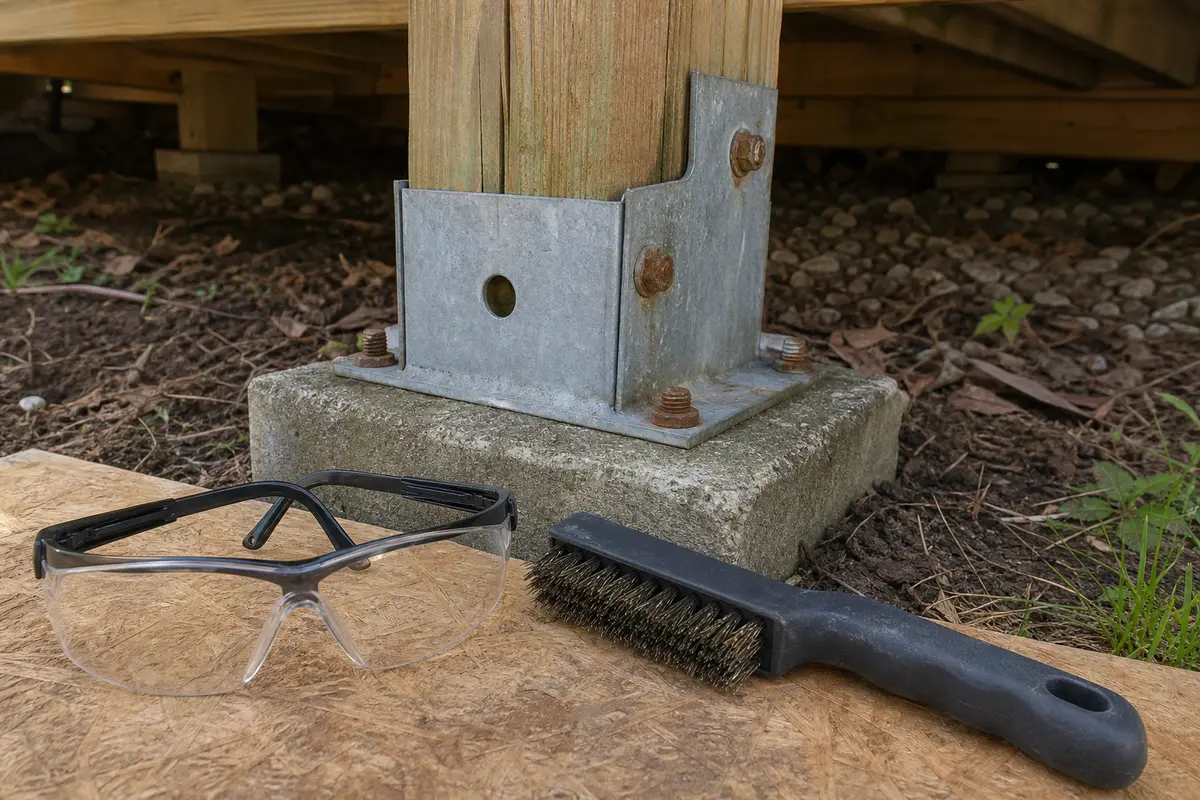
Helps when: Use them to clear rust scale and dirt so torn holes, cracked metal, and concrete damage are visible.
Skip it when: Skip aggressive brushing if the bracket is rusted thin enough to flake apart under light pressure.
Compare wire brushes and safety glasses on Amazon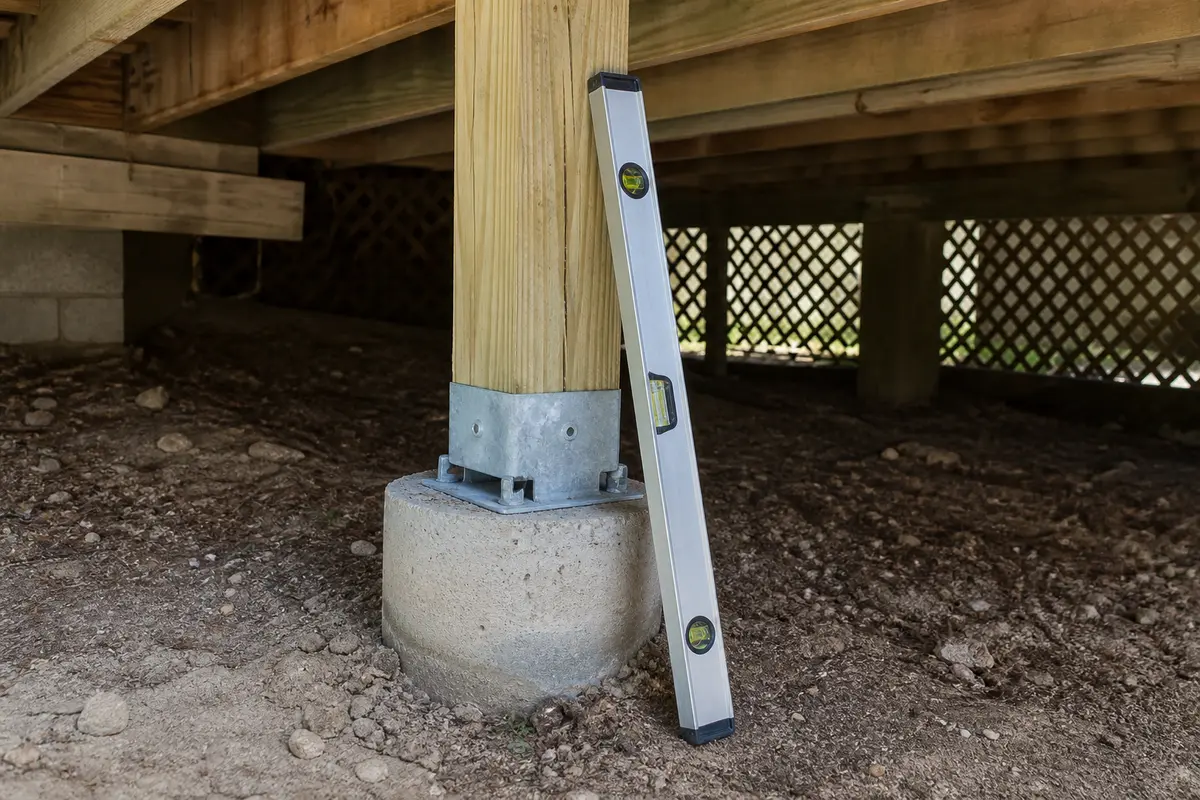
Helps when: Use it to check whether the post or pier is leaning after you identify the loose support point.
Skip it when: Skip treating plumb alone as proof of safety; a straight post can still have a failed base.
Compare levels on AmazonBuy parts only after the moving point is clear. Match the bracket, anchor, and fasteners to the actual post size, base style, material exposure, and connector instructions.
Paid links. As an Amazon Associate I earn from qualifying purchases. Repair Riot may earn a commission at no extra cost to you.
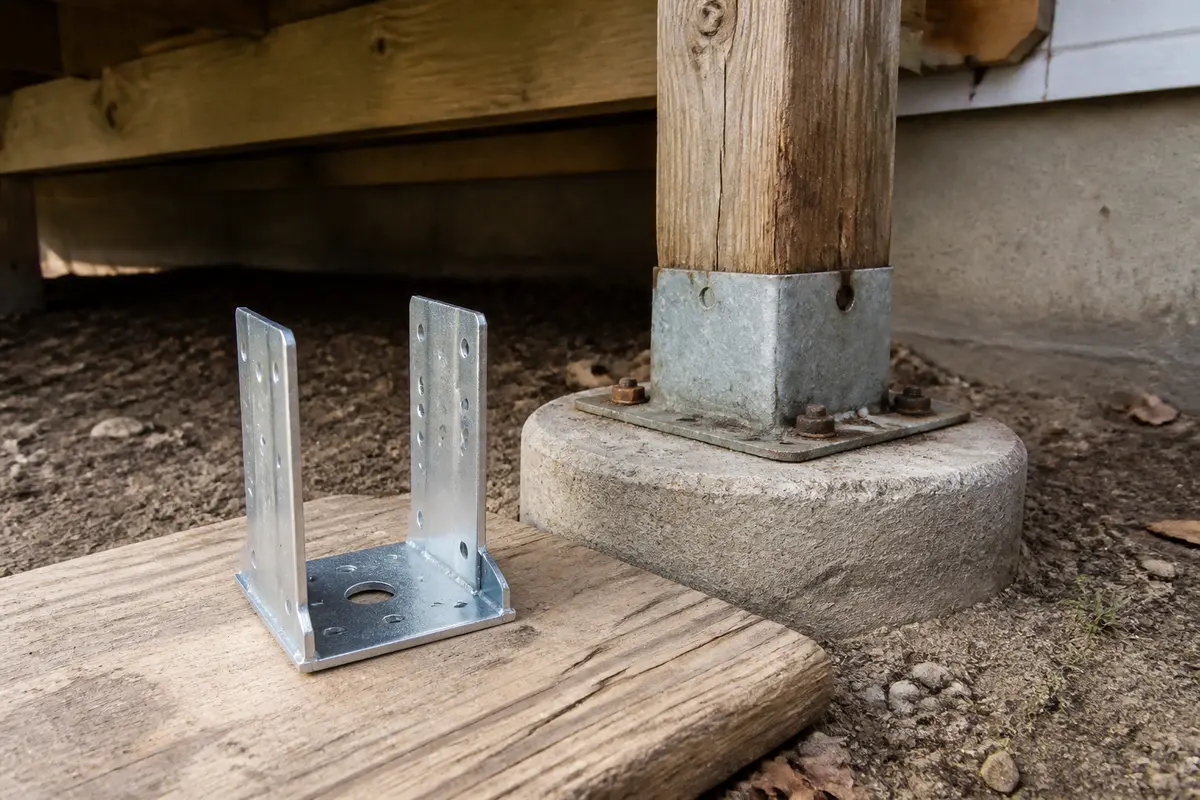
Helps when: Use one when the existing bracket is bent, torn, cracked, rusted thin, or has holes that no longer clamp the post.
Skip it when: Skip it when the post is soft or the footing moves; a new bracket will not fix failed wood or concrete.
Compare deck post bases on Amazon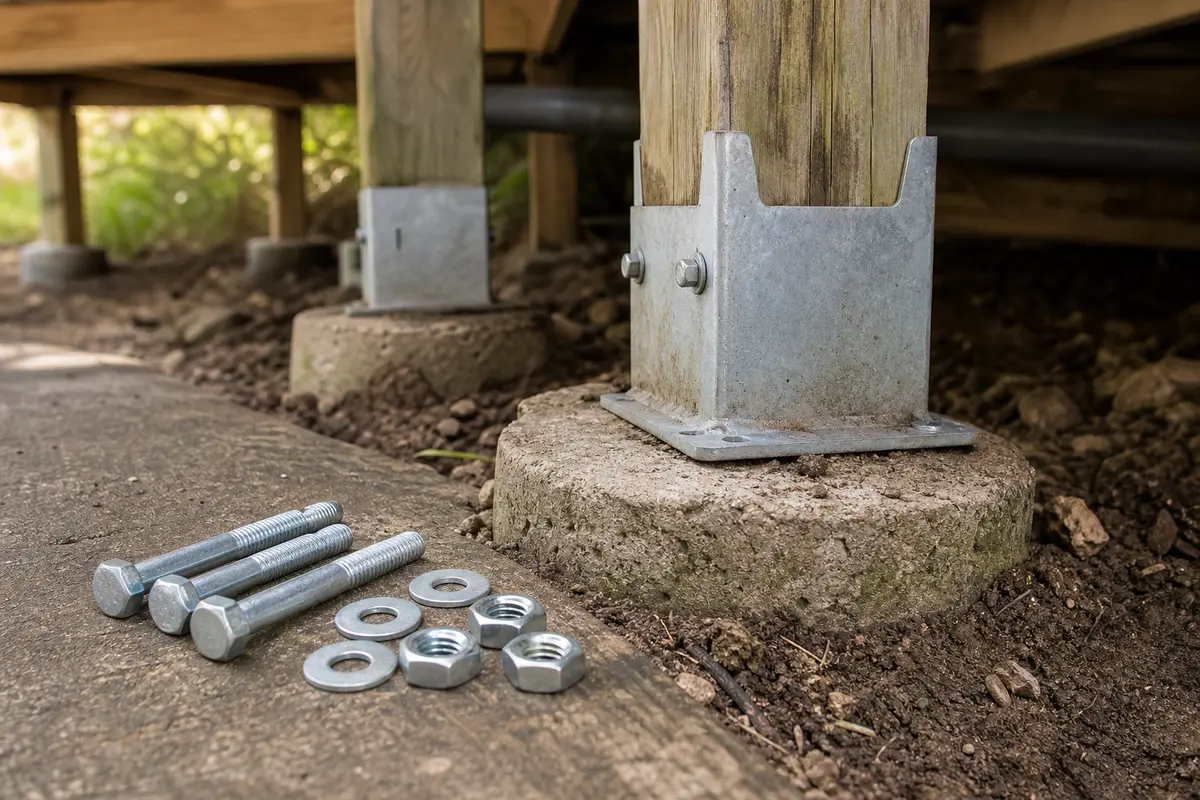
Helps when: Use it when the base is sound and the confirmed failure is damaged or corroded anchor hardware in sound concrete.
Skip it when: Skip it when the concrete is cracked, crumbling, too thin, or the old anchor has already lost grip.
Compare post base anchors on Amazon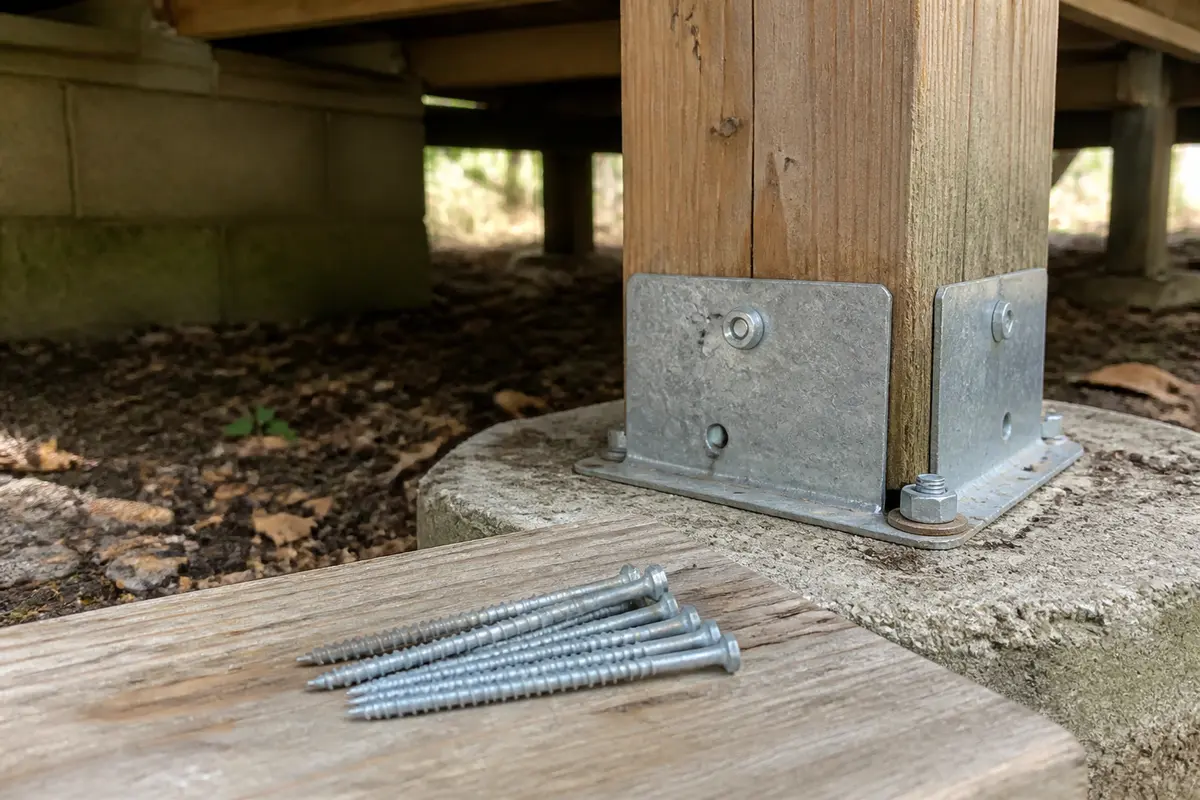
Helps when: Use them when the bracket is sound but the post-to-base fasteners are missing, loose, rusted away, or wrong for the connector.
Skip it when: Skip random fasteners. Use hardware approved for the connector, treated lumber, and exterior exposure.
Compare structural fasteners on AmazonOnly after you confirm the concrete, bracket, and post are sound and the anchor nut simply had slack. If the anchor spins, the bracket is deformed, or the post bottom is soft, tightening is not the fix.
A deck can flex slightly as a whole, but the post base should not rock, click, or shift on the footing. Movement right at a support connection deserves a closer look before the deck is used normally.
Watch the support from the side while someone applies a gentle load above. Name the first moving point: anchor-to-concrete, bracket-to-post, the wood post itself, or the footing and soil below.
A spinning anchor means the concrete connection is not holding correctly. Stop tightening, keep weight off that area, and treat the repair as an anchor or footing repair rather than a simple hardware snug-up.
No. A shim might quiet the click, but it does not fix a loose anchor, failed bracket, rotted post, or moving footing. Structural looseness needs the failed connection or support problem corrected.
If the wood moves inside a bracket that stays on the concrete, check post fasteners, split fibers, and rot. If the post, bracket, and concrete pier move together, look at footing movement or soil support.
Maybe, but only when the problem is clearly the metal base and the post and footing are sound. If the repair requires supporting a loaded deck section, removing structural hardware, or working around rot or footing movement, bring in a pro.
Call a pro if the footing is cracked or moving, the post is rotted or deeply split, more than one support is loose, the beam is sagging, or the repair would require jacking and temporary shoring.
Movement across a wider section of the deck can point to a framing or load-path problem instead of one loose bracket.