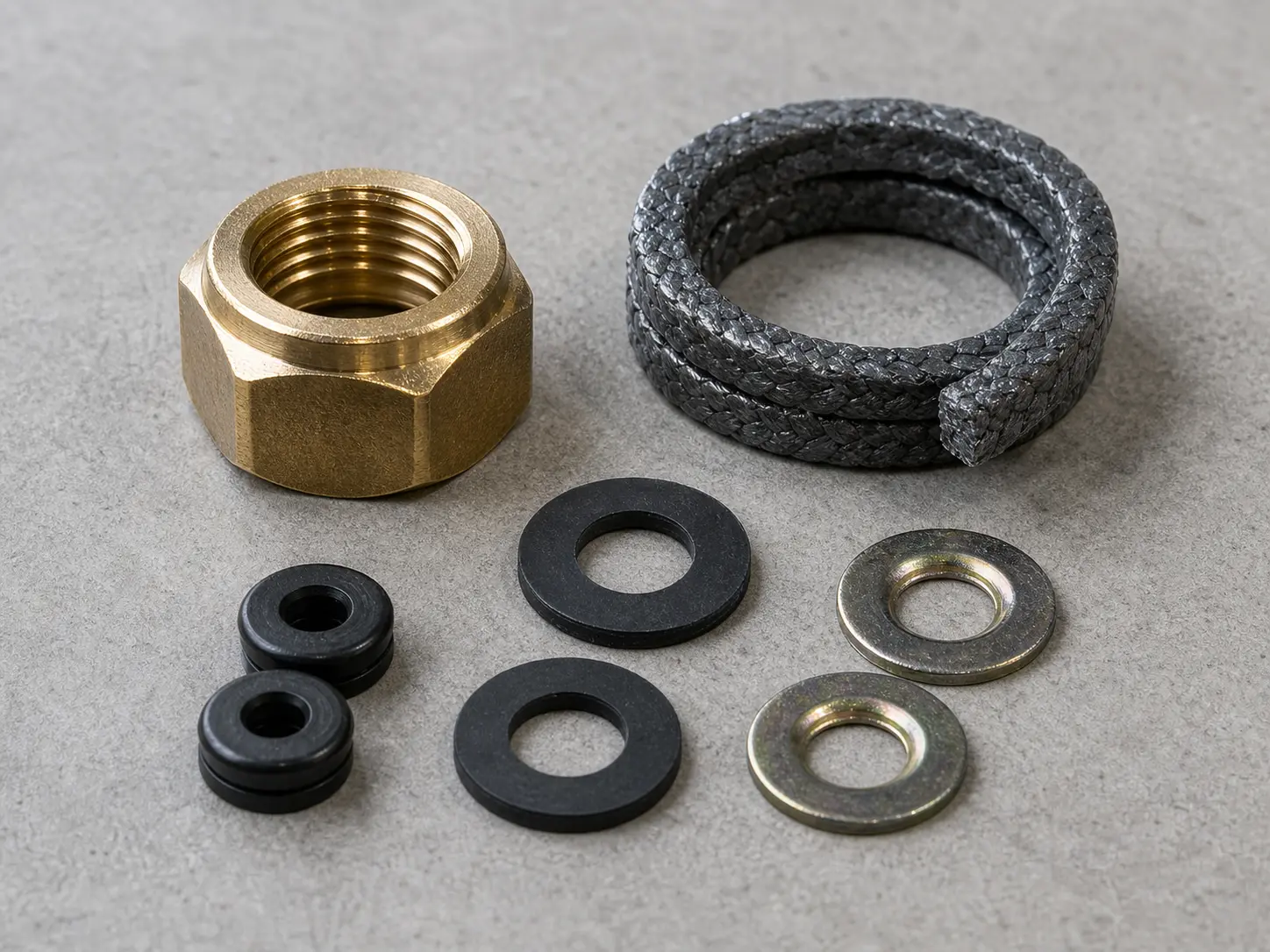
How to Replace an Outdoor Faucet Packing Nut and Packing Kit
If water starts behind the handle while the outdoor faucet is running, replace the packing nut and packing kit after a small packing-nut snug fails. Dry the body first, remove the hose, compare the leak point to the spout and vacuum breaker, and stop if the wall connection moves or gets wet.
Keep the repair on the handle stem. Shut off the branch, relieve pressure, and clean the stem threads. Match the old nut and packing to the new kit, then tighten in small checks until the stem stays dry and the handle still turns smoothly.
Before you start: Before ordering or loosening the nut, dry the faucet and confirm the first wet point is the handle stem. Remove the hose, check the spout, vacuum breaker, and wall flange, and stop if the faucet shifts or the wall gets wet.
A packing kit belongs in the repair only after the leak points to the handle stem. Dry the faucet, remove the hose, and run it bare. Watch for the first bead behind the handle or under the packing nut, then compare the old nut and packing to the kit before you order.
Stem leak only
Look for: Water starts behind the handle or under the packing nut while the faucet is open. A careful one-eighth to one-quarter turn snug does not stop it for long.
Choose another repair if: If the first drop forms at the spout, hose threads, vacuum breaker, wall flange, or a cracked body, follow that leak path before buying packing parts.
Match the nut and packing
Look for: The old packing nut threads cleanly, the replacement nut starts by hand, and the new packing matches the old stem diameter, nut depth, washer thickness, or packing-string space.
Choose another repair if: If the new nut will not start by hand, the packing bunches up, or the handle binds before the leak stops, pause and match the faucet style again.
Stop for wall movement
Look for: The faucet body stays firm while you loosen the packing nut, the wall flange stays dry, and the shutoff fully stops pressure before the nut comes off.
Choose another repair if: Stop if the faucet twists, the pipe moves behind the wall, water shows inside, or corrosion has eaten into the valve body around the stem opening.
Work on the handle stem, not the hose threads
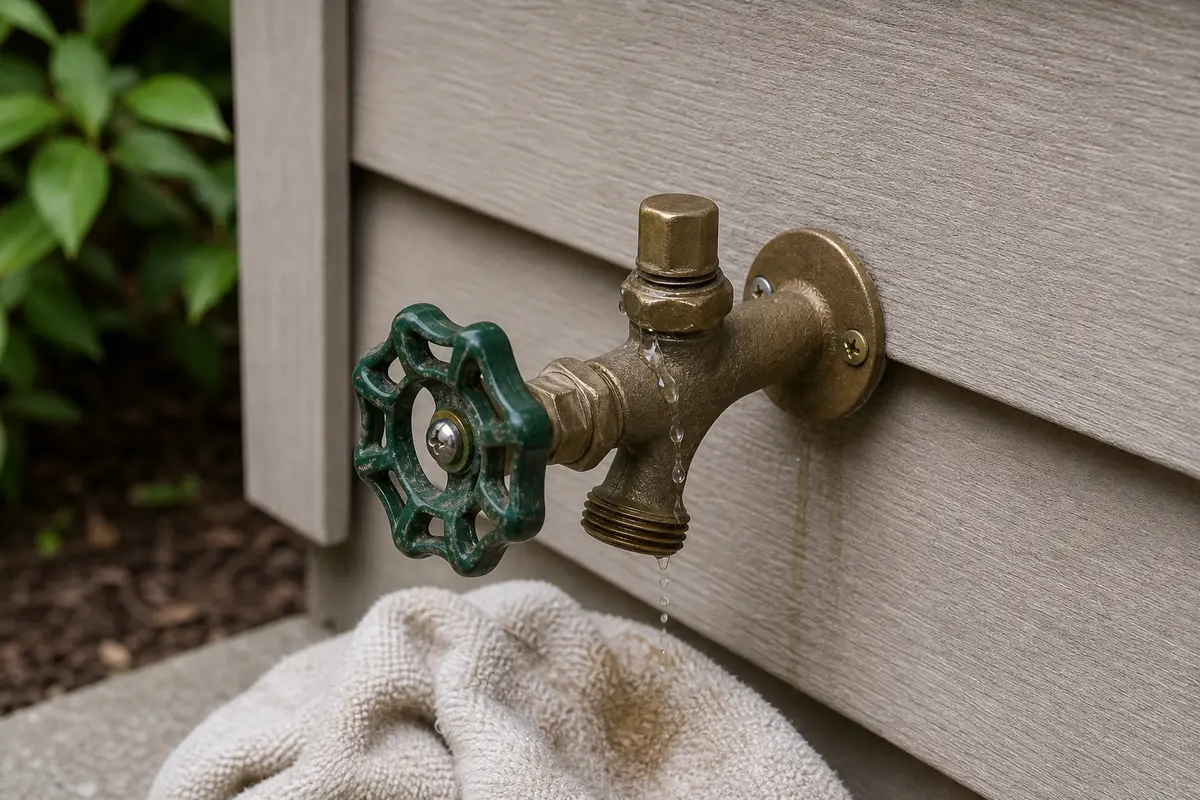
A packing leak shows up around the handle stem when the faucet is open. In the photos, look for the first wet point behind the handle or under the packing nut. Water at the hose threads, spout, vacuum breaker, or wall belongs on a different leak path.
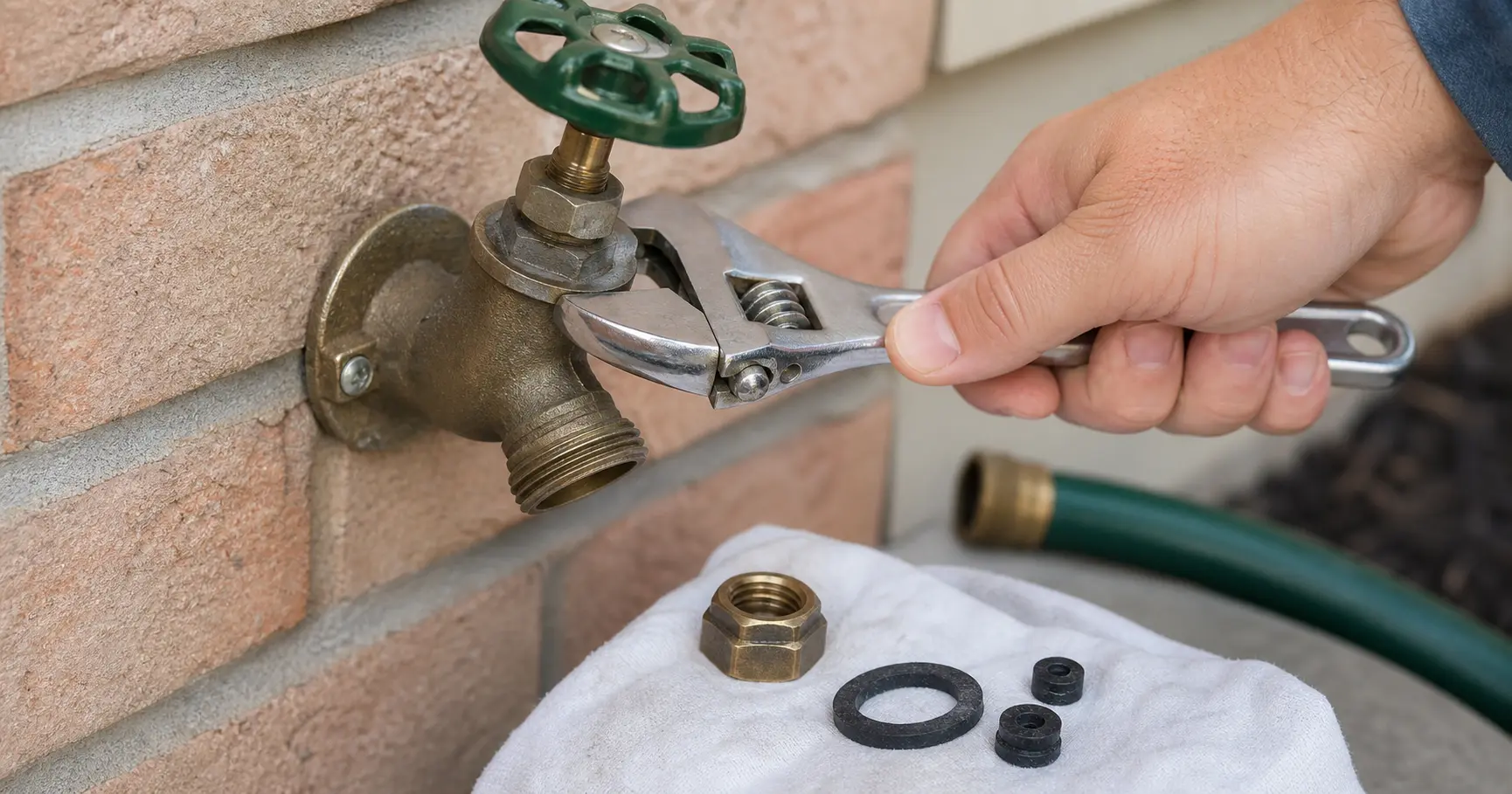
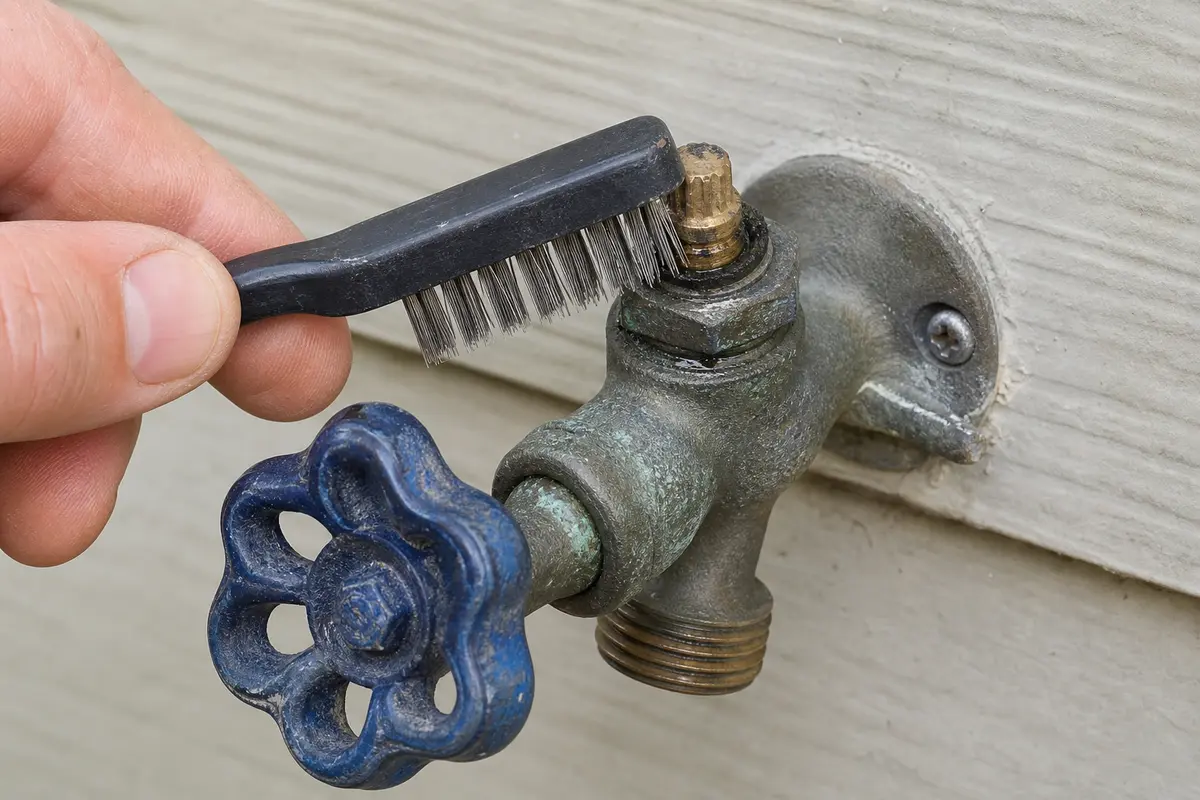
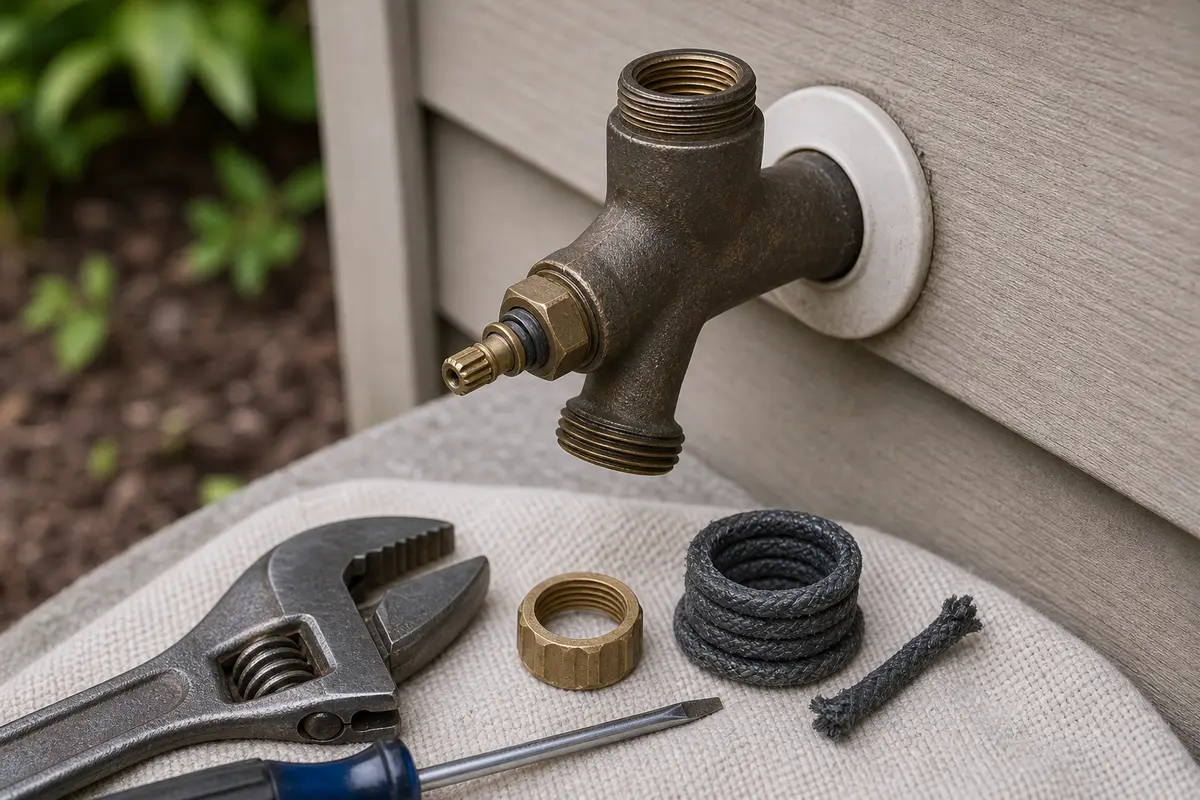
Hold the faucet body steady while you loosen or tighten the packing nut. Small wrench moves protect the stem packing and the pipe behind the wall.Clean old packing residue and corrosion before the new packing goes in. A clean stem lets the nut compress the packing instead of grinding against debris.This is the leak pattern that belongs on the packing branch: water starts behind the handle. Water at the spout, vacuum breaker, or wall needs a different repair.Lay the old nut and packing next to the new kit. Compare nut threads, stem opening, nut depth, and packing style before assembly. Check that the new nut starts by hand and leaves the handle free of binding.
Safety first
Shut off the water supply before removing the packing nut or handle parts.
Support the faucet body while loosening stubborn parts so you do not stress the pipe in the wall.
Use only light grease made for plumbing parts, and keep it off walking surfaces to avoid slips.
Stop if the faucet body, wall connection, or supply pipe moves noticeably while you work.
Call a licensed plumber if the shutoff will not stop water, the faucet moves in the wall, or pressure brings back a hidden wall leak.
Tools you may need
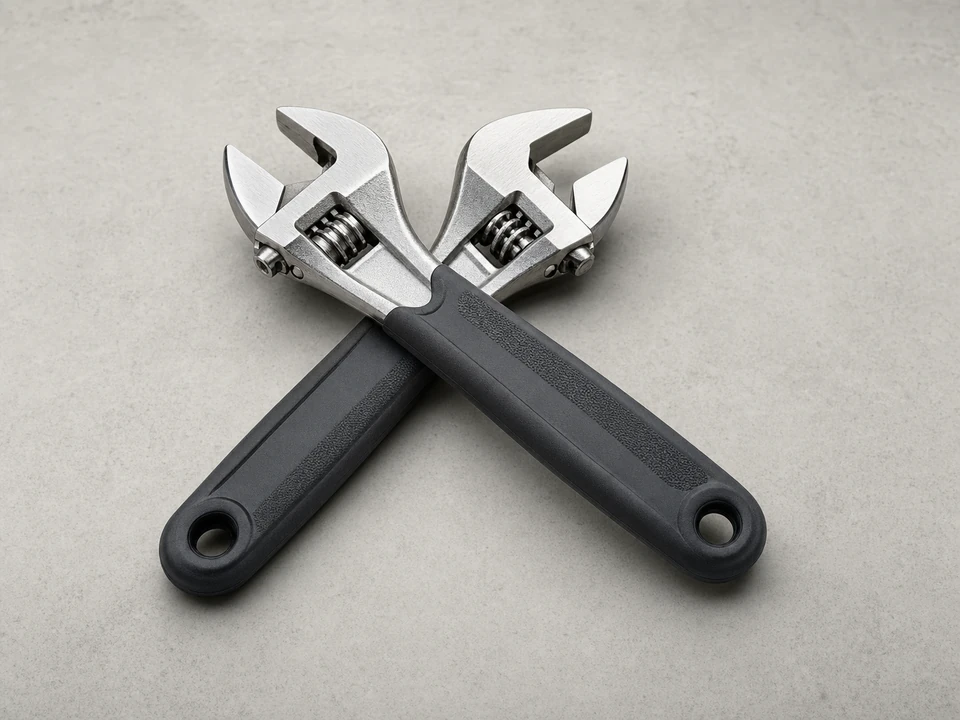
Adjustable wrench
Use it for: To loosen and tighten the packing nut without rounding it off.
As an Amazon Associate I earn from qualifying purchases. Repair Riot may earn a commission at no extra cost to you.
Step-by-step fix
Step 1: Confirm the packing area is the problem
Remove the hose, splitter, timer, or nozzle so trapped pressure and bad hose washers do not confuse the leak check.
Dry the faucet body, then open the outdoor faucet and watch the area right behind the handle where the stem enters the faucet body.
Look for water seeping or spraying from around the stem or from under the packing nut. Compare that with the spout, vacuum breaker, wall flange, and hose threads.
Try gently snugging the packing nut about an eighth to a quarter turn clockwise with a wrench.
If a light snug stops the leak, check the stem with the faucet open and the handle moving through its normal range. Stop there if the stem stays dry after use. Replace the packing parts if the nut is cracked, badly corroded, bottomed out, or the seep comes back.
If it works: The first wet point is the stem packing area, and a light packing-nut adjustment did not hold.
If it doesn’t: If water is leaking from the spout, the vacuum breaker, the wall, or a split faucet body, this repair will not solve the problem.
Stop if:
The faucet body is cracked or split.
Water appears to be leaking from inside the wall or siding.
The faucet is loose in the wall or the pipe behind it moves when touched.
Step 2: Shut off water and remove the handle
Close the shutoff valve that feeds the outdoor faucet. If there is no local shutoff, turn off the home's main water supply.
Open the outdoor faucet to relieve pressure and drain remaining water.
Remove the handle screw, then pull the handle straight off the stem. If it sticks, wiggle it gently instead of prying hard against the faucet body.
Wipe the area clean so you can see the packing nut, stem threads, and any crack at the valve body.
If it works: The water is off, pressure is relieved, and the handle is out of the way.
If it doesn’t: If the handle will not come off, apply a little penetrating oil around the stem, wait a few minutes, and try again with gentle rocking.
Stop if:
The shutoff will not fully stop water flow.
The stem or faucet body twists in the wall while you try to remove the handle.
Step 3: Remove the old packing nut and packing material
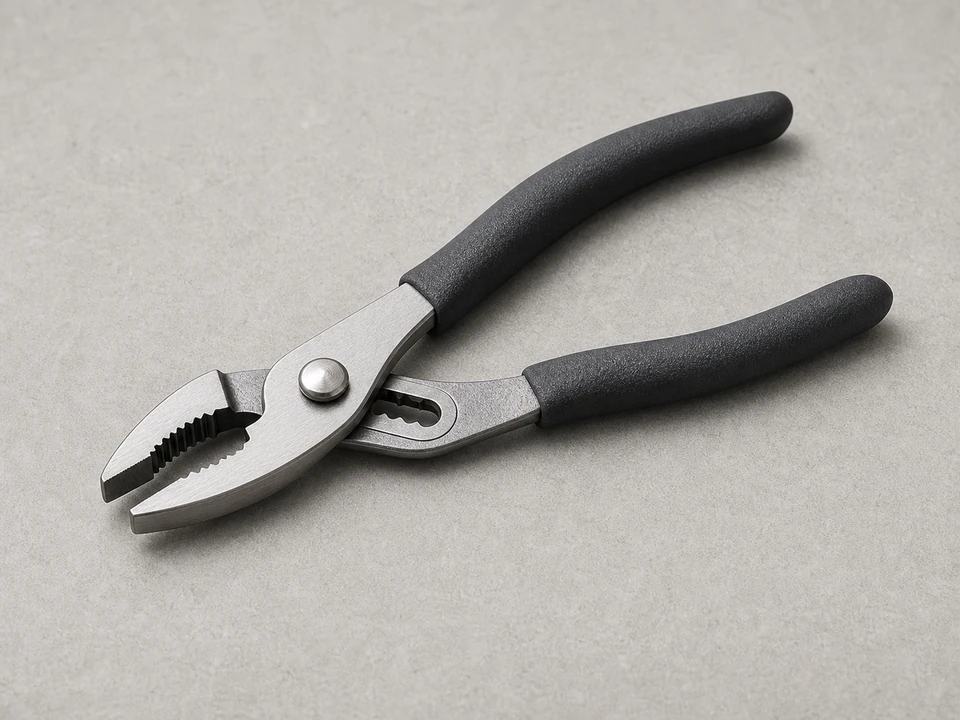
Use one tool to steady the faucet body and another to loosen the packing nut. Keep your support hand close to the wall so the pipe behind the faucet is not taking the force.
Back the packing nut off the stem and remove it. If it binds, add penetrating oil and wait instead of jerking the wrench.
Pull out the old packing material from around the stem. Use a small pick carefully if needed, but do not gouge the stem or valve body.
Inspect the old nut and packing pieces for cracks, distortion, crushed washers, or heavy corrosion so you know why the seal failed.
If it works: The old packing nut and packing material are removed and the stem area is exposed.
If it doesn’t: If the nut is seized, apply penetrating oil, wait, and try again with steady pressure rather than sudden force.
Stop if:
The packing nut will not loosen and the faucet body starts to twist.
The stem threads are stripped or badly damaged.
You find deep corrosion that has eaten into the valve body around the stem opening.
Step 4: Clean the stem area and compare the new parts
Brush away mineral buildup, rust, and old packing residue from the stem, threads, and the opening where the packing sits.
Wipe everything dry with a rag.
Compare the new packing nut and packing pieces to the old ones for thread size, stem opening, nut depth, washer thickness, and overall shape.
With the packing removed, start the new nut on the bare stem by hand. Check for a smooth first few threads before you add sealing material. If it binds or will not start, compare the kit to the old nut again.
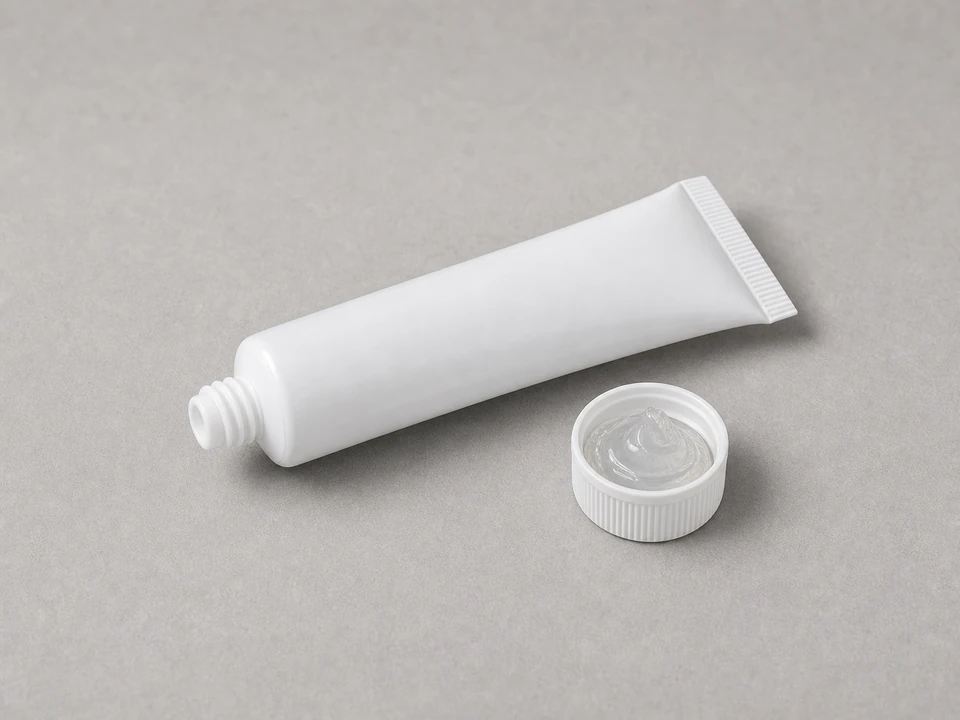
Apply a very light coat of plumber's grease to the stem so the new packing can compress smoothly.
If it works: The sealing surfaces are clean and the replacement parts appear to match the faucet.
If it doesn’t: If the new parts do not match the old ones closely, pause and verify the faucet style before installing anything.
Stop if:
The replacement nut does not thread on by hand.
The stem is bent, deeply scored, or too damaged for new packing to seal.
Step 5: Install the new packing kit and reassemble the faucet
Set the new packing around the stem where the old packing sat. Check that it sits evenly before you thread the nut on, so the nut can tighten squarely. If the kit uses packing string, wrap it neatly without stacking a lump under one side.
Thread the new packing nut on by hand first to avoid cross-threading.
Tighten the packing nut until it is snug and the packing is compressed, then stop. The first test should be slightly loose rather than crushed.
Reinstall the handle and handle screw.
Turn the faucet handle through its normal range and feel for smooth movement. The handle should not grind, bind, or need extra force.
If it works: The new packing parts are installed and the faucet is reassembled.
If it doesn’t: If the handle is very stiff, back the packing nut off slightly and try again. If it still leaks later, tighten in very small increments.
Stop if:
The nut cross-threads or will not seat properly.
The stem binds hard enough that the handle feels like it may break.
Step 6: Restore water and test the repair under real use
Turn the water supply back on slowly.
With the faucet closed, check around the packing nut and stem for any seepage.
Open the faucet halfway, then fully, then close it several times while watching the stem area.
If a slight seep appears at the stem, tighten the packing nut in very small steps. Dry the area and check the stem after each move. Stop when the stem stays dry and the handle still turns normally.
Run water for a minute with a hose attached if you normally use one, then check again for leaks around the stem, the hose threads, and the wall flange.
If it works: The faucet operates normally and stays dry around the stem during actual use.
If it doesn’t: If the stem still leaks after careful adjustment, the stem, seat area, or full faucet assembly may need further repair or replacement.
Stop if:
Water leaks from inside the wall after pressure is restored.
The faucet body leaks from a crack instead of the packing area.
The handle becomes too hard to turn before the stem leak stops.
Buy this only after the leak is at the handle stem and a small snug does not hold. Match the nut threads, stem diameter, nut depth, and formed washer or packing string style.
As an Amazon Associate I earn from qualifying purchases. Repair Riot may earn a commission at no extra cost to you.
Verify the repair
The stem area stays dry with the faucet both on and off.
The handle turns smoothly without excessive force.
There is no dripping or spraying from under the packing nut.
The wall or siding around the faucet stays dry after several minutes of use.
FAQ
What does the packing nut do on an outdoor faucet?
The packing nut compresses packing material around the faucet stem. That seal keeps water from leaking out around the handle when the faucet is turned on or off.
Can I just tighten the packing nut instead of replacing it?
Sometimes yes. A small snugging adjustment can stop a minor stem leak. If the nut is damaged, bottomed out, or the leak returns quickly, replacing the packing parts is the better fix.
How tight should the new packing nut be?
Tight enough to stop seepage at the stem while still letting the handle turn normally. Start snug, then make very small adjustments during testing if needed.
Do I need to turn off the whole house water?
Only if there is no local shutoff for that outdoor faucet. You need the water fully off before removing the packing nut.
What if the faucet still leaks after I replace the packing kit?
If the stem still gets wet after careful adjustment, check the stem for wear or damage before blaming the kit. A drip from the spout, a wet wall flange, or water from a cracked body points somewhere else. That faucet may need a different repair or full replacement.
Sources and References
These Repair Riot reference pages support the leak-location checks used here. Use them to separate a handle-stem packing leak from a spout, vacuum breaker, or wall leak before ordering parts.
Hose Bib Leaking - Use this broader troubleshooting guide when the leak may be from the spout, vacuum breaker, wall, or cracked faucet body.